


 |
 |


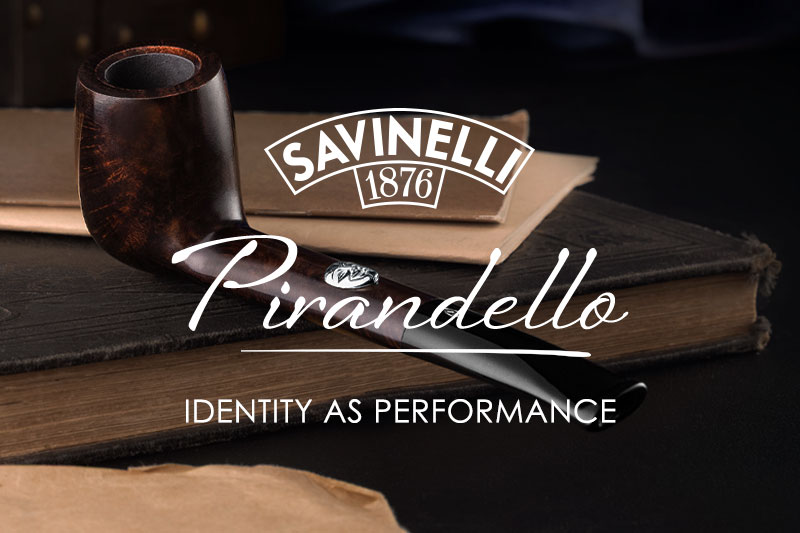
"Madhouse!" That's what audience members shouted when Luigi Pirandello's Six Characters in Search of an Author debuted in Rome in 1921. It's a short play but one that helped pioneer modern experimental and absurdist theater, blurring the lines between actor, character, and audience. Pirandello's work returns again and again to identity: the roles society assigns us and the versions of ourselves we perform for others. In honor of Pirandello, Savinelli has released a new limited series, paying tribute to his work and influence, and the connection runs deeper than the name.
Pirandello's Early Life
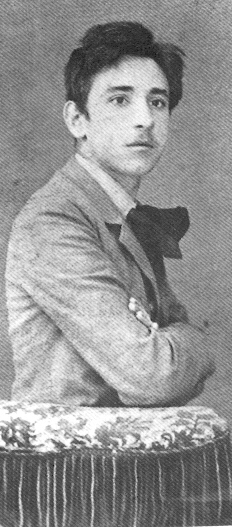 Luigi Pirandello, 1884
Pirandello was born on June 28th, 1867, in the Sicilian district of Caos. Though the region is named for the Sicilian word for "trousers" — taken from the unique shape of a local ravine — it's pronounced the same as the Italian word for "chaos," a connection not lost on Pirandello: "Io son figlio del Caos; e non allegoricamente, ma in giusta realtà," he liked to joke. "I am the son of Chaos, and not allegorically, but in plain fact." A theme supported by the unpredictability of his later dramas.
His father, Stefano Pirandello, was a member of a wealthy family in the sulfur industry, and his mother, Caterina Ricci Gramitto, was raised in Agrigento's professional class. They both supported Italy's unification, but their hopes of a freer, more democratic Italy were unfortunately too idealistic. When unification came in 1861, power was centralized under the House of Savoy, the monarchy of the northern Piedmont region. For those in Sicily, this reorganization of power manifested less as liberation and more as an oppressive takeover, with heavier taxes, little reform, and increased corruption. At a young age, Pirandello witnessed his parents' disillusionment and the gap between idealism and reality.
Furthermore, as a teenager, Pirandello discovered notes that revealed his father's extramarital affairs. The experience deepened his devotion to his mother, and it's easy to see how it could have destabilized his trust in others, informing his perspective of people's hidden selves and the masks we all wear.
Pirandello's love and talent for writing were already apparent at age 12, when he wrote his first tragedy. But his father enrolled him in a technical school in preparation for taking over the family mining business, a future of no interest to Pirandello. In 1891, he completed his education in Bonn, Germany, with a doctorate in Romance philology — specifically a dissertation on the Agrigento dialect. There's a certain irony in a scholar of the Sicilian language completing his degree in German.
In 1894, he married Maria Antonietta Portulano, the daughter of another Agrigento sulfur family. The arranged marriage was initiated by his parents, and the couple settled in Rome where they had three children: Stefano, Lietta, and Fausto. In Rome, Pirandello worked as a professor, teaching at a women's teacher-training college.
Tragedy and Fame
Ruin came in 1903 when a sulfur mine flooded in Aragona. His father had invested the family fortune as well as Maria Antonietta's dowry in the mine, and they lost their investment. The tragedy destroyed his wife's mental constitution, and she descended into increasing jealousy and violence. She was never able to recover and was institutionalized in 1919.
In the months that followed, caring for his ailing wife, Pirandello turned to writing and published The Late Mattia Pascal, which received instant success. The novel follows a man who is mistakenly pronounced dead. He uses the opportunity to adopt a new identity only to discover that life is impossible to live without one. At the time of writing, Pirandello himself likely felt trapped in his own identity as a struggling academic and caretaker.
Though the novel was a success, Pirandello's theatrical renown didn't arrive until his fifties with Six Characters in Search of an Author. Despite a scandalous opening in Rome, the play proved quite successful in Milan, London, and New York City. He followed it up with Henry IV, which earned similar acclaim. By 1924, Pirandello's plays had been performed in at least 14 countries.
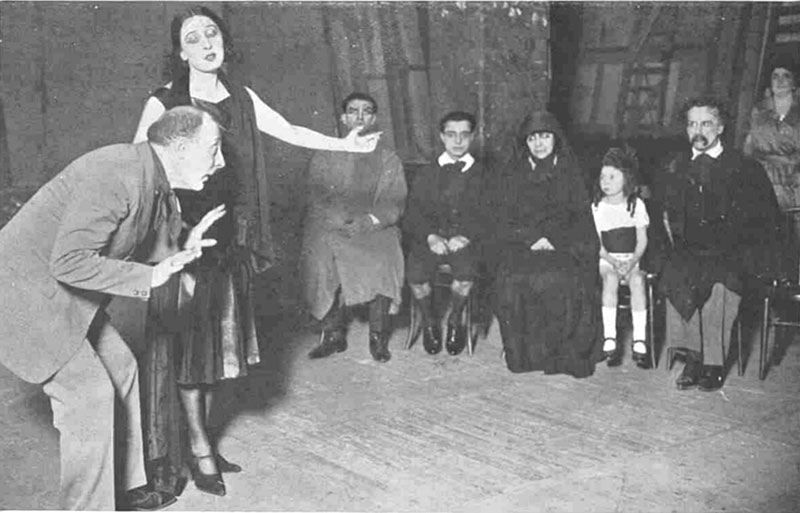 Six Characters in Search of an Author, 1925
The following year, in his late fifties, Pirandello met and fell in love with the young actress Marta Abba. She became his muse, and he wrote seven plays with her as creative inspiration — all seven featuring female protagonists.
After publishing over 100 short stories, around 40 plays, and seven novels, Pirandello was nominated for and won the Nobel Prize in Literature in 1934, becoming the third Italian to win the award. The Swedish Academy's citation honored "his bold and ingenious revival of dramatic and scenic art."
Death and Legacy
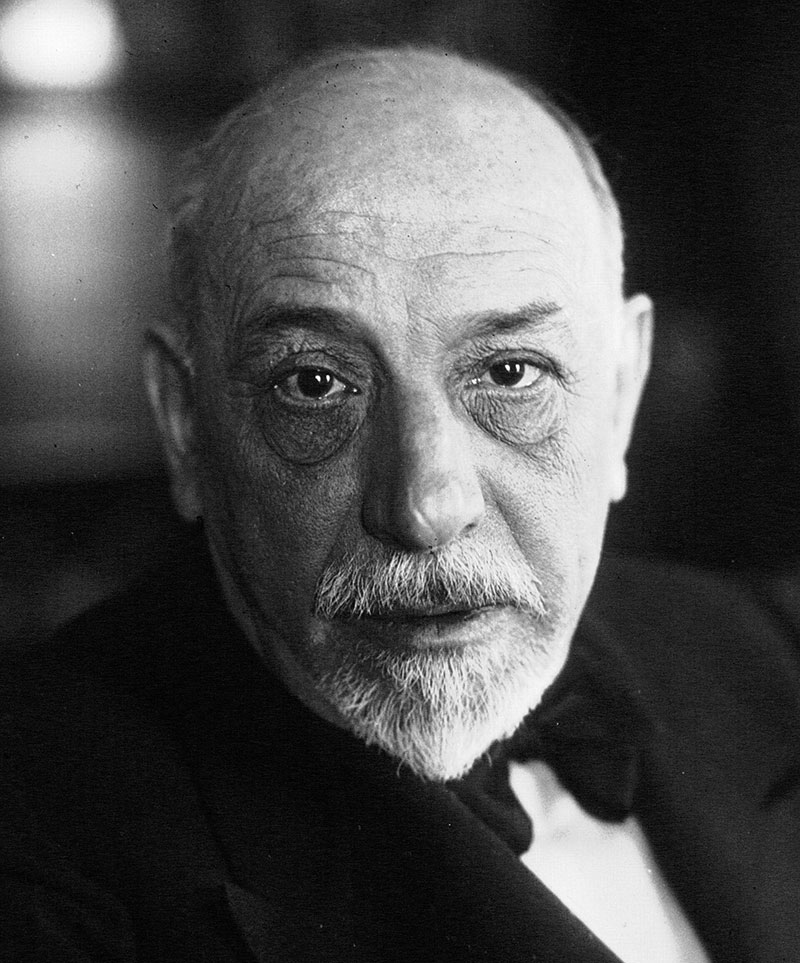 Luigi Pirandello, 1932
At the age of 69, Pirandello died in Rome on December 10, 1936, of pneumonia. Befitting the themes in many of his works, his written last wishes were, "Sia lasciata passare in silenzio la mia morte" — "Let my death pass in silence." He desired a pure passing, one unmasked of any ceremony or superficiality. "Carro di infima classe, quello dei poveri. Nudo. E nessuno m'accompagni, né parenti né amici. Il carro, il cavallo, il cocchiere e basta. Bruciatemi." — "The lowest-class hearse, the paupers' kind. Naked. And let no one accompany me, neither relatives nor friends. The hearse, the horse, the driver, and that's all. Burn me." His ashes now reside in the garden of his birthplace in Caos.
Pirandello's work helped pave the way for the Theatre of the Absurd and future playwrights like Samuel Beckett and Eugène Ionesco. Six Characters in particular pioneered the 'theater-within-a-theater' device, in which the play comments on itself being a play, and Pirandello regularly pushed fourth-wall boundaries and blurred the line between stage and audience, treating identity itself as theatrical.
Even his name has become an adjective — "Pirandellian" — entering Italian in the 1920s while he was still alive. The term can broadly describe anything that blurs fiction and reality and, more specifically, something that plays with identity and performance.
Pirandello has also influenced Smokingpipes and Laudisi: The name "Laudisi" comes from a character in his Right You Are (If You Think So), which explores themes of relative truth. In the play, Lamberto Laudisi is the town skeptic who laughs at his neighbors' obsession with uncovering the truth about others.
Savinelli's Pirandello Pipes
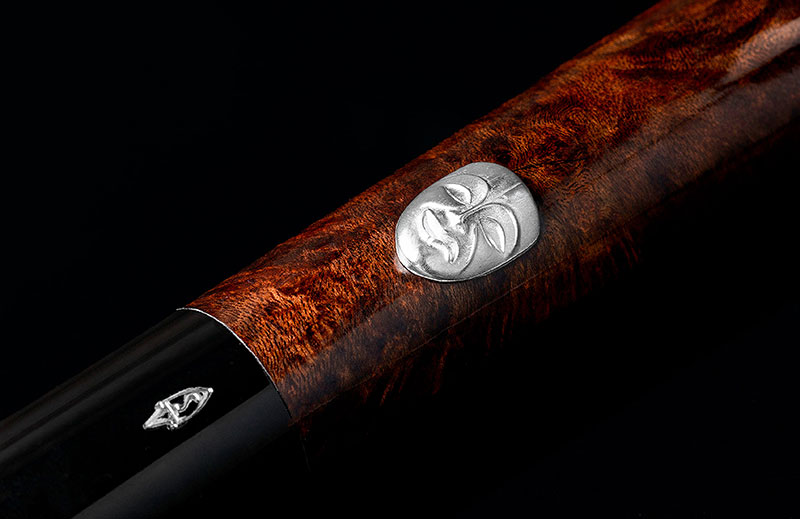
Savinelli's fitting release is dedicated to Pirandello and his influence. The series comprises 900 individually numbered pipes, and they're all rendered in the Italian marque's 812 shape — a semi-bent Canadian design. Dressed in a smooth stain and fitted to a black acrylic mouthpiece, these Pirandello pipes maintain a reserved aesthetic to draw attention to the beautiful shank accent: a shimmering aluminum plaque depicting the comedy and tragedy masks, also called Sock and Buskin — iconic symbols of the theater.
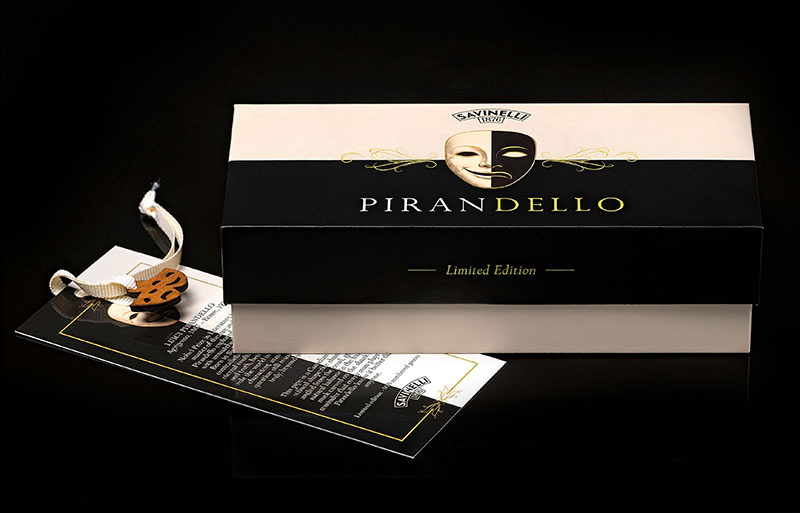
In Savinelli's accent, the two masks are combined into one: One half displays the smiling visage of comedy, while tragedy's frown covers the other, with the former finished smooth and the latter satin-finished to enhance the contrast. Savinelli has utilized this plaque-style accent in other limited-edition series, like Gondola and Leonardo da Vinci, placing Pirandello among such celebrated releases. The Pirandello line is finally completed by a thematic box and a beautiful bookmark featuring both theater masks — a perfect companion while reading Pirandello's works.
It's a lovely tribute from the Italian pipe manufacturer to one of their country's most renowned dramatists, and the medium of a pipe actually fits the themes of Pirandello's work quite well. A pipe is, in many ways, a prop used in the dramatic performance of our lives. Just as the clothes we wear, the hairstyle we choose — the personas we present to the world — influence how others perceive us, so too does smoking a pipe. For some, maybe it's a symbol of intellectuality, or an homage to a bygone, vintage style, or a weird anachronism to draw attention. Regardless, a pipe is itself part of the mask of our performed identity.
Bibliography
- Atuttarte. "Luigi Pirandello."
- Bassnett, S., & Lorch, J. (Eds.). (2014). Luigi Pirandello in the Theatre: A Documentary Record. Routledge.
- Encyclopaedia Britannica. "Six Characters in Search of an Author."
- Encyclopedia.com. "Pirandello, Luigi."
- Italia.it. "Nei luoghi di Pirandello ad Agrigento e dintorni."
- LitCharts. "Luigi Pirandello."
- Mazer, C. M. "Have It Your Way!" University of Pennsylvania.
- Merriam-Webster. "Pirandello."
- Middlebury College. "Examining the 'Pirandellian' Through Theatre and Literature of Pirandello and Eduardo de Filippo."
- New World Encyclopedia. "Luigi Pirandello."
- Nobel Prize Outreach. "Luigi Pirandello – Facts." NobelPrize.org.
- Ortolani, B. (Ed. & Trans.). (1994). Pirandello's Love Letters to Marta Abba. Princeton University Press.
- Skuola.net. "Pirandello: vita e formazione."
- Virgilio Sapere. "Pirandello: vita e opere."
- Wikipedia. "1934 Nobel Prize in Literature."
- Wikipedia. "Luigi Pirandello."
- Wikipedia. "Six Characters in Search of an Author."
- Wikipedia. "The Late Mattia Pascal."
- Wikipedia. "Theatre of the Absurd."
You may also enjoy:





Comments