


 |
 |


Cultivate, Curate, Collect: A How-To Guide to Pipe Collecting



What is the difference between a pipe smoker and a pipe collector?
The answer is twofold: To be a collector is to be both a curator and a cultivator, with one role growing out of the other. While a pipe smoker simply enjoys the recreation of smoking, the collector acts as a museum steward, choosing, with a discerning eye, the pieces that make up their collection.
The distinction between smoker and collector boils down to intentionality. Collecting is an active process whereby the collector exercises not only their knowledge but that most personal and hard-earned quality: taste.
"I feel like the whole point is to collect with purpose," says Shane Ireland, Laudisi's Vice President of Retail. "At least that's the difference between collecting and just owning a rotation of a handful of pipes."
Alan Britt, Customer Service Manager, echoes the sentiment: "Whether it's Grandpa's firearms or Grandma's china, I think all collections stem from a part of our brain that unconsciously seeks order and pleasure in building something. It helps when it's a thing that you love and appreciate — in our niche world, that's pipes and tobacco. Speaking from my own experience, once drawn to a specific factory or artisan, there's a drive to build something cohesive that, if we're being honest with ourselves, will never be complete."
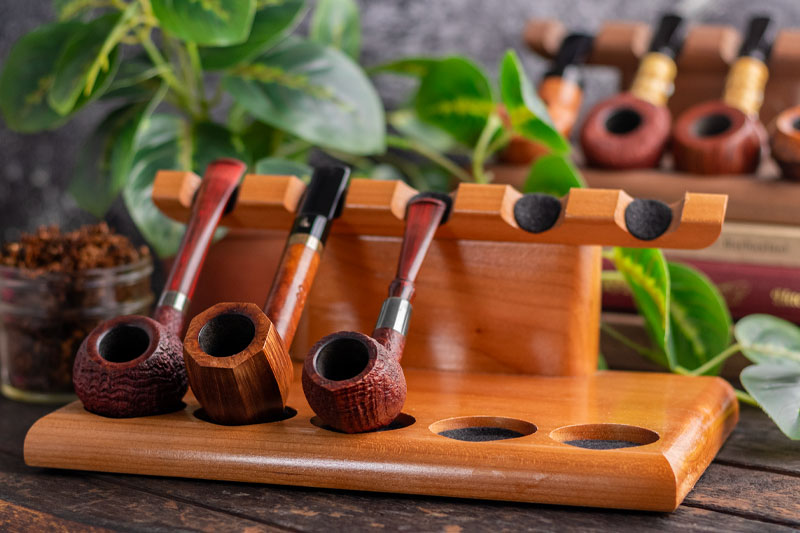
For John McElheny, Pipe Specialist, the fascination with collecting starts with his view of pipes as functional art. "Pipes are tools, yes, but they're tools that have an inherently more personal relationship with their users than most others," he says. "They may be tools, but in many cases, for me, they are also art. They're small sculptures that serve a purpose and reflect one's tastes and practices through their form and the evidence of regular smoking."
But to curate a collection one is proud of, one must first cultivate within themselves that aforementioned taste, which is deeply personal and, arguably, subjective. How do you develop your taste? What aspects must be considered?
Bowl by Bowl
To develop your own taste, you first have to determine what you like, and that requires trying different kinds of pipes. Just as a gourmet expands their palette by sampling an array of dishes, a pipe collector must smoke pipes to understand what they enjoy. In the process, you discover important things about your preferences, such as whether you enjoy large chambers or small, straight pipes or bent, vulcanite stems or acrylic, etc. This helps familiarize you with the basics of the hobby and is paramount to figuring out your taste; it's also half the fun.
The easiest way to explore a variety of pipes without breaking the bank is our estate market, which offers an endless array of refurbished pipes from a wide range of marques, makers, and artisans. Moreover, as your taste and collection evolve, you can trade in retired pipes through our estate program and earn store credit or cash toward new pieces.
Experiment
Likewise, part of the discovery process is learning how you smoke and what best fits your habits. Say you enjoy smoking on your evening walk, a time you reserve for quiet contemplation and decompression. It wouldn't make sense to bring along an oversized Ser Jacopo Maxima; you'd surely prefer, and find more convenient, a lightweight pipe, most likely a bent one. Of course, if you're smoking at home and prefer deep-chambered briars for marathon sessions, a Ser Jacopo may be perfect. Think about how you smoke, where you smoke, and what you want out of the experience.
Join a Pipe Club
One of the great joys of our beloved hobby is that it can be enjoyed both privately and in communion. Being such a niche pastime, pipe smoking draws a ferociously devoted following, and with it comes a variety of opinions and tastes. Engaging with this community exposes you to new ideas and resources, builds connections, and offers a space to discuss our favorite pastime.
Your city may or may not have an in-person pipe club, but online, these communities thrive on forums, social media, and right here on the Daily Reader.
Peruse Your Pipes
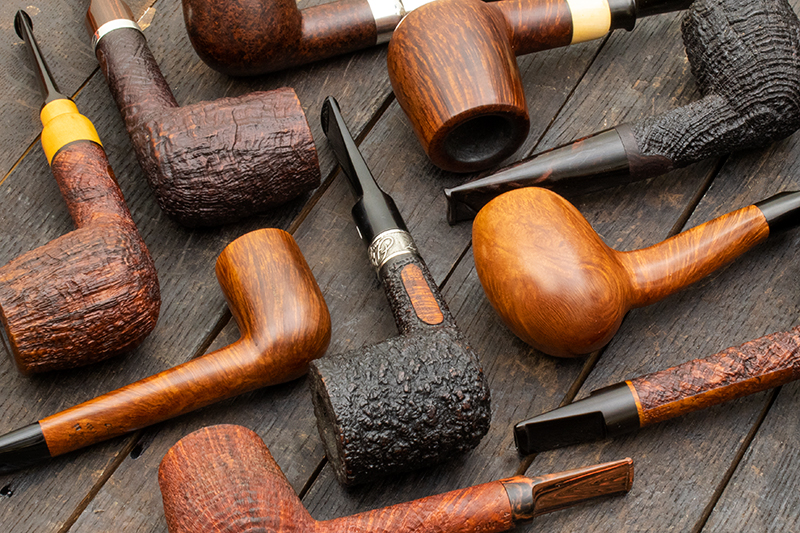
Another helpful means of discovering your preferences and defining your collection is to take a look at the pipes you already own. Which ones are you drawn to? Which are your favorites, and which do you actually smoke? And most importantly, why do you like them? What qualities do they share? What's the finish, who's the maker, what accents do they have? The answers will likely be the seed from which your collection grows.
Collecting is an intuitive process as much as anything, but given the array of choices, it helps to have some signposts. Many collectors build around a single maker or factory, a favorite shape, a particular era, a country of origin, or a specific finish.
Alan's collection, for instance, centers on Micah Redmond, and on Nosewarmers in particular. "I am a huge fan of Nosewarmers or just comically small variations on classic shapes," he says. "I also absolutely love a squat Tomato, which is probably what Micah Redmond is most recognized for." Shane has a broad focus on classic shapes but within that he explores a number of more focused themes: bamboo work from J. Alan, sandblasted Petersons in the Rua and Cobble finishes, smooth Former Apples and Billiards with silver accents, and Michael Parks commissions modeled on shapes from old English catalogs.
John, meanwhile, doesn't have as rigid of a criteria, judging each pipe on its own merits rather than by brand or maker. "Each piece I acquire just has to fit correctly, has to have the right look and dimensions, and needs to be finished in a way that keeps me happy when I look at it every day," he says. Even so, a theme has emerged: classic shapes and squat, round bowls — "I am and will remain a fervent Tomato enthusiast" — mostly in natural wood tones.
For some, narrowing a collection to one theme or quality can feel constricting; in fact, it does the opposite: It gives an identity to the collection and purpose to the collector. A narrower focus can also be freeing. You no longer have to worry about missing the latest release or perusing aimlessly online for a random pipe to inexplicably spark interest; instead, you can pursue what you know you'll love.
Shane sets hard parameters for himself, collecting mostly pipes between Group 1 and Group 3 in size. "These size constraints help to give me focus and to keep me from buying too much," he says, "and also I know that I'm much more likely to smoke the pipes, which is my intention when I buy any pipe."
Wrap Up
Remember, collecting is supposed to be fun, and is often a lifelong endeavor. As your interest and knowledge deepen, and as you grow as a person, your preferences are bound to evolve.
"The most important thing is to have fun," says Shane. "Once you understand your smoking preferences and taste, try to focus those into a collection that makes sense. That doesn't mean you can't have some fun and pick up something randomly that might not fit. That may end up being the start of a new focus!"
Alan is even more succinct: "It's your money. If you like it, buy it."
You may also enjoy:




Comments