


 |
|
 |
|





Filmed and edited by Chris Herath
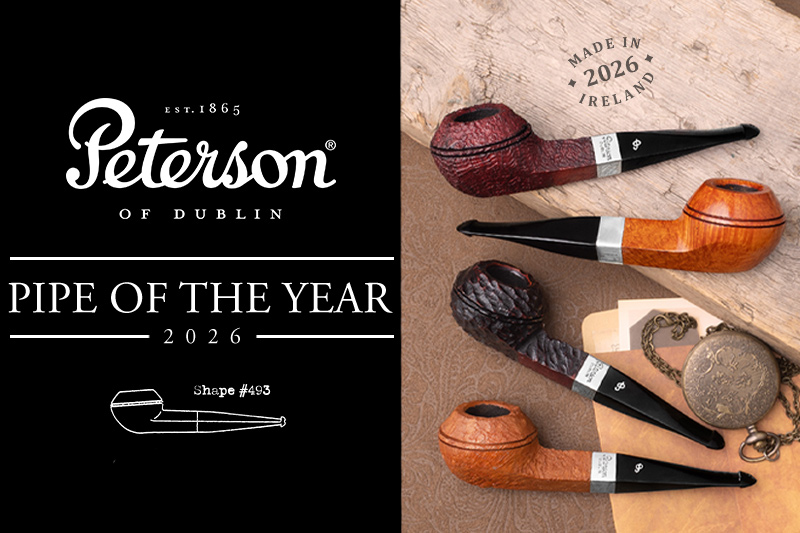
I was recently on location at the Kapp & Peterson factory in Ireland with Glen Whelan and Giacomo Penzo to discuss something super special. It's a release that I look forward to every year: the Pipe of the Year for 2026.
Note: The following transcription has been edited for clarity and brevity.
A Personal Inspiration
[Andy Wike]: Glen, can you tell us a little bit about what we can look forward to in the Pipe of the Year release?
[Glen Whelan]: This one is really special to me personally. The pipe we're doing this year is one I inherited from my granddad. He was gifted it by my dad, who was the factory manager at the time. When I saw the shape, I immediately knew — I've been trying to get this shape out there for the last eight years. So I almost felt like it was my turn to get the Pipe of the Year choice. Josh has had his say in the past with the O2 and the Pat B, and Giacomo even made his own shape one year.
[AW]: Well, that's awesome. We're looking at an archival Peterson shape and putting a new spin on it for the Pipe of the Year.
[GW]: Yeah, these go as far back as the 1896 catalog. What we're going for is one of the "Cad" shapes — the Squat Bulldogs, namely the 493. Giacomo was able to use my grandfather's pipe during the early R&D phase, measuring up to get a finished concept for us to look at. The only difference between what we're doing this time and the original 493 is that we're drawing inspiration from the 494 shape, which had a tapered stem rather than a saddle stem, and of course, it'll have a P-Lip.
[AW]: I'm holding the very first one here, and it's absolutely beautiful.
Rooted in Peterson History

The "Cad" class of shapes goes back a long way. Thanks to Mark Irwin's blog, a great resource if you haven't checked it out, the earliest mention of the "Cad" shape that we know of is the Coronation "Cad", which was smoked by Tom Crean.
[GW]: Tom Crean, who we've celebrated with Peterson before, but always as the man smoking the Dublin shape, since that's almost synonymous with him. We were genuinely surprised to see a photo of him with this Coronation Bulldog instead. The Bulldog shape is iconic for Peterson, but the more modern Bulldogs have all gone for height rather than the Squat roundness we're getting with this one. It's totally different from what we've done in recent iterations of the shape.
[AW]: I think the particular models we're referencing in this year's release really reached their peak around 1947. You can see them in some of the distributors' catalogs — there were three or four "Cad" shapes, but they were all Squat Bulldogs of varying sizes.
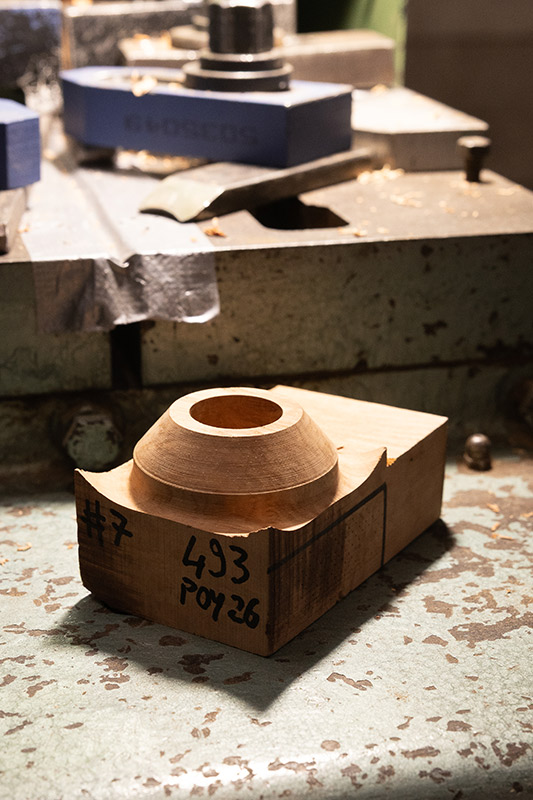
[GW]: And we're going with the largest of them.
[AW]: It's got a nice, wide, almost pot-like chamber, but the lines are really striking. They have almost a streamlined, modern look.
[GW]: It's very elegant. The transition from the bowl into the shank flows all the way through, and it stays conical almost down to the button. The lines are so sharp, and I think the tapered stem lends itself really well to that. The P-Lip button, for me, finishes it off.
[AW]: You have to have a P-Lip. If you look at Peterson's early Bulldogs, they were all Patent-Lips — the 1896 and 1906 catalogs had Peterson's patent pipes, which were the precursor to our modern Classic Range.
[GW]: Exactly. It keeps our tradition of staying true to heritage in the Pipe of the Year releases — drawing inspiration from our storied past and continuing with P-Lips. Pipe of the Year is our most iconic release each year, the one everybody's waiting on, and for me, it has to be a P-Lip. It's a no-brainer.
From a Family Heirloom to a Finished Concept
[AW]: It's especially great that the inspiration for this year's release came from a personal connection, your granddad's pipe. But getting that to a modern execution, where do you even start recreating something like that?
[GW]: These ideas always sound great on paper, but bringing them to fruition is the hardest part. The first step for us, thankfully, was having a living example to work from. We've recreated past Pipes of the Year from just 2D drawings, so having a physical pipe was a big help for Giacomo.
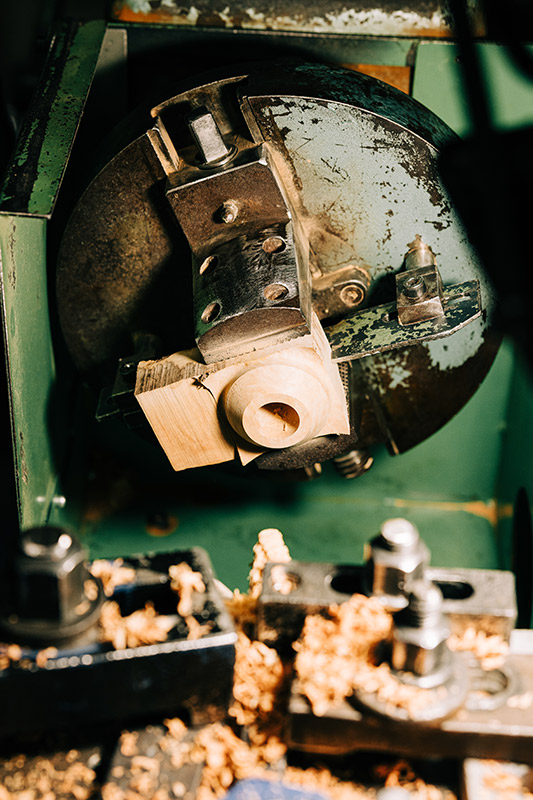
The main thing we need to be sure of is that we can turn a sufficient quantity of blocks, since this is a big, wide bowl coming from an unusual block size. We need to know we can accumulate that amount, since you always need to turn more than you'll actually use — probably about 20% overage to account for attrition.
That's the first step: we talk with Giacomo, he sketches out the block size we need, and creates a template, with tolerance built in around the bowl and the end of the shank for shaping. From there, he gets it to the finished concept.
Engineering the Shape at Scale
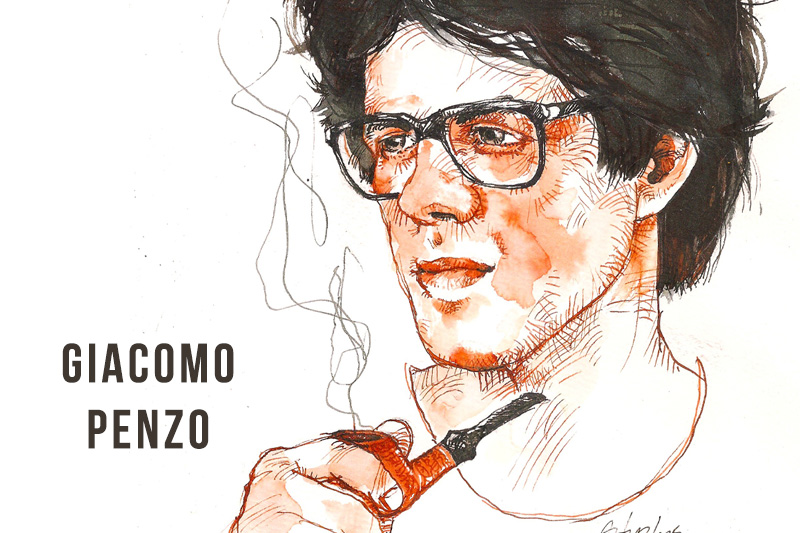
[AW]: Giacomo, you've been responsible for executing most of our Pipe of the Year editions over the last several years, often starting from just a 2D drawing. This year we actually have a model to work from. How do you take that and turn it into a production-ready recreation of the Bulldog Glen described?
[Giacomo Penzo]: This time we were lucky to have a sample. Usually I take measurements directly from the pipe or the bowl, make some drawings and sketches to get an idea of what I'm going to do, then transfer that drawing onto the block. From there, the three-dimensional work starts. Like with other Pipes of the Year, I make a sample in my workshop, then use that sample to set up all the machinery for bowl turning and start production.
[AW]: In terms of taking it from the block to a finished prototype, what were some of the challenges? It's a Squat shape, but also a wide one with a big bowl, plus the sharply tapered lines of a Bulldog.
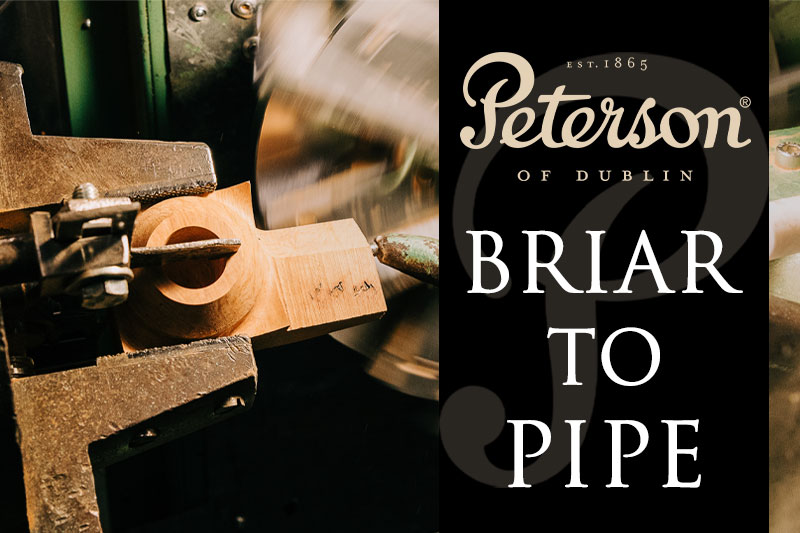
[GP]: The first thing is finding the best block to fit the shape — in this case, a big block, an MFF two-and-a-half or MFF two-three: tall, long, and very wide for the shape. It's also hard to source blocks like that, so we started many months ago to secure enough for this project. After sorting the blocks using a template made specifically for this shape, we start the bowl-turning process. That's a challenge in itself, because we have to make new knives and milling tools and set the machine up in a new way every time. It takes time and experience. It's tricky.
[AW]: So it's not just making one pipe and being done — it's taking that one design and engineering the whole process to make it work at scale.
[GP]: It has to be as accurate as possible, because we're going to make 1,500 bowls. We can't stop partway through and start over. It has to be right from the beginning.
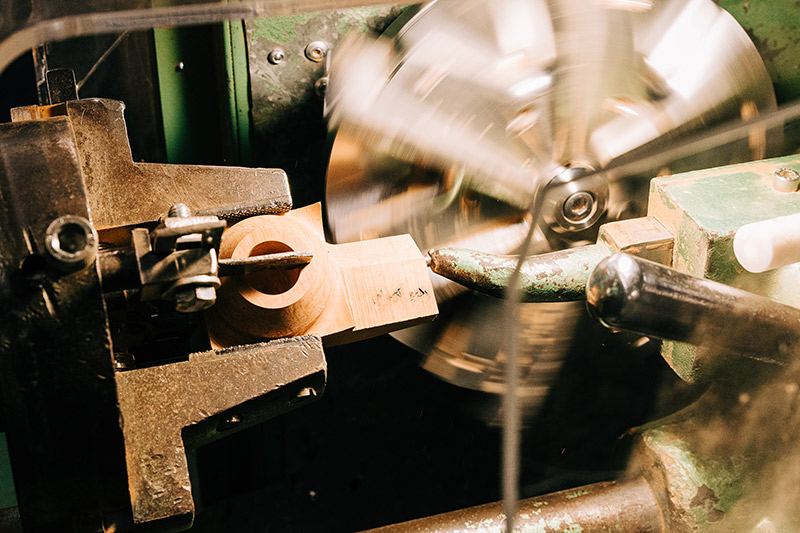
[AW]: And bowl turning isn't a one-and-done process either. I'd imagine you have to keep going back in to fine-tune accuracy along the way.
[GP]: Usually after 20, sometimes 50 pieces, we check all the tolerances and dimensions again. After 300 bowls, we stop, remove the knives, sharpen them, and reset the machine — everything has to match how it started. It's a big job. We have to be very precise.
[AW]: It's almost like hitting a moving target — you know where it is, but you're constantly recalibrating to make sure you hit the mark every time.
Giacomo's Favorite Part of the Process
You've worked on so many of these — what's your favorite part of the Pipe of the Year project?
[GP]: As a designer, I love the whole process. It never starts with just making the bowl. It starts before that, with research and conversations with the other managers. I love seeing lines on a piece of paper become a three-dimensional product, a real pipe. It's magical, because it's a true creation. You're making something from material, but it all comes from the brain. It's a mix of many different kinds of knowledge and skills coming together to make something great.
[AW]: I imagine it's also rewarding watching them go through bowl turning and then all the other stations in the factory. Seeing the grain come through, or knowing a particular one is going to be a great PSB.
[GP]: Yeah, it's an industrial design project, so we're not just studying the product, but the whole process. If we find something that doesn't work — in the BTA stage or in finishing — we have to go back and fix the process to save time and get it right from the start. A lot is involved, which I think makes it more interesting.
Silverwork and What's Next
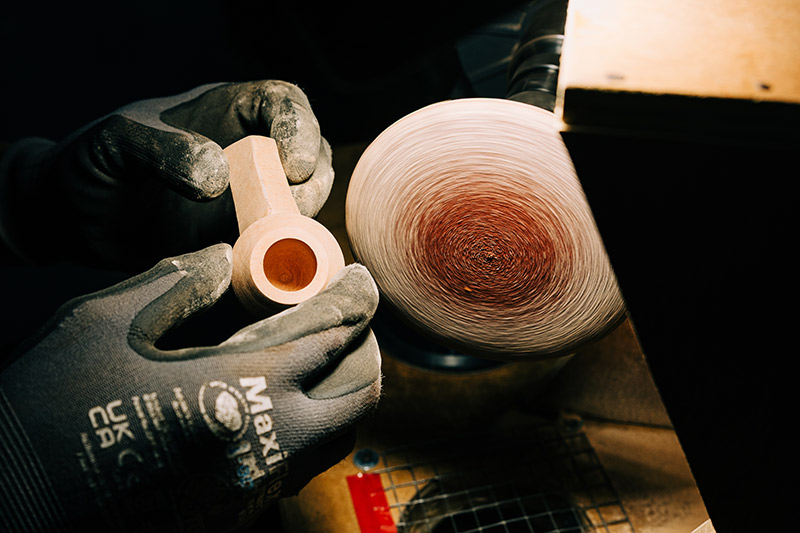
[AW]: One thing worth noting: since this is Pipe of the Year, we wanted to incorporate Peterson's iconic silversmithing. If you look at the 1947 distributors' catalog, none of those "Cad" shapes were mounted, so being able to add such a nice matching silver band on this one is special.
[GW]: To me, a Bulldog always comes with a band. It looks strange without it. It also helps break up and smooth the transition from shank to stem.
[AW]: A nice little buffer.
[GW]: Exactly.
[AW]: One last thing — last year Peterson celebrated their 160th anniversary. It's particularly fitting that the first Pipe of the Year after that milestone is also the 30th edition of the Peterson Pipe of the Year series — a new milestone era in its own right.
[GW]: I think that's the advantage of having such a storied history; almost every year is a milestone of some sort. It's a testament to all the craftspeople who came before us that we get to celebrate what they achieved.
[AW]: Beautifully put. Glen, thank you so much. It's always great to catch up.
[GW]: Thanks, Andy. It was a pleasure.
You may also enjoy:


Comments
Never been too impressed with petersons. I choose Savinelli and other popular names over them all in the under $200 price range. My Savs are better smokers than my Pete’s including workmanship and consistency in quality. JMO
🇺🇸
To me, it depends on the Peterson model. I love my Savinelli's but still prefer my Peterson System and System Deluxe pipes. Your mileage may vary.
Maybe try Sav dry system for comparison?
Love your articles
It seems everytime I order a Peterson I can't pass a pipe cleaner through it. Maybe add that to the quality control. It is annoying for me to do my own woodworking on a new pipe to just pass a pipe cleaner through it. My Savinelli pipes as well as some less expensive pipes I own don't have this issue.
I concur with the Peterson critiques. And yes Savs are always good smokers and easy to pipe clean. Let me chime in on a line Smokingpipes is reprising
Molina is an Italian brand that pound for pound in my opinion is the best under $100 pipe out there. I have two 40 plus year Molinas in my lawn tractor shelf!
Also the new Molina have really funky acrylic stems.
Please keep ‘em coming
Wow - maybe I’ve just had the pipe gods looking out for me (good pipe ju ju)
I currently have over 30 Pete’s from modest to fine - new & estate - even one gold trim - P-Lip & fishtails - meers & briars and I’ve never gotten a bad Peterson pipe - not even a marginal one - My 1st good pipe was a system Pete in 1974 - STILL a great smoker -
to Glen - his family & all the folks at Peterson THANKS for lots of great smokes
ps: love my Savinelli pipes too…..
Peterson's permanence in the pipe market remains a mystery to me. I know very few people who have not had an incident or complaint with their Peterson pipes. A symptom, without a doubt, that some brands know how to handle marketing and similar issues very well and can afford to do things wrong and remain prestigious. The question is... until when?