


 |
|
 |
|





Produced and Edited by Chris Herath
At the 30th anniversary of the Chicago Pipe Show, Peterson of Dublin gave a special presentation on something most pipe smokers never get to see: the full in-house process of turning their pipe bowls. We've been working with the team at Peterson to bring a version of that presentation to you, and what follows is a look at how these iconic pipes come to life, straight from the factory floor.
Note: The following transcription has been edited for clarity and brevity.
Receiving and Drying the Briar
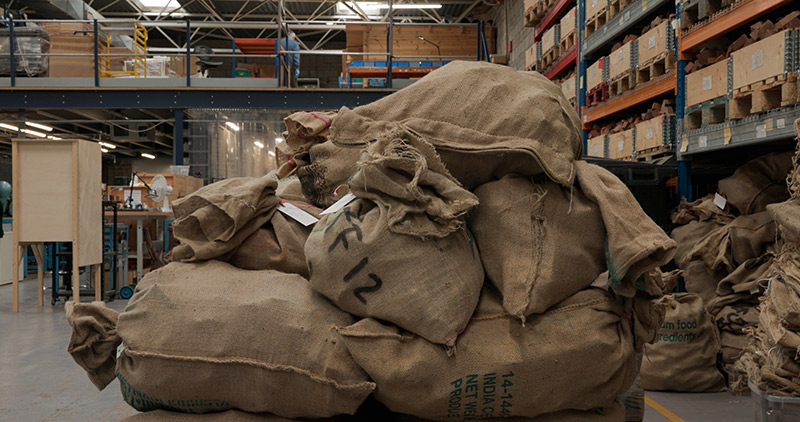
[Giacomo Penzo]: The briar arrives at the factory on pallets in sacks. The first thing we do is check the quality and quantity of the blocks we receive. The briar we use comes from the Mediterranean area. We usually prefer to buy from different suppliers to have a better selection of quality and sizes.
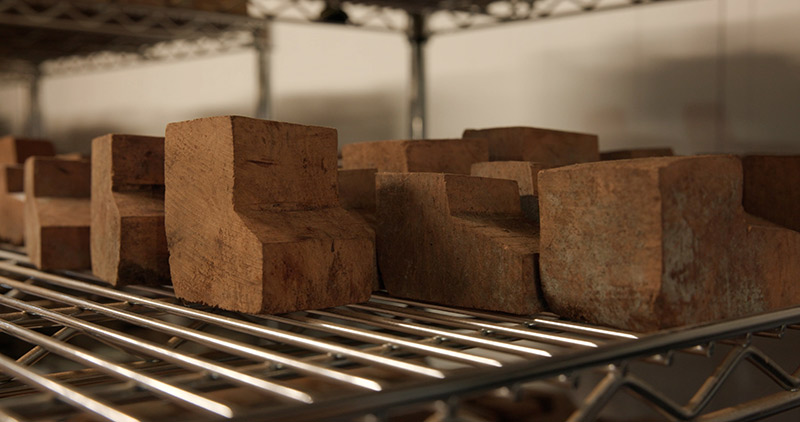
We put the blocks in a trolley for the drying process, which consists of removing humidity from the blocks of briar. The dry room is not an oven — it's just a room where the temperature and humidity are under our control, so we can dry the blocks as we prefer. We're happy with the result when the humidity in the blocks is around 40%.
Sorting the Blocks
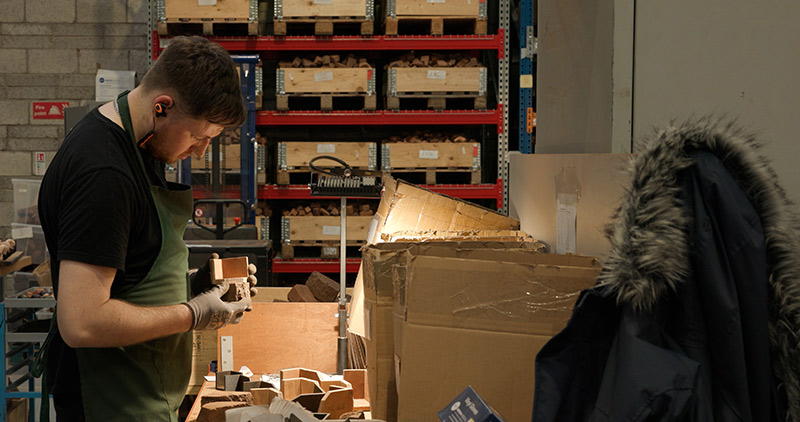
We empty a sack of the size we need to sort onto a big pallet, then fit each block into a shape template until we find the best match. The block has to be sorted considering the size, the shape, any issues it could have, and most importantly, the squaring process — so it has to be a little bit bigger than the template.
When we find the best shape template, we put the block in the box for that selected shape and follow the same process for all the blocks in the batch. When we finish sorting, we count the quantity for each shape, update the software, and move the sorted blocks to a pallet by shape.
When we have to start the making process, we check stock quantities through the software and choose the shape based on priority. Usually, we have some best sellers that we produce three or four times a year in large quantities — around 1,500 to 2,000 bowls. Sometimes we make a small batch of a limited edition, even as few as 300 to 500 bowls.
Squaring the Blocks
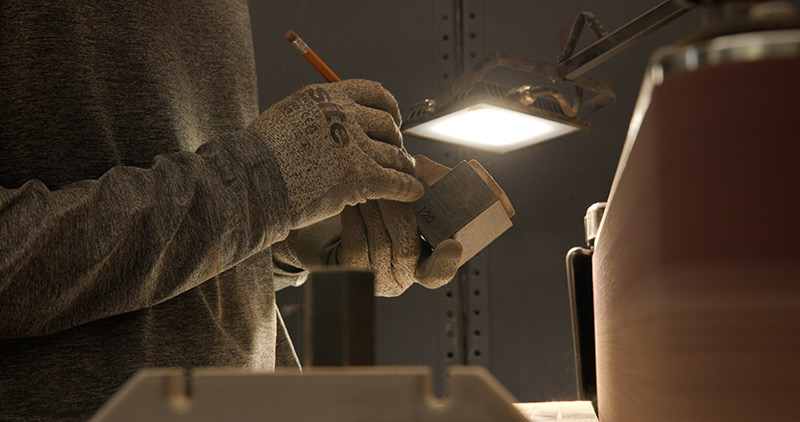
The squaring process consists of squaring all the blocks to the same size, avoiding strange cuts, cracks, or issues that could cause problems during the bowl-turning process. We take the block, compare it to the template, and remove material until we get the right size for the shape we're making. When the block is squared, we mark the profile with a pencil and cut it on the bandsaw. After that cut, all the blocks in the batch are uniform and ready for the bowl-turning process.
Bowl Turning
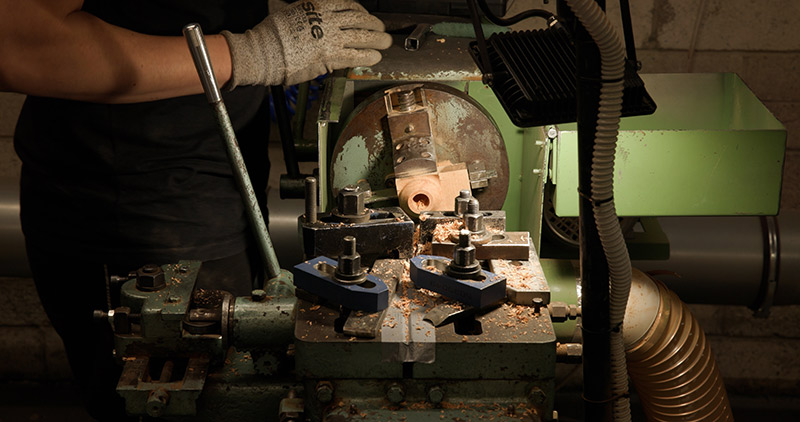
In the bowl-turning area, we have seven machines — three for straight shapes and four for bent shapes. For straight shapes: a flaring machine, a straight shank machine, and a side bottom machine. For bent shapes: a flaring machine, a shank bent machine, a side bottom machine, and a wings machine.
The first thing we do is set the machines. We put the knife in the right position to turn the right shape at the right size. Even a very small mistake here can compromise the entire result and production, so we have to be very accurate. The blades have to be sharp and positioned correctly, and we set each machine using both a template and a sample. We make some test pieces, and when we're ready, we start the bowl-turning process.
On straight shapes, we start with the flaring machine to drill the top of the shape, the chamber, and the rim. With the second machine — the straight shank machine — we turn the shank of the bowl. Then, with the side bottom machine, we turn the side and bottom of the bowl. For bent shapes, we add two more steps — removing the excess on the side of the shank (what we call the horns or wings), and then with another milling tool, removing the excess material on the back of the shank.
Drilling
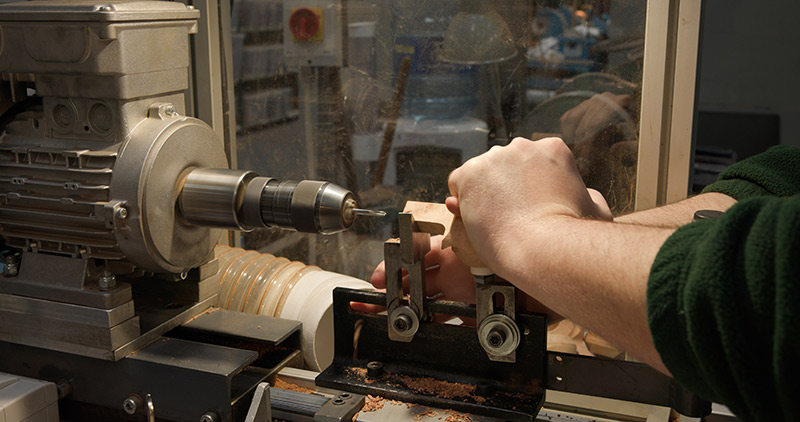
We set the machine — which has a chuck with a drill bit and a slide with two supports, one for the chamber and one for the shank — at the right angle, and start the drilling process. We usually work in three steps: the first drill bit for centering, then the second and third for drilling to the right length. Every shape has a different setup. Straight shapes are generally more straightforward; bent shapes are a little more tricky.
Shaping and Papering
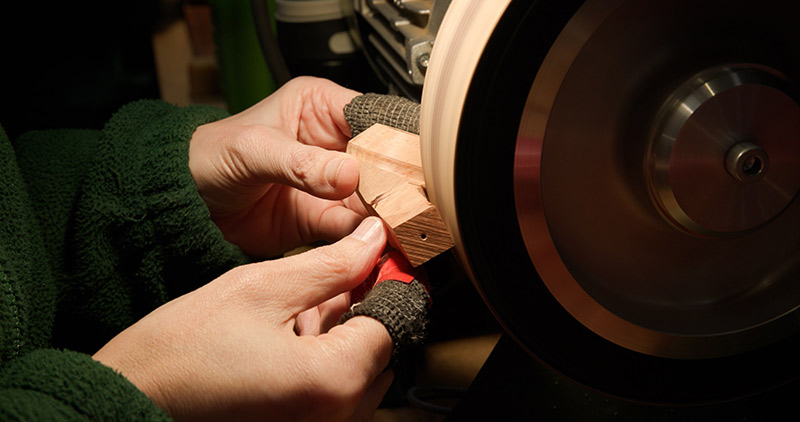
The shaping and papering process consists of three steps: wings removal, 60-grit papering, and 120-grit papering.
In the wings removal step, we remove the excess material on the side of the shank. On bent shapes, we also remove a little material from the bottom and side of the bowl to make the 60-grit shaping process easier. This part is very delicate — we need to remove the excess while maintaining the shape and identity of the piece.
The 60-grit papering is where we shape the bowl to its final form. It requires a lot of experience and attention to give the bowl the right dimensions, the right profile, and the right details that define the shape.
The 120-grit papering is the last step of the pre-production process. We paper the entire bowl, making it smooth and clean in preparation for grading.
Thanks very much to all the guys at Peterson of Dublin for letting us share this special presentation with you. I hope you've enjoyed this look behind the scenes at how Peterson turns its own bowls in-house. Let us know in the comments if you'd like to learn more about Peterson's pipe-making processes!
You may also enjoy:



Comments
do you have the mark twain cobblestone pipe? is it p lip? what is yhe price
I am amazed at the hard work that goes into the artistry of pipe making! Thank you for sharing this amazing video!
Great video....Thanks
I would love to see the final finishing process also!
does anyone have a line on st Bruno prior to 9-11. the newer version is not even close to the older type. the older version was my all day every day from 1960 too just after 9-11. I did make a contact in Canada for a short time . the container was a somewhat flexible dark plastic container.
Excellent video! It makes me even prouder of my Peterson Pipes. I, too, would like to see the rest of the process,
Thank you for the video! I love my Peterson’s.
Great! Show us more.
Beyond impressive…thanks for sharing!