


 |
|
 |
|


Bear attacks present particular challenges for pipe smokers, especially novice smokers who may have trouble keeping a pipe lit in the best of circumstances, let alone when being juggled like a beanbag by a 900-pound grizzly. Even seasoned smokers may find that maintaining good technique is challenging during a bear attack, but this guide provides preparedness for smoking a pipe when these rare events occur. Optimum flavor delivery (for you, not the bear, preferably) is an achievable goal.
Not even the most ardent outdoorsmen appreciate being attacked by a bear, but pipe smokers are perhaps better equipped to survive these inconvenient episodes. Pipes can provide a defense that is at least as effective as and possibly superior to finger jabs and harsh language, and just because some giant beast is causing trouble is no reason to be satisfied with less than an exemplary smoking experience.
Pipe Smokers Are Susceptible
Generally speaking, pipe smokers tend to appreciate nature. We hike, fish, camp, kayak, and enjoy the great outdoors in myriad ways. Experts agree that the outdoors invariably has more bears than the indoors, and few bear attacks occur in living rooms, though it's happened recently. We should be prepared for both scenarios, but mostly they occur in the wild.
The choice of tobacco to smoke when appreciating nature is of paramount importance because some blends are attractants and it's better to avoid bears than negotiate with them.
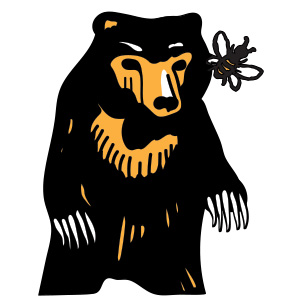
Take C&D's Sun Bear, for example. It probably isn't a good idea to smoke tobacco flavored with honey when trying to avoid bears. These animals like honey; they like all food. Bears eat anything and possess olfactory senses that are superior even to dogs', so they'll smell our tobacco for miles and it's best not to smoke anything that may have a scent of food. For safety, avoid Aromatics; anything fruity, citrusy, nutty, caramel, buttery, sweet, vanilla, raisiny, or figgy may be interpreted as part of a bear buffet. Gravitate instead to blends that project leather, wood, earth, or other natural non-consumables. English blends are good choices because they can smell like campfires, and while bears are not overtly repelled by fire, they don't typically eat it.
Choice of Pipe to Smoke in the Wild
It's better to leave our high-end artisan pipes at home when exploring the wilderness. A poll of pipe-restoration experts has revealed that bear-chewed pipes are particularly difficult and costly to repair. Even without bears, falling off a cliff, plunging over a waterfall, getting stuck in quicksand, or being struck by lightning can damage a pipe, so leave the museum pieces at home. Take pipes that are less heartbreaking to replace: Corn Cobs, basket pipes, or that unfortunate Billiard that's permanently ghosted with a tobacco we wish didn't exist. We all know a tobacco like that. For me, it's Erinmore, which should be banned by international treaties for crimes against civility. Its wretchedness knows no limit. I believe it is siphoned from the fetid primordial swamps of our most horrifying nightmares and made physical by maliciously depraved evil necromancers. (I work in the Smokingpipes Marketing Department, by the way, so do order your Erinmore now. Free shipping over $95!)
Pipes that whistle generally do so because of some flaw in the airflow, and we avoid them, but wildlife experts agree that making noise while hiking notifies bears of our presence so they can follow their instincts and keep away. Whistles are often recommended, so perhaps that one whistling pipe that we can't get rid of because the shape is too perfect could find its best employment here.
It probably isn't a good idea to smoke tobacco flavored with honey when trying to avoid bears.
When a Bear Approaches
Bears approach humans for various reasons. Perhaps we smell like the hot dogs we cooked for lunch, or we've simply stumbled upon a bear as it goes about its daily routine and we surprise it. Maybe we're roughhousing with a couple of cute bear cubs we've happened across when their mother notices and decides we are unqualified caregivers, possibly because of inter-species prejudice against smokers.
Wildlife experts agree that the most important aspect of a bear encounter is to remain calm. Panic, fear, and running away only attract a bear, so it's important to concentrate on proper smoking cadence to maintain one's tranquility. Pipe smoking is among the most meditative and soothing activities known and contributes to serenity, even in tense situations. Running interferes with correct breathing cadence for pipe smoking anyway and should be avoided for that reason alone.
Avoid eye contact with a bear. Eye contact sends the message, "You think you're tough? You want a piece of me? Come get it, loser." Bears will accept that challenge. By averting our eyes, however, we send the message, "I'm nobody in particular, not tasty in the least, just moving along slowly. Oh, look at that, a butterfly." It doesn't always work. Even when projecting docility, we may find that a bear will still want a taste just to see what we're made of. (Spoiler: We're made of meat, and we don't want the bear to make that inference).
bear-chewed pipes are particularly difficult and costly to repair.
If the bear maintains an interest in us, it's time to make ourselves look big by raising our arms and taking up as much space as possible to appear more challenging than is worth the bother. Our tobacco smoke can help with this strategy. While up to now we've been maintaining a slow puffing cadence to achieve great flavor and relaxation, when a bear is charging we should consider changing tactics.
We might dissuade a bear from further investigation by now employing more aggressive puffing, building a large cloud of smoke to help us appear more formidable and intimidating, like the Wizard of Oz emerging from a great billowing cloud of smoke. There's never been a report of a bear attack on the Wizard of Oz (despite the prevalence of lions and tigers and bears. Oh my). Don't overdo it, though; there's risk of damage to the pipe from overheating, and puffing too fast can undermine the flavor of the smoke.
Smoking like that while arm waving requires a firm clench on the pipe stem, and that dynamic brings us to one of the most important components of successful smoking during a bear attack: rubber pipe bits.
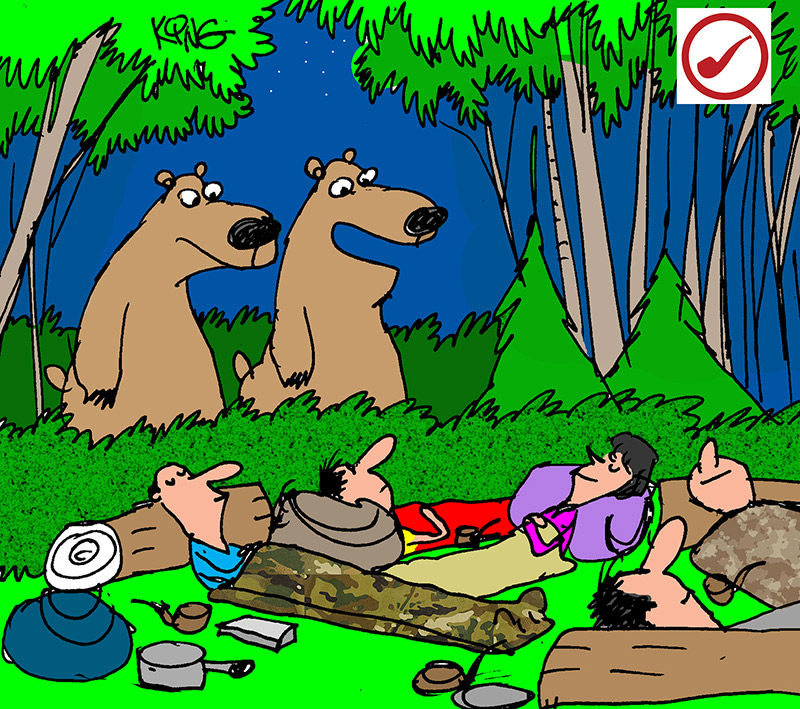
Rubber Pipe Bits
During a bear attack, we need our hands free to extend, wave, and cover our carotid arteries. Clasping them in prayer might also be advised. The tense situation may cause us to apply more bite pressure to the stem than is healthy for a pipe. A rubber pipe bit makes the pipe easier and safer to clench.
Panic, fear, and running away only attract a bear, so it's important to concentrate on proper smoking cadence
With all the mauling and stomping, we might lose bite grip and risk dropping and damaging the pipe, and that should always be avoided. There is little time during a bear attack for loading a fresh pipe should the first become damaged with a broken tenon, so it is paramount that we maintain pipe control, and rubber pipe bits contribute to that control. They are recommended for wilderness excursions and emergency situations. Rubber pipe bits should be part of any survival kit.
building a large cloud of smoke to help us appear more formidable
First Line of Defense
Bear spray is the foremost deterrent for an approaching bear. It's like pepper spray but worse. Bear spray is superior to firearms because shooting a bear causes only mild irritation and possible exasperation. It is imperative, however, not to let bear spray get onto or into our pipes. If you think Erinmore will ghost a pipe, imagine bear spray. They're comparable in flavor and appeal but bear spray stings more.
There's some hope of cleaning bear spray from a smooth pipe, but for sandblasts, rustications, and cobs, it's a losing proposition. The spray will remain in the tiny crevices of textured pipes, so measure the prevailing wind and eliminate its use if there's any chance of contact with the pipe. A bear-sprayed pipe is a goner.
Other Deterrents
Depending on the type of bear, other methods may prove advantageous. Different strategies must be employed for brown bears — including grizzlies — and black bears. If it is inevitable that the bear means mischief, playing dead with brown bears is the best defense, after avoidance and bear spray. A grizzly will stomp, claw, bite, and gnaw on you for a while, but if you maintain good smoking rhythm and remain calm, it will lose interest. Don't relight your pipe when playing dead.
There is little time during a bear attack for loading a fresh pipe
A fetal position is a good starting point, leaving as few easily snappable limbs exposed as possible, but it's better to splay yourself face down on the ground with your legs spread to avoid letting the bear turn you over and expose your smoking pipe to potential damage.
Here's where a good backpack becomes an advantage, providing protection from the claws and teeth worrying our backs. It's especially useful if we've had the foresight to load it with tobacco tins in case we become lost. No one wants to be lost in the wilderness without a good supply of tobacco.
Tobacco tins in a backpack can provide a protective layer when we're being mauled. Round or rectangular flat tins in multiple layers are somewhat better than the more cylindrical versions, which are slightly more prone to collapse under the weight of a bear, who will, at some guaranteed point, be standing on you. These tins are likely to be punctured, though, so be sure to smoke or store their contents shortly after the encounter. Tinned tobacco will arrest its aging process if pierced by bear misconduct.
If you think Erinmore will ghost a pipe, imagine bear spray
Invest some time in playing dead. Bears are known to hang around to see if you get back up, so waiting 10 or 20 minutes is advised. This is the hardest part because you must resist smoking your pipe, which is still in your teeth if you've done it right.
Because of all the exertion, moisture is likely to have built up in the pipe, not only from the tobacco but possibly from saliva and tears. If the pipe gurgles while you're playing dead, it can give you away. Bears are smart enough to know what it means, so no matter how bored you become or how enticing your tobacco may be, refrain from smoking a wet pipe while waiting for the bear to lose interest.
Black bears won't fall for the playing-dead routine. Black bears want to eat you, and fighting back is the best recourse. When a bear is snarling in your face — spittle flying, rage boiling over, jaws snapping — resist the temptation to tap out your burning dottle on its snout. Bears don't like that. It might work on an alligator or mountain lion, but not a bear. Certainly, its behavior merits that response, but keep the pipe in your mouth and punch the bear in the face or hit it with rocks or whatever is on hand. A pipe can contribute to the defense strategy, though, with some shapes more favorable than others.
Pipes Appropriate for Bear Attacks
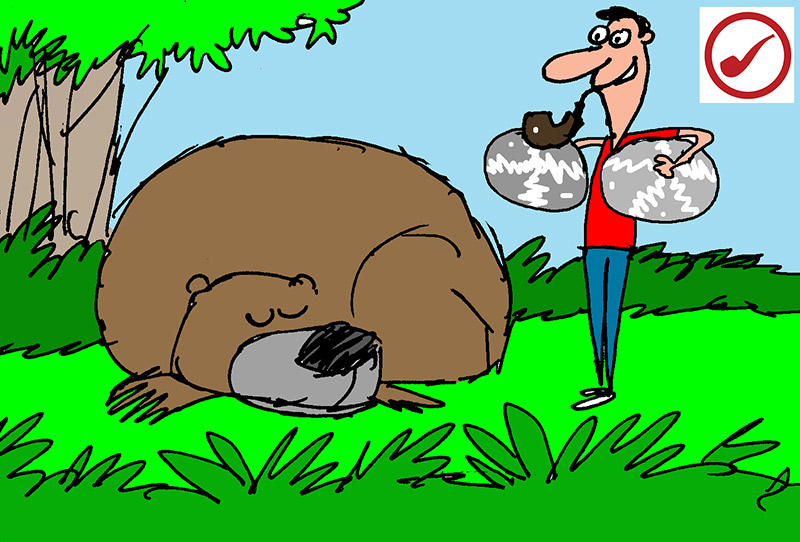
Large pipes are obviously useful against bears. Savinelli Churchwardens, Ropp Gargantuas, Peterson Churchwardens, and other extra-large pipes can be formidable weapons but only as a last resort. Bears have extraordinarily thick skulls that are unlikely to succumb to such attacks as may be launched by a Churchwarden.
leaving as few easily snappable limbs exposed as possible
Large pipes aren't particularly good for hiking and camping anyway. Outdoorsmen prefer smaller pipes, but there are some shapes that are inherently weapon-like. Take, for example, Oom-Pauls, which are bowl-centric enough to be worth swinging at a bear. Becker pipes often manifest pointed heels that might be used to poke at the face of a bear and perhaps amuse it enough to move along and go entertain its friends with the anecdote.
The Pickaxe shape, like this Dunhill, can be an efficient gouging appliance. However, pipes in general will do little to dissuade a determined bear, and we certainly want to avoid damage to any pipe. It's better to keep a pipe out of the fray and perched in our teeth, instead availing ourselves of any rocks, sticks, or jagged protruding bones that may be convenient.
After a Bear Attack
Should you survive a bear attack, your first impulse will be to relax with a good smoke, but medical attention should probably be concurrently pursued. There will be time for more pipes after the reconstructive surgery.
moisture is likely to have built up in the pipe, not only from the tobacco but possibly from saliva and tears.
Remember, a bear attack can be a positive experience. Like a plane crash, a bear attack carries with it bragging rights for life. You'll be the envy of everyone as you display your gnarly scars and retell their riveting story from the comfort of your motorized wheelchair. You'll show off the pipe you were smoking when you dispatched that formidable beast, expanding upon your own heroics and lapsing poetic about the pipe's fine smoking attributes. However, the most important lesson to incorporate into our day-to-day lives is that pipes enhance and maximize the favorable aspects of any adventures that come our way, including bear attacks.
You may also enjoy:





Comments
I thoroughly enjoyed this one, Mr. Stanton, as I did your very informative article from April 1. Thank you!
I made the mistake of reading this while eating my homemade omelette. Have you ever had omelette come out of your nose with chunks of onion, black olives, grape tomatoes, and cheese? Not pleasant, but more tolerable than a bear attack. Maybe this is foreshadowing of C&D's Sun Bear 🐻 🍯 🐝 release. Thanks for the laughs, Chuck...I think. Looking forward to the release of your anthologies from P&T Magazine.
That was an enjoyable read; I was pleasantly reminded of Patrick McManus. As an old woodsman, I concur that cobs are the smart choice for sylvan smokers. I will also add that while the Czech pipe tool is an indispensable item for every-day-carry, I do not recommend it for bear defense purposes.
Anthologies? Chuck Stanion ANTHOLOGIES? Anthologies from P&T Magazine? When? Where? How do I get in line??? Please, please--inquiring minds need to know.And PS, "Bear Attacks" once again proves Mr. Stanion is the indisputable Mark Twain of the pipe smoking multiverse.
Listen up youngsters! This is the voice of experience only countless encounters in the wild could provide! Why re-invent the wheel? LEARN from the lessons of those who've paved the road before you! Maybe you think you're smarter? Maybe you're thinking to yourself, 'Its just a stupid bear, and I'm a sofisticated pipe smoker with a rugged austere aura, and steely gaze... And Chuck is a wus... And I can smoke my Great Dane any where I damn well please!'Nevermind! Youngsters will never listen and have to figure out everything the hard way!Just remeber you're gonna need that jaw bone to clench down on that acyrlic.
Thank you for this wonderful article, Chuck.I will be prepared, if a bear visits my garden in Munich (Germany). Maybe i will go over to wear a vest stuffed with the flat 50gr. tins to form some kind of an armor. Greetings Andi
Ha, ha! I have a whistling pipe! ...but not yet ghosted with Erinmore. Half way there. You got me to watch Shane Ireland's "Tasting Notes: Erinmore Flake" episode. Seems harmless enough. Well, I won't say you didn't warn me. Cheers!
I just smoked a bowl of Sun Bear this morning.
"There's never been a report of a bear attack on the Wizard of Oz" Munchkins just don't taste that good but, I wouldn't know.