


 |
|
 |
|


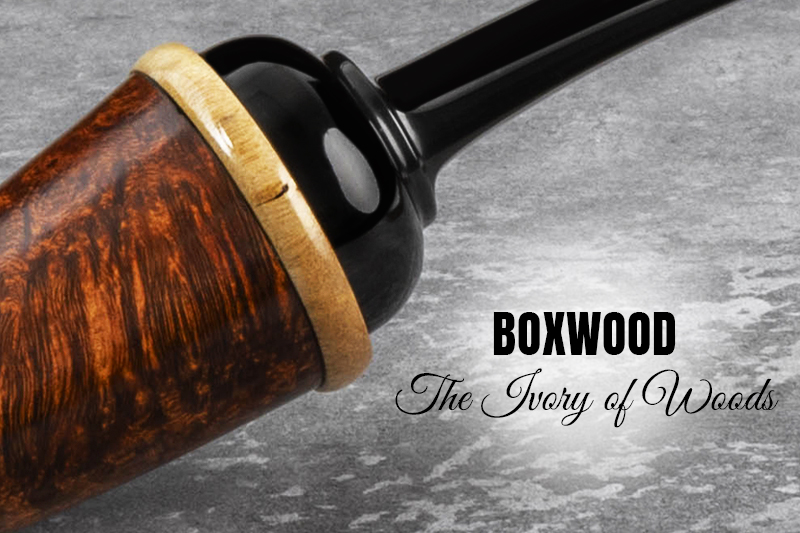
The variety of pipes available is staggering; from shapes and materials to finishes and stem colors, the choices are unending. Additionally, some of us like a pipe with an accent of some sort: silver, gold, acrylic, brass, vulcanite, stainless steel, mammoth ivory, dozens of different exotic woods, and even meerschaum. Some pipes look better without an accent at the end of the shank, but some are elevated by them and undoubtedly stunning.
The choices for accent materials are numerous, and the decision to employ a material in addition to briar and vulcanite (or acrylic) is based on the carver's artistic sensibilities. Most pipes do not employ accents and thereby maintain a sense of traditionalism and utilitarianism. Smooth pipes, however, are the only ones that can have no accenting visual component at the end of the shank (except for flaring Freehands, those accommodating push stems, and some non-traditional designs).
If a pipe is sandblasted or rusticated, the briar at the end of the shank always features a transitional smooth band of the same briar, which is necessary to introduce the smooth base of the stem. That smooth band is an accent of sorts, though the most subtle of examples.
Boxwood is one of the most beautiful and perhaps underrated pipe-accent materials. It's a light-colored, lustrous wood with an unmistakable sheen that lasts for the life of a pipe. Many artisans take advantage of its positive qualities. It provides excellent contrast against dark stains, beautiful grain so tight as to be almost invisible, and an extraordinarily smooth, non-porous surface.
Early Boxwood Carving
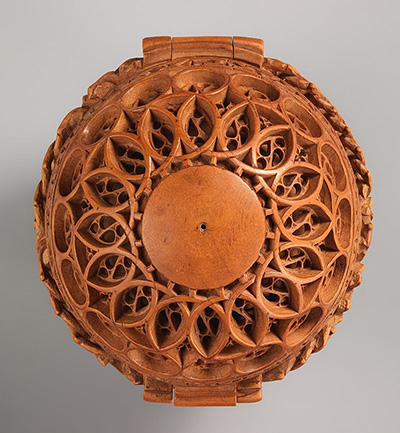
Boxwood has been used artistically for at least 900 years. Its carving originated in China's Zhejiang Province and achieved an elevated status in the mid-1600s. It was initially and primarily used for carved dragon-themed stools, which became increasingly ornate. Their popularity advanced due to the conviction that they drove away evil spirits and paid tribute to one's ancestors.
Boxwood carvings began to spread and differentiate. Many were employed for religious motifs, gradually developing into decorative household objects. In the first half of the 20th century, China exported these carvings worldwide.
Outside of China, before wide exportation, other artisans discovered boxwood's advantages, such as its low porosity and high density, which allowed carving at a micro level. During the Renaissance, ivory was the preferred medium for intricate carvings, but the ivory trade foundered after the Ottoman Empire conquered North Africa. Artisans turned to boxwood, which shared attributes with ivory.
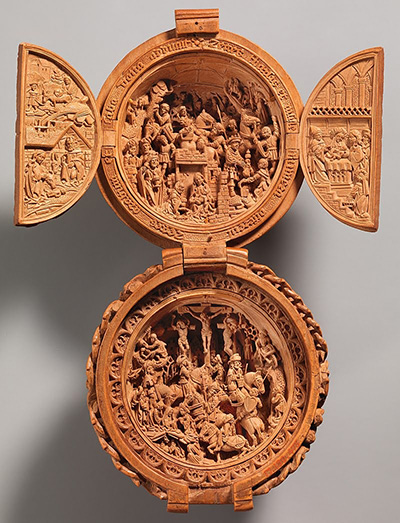
In terms of such detail, among the most impressive boxwood carvings were gothic miniatures of incredible detail produced about 500 years ago. They include prayer beads, rosary beads, and small altarpieces. Their construction was a mystery until recently when CT scans and 3D analysis revealed that these tiny artworks were made in separate pieces from the same fragment using almost microscopic pins. There are no records of the artists who originated the technique or the carvings themselves.
Carvings made from boxwood are necessarily small because boxwood does not reach large dimensions. We won't find boxwood flooring, for example. It takes a boxwood tree 50-90 years to reach usable size, much like briar burls, and even then, it rarely reaches six inches in diameter. It's an expensive wood, available only from exotic wood purveyors like Rare Woods USA and Griffin Exotic Wood.
Today, boxwood is mainly used for chess pieces, handles for knives, chisels, and other tools, and for pens, figurines, walking-stick knobs, kitchen pull handles, musical recorders, bagpipe chanters, and of course, pipes.
Boxwood in Pipe Making
Pipe makers have leveraged boxwood for many creative applications. Peterson of Dublin, for example, uses boxwood for the mandrils necessary in spinning silver. "We use it," says Jason Hinch, Silversmith at Peterson, "because it's smooth, hard, and easy to turn, unlike other woods that crack easily."
The boxwood mandrils are turned on a lathe to the shape of various shanks, and the silver is spun to the correct size. The process is viewable starting at the six-minute mark in the following video:
Where Pipe Makers Find Boxwood
Many pipe makers "know a guy" who can provide boxwood, or they harvest it themselves. They need it in only small quantities, so a little lasts a long time. For Peterson, Jason says, "We get our boxwood from a man named Frank in County Wicklow who owns land that grows boxwood, but I've never had to source from him. We've had a very large supply for as long as I've been at Peterson; it will last for years."
artisans discovered boxwood's advantages, such as its low porosity and high density, which allowed carving at a micro level.
Tom Eltang uses boxwood for a variety of caps and accents. "The boxwood we have," he says, "is from an old pipe factory from the former East Germany. We bought it many years ago."
Pete Prevost of BriarWorks uses boxwood for his own artisan pipes, but little for the BriarWorks and Moonshine pipes. "We have used some boxwood rings as adornments on BriarWorks and Moonshine pipes that were custom-cut for us and sourced from an Italian ring supplier. The quality wasn't quite as nice as we typically use for handmade pipes, but they still had a cool look for an accent ring. There was definitely a lot more sanding and steps involved in the finishing process, unfortunately, so we discontinued them."
Pete found a local source of boxwood for his own Prevost pipes. "I found some right here in Tennessee. There was a huge boxwood that was being torn out that was supposedly about 100 years old." Pete was able to get several large pieces. "Many of the branches were a few inches in diameter. It was very wet when I got it several years ago, but after a few years of drying it has become workable. But the downside is, there are lots of flaws to work around, similar to using briar."
Jeff Gracik of J. Alan Pipes has cut his own boxwood as well as sourced it elsewhere. "I've got what's been sold or given to me as European boxwood and Japanese boxwood. There's a distinct difference between that and the few pieces of boxwood I've cut myself or sourced elsewhere. European boxwood often has an almost waxy texture to it. It cuts and polishes beautifully. That contrasts with the Japanese boxwood, which is darker, drier, and more porous. The boxwoods that I've cut myself have characteristics that are between the others — lighter in color, but drier, without the waxiness that I find so appealing about the European variety."
There are about 200 species of boxwood, and as Jeff noted, there are some differences. According to the Griffin Exotic Wood website:
Boxwood is expensive owing to scarcity of good material, and the very long time it takes to grow to a usable size (at least 90 years minimum and even then under unusually good conditions). There are many types of boxwood but sempervirens is the type most often sold on the world market. We have found other boxwood types like buxus macowannii are equal in quality to the best of the sempervirens. The speed the wood grows has an effect on its quality, so the wood from Turkey which grows the fastest and largest usually has grain lines further apart and is therefore not always equal to the slower-grown wood.
Most wood carvers and pipe makers, however, don't know the particular species they are using. They know only whether the quality is up to their standards. Adam Davidson is another carver who sourced his boxwood from a friend: "I bought boxwood probably 15 or more years ago. Back then it was pretty hard to find because there could be less expensive boxwood logs that were large, but the better stuff is actually smaller. I remember I was talking to Nanna Ivarsson at a Chicago show about boxwood, and she sent me a box that was probably from her personal collection because she and Lars would go out searching and cut their own. But Nanna sent me quite a bit of boxwood, and I've been using that ever since."
Friends in the pipe-making community often help one another; non-competitiveness is a hallmark. "I had some boxwood from Peterson as well," says Adam, "and what I noticed is that the Danish boxwood is more dense than the Irish boxwood. So there are different types."
Why Boxwood?
It's a beautiful hardwood with its own unique character. "I love the natural earth tones of boxwood," says Pete Prevost. "It matches really well with most pipe-and-stem combinations. I think it looks especially good on a dark sandblast or dark smooth pipe."
Boxwood isn't necessarily perfect to work with, however. "One of the most annoying things," says Pete, "is that it stains easily when buffing. I've messed up pieces that are almost finished when buffing with tripoli compound. Sometimes the wood can get the reddish-brown compound embedded in the grain and it's very hard to get out. Sometimes you have to sand it down significantly to clean it up. I avoid using tripoli compound altogether now when finishing boxwood. I just sand it to a very fine grit and then skip the tripoli and move straight to the white diamond polishing compound."
European boxwood often has an almost waxy texture to it. It cuts and polishes beautifully.
Adam Davidson finds that boxwood appeals to his minimalist personal philosophy. "I'm not minimalist in terms of shaping," he says, "but I am in terms of accents. And I have this neutral palette that I like. I prefer accents that may have been found on pipes 50 years ago. The Ivarssons used boxwood, bamboo, silver, horn, and not much else. I do the same thing. I used to use different hardwoods once in a while, but I really liked how neutral boxwood is. And boxwood is hard. For a ring on a pipe, you can face off a wafer just from the cutting tool and it's almost polished afterward because it's so dense."
He also enjoys the experience of working with it. "The fun detail is that as you're turning it on the lathe and cutting it and sanding it, the oils in the boxwood are very pleasing. When you're working with boxwood it actually smells like buttered popcorn."
While Adam finds boxwood to be relatively neutral in color tone, he enjoys some of its variation. "It does have some different colors. But for the most part, it's this orange-ish-yellow ochre color that I find pleasing. And you'll have little pieces of boxwood that have some grays or some greens or some browns in it. That's because, as Nanna says, for larger pieces, they liked to find some that were essentially diseased." Variation in color can occur when the wood is under stress, similar to spalted tamarind, which gets its distinctive patterning from fungus in the wood before it's stabilized.
"When you cut boxwood," says Adam, "you can sometimes find streaks of greens or something in there, but there's no grain, so to speak, that clashes with anything. That's why I like it; I can put boxwood on a pipe and it's this nice little ochre accent that doesn't have any lines to clash with the grain. That's just a personal preference of mine. I used to use black palm and snakewood and things like that, and after a while, I didn't like what the grain was doing in contrast to the bowl. It's kind of like having striped pants with a plaid shirt. So I like the neutrality of it, and that's why I use it."
Boxwood Stems
Some pipe makers have found the wood exceptional for various components of pipes. Boxwood stems, for example, are particularly popular. They're invariably straight stems; boxwood doesn't bend like vulcanite or acrylic. Wood can be bent with steam, and it's possible that there's a bent boxwood stem somewhere in the world, but it would typically be a prohibitive investment in time. Horn or amber stems are difficult enough to bend, let alone a wood as hard as boxwood.
Pete Prevost regularly makes pipes with boxwood stems. "I've been making hand-cut stems out of boxwood for about four years now. When I've spent a few hours working on the stem and dedicated a large piece of boxwood, I tend to just leave little character flaws and not worry about starting a new stem when it's perfectly usable. I haven't smoked a pipe of mine with a boxwood stem yet, but I know some of the people who have my pipes with boxwood stems, and they seem to really like them. I always recommend that they don't clench the pipe though. I would think that over time, the stem would get soft and chewed up if you were to clench it. It just seems like it's better to take a little more care with the stem than you would an ebonite stem."
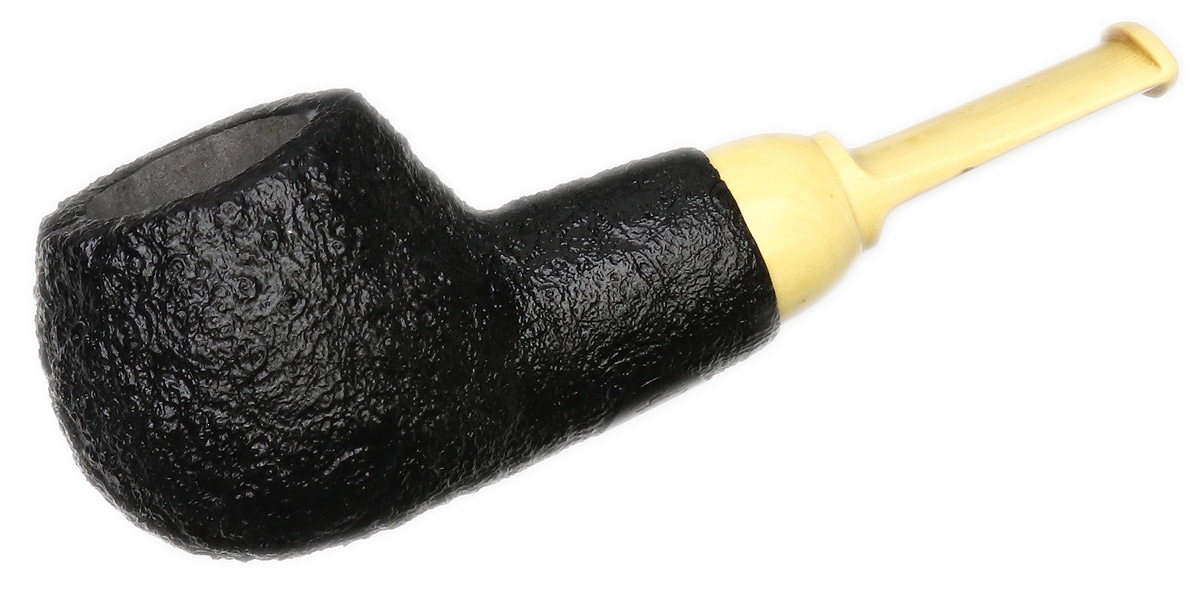
Pete Prevost
Castello has devoted considerable energy to boxwood stems on a number of their straight designs. Chris Askwith and others have also made boxwood stems. Boxwood has considerable character; its color and luster contribute handsomely to the aesthetics of a pipe.
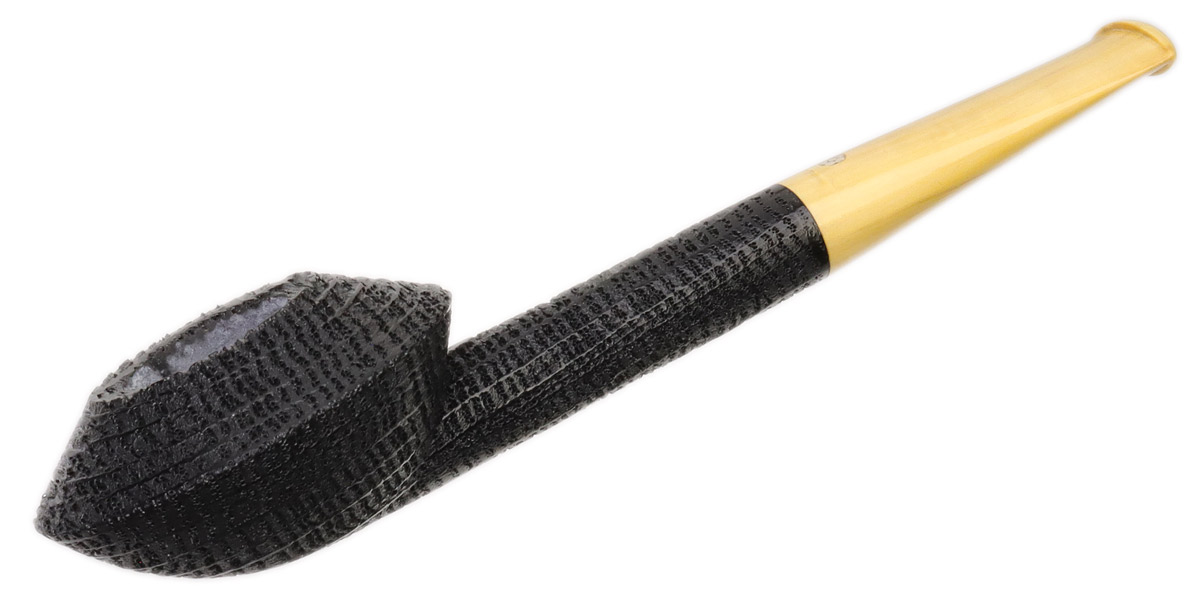
Chris Askwith
However, boxwood isn't as hard and resilient as vulcanite or acrylic and is less saliva-resistant for long-term exposure. "Boxwood or briar stems should basically hold up the same," says Adam. "Neither will be great if someone holds it in their mouth and lets it get wet. Teeth will also wear it down. It's durable enough to work and be interesting, but no one should expect them to hold up like vulcanite or acrylic." Boxwood stems will also discolor over time if regularly used.
One might ask, then, why even make boxwood stems if they don't hold up?
Like boxwood accents on a pipe, boxwood stems are primarily aesthetically pleasing: they look great, and they are fine to smoke. Just look at this Castello for an example of how beautiful the grained boxwood is in conjunction with the black army mount and darkly stained stummel:
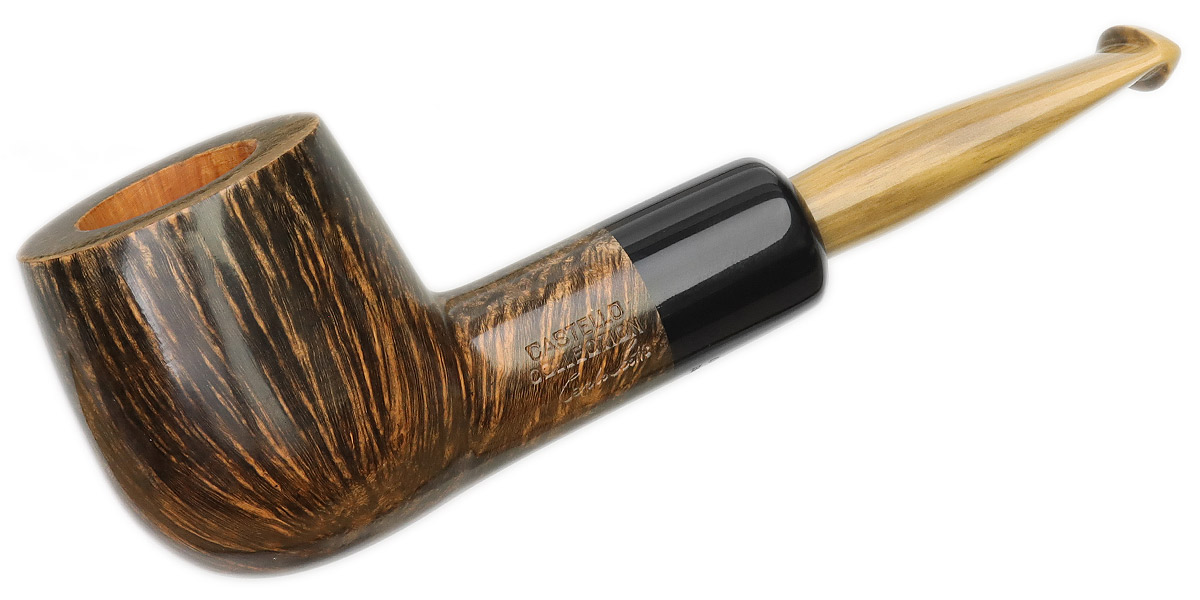
Castello
But they can't withstand repeated chewing and excessive exposure to the dampness of saliva – constant moisture harms wood. Pipe makers, well aware of this issue, always include an additional stem of vulcanite or acrylic. Pipes with boxwood stems invariably include two mouthpieces — the boxwood for its particularly pleasing appearance and its own smoking characteristics, and the other for long-term smoking and clenching.
you'll have little pieces of boxwood that have some grays or some greens or some browns in it.
Boxwood Pipes
On rare occasions, pipe makers will produce a pipe whose stummel is boxwood. Boxwood is almost as dense as briar and performs at a level similar to cherry wood, olive wood, morta, or other traditional non-briar mediums.
Here's a remarkable example, an Erotique shape by Ray Kurusu:
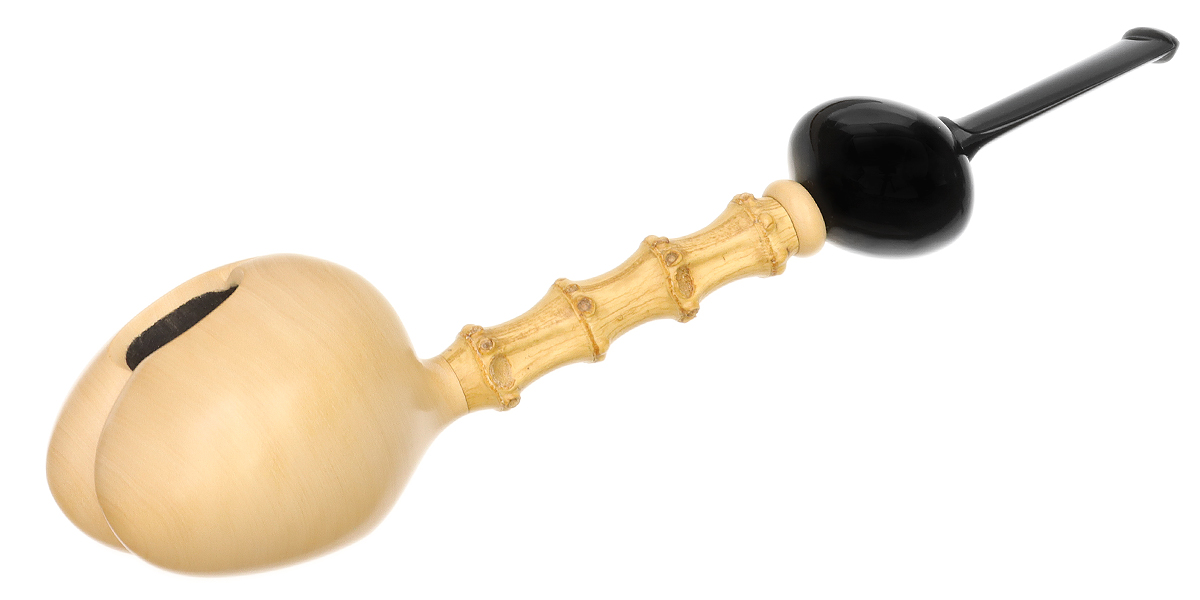
Ray Kurusu
Another is this signature Wasp shape by Wolfgang Becker. It additionally features a boxwood accent:
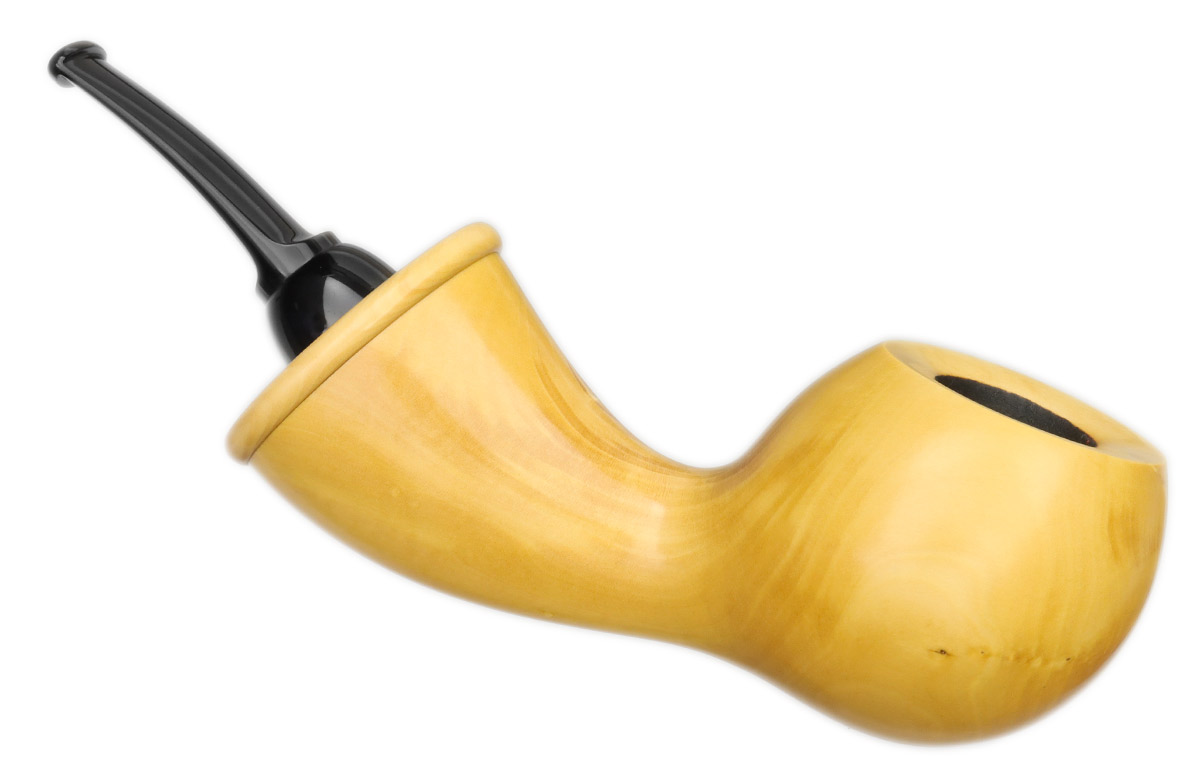
Wolfgang Becker
Here's a low-slug Scoop by Micah Redmond. This particular stummel actually reveals some grain that follows the form of the pipe:
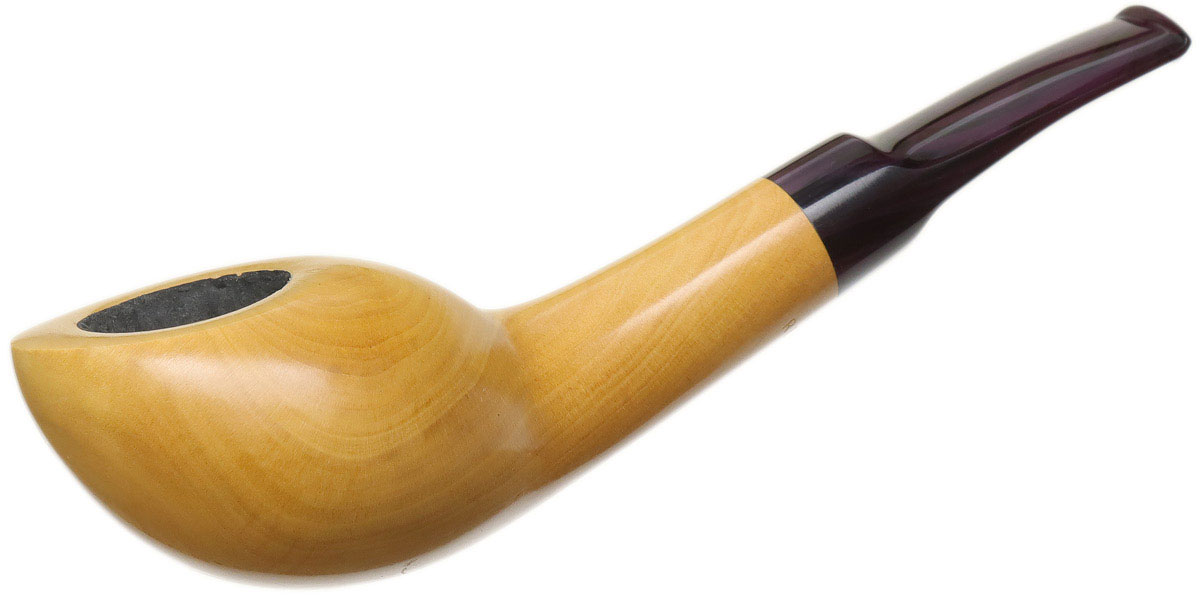
Micah Redmond
This Tomato by Jeff Gracik of J. Alan Pipes is made of boxwood and accented with horn:
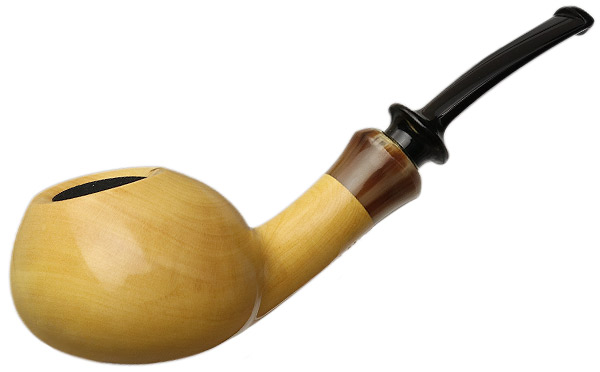
J. Alan
Other makers have combined boxwood with darker woods for dramatic effect, as with this paneled Dublin with cocobolo and brass by Micah Cryder of Yeti Pipes:
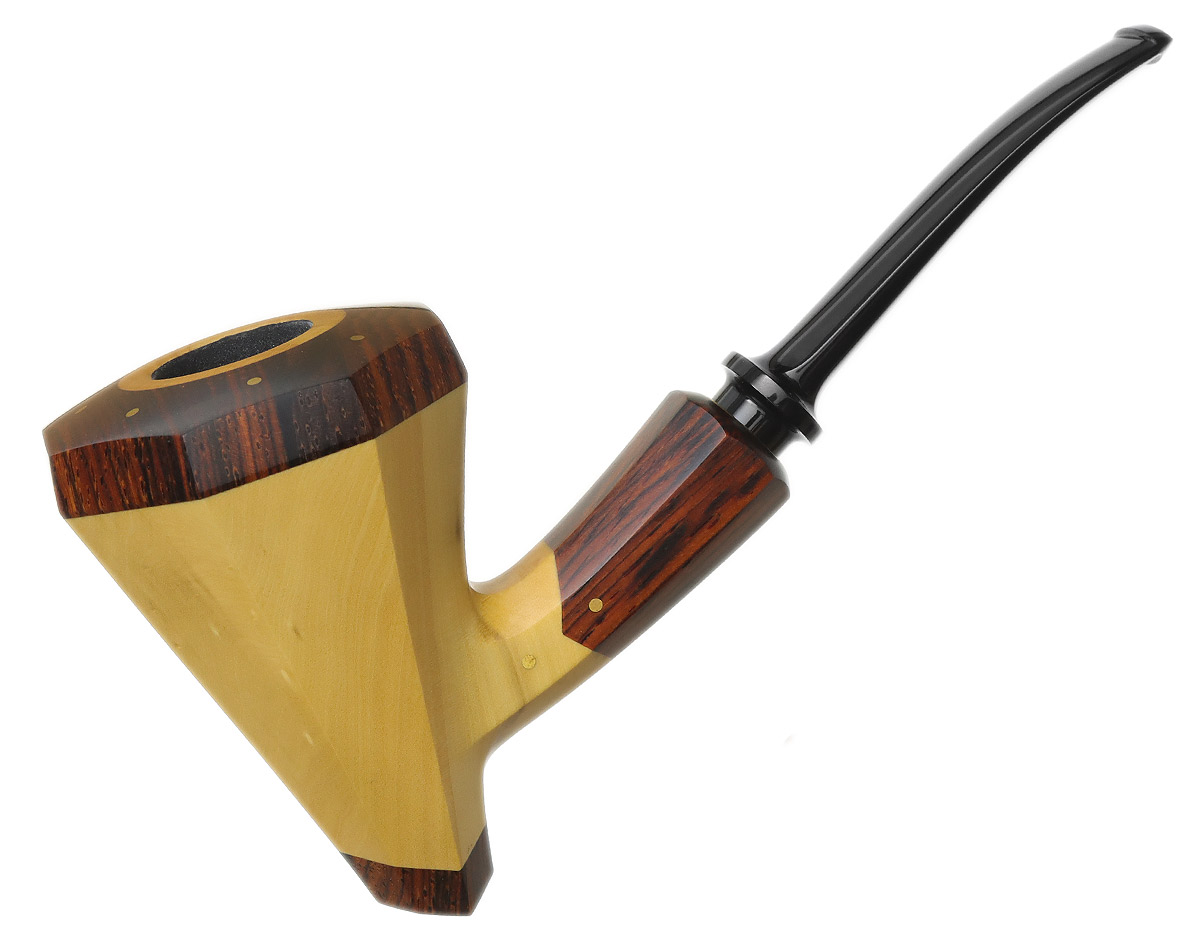
Yeti
Sometimes the pipe maker chooses not to contrast the lightly toned boxwood against a dark material, as seen in this Tomato with bamboo by Adam Davidson:
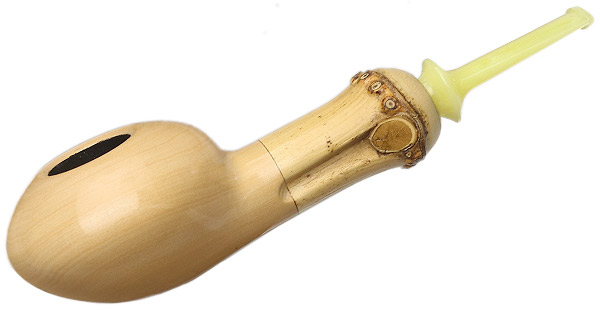
Adam Davidson
Boxwood Shanks
Shanks are the unsung heroes of pipe anatomy. Connecting stem to bowl is essential, and the transition from bowl to shank often reveals just how good a pipe maker is, because it's often the most difficult aspect to get right and it's pretty clear when it isn't. But the shank itself is an often overlooked component and certainly doesn't get the praise that a well-constructed stem or the grain of a bowl receives. It serves a valuable function but is not typically a heroic figure in the pipe world.
When made from boxwood, though, the shank achieves heightened notoriety. Tom Eltang has created several pieces with this theme, like this Pierced Fish:
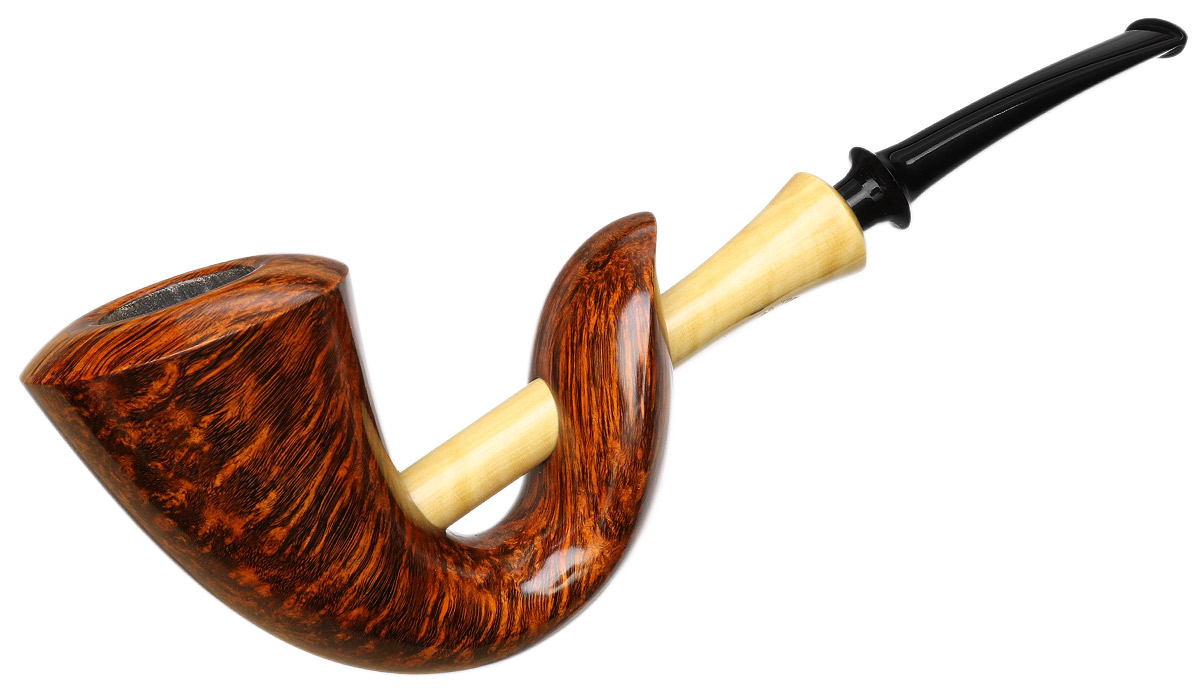
Tom Eltang
Another Eltang composition, his Standing Fish, likewise uses boxwood for the shank:
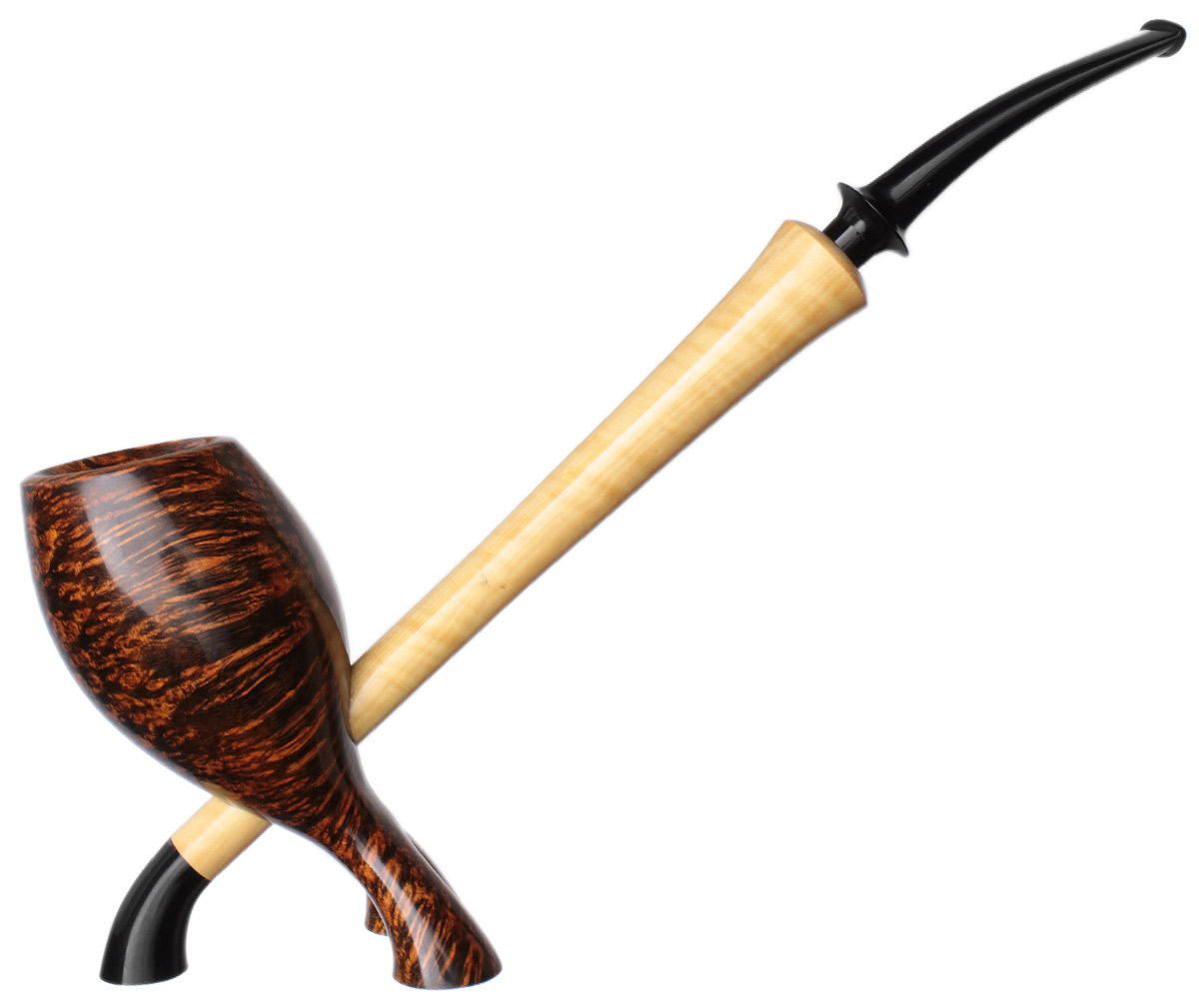
Tom Eltang
Butz-Choquin stepped outside of their norms for this long, segmented boxwood shank:
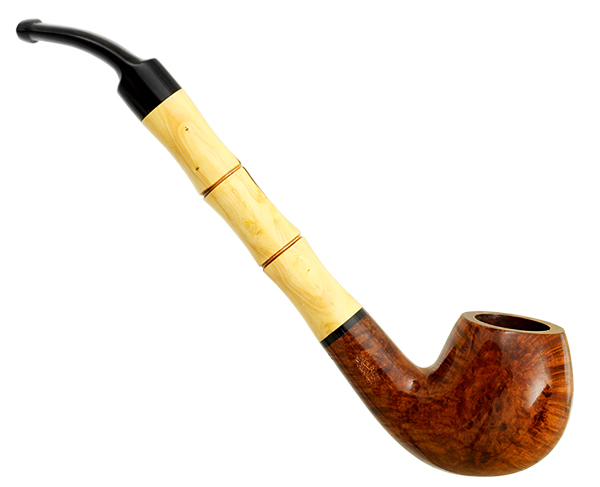
Butz-Choquin
Here's a pipe by Hiroyuki Tokutomi for which he carved the boxwood to look like bamboo:
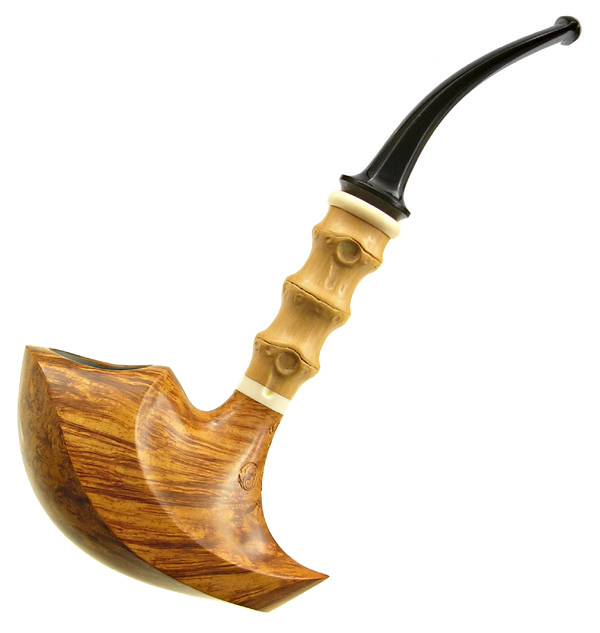
Hiroyuki Tokutomi
Boxwood Rims
We occasionally see pipes with boxwood rims, which offer spectacular contrast against darker bowls. Here's a rusticated Bell from Caminetto, their Christmas pipe from 1990:
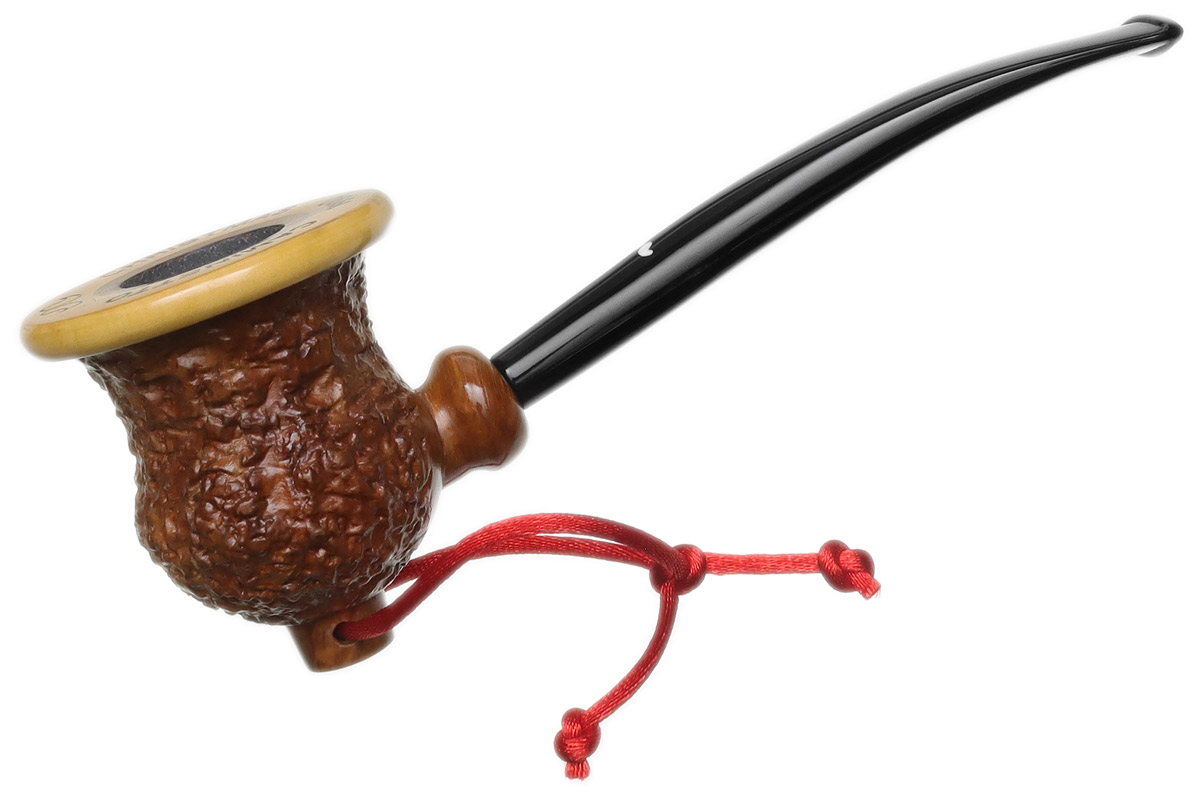
Caminetto
A more subtle approach was chosen by the W.Ø. Larsen workshop for this bent Brandy:
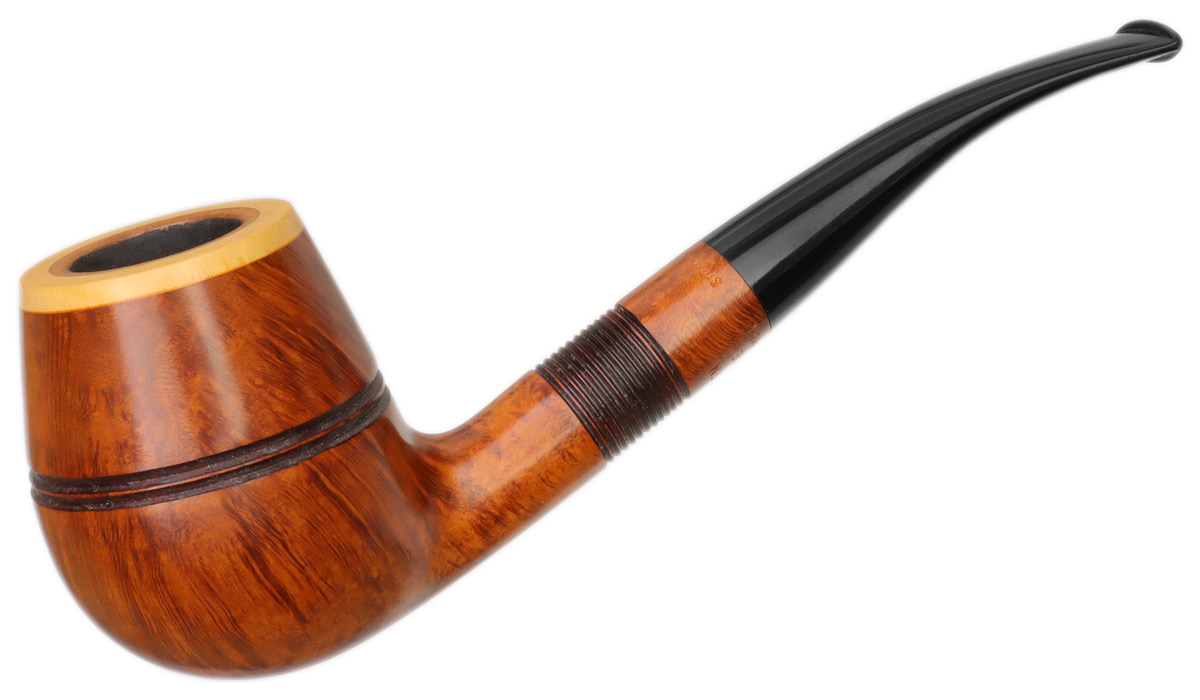
W.Ø. Larsen
Another boxwood rim was elegantly composed for this Cherrywood shape by Kent Rasmussen, who additionally utilized boxwood for the accent:
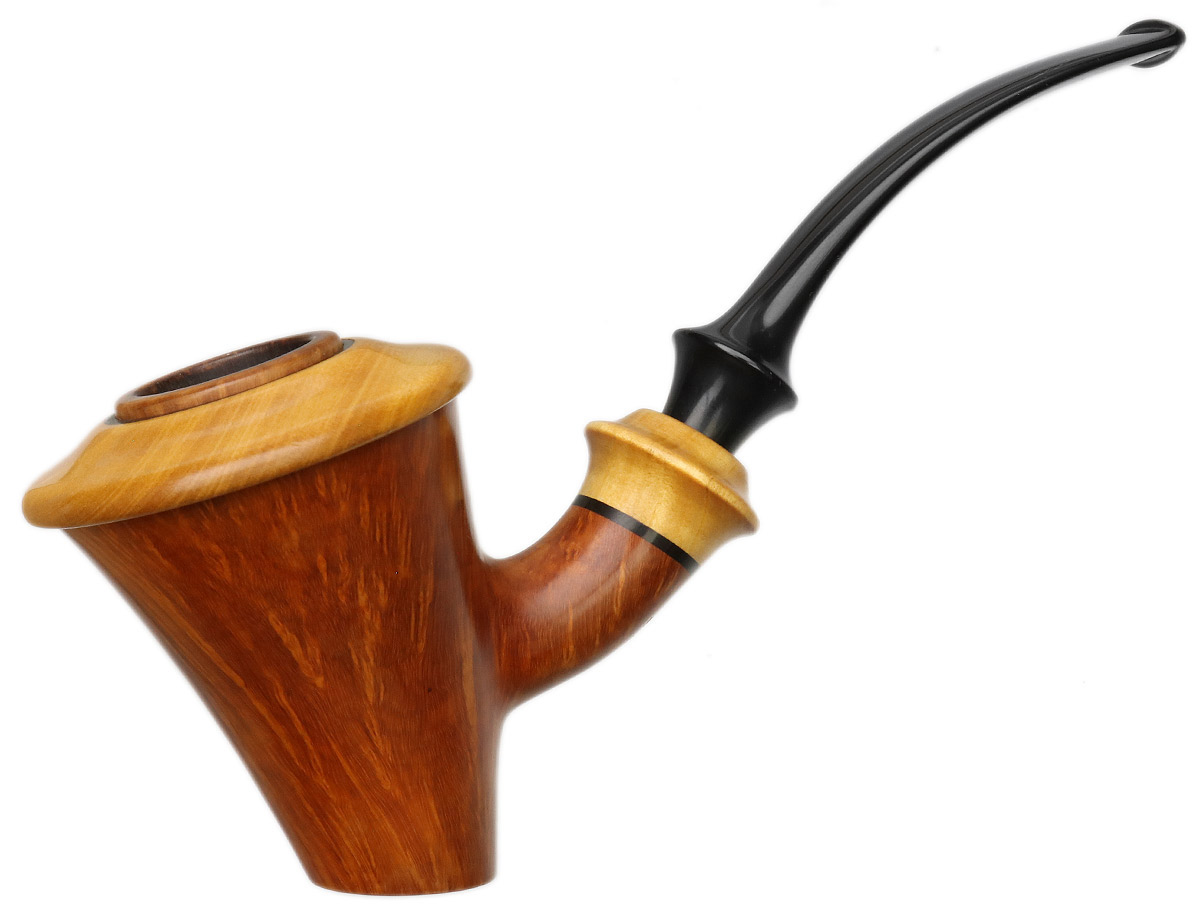
Kent Rasmussen
Calabashes
The Calabash is widely recognized for its serpentine S-shape and wide, domed chamber cap, traditionally of meerschaum, and the light color of boxwood admirably works in place of meerschaum. Take, for example, this remarkable Calabash by Adam Davidson. He made it for the 2023 Pipe Makers Exhibition, whose theme was alternate materials, challenging carvers to produce non-briar pipes. It's made of leather — not briar wrapped in leather, but leather itself, shaped and hardened and stitched with gold. The chamber cap and shank mount are both made of boxwood.
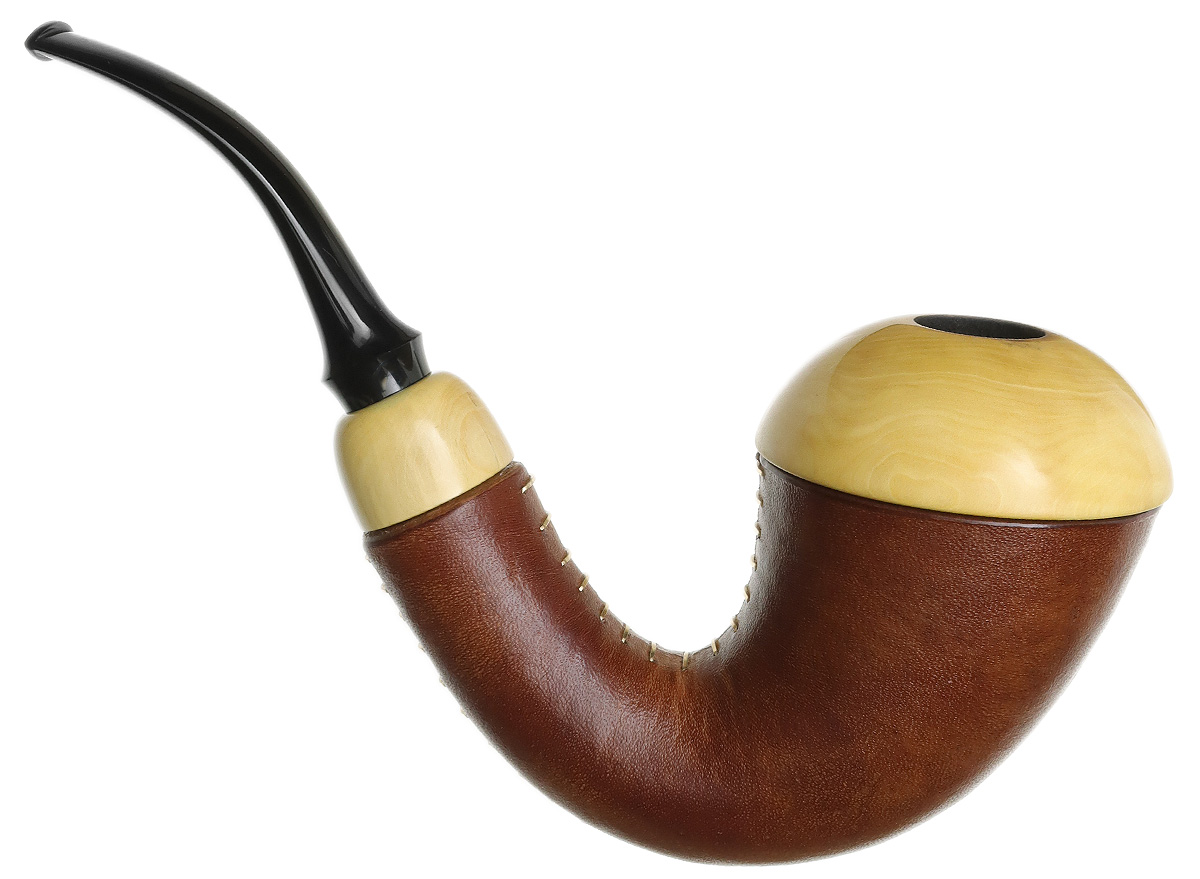
Adam Davidson
Not as traditional as a gourd Calabash but more traditional than a leather one, this piece by Ken Dederichs features a briar insert in the boxwood cap as well as a boxwood accent offering exceptional contrast against the undulating black sandblast of the stummel:
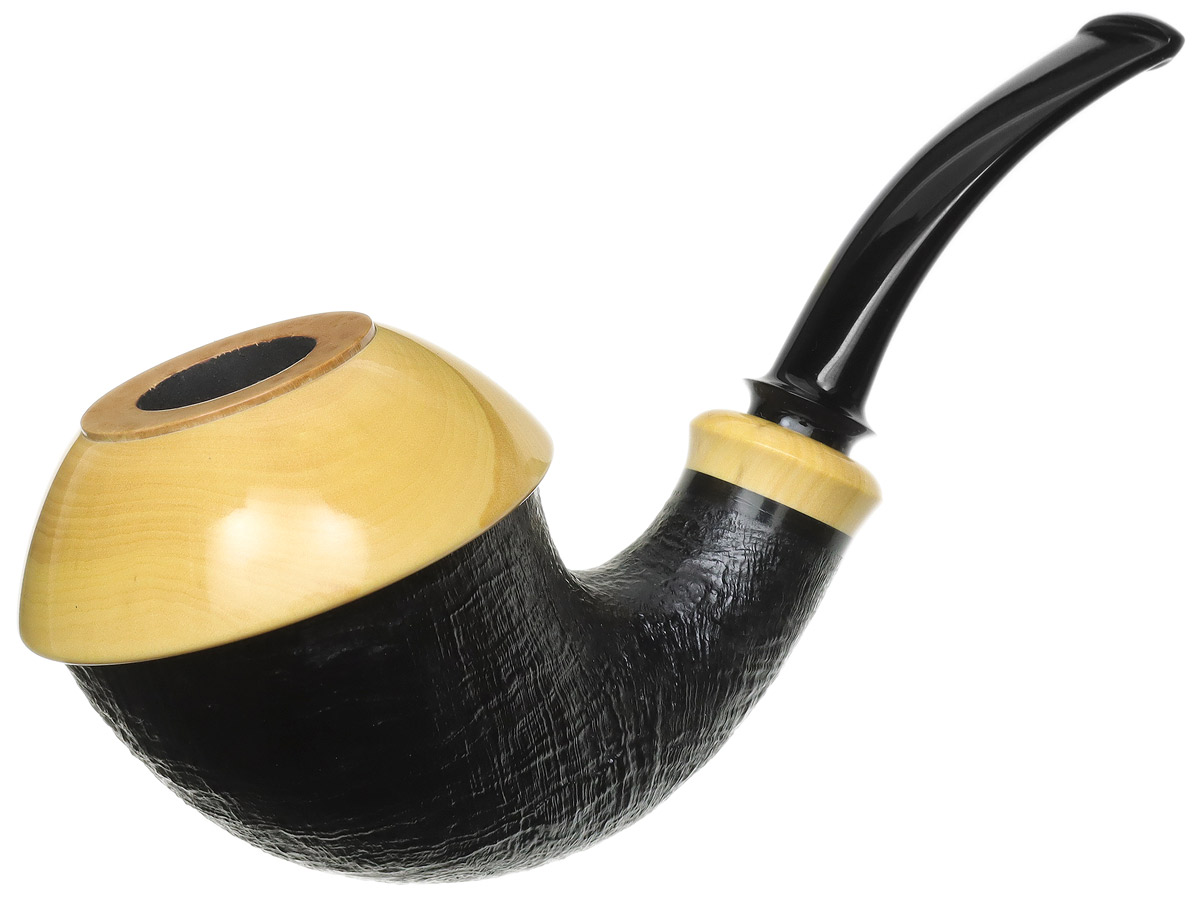
Ken Dederichs
Here are a few more Calabashes that capitalize on the handsome character of boxwood:
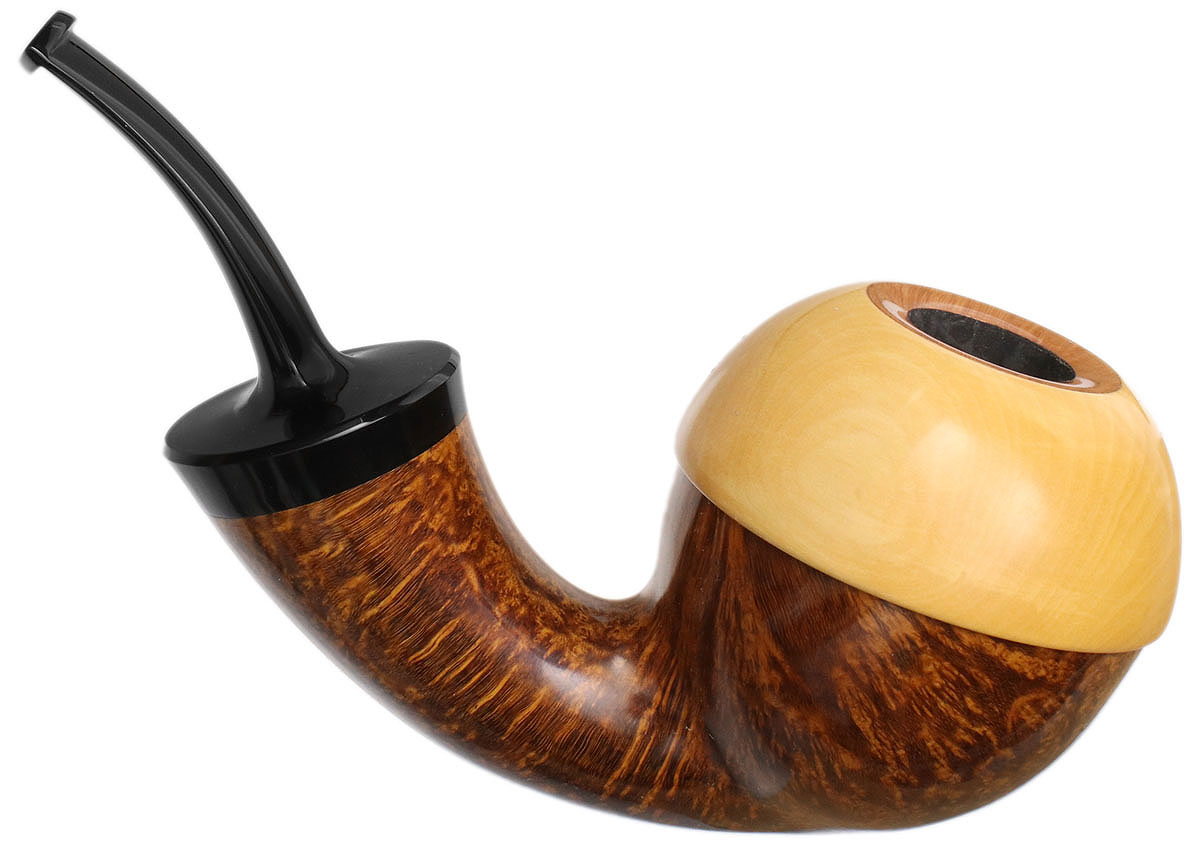
J. Alan
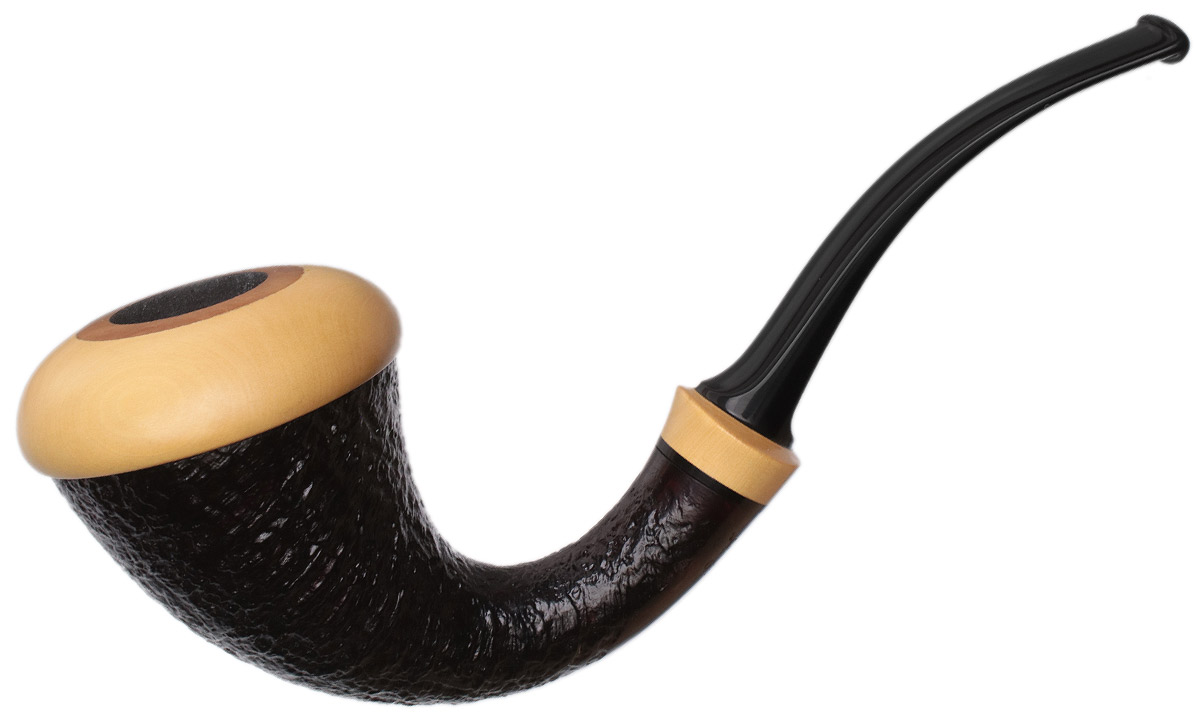
Cornelius Mänz
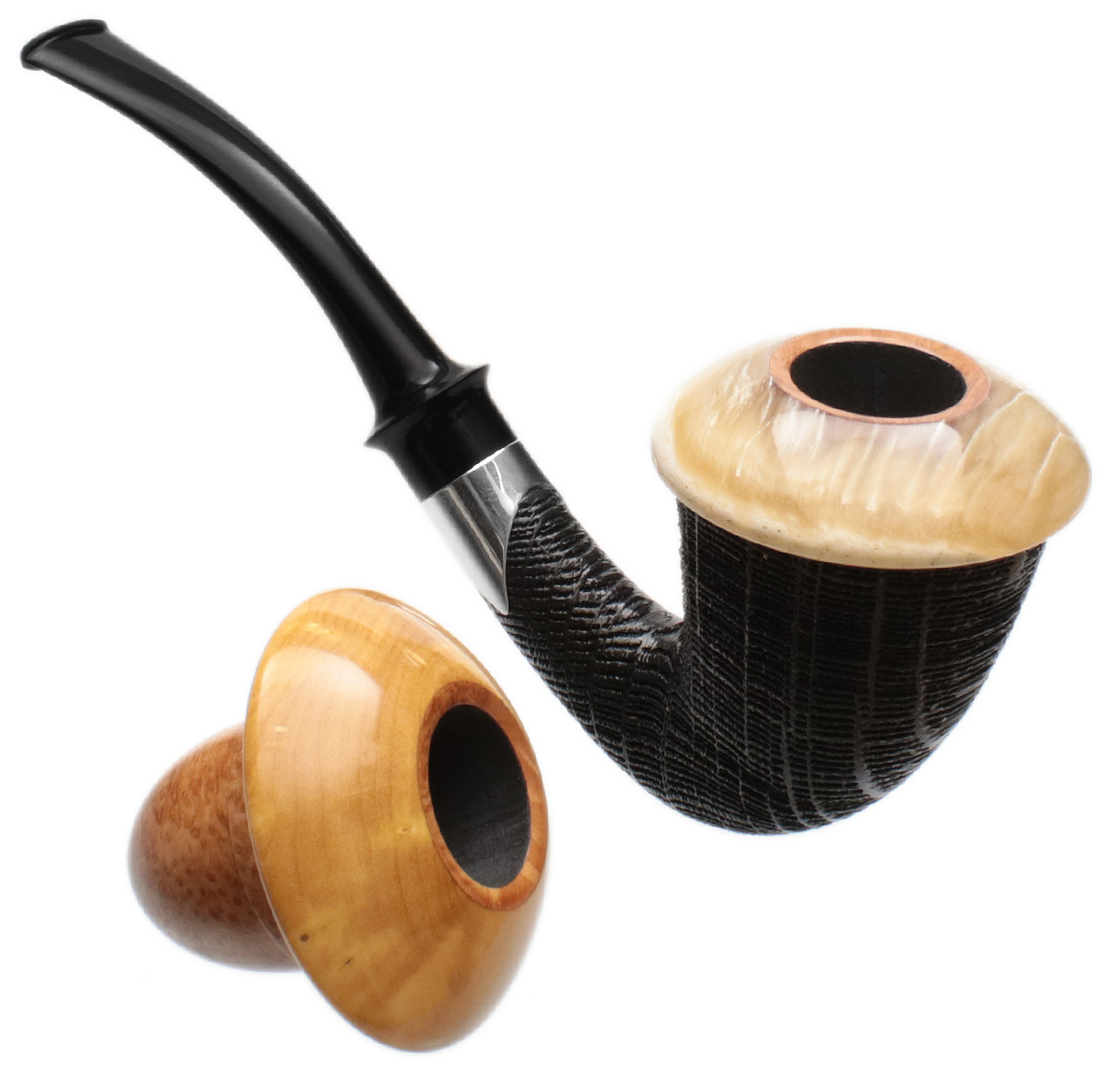
Morta Calabash by Tom Eltang. This pipe includes two different chamber caps, one fashioned from boxwood, the other from muskox horn.
Obviously, Calabash caps made from boxwood look great. The wood has a hue, tone, grain, and luster that is unlike any other medium. Briar inserts for the tobacco chamber are most often employed — briar is slightly more resilient and the inserts help keep the boxwood from discoloring.
Boxwood Accents
By far the largest application in pipe making for boxwood is in accents at the end of the shank or base of the stem. They can be wide or narrow, vanishingly thin and understated, or shaped and sized to dominate the visual field. Their handsomeness speaks for itself. Here are a few interesting examples, perhaps better characterized as unabashed eye candy:

J. Alan
It's easily recognizable that boxwood possesses a genuine ability to enhance the designs of pipes. It's a unique wood. It was employed to beautify everyday objects 900 years ago, and it continues today, most especially in pipes. Don't disregard it on the next pipe you may see enhanced by this wood's beauty. Light in color, with understated refinement, it reveals a luster and shimmer that is irresistible for those who know what to look for.
.jpg)
.jpg)
.jpg)
.jpg)
.jpg)
.jpg)
.jpg)
.jpg)
.jpg)
.jpg)
.jpg)
.jpg)
.jpg)
.jpg)
.jpg)
.jpg)
.jpg)
.jpg)
.jpg)
.jpg)
.jpg)
.jpg)
.jpg)
.jpg)
.jpg)
.jpg)
.jpg)
.jpg)
.jpg)
.jpg)
.jpg)
.jpg)
You may also enjoy:





Comments
Chuck has done it again. He has made sense out of another way of enjoying our passion for pipes big orsmall. Thank you sir.
Thanks for the history lesson on boxwood and the many works by pipers. It would be nice to get a large standard billiard lightly embellished.Don
Wonderful article! Thank you! My 2006 Jaguar XJ Vanden Plas interior is surrounded in burl walnut with Peruvian Boxwood inlay. It’s a lovely Edwardian club meets modernity that the new models are lacking. More boxwood now available for making lovely pipes, no doubt!