


 |
|
 |
|





Greta Garbo, Karenina
There are few actors as iconic as Greta Garbo. The Swedish-American actor is often considered one of the greatest screen entertainers of all time, contributing impassioned performances in roles both silent and spoken. Garbo was an enigma to the public, a star who shied away from the spotlight and was unapologetically herself. Prolific as a smoker as well as an actor, this is the tale of Greta Garbo, the smoker who mystified the world.
Early Life and Career
Greta Lovisa Gustafsson was born in Södermalm, Stockholm, Sweden, on September 18th, 1905. The third and youngest child of Anna Lovisa, a jam factory worker, and Karl Alfred Gustafsson, a laborer, she grew up with her older brother, Sven Alfred, and older sister, Alva Maria, who had a habit of mispronouncing her name, leading Garbo to be nicknamed Kata for the first decade of her life.
Her parents fell in love in Stockholm when her father was visiting from Frinnaryd. He was moving to Stockholm to become independent, earning work as a street cleaner, grocer, factory worker, and butcher's assistant. Her mother Anna moved from Högsby, and the couple raised their impoverished family in a cold water flat at Blekingegatan No. 32, a working-class district of the city's slum.
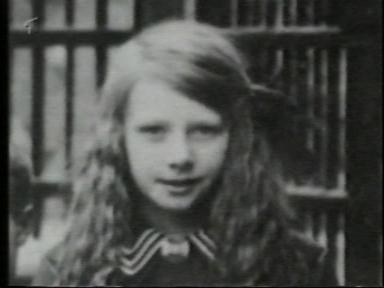
Greta Garbo, 1916
When asked about her childhood in a 1931 interview with Lektyr, a Swedish men's magazine, Garbo recalled, "It was eternally gray — those long winter's nights. My father would be sitting in a corner, scribbling figures on a newspaper. On the other side of the room, my mother is repairing ragged old clothes, sighing. We children would be talking in very low voices, or just sitting silently. We were filled with anxiety, as if there were danger in the air. Such evenings are unforgettable for a sensitive girl, but also for a girl like me. Where we lived, all the houses and apartments looked alike, their ugliness matched by everything surrounding us."
Garbo was a shy daydreamer during childhood with a dislike for school and a preference for being alone. However, she was regarded as a natural leader and became interested in theater at an early age. She would direct her friends in make-believe games and performed and dreamed of becoming an actor. She would eventually participate in amateur theater with her friends and frequent the Mosebacke theater. Graduating from school at 13, Garbo decided not to attend high school. An inferiority complex would later develop from this decision and become one of Garbo's lasting regrets.
In 1919, when the Spanish flu ravaged Stockholm, Garbo's father fell ill and lost his job. Garbo cared for him, taking him to the hospital for weekly treatments before he passed in 1920 when she was 14.
After graduation and while caring for her father, Garbo would work as a soap-lather girl in a barber shop before taking on a role at PUB department store, where she would run errands and work in the millinery (ladies' hats) department. During this role, she would begin modeling hats for the store's catalogs before earning a more lucrative job as a fashion model at Nordiska Kompaniet. In 1920, a director of film commercials for the store cast Garbo in roles advertising women's clothing with her first commercial premiering on December 12th, 1920.
She would direct her friends in make-believe games and performed and dreamed of becoming an actor
Two years later in 1922, Garbo caught the eye of director Erik Arthur Petschler, who would cast her in his short comedy, Peter the Tramp. During this time, Garbo began studying at the Royal Dramatic Training Academy in Stockholm before being recruited in 1924 by Finnish director Mauritz Stiller to play a principal part in his film The Saga of Gösta Berling, in which Garbo performed alongside silent movie star Lars Hanson. Stiller became Garbo's mentor, training her as a film actress and managing her career. She would follow her role in Gösta Berling with a starring role alongside famed actor Asta Nielsen in the German film The Street of Sorrow (Die freudlose Gasse) directed by G.W. Pabstin in 1925.

Approved application for Greta Gustafsson to change her name to Garbo
This performance would lead to her first contract with Louis B. Mayer, the vice president and general manager of Metro-Goldwyn-Mayer. In July 1925, the non-English speaking Garbo was brought to Hollywood from Sweden at the request of Mayer. After a 10-day journey on the SS Drottningholm, Garbo and Stiller would remain in New York for 6 months with no word from MGM before the duo decided to head to Los Angeles on their own. Another five weeks passed, and the duo was on the verge of returning to Sweden. A Swedish friend in Los Angeles helped by nudging MGM production boss Irving Thalberg, who agreed to give Garbo a screen test. Thalberg was enthralled and began grooming the young actress the very next day, thus beginning Garbo's rise to stardom.
Thalberg had decided Garbo would play young but wordly women, to which Garbo would cry "Mr. Thalberg I am just a young -gur-rl!" before Irving would laugh and move on. This would be the foundation of Garbo's iconic image throughout her career. Her first major role was in Torrent (1926), directed by Monta Bell. The film proved to be a hit and Garbo's performance was praised. She would follow it up with a similar role in her first American film The Temptress, this time directed by her mentor Stiller, where she starred with popular star Antonio Moreno.
Despite Antonio Moreno's star status, Garbo was given top billing for the feature. Garbo was unenthusiastic about the role due to the script, and Stiller had difficulty adjusting to the studio system nor did he get along with Moreno. Eventually, Stiller was fired by Thalberg and replaced by Fred Niblo, who began extensive re-shoots which proved to be incredibly expensive. Despite becoming one of the top-grossing films of the 1926-27 season, it was the only Garbo film of the period to lose money.
... the non-English speaking Garbo was brought to Hollywood from Sweden at the request of Mayer
Her performance was a smash hit and she was instantly propelled to MGM stardom. She would make eight more silent roles at MGM and they all were hits, but three in particular stood out. Garbo would spend these three films acting with leading man John Gilbert. Their first film together Flesh and The Devil carried electric on-set chemistry that would soon translate into off-screen romance.

Garbo, Inspiration
These films with Gilbert would change the course of Garbo's career with one Pierre de Rohan, a popular film critic for the New York Telegram, writing "She has glamor and fascination for both sexes which have never been equaled on the screen." During Garbo's meteoric rise to stardom, she began requesting certain conditions for shooting scenes. She banned visitors from visiting her sets and demanded that screens surround her to prevent the crew from watching her. When asked about these demands, she simply quipped "If I am by myself, my face will do things I cannot do with it otherwise."
Despite her star status, MGM feared her accent would hinder her career in sound films. These fears were misplaced as in 1929, MGM cast Garbo in her first speaking role in the film Anna Christie. Her famous first line "Gimme a whiskey, ginger ale on the side, and don't be stingy, baby," would push her into further success in roles that punctuated the signature Garbo image. She would receive her first Academy Award nomination for Best Actress with her performance, losing to Norma Shearer, and would star in four more films between 1930 and 31: Romance, a German-language Anna Christie, Inspiration, Susan Lenox (Her Fall and Rise), and Mata Hari.
Later Career and Retirement
Mata Hari would see her in one of her most iconic roles as she played a World War 1 German Spy with co-star Ramón Novarro. Upon the film's release, the police were required to help keep filmgoers waiting in line in order. She would follow this up with Grand Hotel in 1932 starring alongside an ensemble cast who included John Barrymore, Joan Crawford, and Wallace Beery. The film won the Academy Award for Best Picture and alongside Mata Hari they would be MGM's highest earning films of 1931 and 1932. MGM declared Garbo "the greatest money-making machine ever put on screen." Around this time, Garbo's following was considered at its peak and after starring in As You Desire Me in 1932, her MGM contract expired and she returned to Sweden.
"She has glamor and fascination for both sexes which have never been equaled on the screen"
Garbo took a year-long break during this time, largely to accommodate her negotiations with MGM. She renewed her contract with the condition she'd star in Queen Christina (1933) and that her salary would increase to $300,000 per role. MGM was initially reluctant to make Queen Christina but decided to move forward with Garbo's persistence. MGM wanted to have Charles Boyer or Laurence Olivier as the film's leading man, but Garbo rejected them both and wanted her former co-star/lover John Gilbert.
MGM was appalled by the idea of Gilbert due to his declining career leading to fears it would hurt the film's premiere. The film proved to be a lavish production, becoming one of the studio's biggest successes at the time, bringing positive reviews and a booming box-office upon its release in December 1933, and making it the highest-grossing film of the year. The film wasn't without controversy and censorship due to scenes of Garbo disguising herself as a man and kissing a female co-star.
While Garbo remained popular in the early 1930s, most of her film's profits during this time depended on the foreign market. The iconic historical and melodramatic films she would take on during this time were successful abroad but less so in the U.S. due to the Great Depression. American audiences leaned toward more homey products with stars like Clark Gable and Jean Harlow. In 1935, Garbo would star in Leo Tostoy's Anne Karenina, favoring it over another role in David O. Selznick's Dark Victory. Her performance in Anne Karenina would win her a New York Film Critics' Circle Award for Best Actress and was a huge success in International markets with better domestic returns than MGM had anticipated. Despite this, the profit of the film was diminished due to Garbo's $300,000 salary.
MGM declared Garbo "the greatest money-making machine ever put on screen."
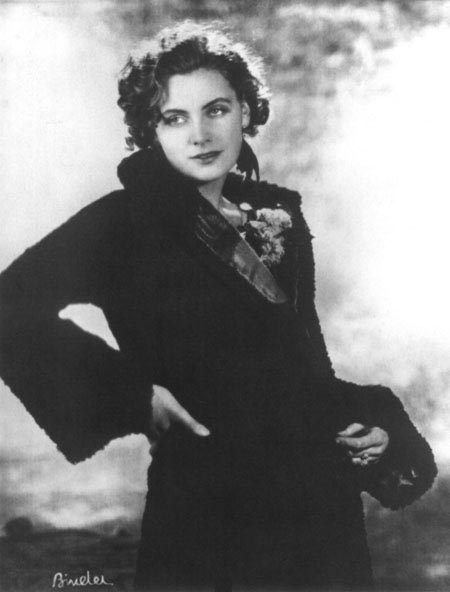
Following it up in 1936 was George Cukor's Camille. Production was hit hard by the sudden death of Irving Thalberg at the young age of 37. Garbo wasn't the only one affected by this as the entirety of Hollywood was in a state of shock; however Garbo was especially close to Thalberg and his wife, Norma Shearer. Pairing this event with the death of John Gilbert that same year, the film carried a certain morbid atmosphere. Nevertheless, upon the film's release on December 12th, 1936, it became an international success, Garbo's first major success in three years. She won another the New York Film Critics' Circle Award for Best Actress, and was nominated for more than one Academy award. Garbo regarded the film as her favorite out of all of her roles.
Garbo then starred in Conquest in 1937, but the film, despite its PR campaign, proved to be one of MGM's biggest failures in a decade. Once again, Garbo's contract would expire and she would return to Sweden for a period of time. Around this time, specifically on May 3rd, 1938, Garbo was among many stars like Fred Asaire, Norma Shearer, Joan Crawford, and many more, to be dubbed "Box Office Poison" in an Article published by Harry Brandt on behalf of the Independent Theatre Owners of America. MGM would renew her contract again and decide that to resurrect Garbo's career, they needed a change of pace.
In 1939, Garbo would be teamed with director-producer Ernst Lubitsch in Ninotchka, her first comedy role. The film was a satirical, light romance depicting the Soviet Union, then under the leadership of Stalin, as rigid and gray in comparison to Paris in its pre-war years. One of the first of its kind to treat this depiction, the film was generally favored by critics and experienced box-office success in the United States and abroad. Without shock, the film was banned in the Soviet Union. In 1941, she would star in George Cukor's Two-Faced Woman, another romantic comedy that would try to showcase her as a modern, chic woman. It was a critical failure and Garbo would refer to the film as "my grave."
She won another the New York Film Critics' Circle Award for Best Actress, and was nominated for more than one Academy award
This would be Garbo's last film, marking the end of her acting career at 36 with 28 feature films on her resume. Garbo was humiliated by the negative feedback of Two-Faced Woman but hadn't had the intent to retire at this time. But due to the Second World War, and her films dependency on the European market, MGM had a difficult time finding her a role. In 1942, she signed a one-picture deal and was to star in The Girl from Leningrad but the project quickly dissolved. Garbo initially thought she would return to acting when the war ended but was indecisive. In 1945, Salka Viertel, one of Garbo's closest friends and collaborators, is quoted as saying "Greta is impatient to work. But on the other side, she's afraid of it."
Garbo would sign another contract in 1948 to star in a film based on Balzac's La Duchesse de Langeals. She did several screen tests, learned the script and arrived in Rome that summer ready to shoot. However, the film's financing failed to materialize and the project was abandoned. The screen tests would be the last time Garbo stepped in front of a movie camera. They were thought to be lost to time but were re-discovered in 1990 by film historians Leonard Maltin and Jeanine Basinger.
In 1949, Garbo was offered a role in Sunset Boulevard but after meeting the film producer, Charles Brackett, she insisted that she had no interest in the role whatsoever. There would be other films through the '40s that she would reject and on the off chance she did accept, she'd drop out at the slightest problem. Toward the end of her life, she would talk with Swedish biographer Sven Broman about her decision to retire. "I was tired of Hollywood. I did not like my work. There were many days when I had to force myself to go to the studio ... I really wanted to live another life."
Personal Life and Eccentric Retirement
Even during the height of Garbo's career, she avoided the public, never attending industry functions, rarely engaging with fans, and scarcely giving interviews. Even when she was nominated for an award, she failed to show up for the ceremonies. Her detest for the public wasn't the product of fame, with Garbo herself explaining, "As early as I can remember, I have wanted to be alone. I've always been moody. I detest crowds, I don't like many people." Aside from her notable private life, when spotted in public she was regarded as "the Art Deco Diva." She often wore men's shoes and clothes. Her style was described as "trench coat, simple shoes, shirts, cigarette pants, slouch hat and big sunglasses" by Telegraph fashion writer Hilary Alexander.
Garbo initially thought she would return to acting when the war ended but was indecisive

In retirement, Garbo continued to lead a private life. This wasn't to say it was a lonely life; she had a great many friends and acquaintances whom she socialized and traveled with. Often it's said the most difficult thing for Garbo was deciding how to spend her time, which clashed with many of her eccentricities and melancholy moods. Barry Paris wrote that Garbo told reporters, "I have no plans, either for the movies or anything else. I'm just drifting." In the '40s, she would become an art collector but many of the paintings she bought were initially of negligible monetary value. But the pieces she did collect, including works by Renoir, Rouault, Kadinsky, Bonnard, and Jawlenksy, were worth millions by her death.
In 1951, Garbo became a citizen of the United States and would buy a seven-room apartment at 450 East 52nd Street in Manhattan in 1953, where she would spend the rest of her life. Her apartment buzzer was identified by a solitary G, and what may come as a shock in contrast to her signature gloomy mood, is that the apartment was decorated in a "light and airy study in pink." To protect her privacy, she preferred being addressed as "Miss Harriet Brown," and only her closest friends were allowed to call her G.G. or Miss Garbo. She wouldn't respond to anyone if they called her Greta. In 1971, Garbo would vacation in Southern France at the summer home of her close friend Baroness Cécile De Rothschild, who would introduce her to Samuel Adams Green, a famous art collector and curator in New York City.
"As early as I can remember, I have wanted to be alone. I've always been moody. I detest crowds, I don't like many people"
Garbo and Green became close friends and walking companions. Green had an eccentric quirk of recording all his telephone conversations, and with her permission, recorded a great deal of his with Garbo. In 1981, Garbo would terminate the relationship after being falsely told that Green played the tapes to friends. Upon Green's death in 2011, he gave all his tapes to the archives of Wesleyan University, which offered a great deal of insight into Garbo's personality in her later life.
Garbo never married, and never had children. As mentioned previously, her most famous relationship was with John Gilbert. She is quoted as saying she was in love with him and that he was the only man she'd ever really loved, but due to Gilbert's "extracurricular activities" during their relationship, she rejected him and never truly forgave him for the transgression. She had a relationship with Leopoid Stowkski but whether it was romantic or platonic was never quite clear.
In recent years, it's come to pass that Garbo was bisexual. Some claimed she had relationships with Lilyan Tashman and Louise Brooks but I couldn't find anything definitive about those relationships. However, in 1931, Garbo befriended writer, and known lesbian, Mercendes de Acosta and the two began a sporadic and volatile romance. For 30 years, the two would remain friends and Garbo would write de Acosta 181 letters, cards, and telegrams, 87 of which are on display at the Rosenbach Museum & Library in Philadelphia. Later, in 2005, Mimi Pollak's estate released 60 letters Garbo had written to her during their lifelong friendship, with some letters suggesting that Garbo had romantic feelings for Pollak. One letter had Garbo writing "But I have always thought you and I belonged together." Down the road in 1975, she would write a poem about not being able to touch the hand of her friend with whom she might have been walking through life.
"Garbo Smokes!"
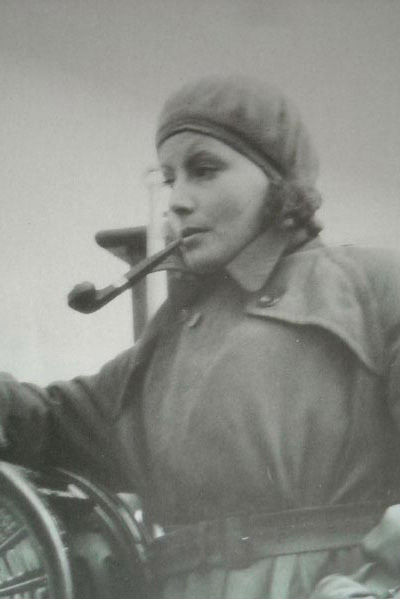
Garbo was a lifelong smoker of just about everything tobacco: cigars, cigarettes, and pipes. When asked in an interview, Garbo quipped, "I have been smoking since I was a small boy." Mark Irwin of Petersonpipenotes.org did an extensive deep dive on trying to identify the pipe Garbo was seen with most often and settled on it being a Peterson Junior Bulldog. That said, she's been spotted with a variety of other shapes both on the silver screen and elsewhere. Just like her mysterious personality, we don't have a great deal of information on her favored pipe tobacco, cigars, or brand of pipes. Whether she bought local blends from a tobacconist near her apartment or if she simply indulged in over-the-counter blends is not for us to know. We can just take joy that, like so many of us do, Garbo found comfort in her pipe.
Bibliography
- Greta Garbo: A Divine Star (2012) by David Bret
- "Greta Garbo" (1931) by Lektyr (translated from Swedish)
- Greta Garbo: A life Apart (1997) by Karen Swenson
- The Great Garbo: Part Two: Greta's Haunted Path to Stardom (1955) by John Bainbridge, Life
- The Great Garbo: Part Three: The Braveness to Be Herself (1955) by John Bainbridge, Life
- Greta Garbo: A life Apart (1997) by Karen Swenson
- "Herrskapet Stockholm ute på inköp" (1920), The Swedish Film Database, Swedish Film Institute (in Swedish translated to English via Google)
- Garbo (1994) by Barry Paris
- The Divine Garbo (1988) by F. Sands and S. Broman
- Greta Garbo: A Cinematic Legacy (2005) by Mark A. Vieira
- Irving Thalberg: Boy Wonder to Producer Prince (2010) by Mark A. Vieira
- Thalberg: The Last Tycoon and the World of M-G-M (1994) by Roland Flamini
- To die for: Greta Garbo (2010) by Hilary Alexander Hilary
- The Rough Guide to Film (2007) by Richard Armstrong
- Conversations with Greta Garbo (1990) by Sven Broman
- "Garbo by Robert Gottlieb Review – distant darling of the silver screen" (2022) by Peter Conrad, The Guardian
- "Lonely Garbo's Love Secret is Exposed" (2005) by Alex Duval Smith, The Observer
You may also enjoy:






Comments
Thanks for the Garbo article. She was quite mesmerizing. Her movie "Love" which is an early silent Anna Karenina is probably my favorite. TCM plays her movies from time to time. Her silents are very special (The Tempest for one). There was no one like her.
Thank you for providing a brief visit with Greta Garbo. You must have encountered volumes of biographical information that were excluded! Your article captured the mystery, talent & melancholy of "G.G." quite well. The photo of her with one of her pipes was a special treat!