


 |
|
 |
|



It's always interesting to take a look at the trends of a certain era. Whether we're looking to the 1960s for hippie-inspired attire, or to the Y2K fashion of the early 2000s, different time periods have varying ideas of what is in vogue. But it's not just clothes; smoking pipes have also seen ebbs and flows in popularity. There was a time when pipes were viewed as a symbol of wealth and status in European society.
Costly Craftsmanship & Expensive Materials
Smoking tobacco recreationally grew to prominence in England throughout the 1500s and on. Clay pipes were widely available, with mass production offering a functional and affordable way for the common folk to indulge in pipe smoking. Clay pipes were commonly seen in taverns and at social gatherings by the 17th and 18th centuries due to their relatively cheap price.
With clay pipes' rise to prominence, their allure caught the attention of the upper class. Clay pipe designs became much more ornate and decorated among the wealthy and ruling classes. Silver and gem-studded pieces were common among the wealthiest members of society during the Renaissance era. Lori Newman explains further in her article, The history of smoking pipes: A timeless tradition: "Nobles and aristocrats began commissioning custom-made clay pipes adorned with intricate designs and elaborate decorations. These pipes were often personalized with family crests, monograms, or symbols of wealth and power."
The design cues reflected the artistic styles of the time. "Archaeologists have uncovered numerous clay pipe fragments in historical sites, providing valuable insights into the smoking habits and preferences of people from different social classes."
Skilled craftsmanship was required to create these impressive works of art. "Skilled artisans meticulously sculpted the clay, transforming it into miniature works of art," notes Newman. "The pipes were then fired in kilns, resulting in hard and durable smoking instruments that could withstand frequent use. Owning a beautifully crafted clay pipe became a way for the elite to showcase their wealth and taste. These pipes were often displayed and cherished as prized possessions." The intricate designs that would be carved onto the clay pipes ranged from floral patterns to animals that symbolized good luck and religious symbols, like crosses, representing faith and a connection to a higher power. This method of visual storytelling preserved the tales and traditions of the people who used these pipes.
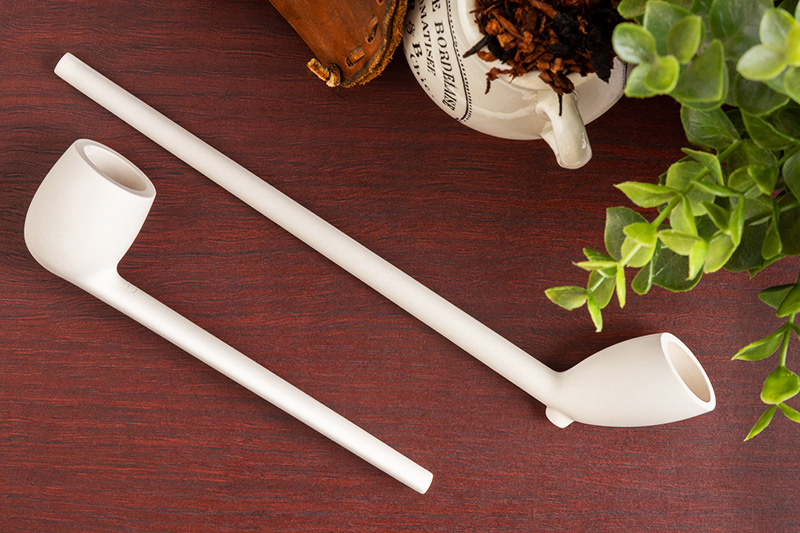
Soon, basic clay pipes with simple designs that could be easily replicated in mass production came to be known as the "commoner's material," opposed to the more expensive alternatives that grew in popularity, such as briarwood and meerschaum.
A few other materials were seen in pipe making at this time. Select pipes featured precious metals and exotic materials among the European nobility. Newman writes, "In many societies, smoking pipes became a symbol of power and influence. Kings, queens, and rulers often adorned themselves with ornate and exquisitely crafted pipes, showcasing their wealth and authority." Expensive materials such as silver, gold, and brass were included as accents, along with ivory, further emphasizing their status.
By the 18th and 19th Centuries, Meerschaum pipes were also seen as a symbol of wealth and affluence. Similar to clay pipes, the more detailed pipes would be commissioned by artisans, which was a time-consuming and costly endeavor.
In my History of Meerschaum Pipes piece here in the Daily Reader, I discussed the connection between Meerschaum pipes and social status:
The Meerschaum pipe became more of a stylish accessory, which was likely one of the reasons intricately carved figural masterpieces came to be well-loved and desired. These intricate pipes were viewed by the upper class as art objects, many purchasing them simply to display on their shelves as a sculpture of sorts. Even so, some still wanted their pipes to take on unique colors, so the wealthy would hire people just to smoke their meers, or instructed the pipe maker to smoke the pipe for several weeks before it was delivered to the owner so that it came to them with an already developed patina. Though we might find this bizarre by modern standards, this was the norm at the time. The belle epoque of antique Meerschaum pipe production was between 1850-1920, with artisans crafting these beauties with a pointed attention to detail and masterful carving required to form a block of Meerschaum into a completed pipe for smoking.
The wealthy would commission artisans to craft pipes to be one-of-a-kind works of art. Intricate detail work and custom projects were a symbol of status. "These pipes were not just functional tools for smoking tobacco or other substances;" explains Newman, "they were intricate works of art, reflecting the opulence and grandeur of the ruling class."
As noted in my post about Meerschaum pipes, many people of higher status in society didn't even smoke their pipes, but rather procured them as decorative ornaments to be displayed in their homes. They were seen as small works of art, crafted with care and detail among artisans, making them collector's items.
Today, many artisan pieces and limited-edition releases from esteemed marques are collected by aficionados, yet are seen as both works of art and functional smoking devices to be enjoyed. Though we might reserve certain special pipes for once-in-a-while smokes on momentous occasions, it is quite interesting to see just how much these detailed pipes were viewed solely as pieces of art to be admired instead of the smoking instruments they were initially designed to be for use and enjoyment.
Changing Perception of Pipes in Society
Beyond commissioning and procuring extravagant pipes, some of the upper class did smoke their impressive pipes in social settings, such as at salons, during political meetings, and while engaging in intellectual, cultural, and philosophical discussions. Newman describes these instances:
In European courts, pipe smoking was a common practice during diplomatic meetings and discussions, providing a relaxed and convivial atmosphere conducive to negotiations. Beyond politics, smoking pipes also held social significance. They were often used as a means of socializing and bonding among individuals. Smoking circles, where friends and acquaintances gathered to share a pipe, were common in many cultures. These gatherings provided opportunities for conversation, storytelling, and the exchange of ideas. Smoking pipes became a social lubricant, bringing people together and fostering connections.
Throughout the 19th and 20th centuries, smoking pipes were seen as sophisticated and refined, and something that intellectuals and gentlemen regularly did in habit. It was also the golden age of pipe smoking; the industry boomed and a variety of popular pipe shapes that we know and love today emerged.
Pipe smoking also began to have associations with influential individuals, from Sir Arthur Conan Doyle to Mark Twain and Albert Einstein. Their iconic pipes added to their allure. "It is not uncommon to come across historical photographs depicting famous figures while smoking a tobacco pipe," says PipeOnline Giovannozzi, founded by two siblings due to their shared passion for pipes, Fabio and Stefania Giovannozzi, "images that have helped solidify, in the collective imagination, the association between the tobacco pipe and the thoughtful, educated and responsible man."
Similarly, literary greats like Sherlock Holmes and Gandalf were frequently seen enjoying pipes while pondering mysteries and going on adventures. Pipes were seen as a more intellectual and sophisticated activity meant for leisurely contemplation. The positive connotation between smoking pipes and intellectual people shaped public perception. Even in the modern day, when we think of classic films and old movies, or of our grandparents and pipe smokers through generations of our family histories, pipes come to mind in a fond way.
The golden era of pipes ended in the mid-1930s and on. For centuries, a tobacco pipe was the main mode for smoking tobacco. With the introduction of mass-produced cigarettes, pipe smokers dwindled in favor of lower cost and easily accessible cigarettes in the 20th century.
Despite the changing tides of opinions about pipes, those of us who enjoy pipes continue carrying the torch as we enter the second quarter of the 21st century. Pipe enthusiasts, like ourselves here at Smokingpipes and you, dear readers, are the individuals keeping the hobby alive, cherishing pipes as a collector's item and viewing them as an authentic example of craftsmanship. In a world where fast, mass-produced products are king, we believe in the dedicated artistry of artisans and factories around the globe who create masterpieces we can delight in; unique pipes that are made for a lifetime of enjoyment.
Rare Pipes Today
In the present, the association with rare and expensive pipe brands can certainly be seen through luxury brands from Europe like Dunhill, revered for their use of aged briar, exceptional craftsmanship and precision, and their iconic "White Spot" logo that indicates that it is a genuine Dunhill pipe. Similarly, artisan-made pipes are entirely unique and require the artistry of one artisan carver to be completed, making them highly sought after and coveted.
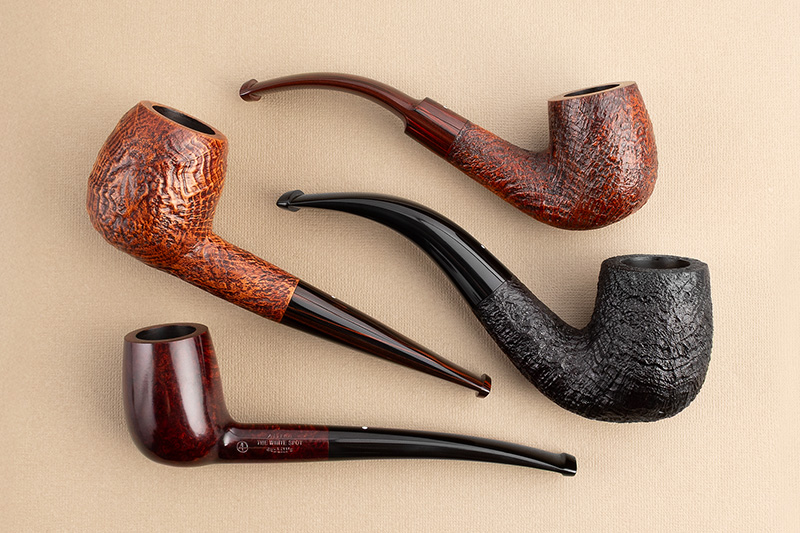
The perception of pipes has certainly changed throughout the centuries since the very foundation of pipe making. So, too, has the perception of pipe tobacco since its arrival in Europe from American soil in the late 1400s. Today, pipe tobacco ranges from codgers to more Small-Batch boutique offerings, such as what can be found from the only American pipe-tobacco company remaining, Cornell & Diehl. In Europe, popular brands like Orlik and Capstan remain staples in cellars, as well as Gawith Hoggarth & Co. and HU Tobacco, among plenty of others.
Once a symbol of status among European nobility, the perception of smoking pipes has definitely changed. Despite this reality, connoisseurs today continue to collect and delight in regular-production pipes from marques like Peterson and Savinelli, limited-edition releases, and artisan-made pieces from craftsmen all around the world, along with estate finds that have been restored and refurbished to last for generations. Our pipes today are a symbol of our passion for this hobby, and we look forward to new innovations in the future of pipe making.
Bibliography
- Alexander, S. (2024, January 23). The history of pipe smoking: From tradition to modern trends.
- Newman, L. (2023, August 27). The ancient art of clay tobacco pipes: A journey through time. Mr G's Cigar and Pipe Shop.
- Newman, L. (2024a, February 6). The history of smoking pipes: A timeless tradition. Mr Gs Cigar and Pipe Shop.
- Newman, L. (2024b, February 6). The perfect pair: Unraveling the timeless allure of pipes and Cigars. Mr Gs Cigar and Pipe Shop.
- The tobacco pipes of great historical figures: Who smoked them and why. Pipeonline. (n.d.).
You may also enjoy:




Comments
Very interesting piece!
Great article! Loved it.