


 |
|
 |
|


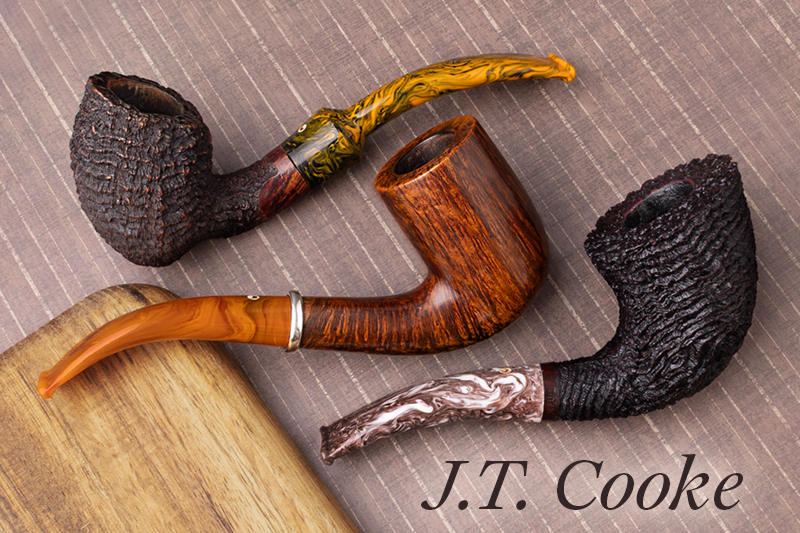
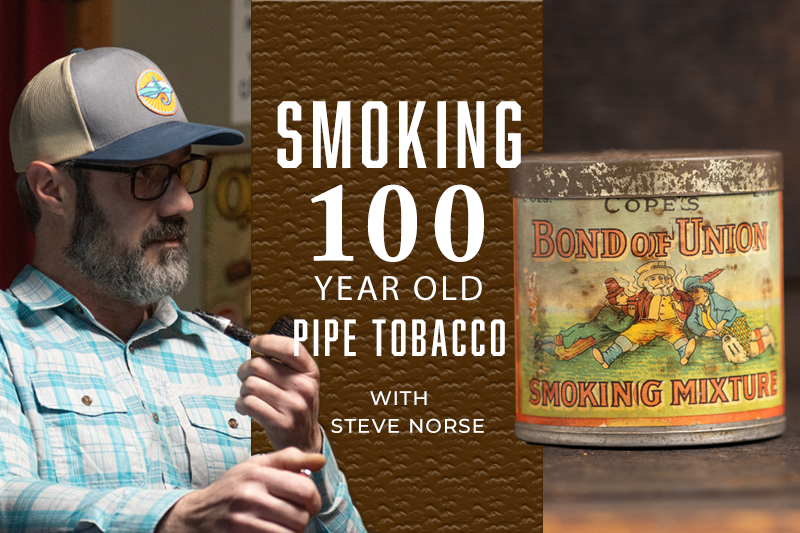
I'm here today with a very special guest, Mr. Steve Norse of Vermont Freehand, who is visiting us at Smokingpipes. We'll be chatting about the illustrious career of J.T. Cooke, who is very near and dear to Steve, and some standout selections from J.T.'s personal collection.
Note: The following transcription has been edited for clarity and brevity.
If you see a pipe listed in this video that you are interested in purchasing, please reach out to our Customer Service team: [email protected]
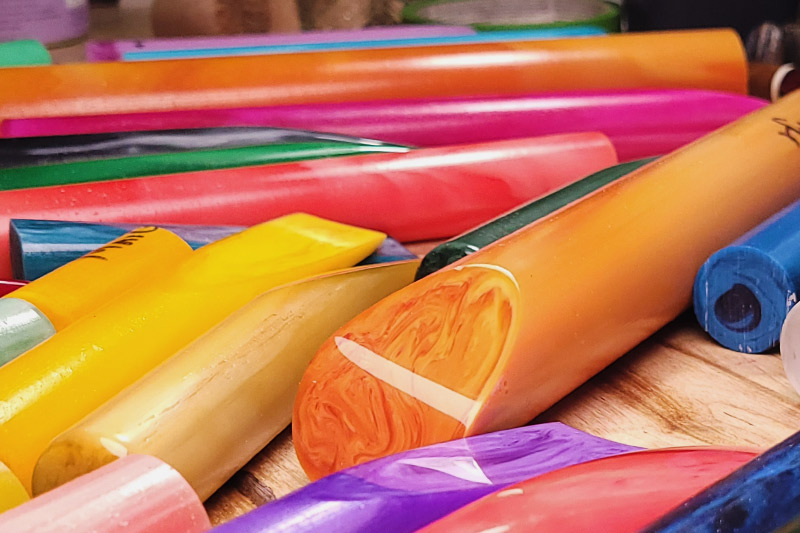
If you're not familiar with Vermont Freehand, Steve is the premier supplier of pipe-making supplies, tooling, briar, ebonite, rods, and more to pretty much most of the American pipe makers and international makers as well. He knows a lot about people's preferences of what kind of wood that they prefer.
Steve is also good friends with J.T. Cooke, an acclaimed pipe maker. Let's get into J.T.'s pipe making.
Pioneer in Sandblasting
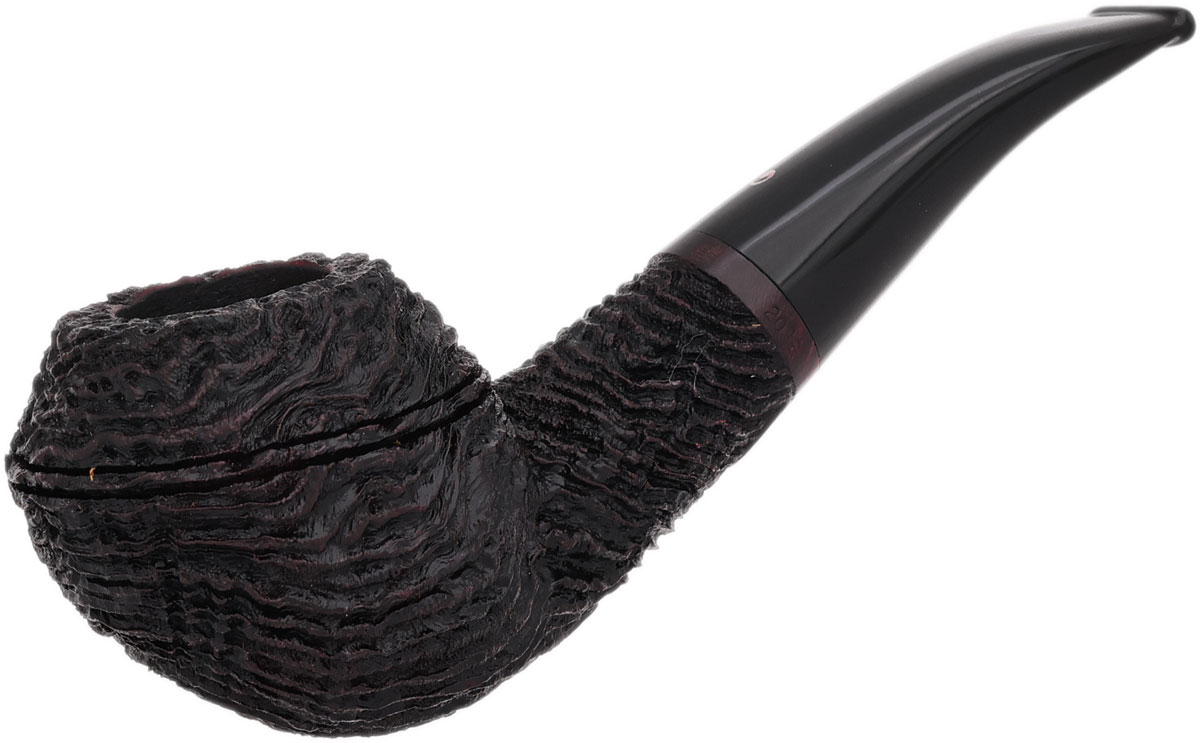
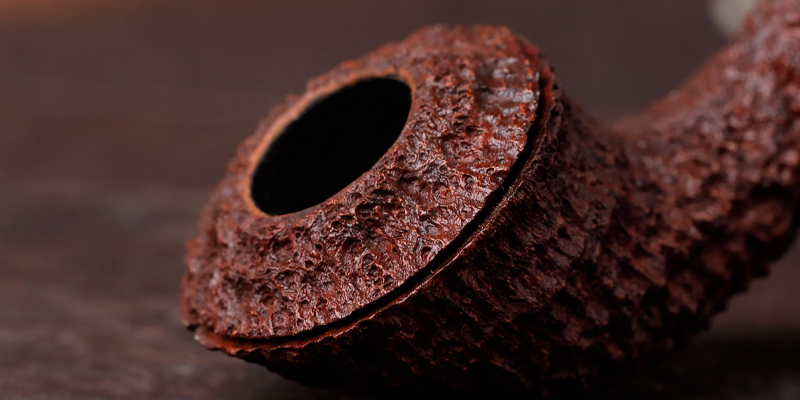
[Shane Ireland]: J.T. has been a pioneer in the sandblasted pipe finish. I would say that he's done more for sandblasting than the original implementation of the process, turning it into something that was viewed as desirable and not just a solution to wood that had flaws in it. I think that everybody who's followed him has strove to achieve the depth and detail that J.T.'s been able to. And he's been doing it for many years. It's not like this was at the end of his career that he figured this out.
Connection to J.T. Cooke
Why don't you tell us a little bit about how your friendship with J.T. started?
[Steve Norse]: As I started making pipes in Vermont, there were only a couple pipe makers. Of course, J.T. Cooke was the more prominent one. He's really been like a father to me. If I had questions about making pipes, he would always be there for me. He'd let me borrow Dunhills and stuff as I was practicing. Once I got into the supply end of things, I would bring him sacks of briar to pick through, which is every pipe maker's dream. There's only a couple pipe makers in the world who have briar delivered to them to pick through.
[SI]: The proximity is rare.
[SN]: Yeah, so really quickly, we bonded over that — the bond of the briar — and that's how it all started. I would set aside blocks that he would prefer that a lot of other people wouldn't prefer. He likes blocks with prominent ring grains and virtually no vertical grain.
[SI]: Which is more or less the opposite of what most pipe makers prefer. Most want to make the nicest straight grain smooth pipe that they can possibly produce. Not J.T., though.
Every Pipe Has A Story
You talked about the kind of briar that he was interested in and that you guys bonded over that. At what point did you start to get close to his collection, because there is a lot of stuff here from his private collection that never saw the light of day in the market since he kept it for himself. Why was that?
[SN]: Jim's really big about stories. Every pipe has a story. Every block of wood has a story. He remembers time through stories more than he does numbers. For example, if I had my friend Will with me, he would mark the batch as "Will wood." When we delivered a batch of briar "by sea," in a boat up to his house, he'd name it the boat's name. Each one of his pipes has its own story. Some of the Pipe of the Years he made, he would keep one for himself. He would try a new, unique shape. He would keep that. He did a really unique bamboo, very rarely, and he kept it. Each one has its own little story as to why he kept it.
The first pipe he ever made was from a birch burl.
[SI]: This is really interesting. It does have Cooke etched in there, not stamped. Absolutely crazy.
[SN]: He had this birch tree growing on his land and it had a burl down near the root base, so he dug it up, made his first pipe, and threaded tenon.
[SI]: The threaded tenon into the wood is very interesting.
[SN]: Of course, Jim, who saves everything, saved the other half of the burl.
[SI]: Do you have any idea about what year that would've been?
[SN]: That would've been between 1970 and 1972. Back in the day, he started restoring pipes with Barry Levin. They had the briar workshop, so you had Brad Pohlmann, Andrew Marks, and Elliot Nachwalter, just a bunch of people working for Barry, but that's also when they all started making their own pipes.
[SI]: We talk a lot about American pipe making and artisanal pipe making. There was a period later on in the late '80s, early '90s, that Mike Butera was active and then a little bit further on in the late '90s, Todd Johnson and Jodi became active.
Side note, I'm not sure how many people are aware that Jodi credits Jim with basically getting him started. He really worked a lot with J.T. and learned a lot from him in the early days.
J.T. had an influence on his peers that he was working with in the '70s and beyond, and also on a lot of the younger guys that came a couple decades later. We owe him a lot on the American side of artisanal pipe making.
Singular Designs by J.T. Cooke
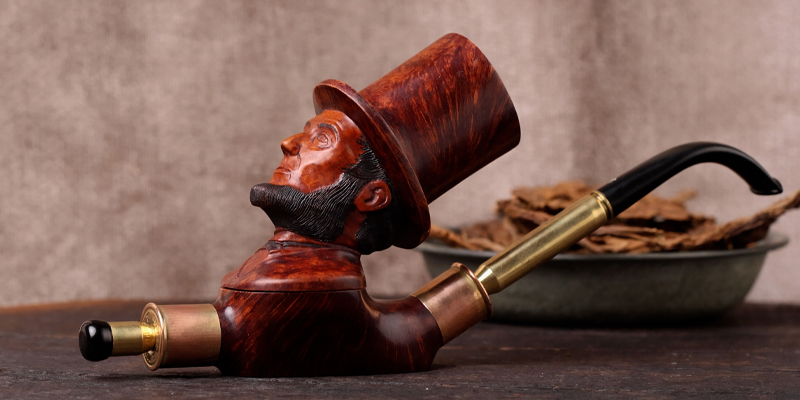
Let's dive into his eccentricities in pipe making. Tell us about his figural pipes.
[SN]: Jim always had a fascination with carving figural pipes. The first pipe of every year would be a figural pipe, so if it was marked "82-1," that denotes the first pipe from 1982. His Abraham Lincoln Cavalier, for example, was one of his more unique figural pipes. All the shotgun shells, or the rifle cartridges, are ones he had used, saved the cartridge, and implemented it into the pipe. It's a full working Cavalier.
The head and top hat where the bowl is actually spins off of the base.
[SI]: Yep. There's a tenon.
[SN]: It's still unsmoked. It was one of those pieces that he had invested so much time in and loved so much, he didn't have the heart to get rid of it.
[SI]: It's amazing. The detail work and construction is great. Really creative to use the shotgun shells and the rifle cartridge. By the way, this is 87-1, so the first pipe of 1987. I've seen tons of these, I'm sure you guys have too. They were really big in France, at the turn of the century, where a lot of figural pipes were made out of briar there.
Of course you still have Meerschaum carvers carrying on that tradition. One of the reasons pipe makers are able to make it so intricate is because it's a softer material. Carving this much detail into such a dense and hard material is insane, and then finishing it, that's another thing. Other than his hair and his beard, which are rusticated, the rest of this is finished smooth, which requires a lot of really fine sanding work. It's absolutely incredible. I've never seen anything like that.
We also have some of the best examples of the shapes that he was known for, with bamboo, something that's super rare, and of course insane blasts.
What do you think this representation of pipes meant to J.T.? A lot of these have been featured in P and T Magazine. Others have taken inspiration from his work over the years, including some of these specific pipes. The Bulldog is maybe the best example of that. Tell us about that one.
[SN]: Jim would come up with a Globe grade maybe once every year, or two years. He would have one in his mind that would be the best grain alignment, blast, and all the details. This example we have here is astonishing, with the alignment of all the grain rings and the depth on everything.
[SI]: It's natural, which means that it couldn't have flaws. The shape is great. He smoked that one, didn't he? So it's not strictly a matter of keeping the best work, it's that he was a collector and a smoker himself and wanted to enjoy them, which I think is really cool.
[SN]: This was one that was showcased in the P and T Magazine. Of course, when they took the picture then, it was a much lighter color. Over the years, it's darkened up. Also, all his stems are the resin he casts himself. It's very unique. No two are the same.
Steve Norse's Personal J.T. Cooke Collection
[SI]: I do know that there's a couple of your personal pipes on the table. Let's talk about those, 'cause both of those are pretty unique within his body of work as well.
[SN]: I go on a lot of adventures. I come back and tell him all these stories. One day he says, Frank Burla gave me an old wind cap from an old antique pipe once, and you take so many adventures, you need a pipe with a wind cap.
[SI]: That's so good.
[SN]: He made me one that has vertical rings, which is a lot different than anything else you'll see from him. That's a pipe I hold near and dear. The other one was because I like smoking smaller pipes. J.T. doesn't really make smaller pipes. I kept asking and he kept saying no. I had a batch of briar once he had picked out, and I said, okay, the only way you're getting this is if you make me that little pipe. So he did, and he says, you can have this, but you have to be buried with it. For him, a thin wall isn't really that thin. To him, it's a worry. The rest of us, it's not. But it's my go-to smoker. It has my favorite color with a tuxedo stem on it. It's made of strawberry briar, so I think it weighed 18 grams.
[SI]: Geez. That's insane.
[SN]: That's my number-one pipe at all times.
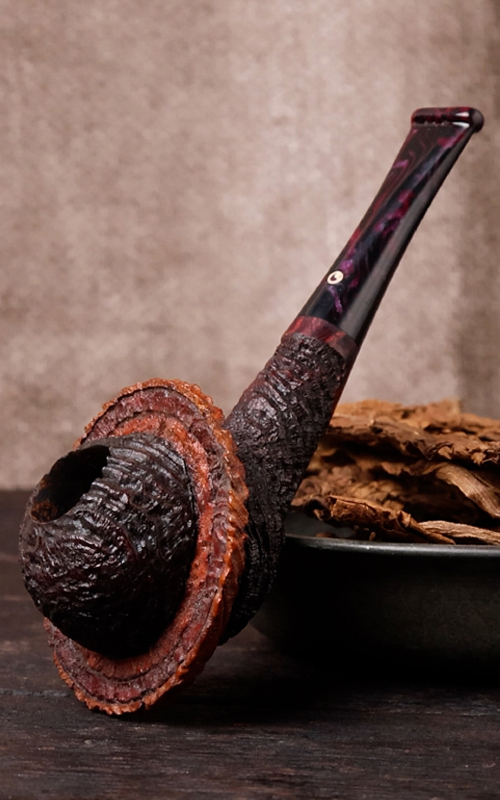
[SI]: Aside from the shape, the stem, and everything about it — I'm having a lot of pipe envy there — I assume this was intentional because it was a smaller piece, but the detail is there. It's a J.T. blast. The detail is there, the rings you can see from across the room, but it's not as deep. He still had the control to be able to get that definition out of it without pushing it as far as he would a larger shape. It's crazy. What about the Saturn?
[SN]: I forget what inspired him to make that. Creating the ring around the planet required him to be so delicate. He probably had more rejects than he had finished pipes with those. It's always neat to get to see one in its finished state like that.
[SI]: Super cool color combinations with the stem and the pipe as well. Staining the ring separately from the bowl was such a nice touch. He also carved beadlines into both sides of the ring, which is crazy. He's such an ambitious guy.
Deep Connection with Every Briar Block
[SI]: What about Jim's philosophy regarding briar and pipe making do you think is different from the other carvers that you've encountered?
[SN]: Jim likes to have hundreds of blocks on hand. If he is not 100% sure what he wants to make out of it, it sits on the shelf, and he waits for the briar to tell him what it wants to be, which is a unique approach. He has a very deep connection with every block that he handles and a very intimate understanding of the burl, how it was grown, how the rings are, and really takes the time to get to know that piece of wood in pipe making. The amount of energy that's put into it mentally and physically, it's pretty impressive.
[SI]: Did he tell you an average amount of time that he would spend on a sandblasted finish?
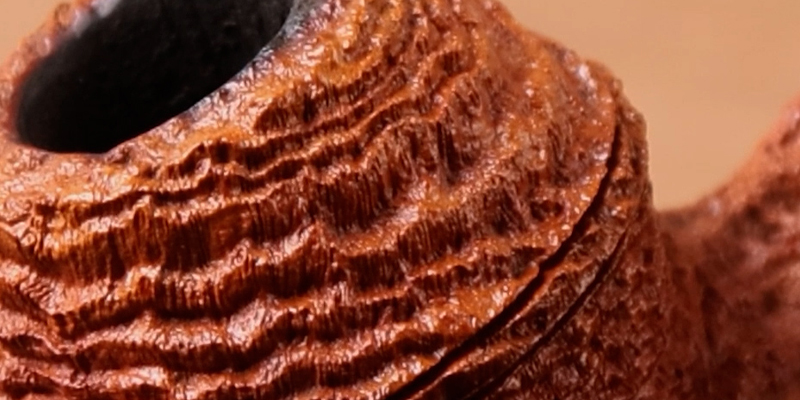
[SN]: It varied over the years. He always kept experimenting and fine tuning. He would take five stages of blasting. The first would be really opening it up and finding the rings. After he finds 'em, he really starts digging out each individual ring with the blaster, and then as he gets through, the last step is to go in these crevices and pull back out the vertical fibers within every ring. It's just intense how he approaches it.
[SI]: The detail in it is remarkable. It's a very labor-intensive process, and one that others have attempted to copy but have never been able to.
We found a price list from J.T. that must have been from the '80s of some available pipes. He either priced the sandblasted the same as the smooths or more, depending on how good they were. That is way against every paradigm that everybody in pipe making had observed at that point in time. There was always this perception that rustication and sandblasting were what you did when you had no choice; you would've made the pipe smooth and straight grain if you could.
I think the approach of looking at the briar and seeing the value in the more rugged possible finish is something that he definitely pioneered. Nobody else was really thinking about it like that before him, and really it took decades for a handful of artisans to catch up and really view sandblasts as a desirable finish and not a second choice. It's really remarkable.
Given the time period when he started pipe making and what was popular then, coming up with specialized sandblasting takes a special, singular person, especially when you consider the kinds of brands that he was looking at, and the fact that the artisanal approach was really isolated in a couple of places in Europe. I admire it so much. I really do.
I think he has a very unique aesthetic within American pipe making that nobody else has really recreated either. You can clearly see some influence from some European pipes that were coming out around that time. But he was pioneering the muscular, rugged aesthetic and design language before we had ever called it industrial or any of the other buzzwords that we describe American pipe making as today.
Eccentricities in Design
There's a handful of pipe makers in the world that have ever lived that would keep their best work for themselves. That's not a common practice.
Let's talk about his tampers and other eccentricities he has created.
[SN]: Jim had only made four or five tampers ever. He would always use a scrap piece of wood for himself and wouldn't worry about making a tamper. This one he made is a very good replica of a finger, with the fingernail, the wrinkles, and everything, with a solid silver base. I think Chuck Stanion has one.
[SI]: He has a matching one.
[SN]: Then there was this other one, which was just a hand holding a pipe with the pinky up in the air all fancy like, which was featured in the P and T Magazine as well. He really took a lot of time to get all the attention to detail with the wrinkles in each finger, and actually the pipe has good grain on it, surprisingly.
[SI]: That's crazy. Even the bit, the stem, and a little chamber are on there. I can count on one hand the number of pipe makers that I've encountered that have this similar proclivity for either dusting off the cobwebs creatively by taking a break and doing something like this, or literally just for the love of the game.
You don't do this because you think, oh, I can make a living selling little finger tampers. It's literally just because he had the idea. It's a creative and skill flex. Also that's where inspiration comes from sometimes in a piece of wood that maybe wasn't destined to be a pipe. There's one more little interesting gadget there.
[SN]: Yeah, this is the cutest little briar thimble with nice lines in the top carved in. It's super unique.
[SI]: I love it, man. It's even rounded over and comfortable to put on.
I was fortunate enough to hang out with Jim a couple times in Chicago when he was still coming to the show and I really enjoyed it because he's a crafts person who is whimsical and unbothered by almost any of the other trappings of this world. It's clear that this was his purpose. He found it pretty early on. He took it crazy seriously and he innovated and inspired a lot of other pipe makers over the last several decades. I think there's a lot of pipe makers out there that may not even realize how much influence that they've gained from other people that they've worked with, originated in J.T.'s work.
Casting Stems
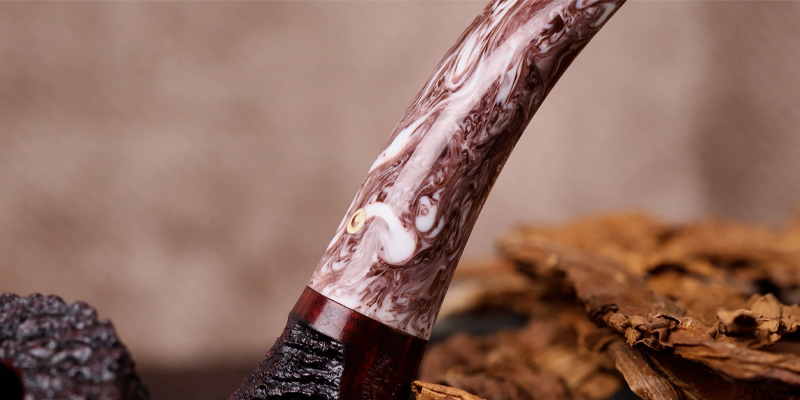
You mentioned earlier that all the stems he cast himself. When did he start doing that? As long as I've been familiar with his work, that's been the case, so it must've been pretty early on.
[SN]: Yeah, it would've been probably in the late '70s.
[SI]: Again, absolutely ahead of his time in terms of pipe making. Taking it that far into his own hands to actually make the material was not something that was common practice at all. We have some makers more recently now that are starting up that kind of thing, casting their own stem material. That's been a relatively recent trend to come back. It's labor intensive and it's a pain.
Some of the coolest stem materials I've seen in the last 30 years have been ones that J.T. made. You cannot find or recreate them and that's just so special.
J.T. Pipes: Singular and Unique Works of Art
I think anybody who's owned any of his pipes would say the same thing. That's why you search for them. That's why the resale value for his pipes is nearly what he was charging new toward the end of his career. He had a waiting list for years for his pipes toward the end. It's remarkable.
There's a finite number of J.T. pipes and I really appreciate you sharing these very special examples with us today and a little bit about his story, Steve. And thank you, J.T., for all you've done for pipe making. It's been a lot, man. I appreciate that and I know a lot of other guys do too.
You may also enjoy:


Comments
The most trustworthy product
The most trustworthy product