


 |
|
 |
|


Talking Pipe-Making Materials with Steve Norse of Vermont Freehand


Recently, we were joined at our roundtable with Steve Norse of Vermont Freehand to discuss his brand as well as his impact on the pipe-making industry through supplying artisans with key pipe-making materials to make their craftsmanship and innovation possible.
Note: The following transcription has been edited for clarity and brevity.
[Shane Ireland]: Steve, thank you for joining us today. For those of you who don't know, Steve Norse runs a company called Vermont Freehand. It's a company that's evolved a lot over the years and has become a critical piece of the pipe-making industry, especially in the United States, but globally too. We've spent a lot of time at all the pipe shows together. I've been up to visit your operation several years back. We're so happy you're down here with us.
Vermont Freehand's Beginnings
Can you tell us from the beginning how you came into this business and how Vermont Freehand transformed into what it is today, which is the go-to place for most of the artisans in the community to supply themselves with briar, ebonite, and all of the other materials that they need to craft the fine pipes that they do?
[Steve Norse]: I was raised as a furniture maker and always had an interest in woodworking. While helping out a friend's father painting houses as a kid, he smoked a pipe, and one day he asked me to make him a pipe. I told him I didn't know how to make one. I finally went ahead and made him a pipe just to get him to stop asking me and I had so much fun. Then, I made a few more.
I was very fortunate. We had PIMO Pipe Craft, which started in the '70s, and in the '80s it moved up to my little town in Vermont. I realized really early on that nowhere was a one-stop shop; you needed to go all around the world to get all the supplies you needed. So I started at a very small scale as an eBay store. For many years, it was a side hobby. I had other jobs going on, but then it just snowballed and got to the point where I got rid of my other jobs to focus only on the supply end.
20 years ago, we would have to do a group buy where everybody would chip in money to one person who would order ebonite from Germany. After four months of production, that would finally come to the states, and then we'd disperse it. We could get one diameter of one color of ebonite at a time to meet the minimum order. Now, 22 years later, we have 300 variations of ebonite on hand, ready to send out. Filling the gap of all the different products that pipe makers need has been a long journey.
[SI]: I don't think people quite understand how time-consuming it can be. I think everybody knows that the pipe-making craft itself is laborious. But so is the acquisition of materials. There's briar, stem materials, accent materials, polishing compounds, and everything that you need for finishing: leather dyes, Carnauba wax, EEE, White Diamond, and so forth. There's a very long list of supplies that go into making even just the most simple black sandblasted pipe, as well as the tooling required.
Supplier Relationships
You mentioned the minimum order quantity for one size of ebonite. How did you get the business to a point where you could offer multiple sources of briar, different grades, different blocks, all the different stem materials, and all of the other tooling and compounds? What does that look like supplier-relationship wise? How much did you have to travel to various locations to form these relationships? This isn't something you can just call up and suddenly be a supplier for.
[SN]: Correct. A lot of the basic things — polishing compounds, dyes, and stuff like that — are pretty easily accessible. When it comes to briar and ebonite, you need to make relationships with these families. Initially you'll see them at bigger trade shows, such as Chicago and Vegas. The relationships start there.
And then you make the pilgrimage out to Italy to Mimmo's, for example, and spend time with the family. When I'm there, the one rule is we don't talk business; we talk briar, we talk everything about it, but we can do business over email. When I'm there, it's time to get to know the family, get down in the factory, and help out. Also learning the process, from watering burls in the morning to cutting sanding blocks, is essential.
One year, I went to Mimmo's on my birthday and he took me out into the woods to harvest briar. Now he buys briar from his diggers. But Mimmo has only taken people out, I don't know, a couple of times maybe in his life. To be able to go out and do that on my birthday, starting with learning how it's dug out on the hillside, bringing it back to the mill for sawing, and then a year later, seeing it boiled, dried, and received in was very special. Making those relationships is crucial to the supply chain.
[Steve Mawby]: You gave yourself some hard labor for your birthday.
[Andy Wike]: It's so interesting. Further down the supply chain you go, the more micro business everything is. You can't just call up a briar digger and ask them to source some burls for you. It's a super specialized, labor-intensive skill.
[SI]: It's a fragile little ecosystem.
[SN]: The amount of energy that goes into a pipe is astounding, from the diggers who dig it up, to the donkeys carrying those sacks down the mountainside, and cutting everything up at the mill.
[SI]: Even before they cut it, there's curing, boiling of the blocks, sorting everything, keeping them humidified so they don't crack; there's just a crazy amount of steps that go into it, even before it's a raw block of wood.
[SM]: It's gotta be an amazing feeling when you've put all this work and all this energy into getting this little block of wood and sourcing it, getting the full supply and going through quality control, when you finally get that to a pipe maker and then months or years later you see the pipe that they made out of that briar. That's gotta be just an incredibly satisfying moment of pride for you to see that end result.
[SN]: It really is. At many pipe shows, I can go around to all the vendors and I know who orders what. To be able to see a whole table of perfectly finished pipes and know that between me and the one pipe maker, it went from raw form to finished pipe, it's really gratifying to see that.
[SM]: Yeah, and then also at the pipe show, you get to see somebody buy that pipe and then maybe light it up.
[SI]: Bring it to life.
[SN]: At that same show, the pipe makers are buying more blocks and the cycle continues.
[SI]: I think one of the reasons that your business has been so successful and so dominant in this field, at this point, is because of your pipe knowledge. Beyond just running a tight ship and having relationships on the supplier side on lock, the selection's great because you can think like a pipe maker as a pipe maker yourself.
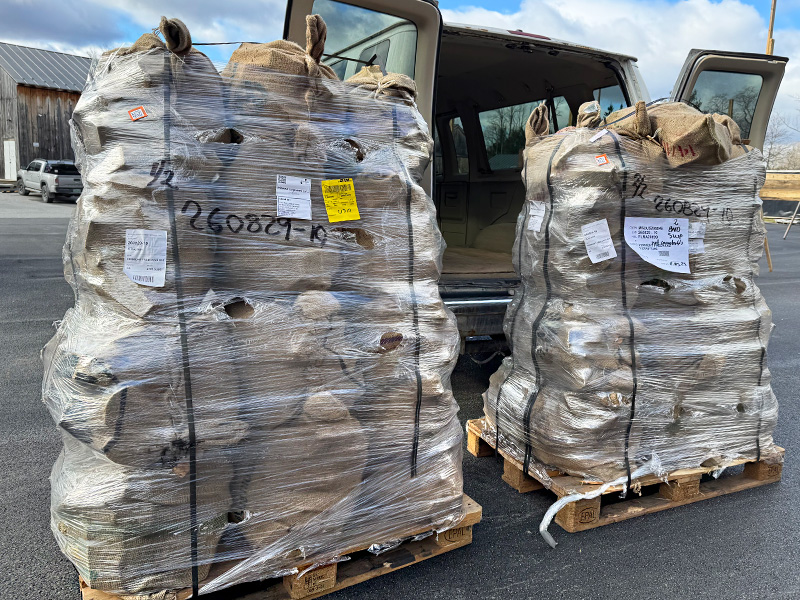
Vermont Freehand (Photo courtesy of Steve Norse)
Pipe-Maker Relationships
I think one of the other pieces of it, too, is your relationships on the other side: with the pipe makers. I have seen it on so many occasions. First of all, people flock to your room. At the shows, one of the first questions all the pipe makers ask when they get there is, where's Steve's room? Is his room open? It becomes a place of congregation for smoking, drinking, and friendship. But also I think a lot of that is because you are able to keep in your head dozens and dozens of preferences and conversations that you've had with these guys over the years.
Like you said, you know what they want, and that's crazy. Yes, they want briar and yes, they want briar that's free of flaws and that has good grain, but it goes so much deeper than that. Certain cuts that certain pipe makers would struggle to pull a shape out of, other pipe makers would love the challenge of, for example.
What do you think stands out in your experience over the years working with all these guys in terms of looking at the raw materials and being able to visualize who they're for? At a certain level, you're the gatekeeper of who gets what.
[SN]: When I bring briar in, there's various stages to make sure it's dried and cured. Sometimes a category sells out and you're selling it a little wetter than you anticipated. When it is coming in, sometimes I sand the blocks down, clean off the plateau, and there will be various people who want very specific things.
When J.T. Cooke was making pipes, he wanted a certain spacing in ring grain. He wanted blocks that showed more dominant rings than it did vertical grain. So those characteristics were for him.
Someone like Micah Cryder can take a block with really unusual grain patterns and come up with something that fits that pattern. He'll want a very particular styled surface of plateau and grain structure. I set aside very specific things and coincidentally, if I was to give that to 75% of other people, they'd be unhappy with the block. So knowing what people want and everything is very crucial to getting it all in the right hands.
[SM]: Yeah, in a large sense, you're curating the pipes that exist on the market, and that's a labor of love in and of itself. Along those same lines, at pipe shows, I have seen you coaching new pipe makers both on how to craft pipes, such as what to look for in briar, and then also coaching them on the business side because you know it from that perspective.
You've seen people come into the industry and go to the top of the craft, and you've seen people burn out. The amount of support that you put into the craft, the hobby, and the industry is just incredible.
[SI]: Steve Norse was awarded the Master of Pipes by the Chicago Pipe Club two years ago. I know the pipe makers recognize your impact. I think the community largely does, and for our readers out there that weren't aware of your game, now they are.
Without Steve's efforts, there would be less pipes on the market. There would be less pipe makers. Everybody would be struggling more to source these materials and at the quality that they're able to source now. What you've been able to do on a pre-industry side, for pipe making specifically, which is a dwindling craft, is wonderful.
There are a few stewards left who do this. Pipe making is hard. It's a labor of love what you do, and even more so for the briar cutters and the diggers digging up the briar burls. I think even more so than the crafting of the pipe, which is the penultimate final product you can be proud of. On the pre-industry side, to put that much effort and love into it is remarkable, and I think all of us smokers, collectors, and all the pipe makers certainly are in your debt for that. It's something that is probably still underappreciated.
Steward of Briar & Facilitator of Materials
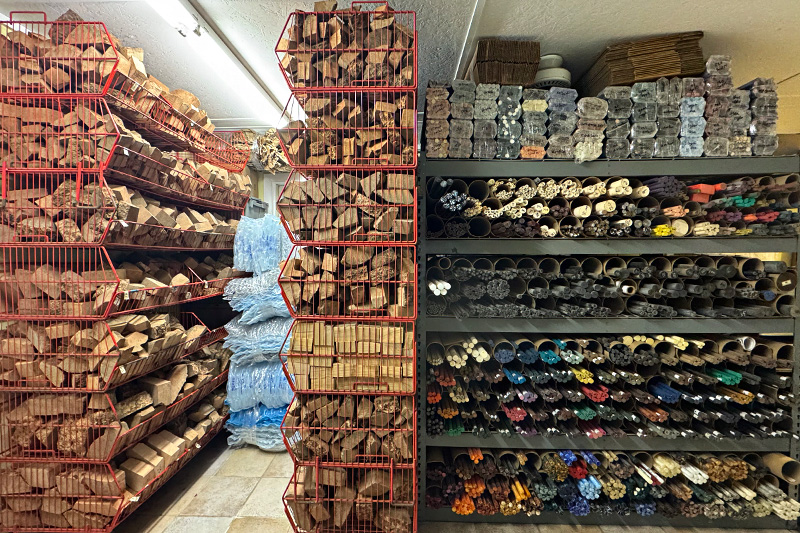
Vermont Freehand (Photo courtesy of Steve Norse)
What do you love about this industry?
[SN]: I do consider myself a steward of briar, first and foremost. Sure, there's other supplies and briar might be the lowest profit margin out of anything, but it's the most complicated, involves the most time, and being able to connect the right dots at the right time and do the best I can with what I got really pays off. I've always had that approach in life. Taking that approach into this business and being able to facilitate those materials and watch them grow far past what I could ever make in a pipe is really neat seeing.
The most important aspect for the entire pipe-tobacco industry is keeping those makers coming in, and keeping those new smokers coming in. Making sure that all the questions they have and the direction they take is helped along the way is crucial. There's so many questions I had when I started, but I didn't have the people to ask. There was no one to answer those questions. Now we've got an industry where we can access, inform, and share that information quicker.
[AW]: Yeah, that's really interesting. Going back to something that you said, it's so much more than just stabilizing the supply chain or facilitating it. What you do, Steve, it actually affords space for innovation. Without what you offer, we wouldn't see any of the emerging trends that we're seeing with new materials or particular finishes, like sandblasting patterns. All of this is dependent on the materials.
Being able to have a relationship that a pipe maker trusts based on supplier relationships helps create a space where not only can we continue making pipes that are interesting, beautiful, and functional, but we can continue pushing the craft further. Innovation didn't die in the '60s and '70s in Denmark. We're still pushing that envelope today.
[SI]: If pipe makers were spending more time chasing down tooling and supplies, that's less time that they would have for the craft. I've heard so many pipe makers over the last year, especially ones that have been around a long time, say things like, "I used to not be able to find this stuff," or "If I did, it was luck of the draw."
Bamboo was a big one. Bamboo is a difficult thing for guys to source. Now, they know they can go to Steve and more or less get exactly what they're looking for, from diameter, size, and coloring, to the funkiest bamboo out there. It's so nice that they have access to that and that it can fuel their creativity.
Compromise & Remarkable Results
Specifically on the pre-industry side, what's the most important aspect for those of us who don't understand the craft? What should we understand?
[SN]: The amount people have to compromise to get what they want. Sure, if we could make the most ideal thing every single time, we would, but every step along the way, whether it's the digger, the cutter, the seller of briar, or the pipe maker, everyone has to make compromises and do the best they can with what they have. By the time we have a finished pipe, the amount of people using so much effort to get to the best they can do for that project is remarkable. So much more goes into it than anyone will ever realize.
[SI]: It's a really special thing we have going here, and the layers behind what makes it special are endless. It's crazy. We've been in it every day for a long time, and we still learn new stuff all the time.
[SM]: The fact that all these different aspects can come together with natural products in a niche market through a labor of love is amazing. On paper, maybe it shouldn't work. But we get great pipes and get to have these cool experiences because of it, which is surreal. The way all of it comes together as often as it does is amazing.
[AW]: It's such a fraternity. We're all part of this collective thing that we're trying to preserve and carry forward, and it takes a lot of effort as well as very skilled, talented, and dedicated individuals, from the pipe makers to Steve to workers getting the burl and everyone in between to create pipes.
Pipes We're Smoking Today
[SI]: What's everybody smoking?
[SM]: I have my Il Cerchio long-shank Apple.
[SI]: I'm smoking a Deluxe System Anniversary Rua that I've been smoking a lot.
[SM]: That's a killer Rua.
[SI]: Crazy killer. It's an 8s, which wasn't on my radar for a very long time, and it's becoming one of my favorite System shapes.
[AW]: Yeah, for sure. I've got my little Emiliano Canadian. It's a really good pipe. It has a smaller bowl. We were smoking some hundred-year-old tobacco and I wanted to be mindful of how much I was taking. If you haven't checked that video out, please do.
[SN]: I'm smoking the smallest pipe J.T. Cooke ever made. It's my go-to and my favorite pipe.
[SM]: That's a killer pipe, and just so immediately recognizable as J.T. Cooke.
[SI]: Yeah, the blast, the stem, all of it.
Steve, thank you so much. Good to see you down here and get to talk about Vermont Freehand. Anybody out there who is interested in pipe craft or wants to level up their game, VermontFreehand.com is the only place to do it.
You may also enjoy:

Comments