


 |
|
 |
|


Breaking Tradition with Whimsical Designs: Danish Fancy Freehand Pipes


Pipe shapes are rather complicated. Whether we're defining what classifies a Billiard or an Apple, every pipe maker has their own interpretation of what a shape could or should look like. Of course, there are general shape charts followed, but one shape in particular varies dramatically just by definition, trading set standards for creative liberty: the Freehand.
What Is A Freehand?
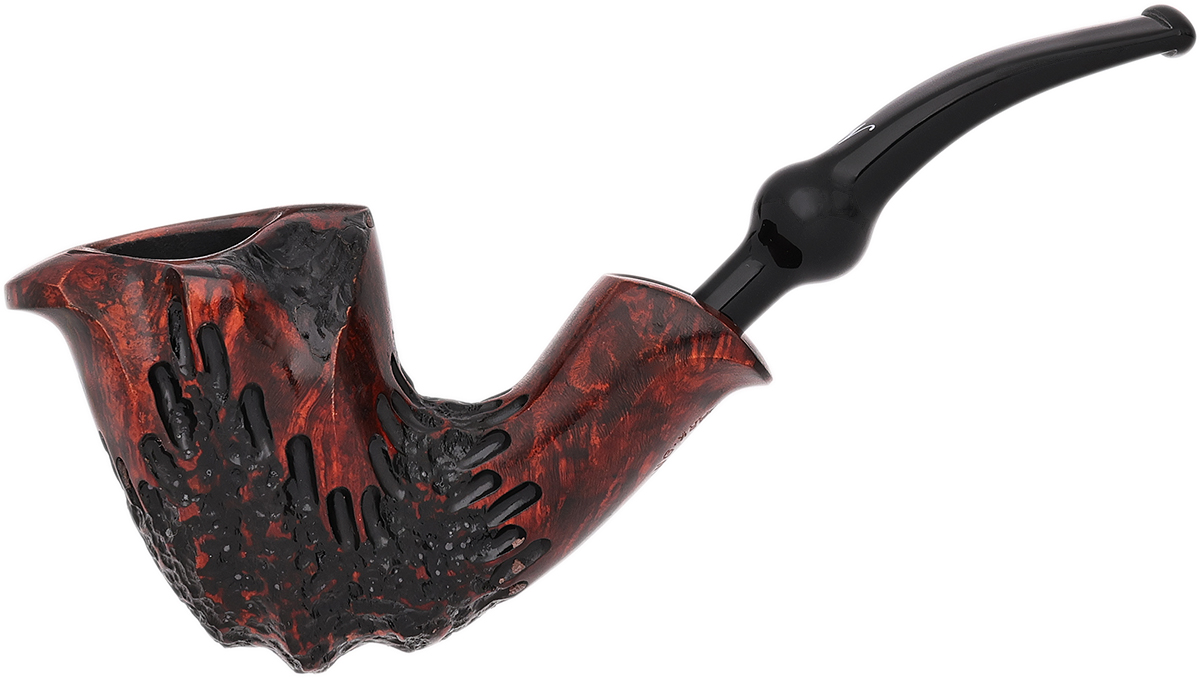
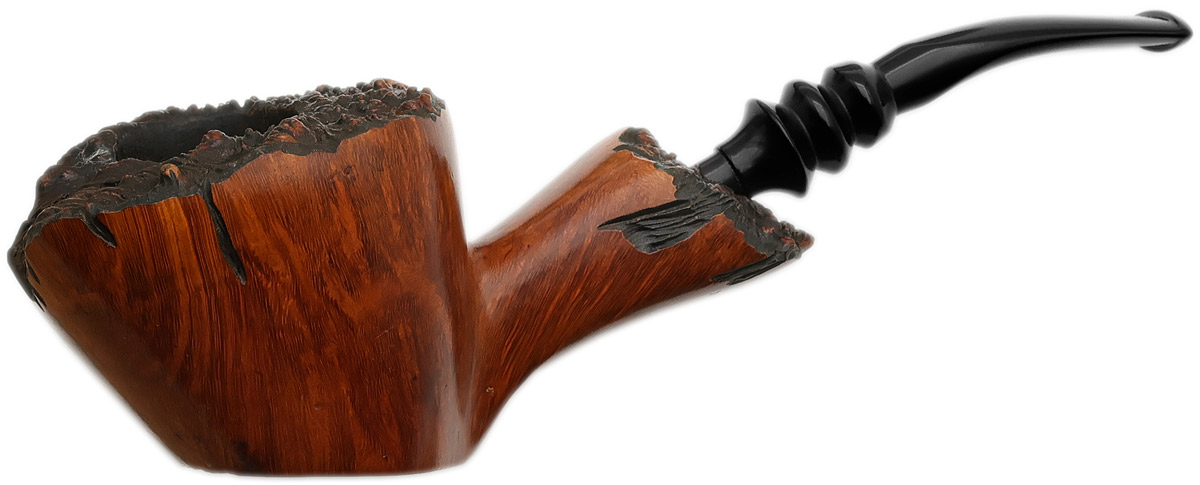
Nørding Freehand
A Freehand features asymmetrical shaping, and the style is highlighted by unique, original designs distinctive to a particular maker. While more classic shapes have narrower rules for design, Freehands open more potential for creative expression through the grain and with accenting materials. In general, a Freehand shape has a bowl or a shank that is not turned on a lathe, but rather is handmade.
It's interesting to note the idea of freehand designs in other art mediums, such as the Surrealist movement of the early 20th century, when freehand drawings and sketches were popular. Freehand art is free of restrictions; it is said to be guided by the unconscious mind, which aids in driving the composition rather than a set plan in motion from the inception of the piece. Freehand pipes are very much the same; anything goes, and the creative renditions that arose as these pipes grew in popularity are to be marveled at for their unusual yet striking aesthetic, often defined by emphasis on natural wood grain and letting its innate beauty shine.
Sixten Ivarsson's Impact
The handmade aesthetic of the pipe-making great, Sixten Ivarsson, and his impact on the pipe-making world changed shaping techniques and placed a greater focus on accent work and creative freedom in design. The idea of crafting dramatic Freehand shapes with eccentric, playful flare was a dynamic one in a time where classic designs reigned supreme.
Ivarsson's first fully Freehand shape, the Oliphant, inspired many artisans since. In the '50s, several pipe makers carved their own handmade pipes, including Bo Nordh, after making acquaintance with Ivarsson; though he was typically bent on creating more classic pipes, with perfectionistic tendencies in mind, he started making more Freehand shapes that pushed him creatively and went against the classic standard he usually followed.
The rising popularity of the aesthetic was evident from this point on, according to Pipedia: "The free hand pipe was something completely new and soon became very popular, especially with the rough bark left on the top of the pipe. During the '60s, several pipe factories and workshops were established, producing large numbers of semi-handmade free-hand pipes of very varying quality. For a period the USA was flooded with these fancy-pipes." This brings us to the beginning of the Danish Fancy Freehand movement in pipe making.
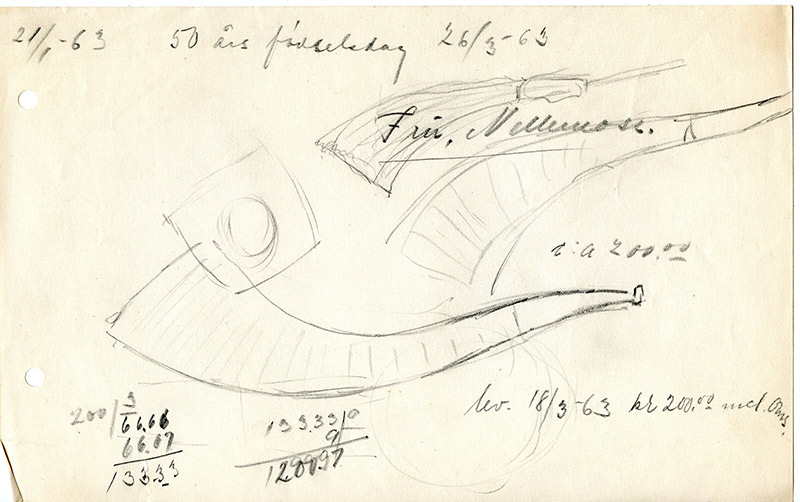
Sixten Ivarsson Drawing
Danish Fancy Freehand
In Truett Smith's Daily Reader piece on the History of Pipe Design in Denmark, he discussed the dawn of what came to be known as the Danish Fancy Freehand style in Denmark, based on Ivarsson's innovations: "The ability to approach briar as a blank canvas, as opposed to one restricted by a pre-drilled chamber and airway, allowed for an endless possibility of designs, and this more extravagant end of the Freehand spectrum became known as the Danish Fancy style."
It is important to note that, stylistically, Danish Fancy Freehands are quite different from more classic Danish functionalism; Instead of the consistent pipe-making style with emphasis on the natural grain patterns, Freehands are more modern, maximalist, and are characterized by creative freedom and organic, sculptural designs, deviating from more classic templates in favor of fresh ones, with bold ridges and natural briar plateau. This distinct aesthetic is a culmination of the envelope-pushing effect of Ivarsson's approach to shaping, creating a sub-genre within the open Freehand shape.
This aesthetic also went against the classic standards of English and French pipe design. Replacing traditional designs, this style prizes grandeur, with wild grain patterns highlighted without concern for typical line work and proportions. Danish Fancy Freehands rose to prominence in the 1960s through the 1980s, and some notable modern shapes are derivations of Freehands, like the Ramses, Elephant's Foot, and Ballerina; these began as Freehands but became more prevalent in the shape charts of artisans, leading to shape names that can be more commonly found.
Tactile details are abundant in this aesthetic, as are flourishing designs that are quite avant-garde and unusual; one-of-a-kind creations that would be difficult to replicate. There's artistic freedom and individuality in Freehand designs, which leaves the door open for incredible pieces of art. Many Danish Fancy Freehands also incorporate different materials, including accents with exotic hardwoods, tagua nut, mammoth tooth, and plenty of others — it's truly up to the pipe maker.
Notable Pipe Makers
In Truett's piece on The Hygge of Danish Pipe Making, the Freehand pipe naturally came up while talking about one of the most notable makers thriving in this aesthetic: Erik Nørding. "To Erik, the beauty of shaping Freehands is in their individuality, allowing the pipe maker creative and practical control over the pipe's aesthetics while also shaping around any natural blemishes the briar may contain." A pioneer of this design style, he has continued to see success, despite less popularity and prevalence in the modern day after the height of the style in the 1970s and '80s in the United States.
His Freehand line today showcases freeform design with rugged examples that cannot be found in shape charts. The briar imitates nature, left as natural as possible rather than appearing man made. Nørding's pipes are also cut exclusively from plateau blocks of briar. In the present day, other series like his Fantasy line are characterized by wild finishing techniques and organic shaping. His fantastical style has made him a frontrunner in the Danish Fancy Freehand aesthetic.
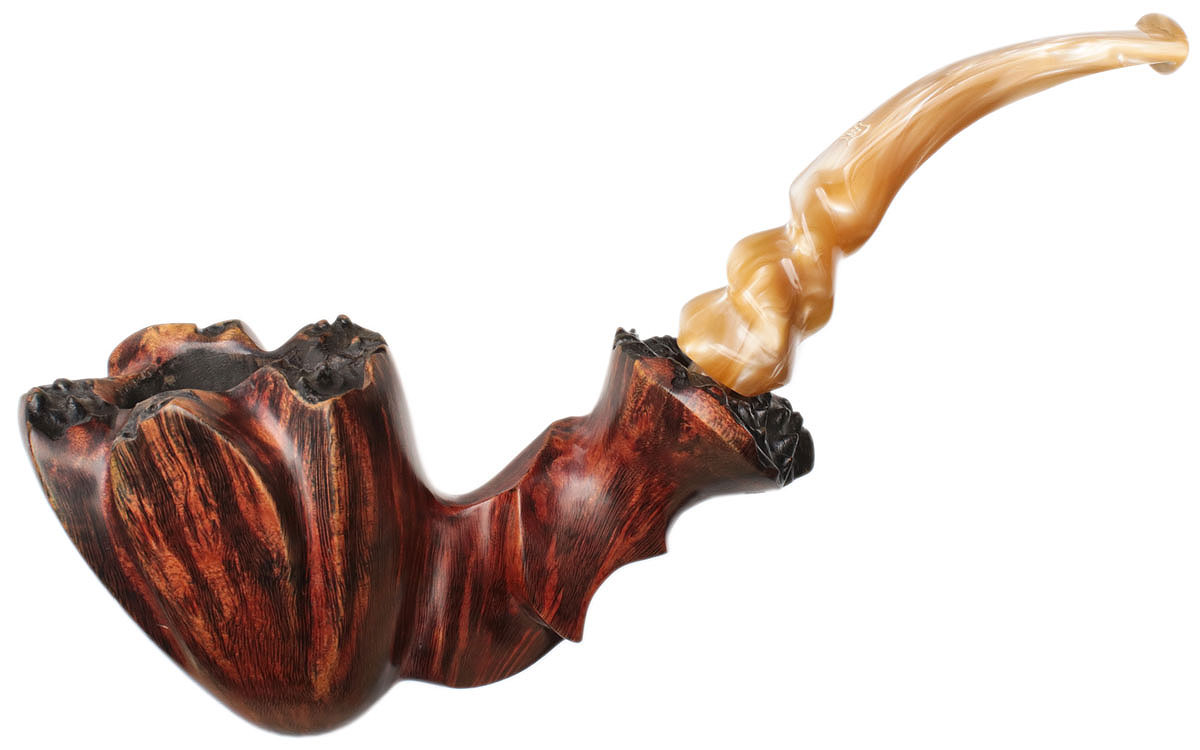
Preben Holm Fancy Freehand
Preben Holm's contributions also helped make this style more popular commercially. He was one of the first Danish artisans to make the style famous in the United States in the 1960s. He started selling pipes to Lane Limited under the Ben Wade label, and his workshop arrested attention thanks to his unique and creative approach to Freehands.
By "chasing the grain," his pieces were dramatic and quite shocking to seasoned, conservative pipe smokers with combined finishes of smooth and blasted surfaces, as well as large areas of the original bark on top of the bowl or at the stem's end — he directly contrasted the classic style. His designs were marked with highly sculptural builds, capturing the eye with flare and striking grain. These Freehand pieces came to be viewed as collector's items, selling for high prices due to their novel, hand-carved designs. The late Preben Holm certainly left a mark on the pipe-making world as a pioneer of the Danish Fancy Freehand aesthetic.
Preben Holm also trained a young Poul Winslow from the age of 17 as his head assistant before Winslow became the foreman at his workshop. In a quote representative of Preben Holm's artistry from Poul Winslow via Pipedia, he stated: "Preben was a genius. Maybe a bit wild, always flying from idea to idea and impatient for results. But he could turn a pipe! Some of the most extreme free-hands came out of our workshop in the '70s, and whatever his critics say, they sold like crazy, mostly in America. And when it came to finishing, he was the best in the business."
Harcourt Spot Carved Freehand
Interestingly, Preben Holm produced a brand of Danish Fancy Freehands for Dunhill called Harcourt, and Nørding later made these pipes also for a short period of time. As noted on Pipedia, these pipes were sold through Dunhill as well as Rich Mervin at the Brick Church Pipe Shop, a chain of three stores in New Jersey through the '70s and '80s. This company also sold Knute and Ben Wade Freehand pipes.
Karl Erik was another successful pipe maker in this aesthetic, who went on to produce pipes for multiple brands, including the aforementioned Knute brand in Denmark. His contract with Wally Frank, Ltd., in particular, is interesting to note regarding Danish Fancy Freehands as he was hired to create well-made, affordable Freehand pipes. This opportunity emphasized his talents in pipe making and commitment to quality at valued prices.
Danish Fancy Freehands Today
In the modern day, Danish Fancy Freehands are often seen as vintage pieces of pipe history. Though designs from the golden era of its production — the '60s through the '80s — are hard to come by, you never know what could arrive in our estates section. As mentioned before, Erik Nørding continues to produce Freehand pipes in this aesthetic, as seen in his Freehand and Fantasy lines, for example.
This movement in pipe making broke away from traditional pipe designs in favor of more fun and unusual ones. Unfortunately, information is quite limited about this particular style, and though definitions, by nature, of Freehand pipes remain open-ended, I think it's an intriguing part of pipe history to explore; Danish Fancy Freehands add much to the innate artistry of pipe making.
Do you have a Danish Fancy Freehand pipe in your collection? Let me know in the comments. I hope this topic was enjoyable for those interested — I find the artistic aspects of this industry to be particularly intriguing. Thank you for reading!
Bibliography
- Groth, J. (2024, January 24). Ivarsson, Sixten. Pipedia.
- Holm, Preben. Pipedia. (2025, December 2).
- Karl Erik. Pipedia. (2023, January 1).
- Smith, T. (2021a, March 12). The History of Pipe Design: Denmark. Smokingpipes.com.
- Smith, T. (2021b, September 24). The Hygge of Danish Pipe Making | Smokingpipes.com.
- What (and Why) is a "Freehand" Pipe? Part One. MBSDpipes.com. (2023, November 21).
You may also enjoy:




Comments
Five of my six Danish freehand pipes were made by Preben Holm; one under the Ben Wade label. The sixth is a Thurmann. I acquired them all in the early to mid 70s. I was a young lawyer and had the financial ability to move on from Dr. Grabow, Yellow Bowl and their ink. At the time, I don’t think a single one of these freehands cost me over $40. Times have certainly changed!
Kayla, fascinating article. Yes, I have one, a Preben Holm bought in 1989 at a Pipe Shop in Amarillo, TX. It is still in its sleeve and box. It is unsmoked.
Hello Kayla. I have and occasionally smoke a BEN WADE "Heather". It was purchased new in 1981 or 1982 from a TINDER BOX store in the Ocean County Mall in Toms River, NJ.
I have a 60’s-70’s Stanwell. Beautiful pipe. Shape 21.Artistic apple shape.Stem has Handcut stamped into it, along with Stanwell logo. Research shows this to be an Ivarsson design lineage although I have no provenance to verify. I have photos if interested.
I actually own the same Nørding pipe that is pictured in the article. An absolute dream to smoke. Very big size. Enough for an relaxing 2 hour 2.30 hour smoke. Smokes amazing with english blends. My favorit blend for this pipe is GL Pease Quite Night.