


 |
|
 |
|


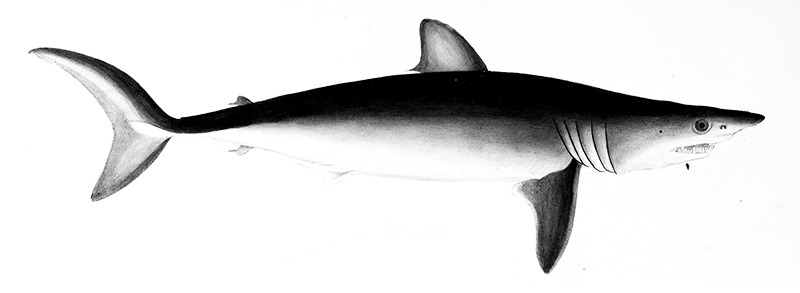
John Fairfax was the first to traverse an ocean alone by rowboat. It was the Atlantic, and two years later, in 1971, he and his partner, Sylvia Cook, were the first to row across the Pacific. The pipe-smoking adventurer had learned his navigation skills as a pirate and as captain of a vessel smuggling whisky, guns, and cigarettes across the globe. He was familiar with the sea and its creatures. When he was attacked by a 12-foot mako shark while cleaning barnacles from the underside of his rowboat in the middle of the Atlantic, there was a terrific struggle, and he killed it with his knife. His right arm was badly lacerated, and he had to rest for a couple of days, but he kept going.
It wasn't his only shark fight. On his second rowing adventure, he was spearfishing when a four-foot white-tip shark appeared and kept pestering him. It wasn't large enough to worry him — he had killed sharks three times its size —, and he pushed it away, but it kept coming back. When Fairfax speared a fish, the shark darted forward and ate it. Exasperated, he finally shot it with his speargun. It was an unbarbed shaft, and it passed through the shark, which was considerably annoyed.
It turns out that shooting a shark makes it mad, and that little white-tip sped through the water at Fairfax, who was not expecting such aggression. The two wrestled under the waves until Fairfax managed to get a good grip on it and drag it toward the boat. He called for Cook to get him a knife, which she handed over the side, and Fairfax sliced it open along its belly. That, too, made the shark mad, and it clamped its teeth into his upper arm. He plunged his hand into its gills, and it finally swam away and disappeared, leaving Fairfax to climb into the boat where Cook, aghast at the wound, applied a tourniquet. "Get the camera," said Fairfax. "This is going to make a great picture" (Brook, page 97).
Fairfax was a resilient guy with a colorful background. When he was a nine-year-old Boy Scout in Italy, where he was born, he had a dispute with other scouts, retrieved a pistol from his scoutmaster's pack, and unloaded it into the camping shelter. He later wrote, "I stood outside and started firing at the hut, where all the boys were sleeping. Those military bullets penetrated the wooden hut like it was made of paper. It was a miracle I didn't kill someone." Although no one was hurt, he was asked to leave the Boy Scouts.
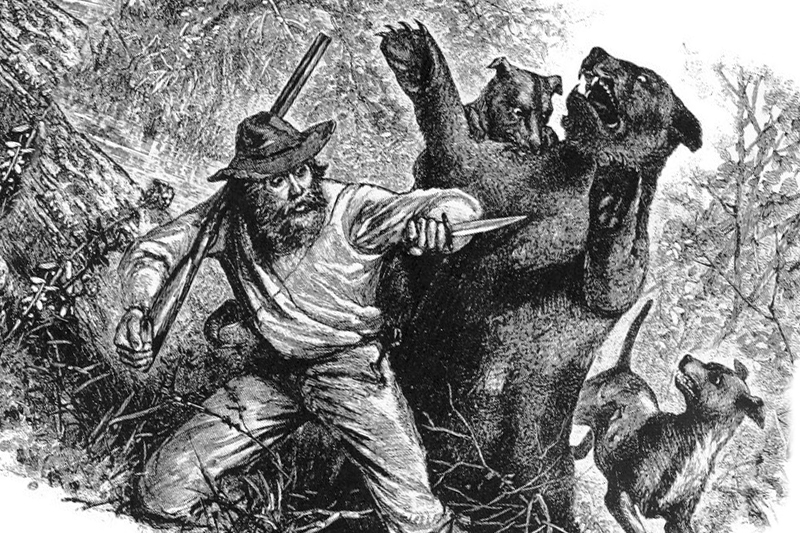
He and his mother moved to Argentina shortly thereafter. The reason is unclear, but maybe shooting military-grade bullets at Boy Scouts had something to do with it. He was a troubled youth, running away from home at age 13 to live in the jungle like his hero, Tarzan, existing as a trapper and selling jaguar and ocelot pelts to survive.
...shooting a shark makes it mad
At age 20, after a failed love affair, he decided to end his life. As might be expected, he chose an unusual approach: suicide by jaguar. He found a jaguar that seemed willing to cooperate, but as it began fulfilling his wish, he realized his error, quickly changed his mind, and shot it.
Fairfax pursued unusual experiences, as reported by Henry Brook in his book, True Sea Stories (2005):
John Fairfax had always lived a dangerous life: he once described himself as a professional adventurer. Growing up in South America, he'd explored the Amazon's forests while working as a trapper, driven across the USA in a sports car, and partied with Panamanian pirates — all before he was out of his twenties. He believed in setting himself challenges, testing himself to the limits of mental and physical endurance (page 97-98)
When he was in his teens, Fairfax had read about George Harbo and Frank Samuelson, two Norwegians who rowed west to east across the Atlantic in 1896. It seemed like an adventure that suited him, but he decided he would row the Atlantic by himself and set a world record. Later, living in London, he started training, with lots of swimming, running, and rowing.
He attained the physical condition he deemed necessary for the crossing, but he had no money and no backers. Building and provisioning a boat that could cross an ocean was expensive. He published a notice in the newspaper seeking backers. Only six responses came back, and none of them offered money, but one was from amateur rower Sylvia Cook, who offered to help. It started a relationship that would lead not only to dating but to the two rowing the Pacific Ocean two years later.
...he'd explored the Amazon's forests while working as a trapper, driven across the USA in a sports car, and partied with Panamanian pirates
They managed to raise the necessary funds over the next year, and on January 20, 1968, Fairfax started his solo journey aboard the Brittania, a 22-foot boat loaded with 860 pounds of provisions. It was designed to right itself after capsizing, which would happen often, and was self-draining to empty the water that collected inside. Waves constantly breached the sides and that was an essential element.
The first day was demoralizing. He rowed all night, and when morning broke, he could still see land. He estimated he had traveled a mere 15 miles. Temperatures hovered around 90℉ with intermittent downpours of rain. The task ahead seemed impossible, but Fairfax wasn't the sort to be dismayed by the impossible.
"I'm after a battle with nature, primitive and raw," he said around that time. Like Sir Edmund Hillary and George Leigh Mallory said before him, both attempting Everest, he climbed it because it was there.
The trek drifted into a routine with Fairfax rowing 10-12 hours a day. He had to supplement his supplies by spearfishing, and occasionally he'd enter shipping lanes, where crews were always happy to provide more provisions, including pipe tobacco, when they learned who he was and what he was doing. After one such visit, he was loaded up with fresh produce and so craved it that he gorged himself despite knowing better, and he was ill for two days.
He had many adventures and life-threatening experiences, was often washed overboard by waves, and frequently battled storms, but his pipe helped him through it. He smoked cigars and cigarettes as well, but his pipe was his special treat to himself. "I found the craving for a strong cup of tea overwhelming after waking up, as I always had a dry, salty, bitter tang in my mouth then. With it, instead of the usual cigarette, I resolved to have a pipe. A full one, too! Yes, that would be nice" (Fairfax, page 86).
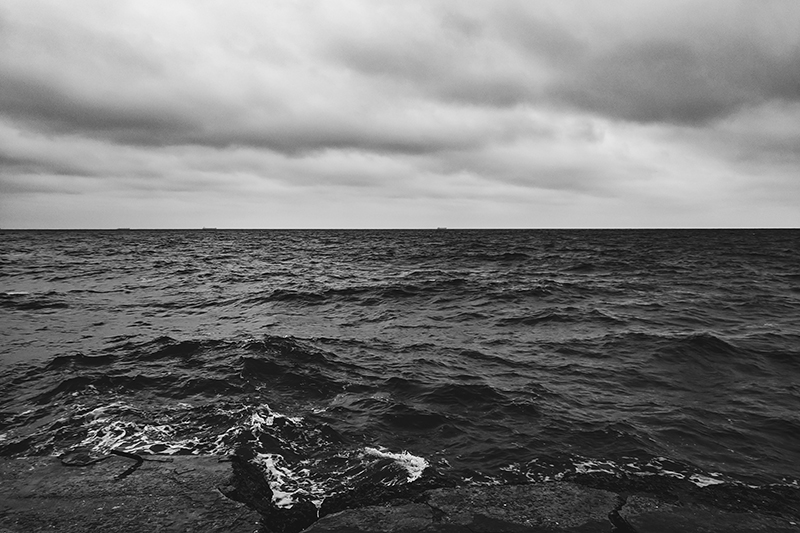
His tobacco supplies were a worry to him. His log on his 61st day of rowing includes a mention: "Getting short of tobacco as well. Am now smoking one cigar, five cigarettes and one pipe per day. Maybe it will last till we reach the shipping lane. Very tired. Rowed 10 hours" (Fairfax, page 122).
"I resolved to have a pipe"
By day 84, he was out of pipe tobacco:
Rowing north, it will take me longer to reach the shipping lane — probably three or four days more, always provided this weather holds. But I am not worried, although I have run out of pipe tobacco, and my food will last only four more days. After that it will have to be fish every day until we meet a ship — on April 20-21, with luck. If I miss sighting a ship there will be, of course, no turning back, and I will have to push on until the next shipping lane — about 15 to 20 days' rowing time (that is to say, 20 days from the moment we reach Longitude 40°). The prospect of eating nothing but fish for all that time makes me shudder, but I am prepared to accept it (Fairfax, page 141).
The monotony of the journey began to wear on him, as seen in his tone for his day-89 log entry:
Still two and a half months to go! Have never sailed in my life, but the way I see it, sailing, whether single-handed or not, is just a joke, a childish game, compared with rowing. Today has been a really terrible one. Nothing whatever went right. Nearly lost Britannia, then cut my hand on the palm, and it hurts like hell when rowing. Lost a spear. The burner broke and had to be replaced, and I smoked my last pipe, God damn it! And ate fish for breakfast, lunch and dinner. Oh, I have had enough. Good night! Rowed 11 hours (Fairfax, pages 144-145).
On day 95, he was scouting the shipping lanes for a ship to resupply him. He was particularly hoping for some tobacco:
At sunset I spotted another ship, but this one was too far. I can see them but they can't see us. The fate of the castaway must be a very sorry one. I miss, most of all, my pipe. I think I have said this before, but it was, in a way still is, my best companion. It is a funny thing, but I usually don't bother much about smoking a pipe when life is normal. Then cigarettes will do just as well, or better; but as soon as I find myself in an adventure, be it hunting in some remote South American bush or on the seas, I have always found my pipe the best of friends (Fairfax, page 151).
He did find a ship and asked for water and shampoo. "Anything else?" called the captain.
"I miss, most of all, my pipe"
"As a matter of fact, I could use some pipe tobacco and a carton of cigarettes." He later wrote about that episode: "I thought he would blow a fuse, but he disappeared from sight before I could tell him the particular brand I had in mind" (Fairfax, page 175). His request was granted, though he did not receive as much tobacco as he would have liked. He should have started with considerably more tobacco. He depended on it more than he did food.
He reached Florida after travelling 5342 miles in 180 days. That's an average of 0.8 mph. It took enormous fortitude and resolve, but he achieved his mission, and his pipe helped him endure the harsh conditions. "Fairfax was an indomitable, fearless and taciturn adventurer. He could sit in brooding silence for hours, puffing on his pipe, then suddenly he would jump up and dive over the side for a relaxing swim with a school of white-tips" (Brook, page 100).
After that journey, Fairfax swore to never again touch an oar. "'This is bloody stupid,' he said as he came ashore" (Fox, page 1). But two years later, he and Sylvia Cook set out from San Francisco to Australia, rowing across the Pacific Ocean on the 36-foot Britannia II.
"He could sit in brooding silence for hours, puffing on his pipe"
It was a supreme challenge to their endurance. They experienced multiple capsizings, food shortages, and were caught in a cyclone, losing their radio communication. "It was very, very rough, and our rudder got snapped clean off," said Cook in a telephone interview with Margalit Fox. "We were frequently swamped, and at night you didn't know if the boat was the right way up or the wrong way up." Perhaps the most difficult episode was the shark attack previously mentioned. Cook wrote more about it in the book they co-wrote, Oars Across the Pacific:
The wound was ghastly, looked like a joint of veal pulsating and bleeding profusely. It was about six inches long, more than an inch wide and over an inch deep, a great chunk of meat missing from the middle. I tied a handkerchief tightly round the arm above the wound for fifteen minutes and splashed rain water over the injury for superficial cleaning. Johnny was looking really grim and suffering greatly. I had this dreadful feeling of helplessness, which has been with me to a greater or lesser degree ever since, while I gave him a swig of whisky, a couple of Tetracyclin capsules and some hot sweet tea.
"Pictures. Take photographs. Go and get the camera," and when I had done so: "Now my pipe — Right. Now take photos — real close." I could scarcely believe my ears. How cool can one keep? (page 221)
It's particularly revealing that Fairfax immediately asked for his pipe. Pipe smokers understand.
On their 357th day, they had almost reached their destination but were unable to get past Australia's Great Barrier Reef, which was living up to its name. Fairfax estimated that they had a 50% chance of wrecking. It was maddening to be so close yet unable to proceed. Fairfax wrote,
"I gave him a swig of whisky"
A really precarious situation arises now. If we let go the anchor — which, by the way, I hope holds — and try to make our way to the west, which seems possible at high tide and is the only way we can go in any case with this E.S.E. wind, we might run into real trouble later on. If the anchor does not hold we really have had it, as it is blowing half a gale and we are completely surrounded by coral patches, although, luckily, the sea is too shallow to break badly (Fairfax and Cook, page 229).
Making the situation worse, Fairfax was again out of pipe tobacco, and Cook tired of hearing him complain about it, as Fairfax recounts:
To spend a few days lying at anchor at the very edge of the Great Barrier Reef was something I had been looking forward to since leaving San Francisco. The water was crystal clear, the coral patches looked absolutely luxurious, and the sea was teeming with all sorts of fish. A diver's paradise and, because of my wound, I could not dive, to avoid the risk of infection. This, and the fact that I had run out of pipe tobacco, made me feel utterly despondent. As I kept complaining about it, Sylvia thought I was mad.
"Stop behaving like a spoiled brat, will you? Here we are, at the very edge of disaster and all you can think of is smoking and swimming. Have you no sense of proportion whatsoever?" (Fairfax and Cook, page 231)
They finally made it with the help of high tides and wind, and a new world record was set. They had completed an unheard-of and herculean task: they had rowed across the Pacific Ocean.
That was the end of seafaring for both of them, except when they journeyed together to retrieve a sunken ship of lead ingots that they had discovered on their Pacific crossing. It was a failed mission, though, too dangerous to achieve.
"... the fact that I had run out of pipe tobacco, made me feel utterly despondent"
Fairfax and Cook did not remain a couple but were friendly over their remaining lifetimes. Fairfax went on to live in Las Vegas, where he pursued the life of a baccarat player. It seems that he required risk — and pipe tobacco — to be happy.
There are no records of what pipes or specific tobacco Fairfax preferred, but photos show him smoking a large sandblasted Billiard and another pipe with a sharp heel, possibly a straight Bulldog. He died in 2012, famous for his exploits. Whenever he needed to name his profession, he called himself a professional adventurer. He was also a pipe smoker, and whatever blends he smoked and from what pipes he smoked them, pipe tobacco was an essential part of his eventful life.
Bibliography
- Brook, Henry, True Sea Stories (2005), pgs 95-109
- "John Fairfax" (Feb.2012), The Telegraph
- Fairfax, John, Brittania: Rowing Alone Across the Atlantic (1971)
- Fairfax, John and Cook, Sylvia, Oars Across the Pacific (1972)
- Fox, Margalit, "John Fairfax, Who Rowed Across Oceans, Dies at 74" (2012)
You may also enjoy:




Comments
What a cool story and cooler guy. Well written. Keep them coming and nicely done!
I really liked this. I’d never heard of John Fairfax. Well written and well told.
Great story!
Ditto to the above.
I got seasick just reading his adventures!!!
Amazing story and gentleman!!
I would say this is apocryphal. Si non e vero e ben trovato.
:-)