


 |
|
 |
|



A Conversation with Charles Lemon: Author of the new book Brigham Pipes: A Century of Canadian Briar


The history of tobacco is both well documented and not. Sure, we know who introduced tobacco to Spain and popularized smoking in England but there are also large gaps of information in details on tobacco brands and pipe manufacturers. An example of a distinct lack of information would be the history of Brigham pipes — rather, it was an example. Charles Lemon's new book Brigham Pipes: A Century Of Canadian Briar is an in-depth look at the first hundred years of the Brigham brand, meticulously researched and full of invaluable information about Brigham's history. The book also serves as the authority for Brigham collectors to identify the shapes and the years their pipes were manufactured.

A professional pipe restorer living in Ontario, Canada, Lemon and his wife have been married for 30 years and have two daughters in their 20s. He brings considerable life experience to his current vocation. He's been a Canadian Army Reserve Officer, a professional chef, a post-secondary instructor, a stay-at-home dad, and a small business owner and entrepreneur.
"I became interested when I rediscovered my father's pipes decades after his death," says Lemon. "They had been unceremoniously boxed up years ago so I looked into how to clean them up so I could put them on display. I researched and practiced fixing up my Dad's pipes and then others I found at garage sales, etc. One thing led to another and I began professionally restoring and repairing smoking pipes in 2015 when I launched DadsPipes.com.
Lemon started writing about pipes around the same time he launched his site. "I have been publishing blog posts at least twice a month — at first I wrote about every pipe I worked on, but as you can imagine, that became repetitive fairly quickly. Now I tend to omit the basic 'ream & clean' type restorations in favor of the more interesting or technically challenging projects that come across my workbench, including hand- cut stems, crack pinning, burnout repair, and those projects that require creative thinking."
Lemon attributes his writing skills to having a particularly tough English teacher in his senior year of high school. "I have dabbled with creative writing, but my strength seems to be an ability to process complicated data into easily understood concepts using everyday language. That has been a great asset when writing blog posts about pipe restorations for my site and, of course, when writing the Brigham book."
"I researched and practiced fixing up my Dad's pipes and then others I found at garage sales, etc."
Part of what makes Lemon's writing so enduring is his blunt honesty. If he doesn't know how to answer something, then he straight up admits it. "If something goes wrong during a pipe restoration, I include it in the blog post along with how I dealt with it. I think this has made my writing accessible to a lot of readers."
Lemon's skill at processing complicated data proved useful when he began working on the history of Brigham. He had the full support of Brigham behind him when he set off on this journey but their archival material consisted of just four boxes dating from the 1930s to 2010. "These were instrumental in tracking details like the evolution of the Brigham Dots and the various grading schemes used over time, but I also spent a lot of time digging through public records on sites like Ancestry.com, Library and Archives Canada, and various newspaper archives to unearth many of the details on the earliest years of Brigham & Co.

Roy Brigham, 1906 (sourced from Brighampipes.com)
"The City Directories published during these periods were immensely helpful as they recorded not only business names and addresses but also personal information by household, including occupation and employer. This allowed me to identify at least some of the people who worked for Roy Brigham and to track the size of the company through World War I and the Depression years."
"If something goes wrong during a pipe restoration, I include it in the blog post along with how I dealt with it"
Staying organized was one of the most challenging parts of Lemon's journey. He organized his materials by decade until a timeline started to emerge from the pieces. "Much of the information came in bits and pieces rather than whole chunks, which required turning things over methodically before the bigger picture became clear." One of the most shocking parts to Lemon through the process was becoming "the" authority on Brigham. "Being identified as an authority on anything is still mind boggling to me." Lemon first started to gain this reputation when he posted an article on his blog called "Brigham Pipes - A Closer Look at Dots Dates and Marking" in 2016.
What started as a simple desire to understand his late father's pipe collection spiraled into a Shape Chart and soon Dadspipes.com was seen as the place to source information on Brigham pipes, and Lemon's workbench as the place to get them repaired. "Having now written the book, I know that there are still lots of things I don't know about the history of Brigham pipes. Unfortunately, the people who had the answers to a lot of those questions are not around anymore to ask."
This isn't to say Lemon's journey in discovering the history of Brigham was a cake walk. There were several points where he felt at wit's end. "The COVID-19 pandemic hit while I was still researching the book, which took up 100% of everyone's time and energy for a while, making research trips and in-person interviews impossible. The book collected dust for a bit, but I eventually went back to it and filled in enough of the remaining gaps to form a complete narrative."
"Being identified as an authority on anything is still mind boggling to me."
Lemon's career offered him a unique perspective as well in the writing process. "My experience as a restorer certainly provided a level of insight into the production of smoking pipes that an average person may not appreciate. I am not a pipe maker by any stretch, but I have a decent understanding of the processes and pitfalls involved."
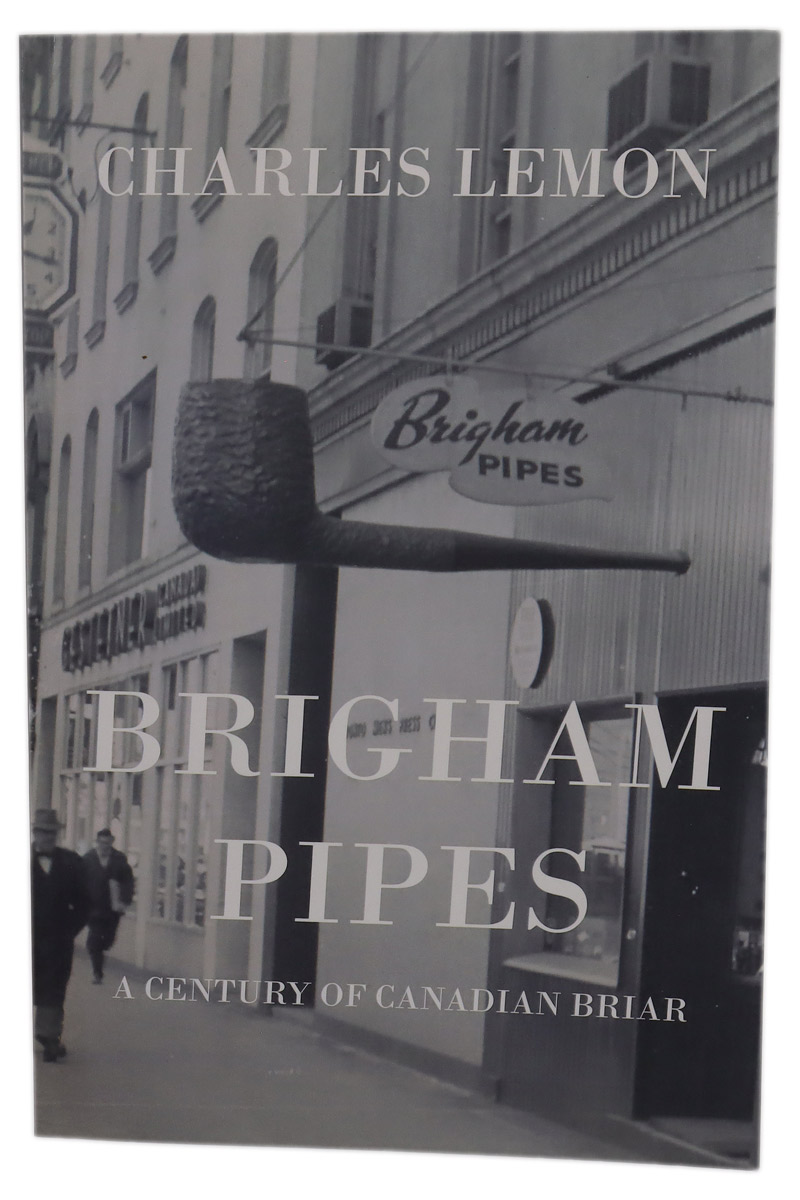
As the title implies, Brigham Pipes: A Century Of Canadian Briar, only covers the first 100 years of Brigham pipes but the brand expands well beyond the first century. "The thing about history is that it just keeps going. I would have loved to dig deeper into the details around Brigham's shift to European production in the early 2000s, but I had to draw a line in the sand somewhere and leave the company's modern history to the next historian."
Lemon's research was expansive but it wasn't just the history of the pipes that interested him. In his research, he uncovered history that surprised the Brigham family themselves. "Like the fact that Roy Brigham was born in Shawnee County, Kansas, making the founder of Canada's most prominent pipe-making firm an American by birth, though he lived in Canada since the age of two." Lemon still got satisfaction from documenting the evolution of the Brigham Dots and grading schemes, piecing them together from archived promotional materials, leading him to a Eureka moment when it all came together.
Despite his stellar research, there were frustrations throughout the process. "While I was able to answer the 'when' of many of the details in the book, the 'why' often remained elusive. For example, records show that Roy Brigham and his wife Mary moved from Toronto to what is now Windsor, Ontario, in 1915, where Roy set up a construction business, but I can only speculate on the reasoning behind the move. Clearly Roy saw an opportunity there, but questions remain — How did a pipe maker learn to build houses? Did he have family or friends in Windsor to make the move easier? Did he have partners in the construction company? That sort of thing."
"The thing about history is that it just keeps going"
While Lemon's journey was a professional endeavor, there was a large personal element to it. "My dad was killed in a light plane crash when I was a child, but decades later his pipe collection, full of Brighams, strongly influenced the selection of my first pipe, a Brigham 218. The book is dedicated to his memory. I like to think he would have enjoyed reading it."
With the book finally released, Lemon looks forward to a future spending more time with his family, workbench, and trusty Brigham 218. Brigham Pipes: A Century Of Canadian Briar is available for purchase on-site now, and is a great read for pipe enthusiasts and collectors alike. You can check out more of Charles' work on his blog dadspipes.com.
You may also enjoy:






Comments
MY NEXT ORDER WILL INCLUDE A COPY OF THIS BOOK. BRIGHAM HAS BEEN ONE OF MY FAVORITES FOR YEARS!!!!!!!!!!!FR
Great conversational piece with the DRDigest to promote your new book. I truly believe that your father was there from above while compiling and completing this book. All of this was reflected in your dedication. Congratulations and continued success. Respectfully, "ZIGGY "
Great read and a collectors must have.