


 |
|
 |
|



When I was growing up, my mother enjoyed restoring old furniture in her spare time (when she had it). Odorous mélanges of turpentine, paint remover, and wood stain often permeated the garage while her latest project occupied the back corner, paint chips and crusted rags surrounding. Honestly, I don't remember seeing her work on many pieces, but she must have because much of our home's décor comprised various hutches, chairs, side boards, and other such items that she had refurbished. However, I definitely remember being dragged to any and every antique store within 50 miles of our home.
Joining mom on her antique-hunting excursions wasn't so much a defined chore like mowing the lawn or doing the dishes; it was more of an understood prerequisite of being her child. I didn't pay for groceries, or housing, or utilities, or really anything, so there wasn't much leverage against having to go antiquing. Plus, every so often, she would claim we were going shopping only to surprise us with a trip to the movie theater. That slim potential was just enough to keep me from begrudging the outings too openly. Absolute parenting genius.
Still, 95 percent of the time we merely did go to an antique store, and I was forced to follow behind as mom perused people's former trash in hopes of finding a treasure.
At the time, I didn't appreciate the decades — sometimes centuries — of history contained within those dusty items; to me, they only seemed worn, old, and worthless. Nonetheless, what was once indifference and even derision later transmogrified into the opposite: a love for antiques and for the people and experiences they represent.
It's now rare that I will visit a city and not prioritize its antique shops. What was once a bane as a child is now something I enthusiastically seek. And as a pipe smoker, I am naturally always on the lookout for vintage pipes. It's a fairly fruitless endeavor, admittedly — I've found precious few antique pipes in person and even fewer that didn't have broken stems or shanks — but the potential is enough to excite and the discovery satisfies in and of itself.
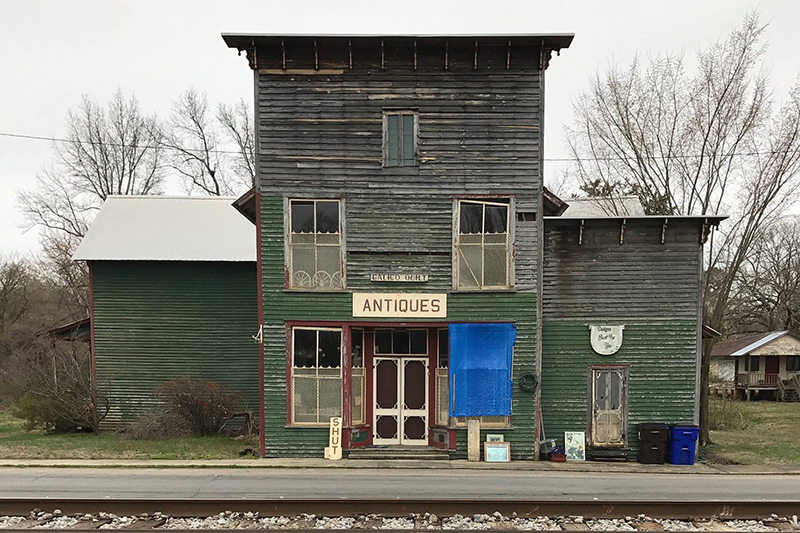
In my years of antiquing and pipe hunting, I've recognized a few patterns and developed a few strategies that either help in finding pipes or in determining whether they're worth acquiring.
Don't Be Afraid to Ask
This is an obvious suggestion, but it's proven the most successful: Ask the antique shop attendant if they know of any pipes available in the store. Unsurprisingly, trying to find a pipe among a shop full of (often unorganized) wares and memorabilia is like haphazardly strewing a decades-long tobacco collection across the backyard and attempting to find a particular, one-of-one tin. To some of us, that's actually part of the enjoyment, but for those who are solely interested in the pipes themselves, I highly recommend asking one of the staff members. More often than not, they're incredibly well versed on the store's layout and contents.
Prioritize Glass Display Cases
If you're in it for the adventure, though, or if the staff isn't sure, then prioritize any glass display cases that may be in the store. Often times they're located at the front near the register — waist-high, shelved displays — but taller, more slender cases are sometimes found deeper on the store floor. It's in these displays that smaller, more delicate items like jewelry, watches, buttons, coins, pipes, etc. are showcased. They're often locked, so looking for pipes is like reading Where's Waldo? or I Spy.
Look for Stem Logos
Unfortunately, most antique pipes haven't been well maintained, and many will have severe condition issues: burn out, charring, broken stems, cracked shanks, etc. However, pipes from some brands are still valuable even when in rough shape. It's important, then, to know what brands to look for and the brands' stem logos. With pipes most likely displayed in locked cases, stem logos are often the best means of identification, informing whether or not to ask the attendant to unlock that case for closer inspection.
Keep in mind these brands especially and their stem logos when on the hunt for antique pipes:
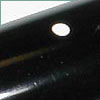 |
Dunhill | The iconic White Spot is perhaps the most iconic of all stem logos. But beware of smaller, lesser-known brands copying. |
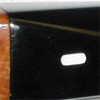 |
Castello | Similar to Dunhill's, but a white bar instead of a dot. |
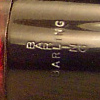 |
Barling | The words "Barling" intersecting in a cross. |
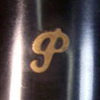 |
Peterson | The unmistakable, scripted "P". |
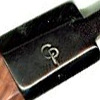 |
Charatan | An overlaid "C" and "P". Various eras differ slightly, with the "C" sometimes overlapping the "P" and sometimes not. |
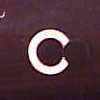 |
Comoy's | A simple "C". The tri-part "C" being of Comoy's earlier and more prestigious era — look for a black circle in the ebonite forming the letter C's gap. |
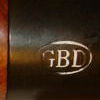 |
GBD | Arguably the easiest — "GBD" in an oval, with inlaid metal versions representing earlier pieces. |
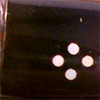 |
Sasieni | While the brand has featured numerous stem logos depending on the individual series, the most common is probably four white dots arranged in a diamond shape. |
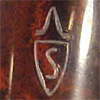 |
Savinelli | Best to be on the lookout for the standard "S" shield logo with two pipes leaning against each other above it. Worth noting the Autograph's signature logo, though, as well as the Punto Oro's single metal dot and the Giubileo d'Oro's trio of metal dots. |
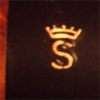 |
Stanwell | A crowned "S". |
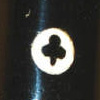 |
Kaywoodie | A shamrock. |
Stem logo images courtesy of Pipe Phil's website (pipephil.eu), a reference site cataloging pipe brand stampings and markings.
Of course, this is nowhere near an exhaustive list, but it's a solid foundation. For a more complete list of brands and their stem logos, check out Pipe Phil's website.
Don't Forget About Meerschaums
I would say that meerschaum pipes are more ubiquitous in antique shops than briar pipes, which has always surprised me because more people smoke briar pipes than they do meerschaums. That said, to a non-pipe smoker, a carved meerschaum looks more intricate and distinctive (and valuable) than a standard briar, so maybe it shouldn't be surprising. So, don't forget to look for meerschaum pipes.
Survey the Entire Store
Just because you've found a selection of pipes doesn't mean you've found all the pipes a store has to offer. If the store is non-consignment and contains only wares sold by a single vendor, then all of the pipes might be displayed next to each other. However, the vast majority of antique shops are actually multiple vendors arranged in distinct booths or sections. In these cases, be sure to look through all of the stalls since any pipes will be located in the section of their respective vendors.
Even if the pipes I've discovered while antiquing have been smoked beyond their limits or are valueless basket pipes, the excitement of discovering them "in the wild" is more than worth the effort, and the potential of finding a true gem whose worth no one realized will always entice me.
Have any of you found any vintage pipes at antique shops? What's been your best find so far?
You may also enjoy:




Comments
How do you know if a meerschaum pipe is really a true pipe or hand carved?
It’s very difficult on eBay to tell except going on the seller’s word.
In my opinion, it is impossible to tell from a photo of the pipe on the internet. The only way is the water test, and that can only be done by holding the pipe in your hand. In that case, the only thing you can do is look for the meerschaum brand marks or symbols to see if it comes from a recognized manufacturer.
Hunting for vintage pipes is an interesting pursuit; unfortunately, in my country (Ecuador), there are very few antique shops. Since there wasn't much of a pipe-smoking culture here, the collections of the few smokers who did exist were often thrown in the trash—because, as I said, there is no real appreciation for antiques. Finding unsmoked vintage pieces is a true treasure—a unique experience. The few pieces I’ve managed to find (whether estate pipes or "new old stock") came through referrals following a pipe smoker's passing, but such opportunities are rare. That leaves me with eBay, where prices are often unrealistic, and unethical sales tactics—like automatic bidding—are sometimes employed. In any case, it was an excellent editorial.
I’ve found several pipes worth finding at antique shops and flea markets. The most notable are a Dunhill LB billiard which while not in top shape still brought a decent price at resell after a bit of cleanup, and a Peterson billiard with sterling band. The Pete had been over-reamed and most of the stampings on the briar were worn away, and it had a crack in bowl which may or may not have gone through to the chamber. But it smoked well; I still have it and it’s been a favorite for many years.
Over the years, I've acquired several hobbies that benefit from a trip to the antique store. One bit of advice is to be aware of what you're looking for. Also, be aware of the KINDS of booths you're looking at. Stuff with Christmas decor or country kitsch won't likely have pipes. Also keep an eye out for old tobacco tins. Stop at these booths and take a better look around. Safety razors, drafting supplies, old tools, fishing lures; grandpa stuff. I've honed my brain to keep an eye out for many things. Sterling silver, pipes, Star Wars toys, etc. But always do sort of a pre-thought before you start. Once I wanted a nice sort of bowl or box to display my rock collection, but forgot to remind myself, and had to walk the whole store again with it in mind. Happy Hunting!
This is is great advice! And absolutely true in my experience as well. Thanks, ParaDottle!
Most pipes in junk stores in West Texas have had the life smoked out of them, bits clenched to ribbons, cake one sixteenth inch thick, etc. However, "Two Gals from Iowa", in Lubbock, Texas have surprised me having pipes in shelf cases in various stalls. They also market new pipes from area pipe makers near the checkout station. I have not purchased any but if anyone is in the vicinity, they might want to check it out.
Thanks for the tip. I live in Lubbock and may have to make a trip over there.
My wife and I wander Antique stores frequently in Southern California, and I'm always on the lookout for pipes. This was a great read, and I find myself feeling a little foolish for not knowing what to look for when it comes to brands. I have been just looking for pipes that would still be smokable with some basic maintenance, and of course they also have to meet my personal preference in style. Searching also for specific desirable brands will add a new fun to this pastime. Thank you for the article.
I’ve found several “antique” pipes in antique/second hand stores for my collection. After having them professionally sanitized and reconditioned, they often smoke great. My favorite is a Peterson I found in an antique shop in Kona right after I got married 29 years ago. My wife and I refer it as “The Honeymoon Pipe.”
You may also ask local B&Ms if they have any estate pipes that have not yet been reconditioned for sale. They might be willing to give you a deal on them. I picked up a Kaywoodie Thorn dublin and a Comoy's Everyman prince sandblast for $20 each at my local B&M, completely unrestored. They had cake so thick a pencil couldn't fit in the chambers and the stems were oxidized yellow. I did full restores myself and miraculously there was no burnout at all. They smoke circles around most of my collection.
I've found two. The second pipe was at a monthly "vintage" market at our state fair grounds. I have vintage in quotes because almost half of the vendors sell cheap, plastic, mass produced crap.
On one such visit, however, I spied what looked like some Peterson's on a table. As I looked closer, I already had the shapes so I was about to leave. I then spotted, well, a white spot! It was a nice Dunhill bulldog, not too badly used. She only wanted $40! I bought it so fast her head spun around. I need to clean it up but, I'm so glad I found it.
There was another person there who had a couple of Dunhill's but they knew what they had and they were priced above $300-$400. I did NOT purchase them.
But, when I first got into pipe smoking back in the 1990's, I was reading a "Pipes & Tobacco" magazine (I used to read that mag cover to cover) and there was an ad for a Mark Twain pipe from Peterson. These were old mags from the '80's. As soon as I saw the ad, that pipe became my holy grail. Oh, I tried to get a few off eBay but I was always outbid and they sold for over $400.
One afternoon, my wife and I stopped at a local antique store. Right there in the glass cabinet by the check out was a Peterson Mark Twain--still in the red, commemorative box, fabric liner, and printed brochure. With trembling hands, I asked for the pipe and examined it. It looked like it had never been smoked! Either that or it was cleaned really well. No teeth chatter. No ghosting from the bowl. They were only asking $75! I yelled to my wife who had go to the back of the store, "I'm buying a pipe!" It's become one of my favorite pipes of all time.
I’ve found some great pipes in antique shops: several GBDs, a great Comoys Dublin, a Savinelli Kings Cross (a very dainty prince), numerous Kaywoodie White Briars (adult smoke them much but I really like the way they look on display - kinda like a vintage Strat). Lastly, I found a Dunhill bulldog in great shape for $34.99 plus an additional 15% off. One of my favorite pastimes!
“I don’t” not “adult” 🤓
I recently had a surprise in finding an early 1800s Meershaum Hungarian Carved Debrecen pipe bowl sitting in a glass cabinet at a weekly flea market. It was in great shape, although the silver lid was dark with tarnish and pipe soot. The bowl was not caked up. It was also missing its wood shaft and horn mouthpiece with a rubber stem in its place. I cleaned up the silver cap with a jeweler’s cloth and had a church warden stem that fits nicely and will do the job until I fabricate one that is closer to original. Not bad for 50 bucks.