


 |
 |


Filmed and Edited by Nicole Weed
The Apple is one of the most classic and recognizable pipe shapes, yet it features a remarkable number of variations. In the second installment of our series on pipe shapes, Truett Smith and I take a closer look at the Apple family, from the classic Dunhill 01 to the Diplomat, and the many variations in between. Along the way, we discuss why some shapes are defined by more than their bowls and how chamber width can influence the way a blend smokes.
Note: The following transcription has been edited for clarity and brevity.
Billiard or Apple?
[Steve Mawby]: Today, we're talking about the Apple family of shapes. The Apple is a very classic pipe shape with lots of variations. I've personally heard it said that all pipes, or at least all classic shapes, are either a Billiard or an Apple.
[Truett Smith]: Oh, yeah.
[SM]: I somewhat disagree with that, but I certainly see the point. There are so many pipes — so many shapes out there — that are just Apples with different dimensions and different design elements.
[TS]: You and Andy started us off last time with the Canadian family, which is itself a subset of the Billiard family. So we've got all these different categories that can overlap or relate to one another in various ways. None of what we say is necessarily the rule or gospel, if you will, but there are definitely patterns to be found.
The Classic Apple: Dunhill 01
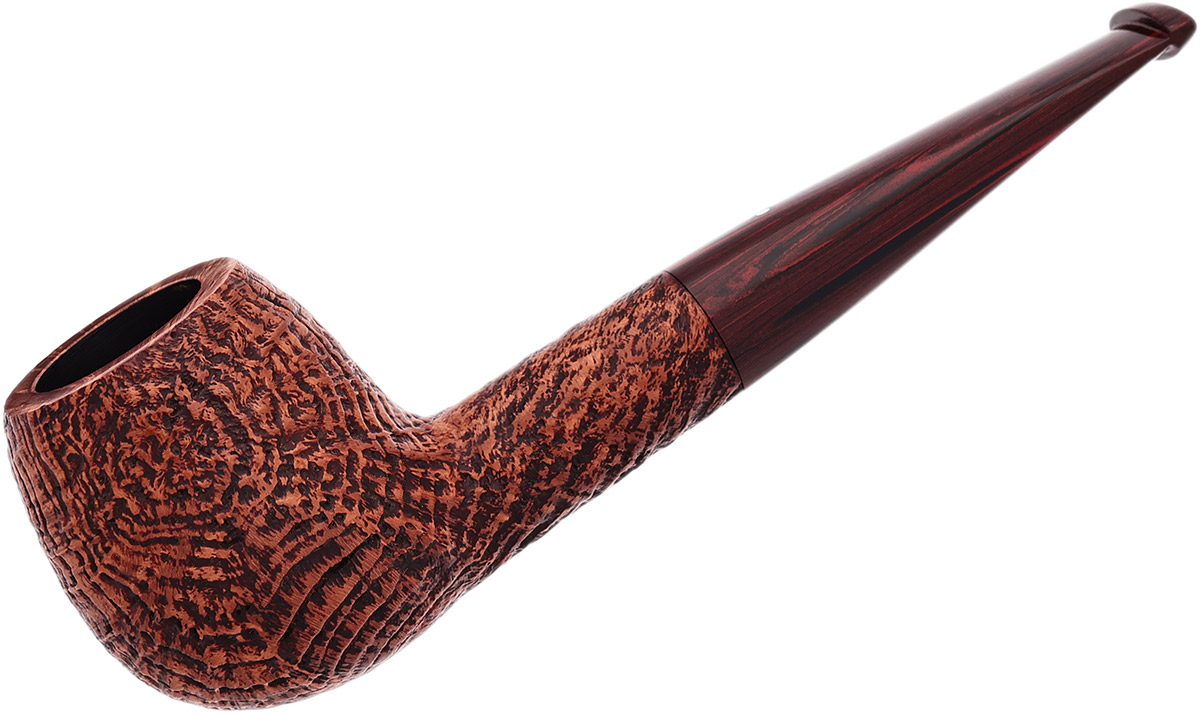
[TS]: This is Dunhill's 01 shape, which is about as classic an Apple as you can get. To the uninitiated, or someone who's never really looked at or smoked a pipe, it might look like a Billiard. But if you look more closely, it has a more rounded profile. The bowl is a little more squat compared to the shank, and it has a rounder, fuller, more apple-like disposition.
The Brandy: Dunhill 34
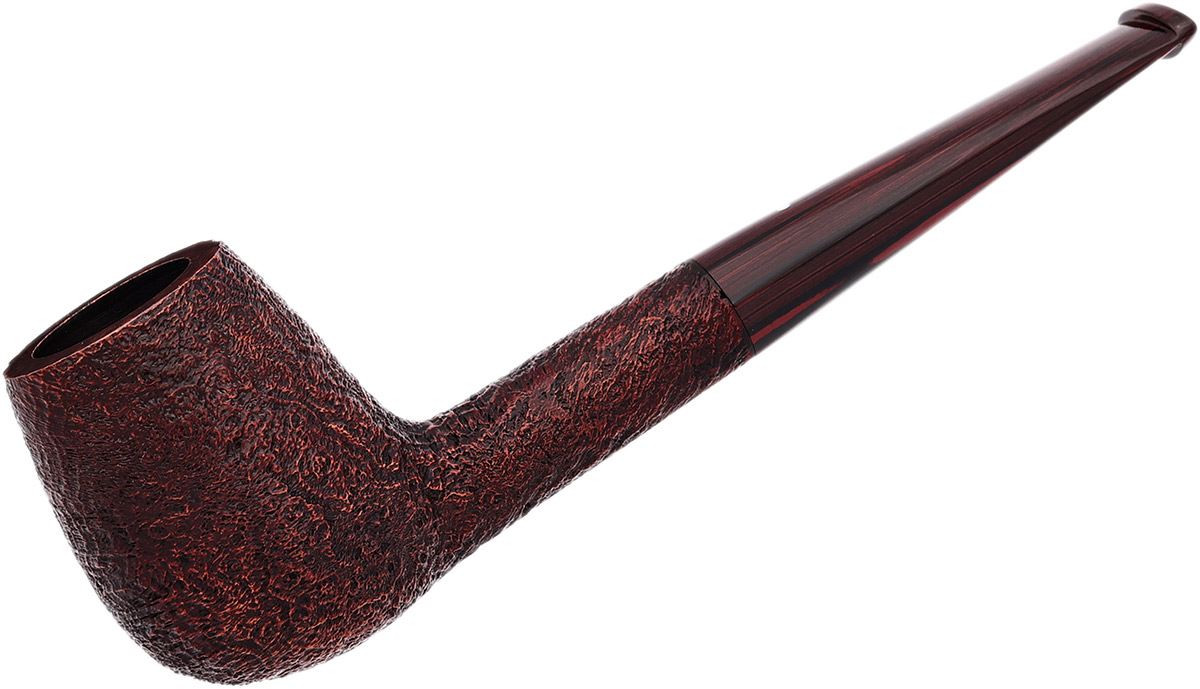
[TS]: This one's an interesting shape. This is Dunhill's 34 Brandy shape. To me, the Brandy has always been an in-between shape. You could classify it as a Billiard with an upward-tapering bowl, or, the way we're categorizing it today, a taller Apple.
[SM]: It's basically the exact middle ground between those two, which are hugely broad families to begin with.
[TS]: It's sort of the crossover shape. If we had more shapes lined up here, we'd have Billiards on one end and a Brandy sitting in between to bring us over into the Apple family. It has a broad base and an upward-tapering bowl evocative of a brandy glass, which is where the name comes from.
The Author: Savinelli 320

[TS]: Next is an Author. This is Savinelli's 320, probably the most iconic Author shape on the market today. It usually has a squatter Apple bowl, almost spherical. The Author takes that further: It's defined not only by its Apple bowl, but also by its quarter bend and a substantial shank compared to a normal Apple.
[SM]: Just like we talked about with the Canadian family, the shape of the bowl is important to how a pipe is categorized. But with some shapes, like the Author or the Lovat, the overall composition of the pipe and how it relates to the bowl determines what shape it is.
[TS]: That makes it more recognizable in many ways, but it also means there's typically less variation.
[SM]: There are more constraints.
[TS]: More constraints, more defining features. A lot of Author variants look similar to each other because there are more elements to take into consideration.
The Diplomat
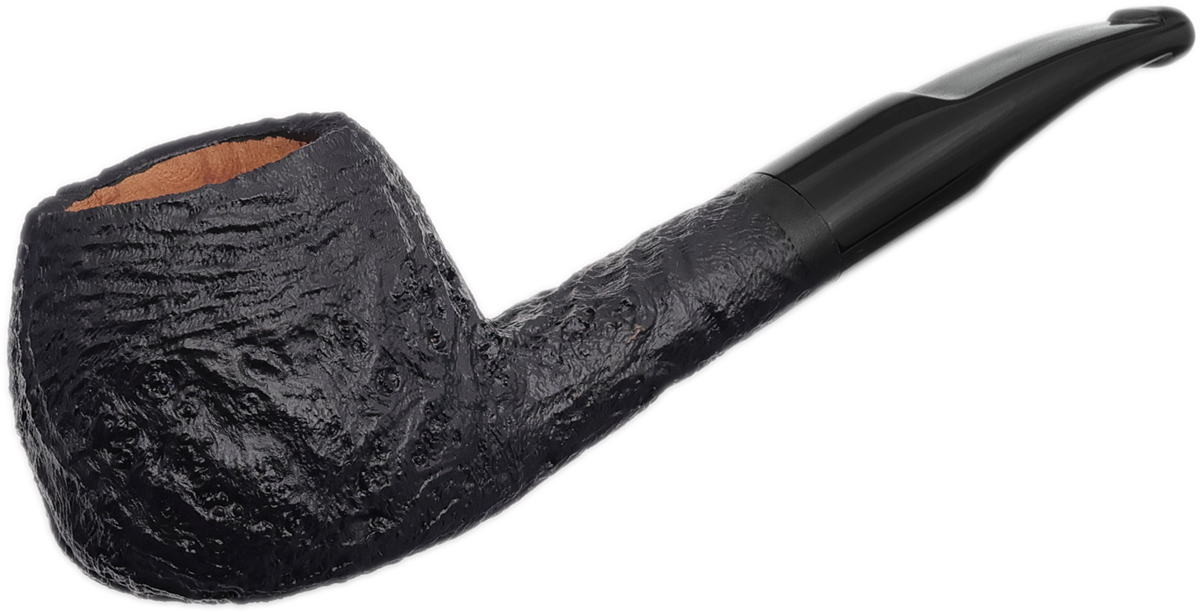
[TS]: Lastly, we have the Diplomat, which is pretty straightforward. It's an Author, except instead of a round, fat shank, it has a broad, oval shank. It's the same bowl and the same general quarter bend. Just as the Canadian and Lumberman are defined by their oval shanks, the Diplomat is defined by its own.
[SM]: It's like the difference between a Bulldog and a Rhodesian. Same basic principle.
[TS]: It's not just about the bowl all the time.
Variations on a Theme
[SM]: We've got a lot of variation on a similar theme here. With the Brandy, you take an Apple and elongate it. With the Author, you take the Apple, condense it, and make some proportional changes to the shank. And there are so many other Apple variations that we just don't have space to show. Even a Blowfish is basically an Apple with some asymmetry and other elements.
[TS]: Which goes against what you said about not subscribing to every shape being an Apple or a Billiard.
[SM]: Somebody is going to prove me wrong. It might as well be me.
[TS]: But no, Steve's exactly right. We probably could have included an Egg on this stand, too.
[SM]: Tomato. Ball.
[TS]: A lot of Italian manufacturers produce what they call the Ball, which is essentially an Apple that emphasizes that spherical nature. And even an Acorn is essentially an upside-down Brandy, with a downward-tapering bowl as opposed to an upward-tapering one.
Does Shape Affect the Smoke?
[SM]: Just in these four pipes, you can see the versatility of the shape: different proportions, different chamber diameters, different depths. What would you expect about how these perform while smoking?
[TS]: I've seen comments on other videos like, "Love that shape. What type of tobacco would you recommend smoking out of it?" Or, "I love this tobacco. What pipe shape would you recommend smoking it out of?" There are some considerations to be made there, but I wouldn't take it too far. If I were coaching a less experienced pipe smoker, I'd focus more on whether their technique is adequate and whether they're drying out the tobacco long enough. Assuming a pipe is well made, those aspects have more of an effect on your smoking experience.
[SM]: So you're telling me all my problems are user error.
[TS]: Just for you. No, but seriously, if your pipe isn't performing well and it's frustrating, which it certainly was for me early on, I wouldn't worry about the shape.
[SM]: It's not the first place to look.
[TS]: Exactly. That said, if you're trying to fine-tune your pipe smoking, think of whiskey glasses. A good whiskey is going to taste good out of any glass, but the shape of the glass can enhance an already great experience. I think that's generally true for pipes as well.
Broad Chambers vs. Narrow Chambers
[TS]: I like to think of it in two categories. It's certainly not a science. Generally, it concerns English blends, or blends with Latakia, but I'd broaden that to blends with three or more components.
[SM]: The particularly complex blends.
[TS]: The broader a bowl is, the more surface area of the tobacco is burning at a given time. So if a blend has multiple components, in theory, a broader chamber is going to get more of those components burning simultaneously.
[SM]: Because it's never going to be perfectly evenly distributed. With a wider surface area, you get more going.
[TS]: You get more of the whole blend going, which gives you a more complete flavor profile. A narrower chamber, generally speaking, is better suited to a straight Virginia or a Virginia/Perique. So I smoke English blends, or blends with more than three components, in my broader-bowl pipes, and I reserve my narrower chambers for Virginias and Virginia/Periques. Because an Apple has a broader, rounder bowl, you're able to drill the chamber more broadly.
That said, you can see this chamber is significantly wider than this one. So even within the Apple family, you might have a pipe that's better for Virginias, and you might have a really big Billiard or Canadian with a wider bowl. You have to consider the chamber dimensions themselves. But an Apple has the ability to have a broader chamber than your average Billiard.
[SM]: And if you just don't like Virginia/Periques or English blends, there's nothing wrong with simply liking a pipe. Don't let that deter you from going after a shape just because it doesn't fit the rules.
[TS]: In my own pipe-smoking tenure, there have been pipes I started smoking Virginias in that performed fine, but not as well as my others. When I made them English pipes, they performed great, and the flavor was more noticeable and more complex. It's very subjective — and your mileage may vary — but what I've been taught, essentially, is that with broader chambers, maybe try English blends. Narrower chambers, stick to Virginias and Virginia/Periques.
Finding What Works for You
[SM]: There's a lot of variety in the pipes themselves and in what you can do with them. You've got to try a lot of things and see what works for you.
[TS]: That can be a frustration, because there's a lot to try. But it's also one of the reasons we love the hobby. You can tweak it, fine-tune it, experiment, and find what works best for you.
[SM]: And it's personal. It's always going to be your own experience. Drop us a comment if you have any thoughts about the Apple shape, or if there's a family of shapes you'd like to see in a future video.

You may also enjoy:






Comments
Is the English blend, called John Bull still available? It was probably my first real English with latakia and I loved it.
I love the apple shape and own a number of them.
The Eleganza 320 is in a class by Itself! Shape has a tremendous effect of the Cut of tobacco! Flake are better in wider inside diameter pipes than ribbon cuts. Ribbon cuts like to be smoked in any pipe shape. Measurements are EVERYTHING TO A PIPE! They tell you ahead of time how that pipe will smoke! Know your shapes and measurements ahead of time and you will always receive a pipe that smokes better than it looks!!!