


 |
|
 |
|


How The Environment Impacts Tobacco Growth & Cultivation


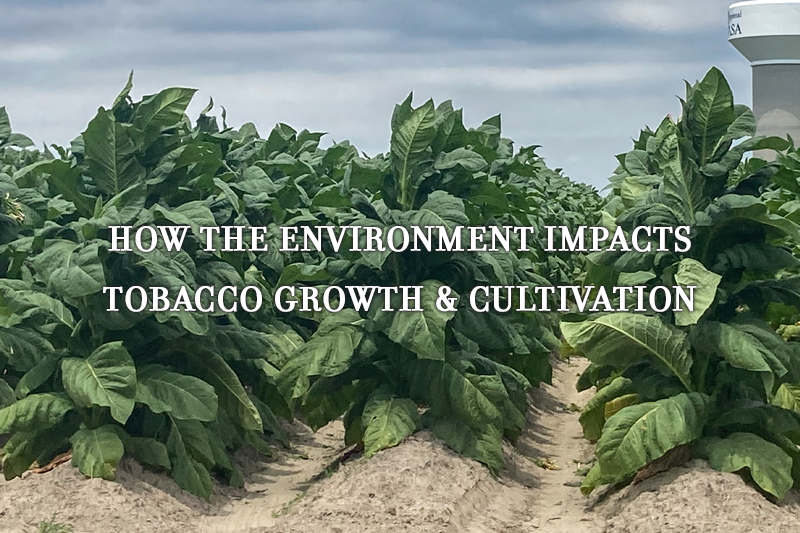
The tobacco we use in our most trusted pipes has a profound journey, from seed to blend, that is largely impacted by many factors. Most of us seldom consider how or why various tobacco varietals came to be, why they deliver the experiences that they do, or the ways in which those particular families of tobacco adapt to their environment and grow into the leaf that we cherish in our most trusted bowls. From the naturally sweet Virginias to complex and flavorful Orientals and everything in between, the environment and the human conditions surrounding tobacco crops result in the varietals we enjoy.
Different Cultivation Methods
Jeremy Reeves, the Director and Head Blender of Cornell & Diehl, has firsthand experience and vast knowledge of how each tobacco varietal develops, from trial and error to accounts of cultivating each of these different tobaccos for C&D's numerous blends.
"Most of what we perceive as different styles of tobacco are more to do with the different environments in which these tobacco styles are grown," says Jeremy.
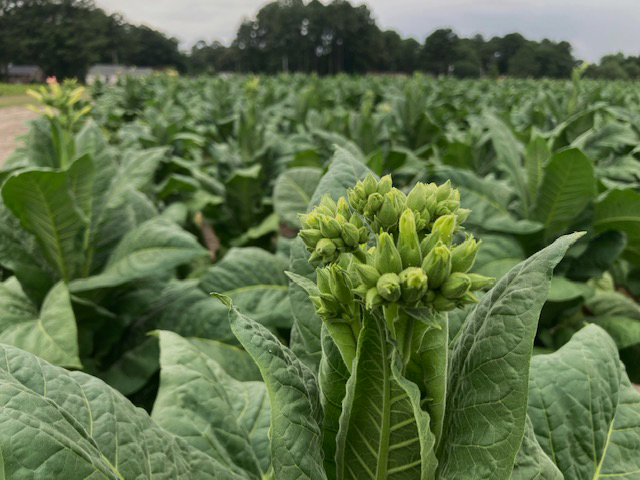
A variety of factors go into the umbrella of "environment," including climate, regional weather, the soil, sunlight, and the cultivation practices employed in that region inspired by the culture around it, such as the after-harvest curing processes. Each tobacco family we know, including Orientals, Virginias, Burleys, and so forth, all respond to their environment.
Tobacco is grown all over the world in around 135 countries, including the United States, Turkey, Dominican Republic, Cuba, Honduras, Paraguay, Uruguay, Ukraine, Mexico, Russia, Poland, France, Germany, England, Africa, India, Argentina, Nicaragua ... The list goes on and on.
Even with all these different regions and methods of growth and cultivation, every tobacco crop is exactly the same species. Yes, you read that correctly.
"There's a really interesting book called Making Tobacco Bright by Barbara Hahn that she wrote as part of her thesis," Jeremy says. "Her goal was to look at the genetic differences between different types of tobacco."
"She quickly realized that, much like tea, which is one genetic plant that results in the various tea types, the differences we perceive in tobacco have to do with the areas where they're grown. Otherwise, they're all genetically the same. It's more that the plant is responding to being in a different environment, and it's responding to differences in cultivation.
"Humans make those choices while the plant is growing, and it is responding to those choices. After the plant is harvested, there are different methods of curing, and some even impart other flavors that give us dramatically different styles of tea, from black to green to oolong. Tobacco crops are exactly the same."
In the book, Hahn states, "Bright Tobacco is genetically indistinct from other types of leaf. The varietal type and its peculiarities arise less from the seed than from the impact of cultivation methods on plant processes."
She continues:
Tobacco varieties are genetically very nearly identical. From the dawn of practical genetic analysis, geneticists have found the similarities among tobacco types shocking. In 1937... geneticists at the United States Department of Agriculture (USDA) discovered that the bright and dark tobaccos of Virginia were "so similar as to be almost indistinguishable." This lesson has been buttressed by more recent and sophisticated scientific study. Gene sequencing in 2007 demonstrated "the low level of genetic diversity within and among cultivated tobacco types," including not only bright and dark tobaccos of Virginia but also Burley (long considered a separate line) and, to a lesser degree, Oriental tobaccos. "Genetic diversity of tobacco germplasm was low, with a high level of genetic identity between the different types."
The human-to-plant relationship largely impacts what that plant becomes in a tobacco blend or in a bulk orientation. Much like a parent to a child, the conditions children are raised in have a definite effect on their resulting personality, or in tobacco's case, their flavor profile, strength, and the overall experience they afford.
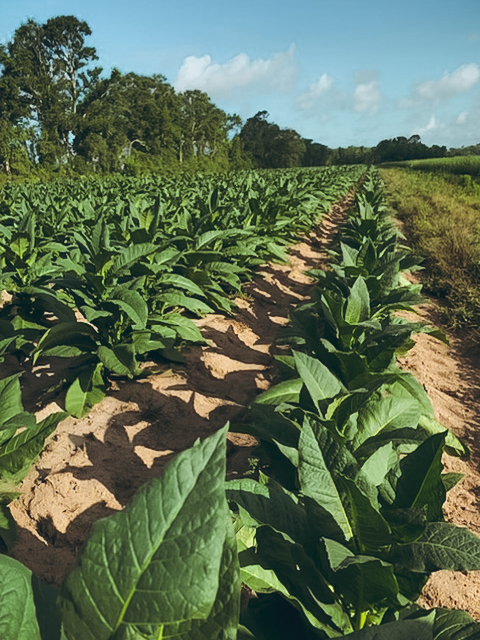
For example, Orientals are Orientals because they are grown in arid, high-desert regions with sandy soil. "Orientals are responding to punishing sunlight, so the plant grows shorter, the leaves grow smaller, and the leaves get oilier," says Jeremy. "There's not enough nutritional value for them to get very rich in nicotine, yet they're rich in sweetness. All of these conditions are why the plants result in their particular flavor and strength profiles.
"If you grow tobacco in sandy soil on the coast, you are going to be growing that tobacco in soil conditions where the plant has to work harder to get its nutrition because sand is not absorbent the same way as very dark, rich soil would be," says Jeremy. "The nutrition is deeper underneath the layers of sand."
These same Oriental seeds planted anywhere else in the world would result in a completely different product. Some characteristics would be like that of Orientals mixed with flue-cured Virginias in the first generation of growth. By the second generation, that plant would be a regular Virginia. If it was air-cured, it would become a Burley.
Curing Processes

Other factors that impact tobacco growth are unnatural causes, such as methods of curing depending on the location and the culture surrounding the crop. For a deeper dive into each method of curing, check out this informative article from our Daily Reader.
The choice to air- or flue-cure, for example, varies in different countries and regions. "Some of those unnatural causes that impact tobacco are farmers choosing to pick leaf in priming versus cutting the whole stalk, or by curing in the sun versus by indirect heat, or flue versus curing by air or over fire," says Jeremy.
Interestingly, tobacco leaf among growers and cultivators is discussed by curing method rather than by varietals. "It's rare to hear Virginia, Burley, and Orientals used on the tobacco side of things in conversation," he says. "You more frequently hear the curing methods to differentiate the types of tobacco leaf, like air-cured, sun-cured, fire-cured, and flue-cured."
When it comes to flue-cured tobacco, there are distinctions in the way that the tobacco is grown. "Flue-cured tobacco is flue-cured because in order for the plant to get its nutrition, it has to work harder and go hunting more, so that requires energy from the plant. The plant responds by producing more sugar so that it can have an energy source that lasts," says Jeremy. "It's naturally higher in sugar in the sap; if you take that high sugar leaf and you air-cure it, this is going to take so long that you lose all the sugar along with the moisture that is slowly seeping out of the leaf during the air-curing process, and it won't be sweet.
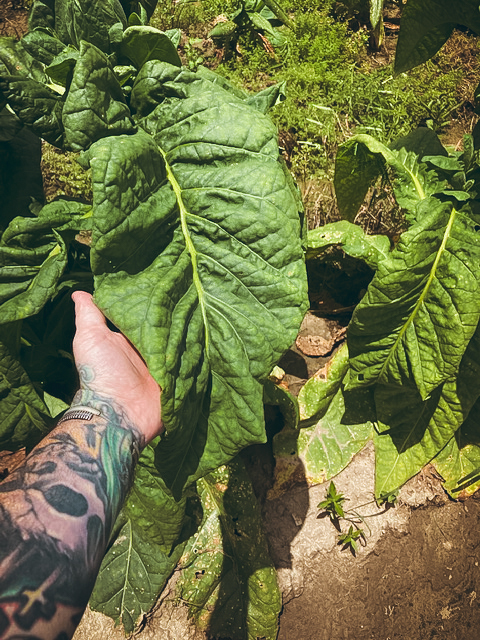
"Flue-curing is a way of setting those sugars in the leaf by spiking the heat in an unnatural way," Jeremy says, "using indirect heat to set those sugars while you're drying out the leaf so that as it cures, those are now hardened in the leaf and won't go with all the other moisture and chlorophyll that you're trying to cure out."
Burley is easily able to access nutrition. "It grows larger but it has naturally lower sugar content since it doesn't need that extra boost of energy to hunt for nutrients," says Jeremy. "Seeds that have evolved to deal with the kinds of diseases and the pests common to Tennessee, Kentucky, Maryland, and Pennsylvania, for example, don't have as much sugar, so you're not losing sweetness when you air cure that leaf.
"They do, however, have lots of nicotine," he says. "The choice to air-cure or the choice to flue-cure is directly informed by the results of the tobacco that you get when you grow it in environment X versus environment Y."
Weather and Climate Impacts
Beyond the particular cultivation and curing methods, Jeremy notes the effects of weather and climate on tobacco. "If you have a wet season, you're going to have higher sugar content and lower nicotine. If you have a drier season, you're going to have lower sugar content and higher nicotine."
Experienced farmers who grow and cultivate these crops have recognized significant differences in the way their plants have grown in recent years based on changes in weather patterns.
"Hurricanes bring nutrition to the areas they commonly affect. The soil in St. James Parish in Louisiana or the soil in coastal Carolina, Virginia, Georgia, and Florida is replenished with nutritional value over time by storms that come through with the water and debris from other parts of the world."
Though these crops are replenished, hurricanes are also brutal natural disasters, and the initial effect of hurricanes can be detrimental to crop growth. Rainfall patterns can have the potential to disrupt the tobacco growth cycle, impacting the quality of the crop, which in turn impacts the yield. Shortages are common in places with unpredictable weather, and Jeremy has certainly experienced this issue.
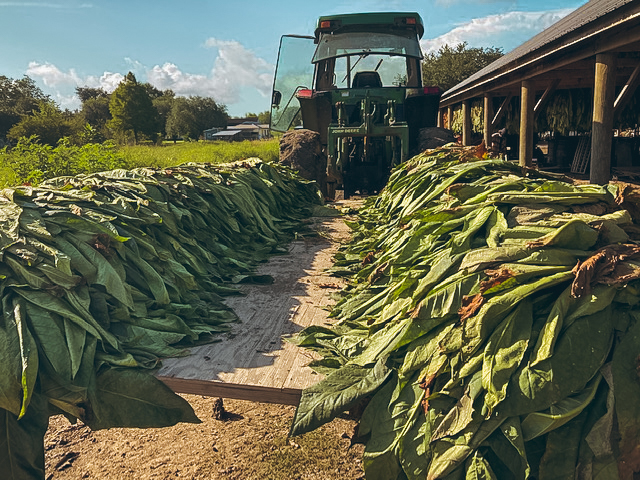
"You've got serious winds that can knock over crops, and then torrential rain that can drown those crops that have been knocked over," says Jeremy. "Thinking of what happened with Hurricane Helene; this storm ended up in the mountains. That's just wild. As these natural disasters continue, we are going to start seeing these kinds of storms move further and further inland," he says. "It is feasible that we start seeing hurricane damage done on crops grown in Tennessee and Kentucky, and to crops grown in Maryland and Pennsylvania, which will largely impact them."
With that sort of unpredictability for weather and the yield of a tobacco crop, it can be difficult to plan blends far in advance without the ability to rely on securing enough leaf to make particular mixtures that we as consumers receive and use.
Beyond hurricanes, other natural disasters and occurrences impact the biome of an area, which results in changes to the way crops grow, and how they turn out.
In a video on our Daily Reader titled "Smoke Rings: Toscano Cigar and Drink Pairing," Michael Cappellini of Toscano Cigars shared an interesting insight about tobacco that is grown in Italy that I recalled while preparing this piece: "Southern Italian tobacco is arguably some of the lightest tobacco because of the soil composition due to the eruption of Mount Vesuvius."
Every aspect of the environment has a profound impact on the resulting tobacco crop, and the journey for the plant doesn't end once it's picked, with a world of decisions farmers make in cultivating, curing, and preparing tobacco to be sold to blenders like Jeremy Reeves.
Other Impacts
There's plenty more to discuss in later posts about the challenges of cultivation based on more than simply the environment in which tobacco is grown worldwide, including issues in market availability, sociopolitical implications, and other human conditions that make obtaining certain varietals particularly difficult. Further, the science behind tobacco growth and the minute details are to be considered.
For now, it is quite intriguing to recognize how farmers and cultivators interact with and prepare the crops that we so adore in our pipe-smoking expeditions. Perhaps the next time you pack your bowl with a newfound favorite tobacco or an old, reliable friend, consider the vast journey that leaf went through to be readied for smoking with such ease in your pipe, from the soil to the hands of cultivators.
Bibliography
- Hahn, B. (2011) Making Tobacco Bright: Creating an American Commodity, 1617-1937. Johns Hopkins University Press.
You may also enjoy:





Comments
Gosh I love tobacco!! It's funny, I had to stop smoking cigarettes to really appreciate tobacco!! Crazy no?!
Fascinating! I had no idea all tobacco was genetically the same plant. The process of making different types is so similar to how, for example, chardonnay grapes can make so many different kinds of white wine with completely different taste profiles. Thanks for the info.
As usual an excellent essay from SP. Keep it up!
Great read! Thanks for the content. It was very informative.
Great article. As I farmer I enjoy reading about what it takes to grow different specialty crops…premium tobacco is closer to wine grape production than a commodity like corn.
Great article, really informative. I had no idea!!