


 |
|
 |
|


Portrait of Stevie Ray Vaughan by Artur Lopes
Stevie Ray Vaughan's life and musical ability are the stuff of legend, as anyone with a passing familiarity with the blues is likely aware. The virtuoso guitarist mastered his instrument while still a teen, honing his skills in the nightclubs of his native Texas before encountering sudden success after his performance at the Montreux Jazz Festival and becoming one of the most famous musicians of the 20th century. Vaughan's personal life mirrored the tumult of his art, his struggles with addiction and alcoholism coming to a dramatic climax with multiple run-ins with the legal system and stints in rehab, finally achieving sobriety before his life was tragically cut short in a helicopter crash. Vaughan's story and music have remained a lasting legacy, inspiring generations of musicians to chart their own paths. What many are unlikely to know, however, is that Vaughan was a pipe smoker, frequently puffing away on stage during a blistering guitar solo or two.
What many are unlikely to know is that Vaughan was a pipe smoker
Early Life
Born in Dallas in 1954, Stevie's early years were marked by a troubled upbringing. Raised in a dysfunctional household, Vaughan lived in fear of an abusive alcoholic father and ran into frequent trouble in school, stating that he was removed from his junior high three times on his first day there. He found a refuge in music early on, getting his first guitar at age seven. He learned by ear, playing along to his favorite songs on the radio with a western-themed toy guitar from a Sears catalog. Two years later, Vaughan got his first electric as a hand-me-down from his older brother Jimmie and soon formed his first band, the Chantones, in 1965. From that point, Vaughan, only 12 at the time, would go on to book gigs in bars and nightclubs around Texas in a long series of bands, committing fully to music when he dropped out of high school at 17.
Vaughan, only 12 at the time, would go on to book gigs in bars and nightclubs around Texas
Stevie would spend most of his career in relative obscurity, relocating to Austin where the audiences were more hip to his blues-rock style. His most successful group came together in 1978 and he would henceforth tour under the name Stevie Ray Vaughan and Double Trouble. During his time on the Texas club circuit, his musical talent continued to develop — along with his bad habits. In late 1979 Vaughan was arrested by an off-duty police officer who saw him using cocaine near an open window. Vaughan was subsequently released on a $1,000 dollar bond and forbidden from leaving the state, complicating his gig as the opening act for his idol, Muddy Waters. He was able to have the sentence revised and continued the tour, though Waters said of Vaughan, "Stevie could perhaps be the greatest guitar player that ever lived, but he won't live to get 40 years old if he doesn't leave that white powder alone."
A Breakout Performance
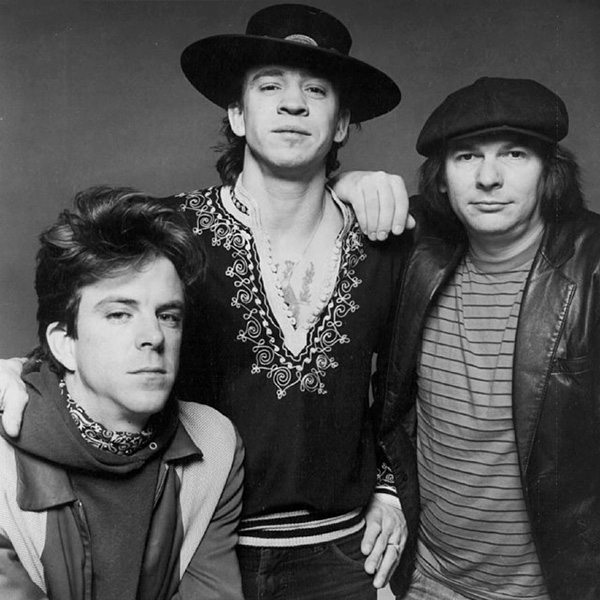
Stevie Ray Vaughan and Double Trouble, 1983
Vaughan and Double Trouble's big break came in 1982 when they were booked to play Switzerland's Montreux Jazz Festival. Vaughan's virtuosic playing and distinctive, cowboy-like aesthetic made his set one of the most memorable of that year's festival. Even then, the band was less than universally appreciated, with a handful of jeers mixed in with the cheers of the crowd as the performance concluded. The flashy guitar player did, however, catch the eye of David Bowie, who invited him to collaborate on his 1983 album, Let's Dance, making the pop album Vaughan's first major commercial release. Later that year, Vaughan released Texas Flood, his first full length recording, to wide and long-belated acclaim.
While little is known about how Vaughan began smoking pipes, he may have been inspired by his idol and later collaborator Albert King, who earned the nickname Smokin' King as he was famously fond of his pipes on and off the stage. Stevie also frequently puffed while playing. Not much is known about what tobaccos he enjoyed and most biographies focus on his more dangerous habits.
Stevie frequently puffed while playing
Keri Leigh paints a vivid picture of what a Vaughan performance was like. In her book Stevie Ray: Soul to Soul, she describes the moment he takes the stage:
SRV came on "Scuttle Buttin'," with his Albert King corn cob pipe smoking away. He bent over his guitar, concentrating hard on the notes whirling out from his fingers. He swung his axe, punctuating the punchy intro to "Say What!" with his wah-wah whirring away, and found the highest bend possible, pinching the strings with a mighty force while his right hand danced effortlessly over the pickguard.... He returned for an encore of "Lenny." Stevie was sitting alone with her center stage, thinking of his woman back home, gently tugging her whammy bar, and making her quiver in his hands. He sat relaxed, smoking a pipe that he soon ditched, coughing. The song was his masterpiece for the night.
Stevie Ray's Pipes
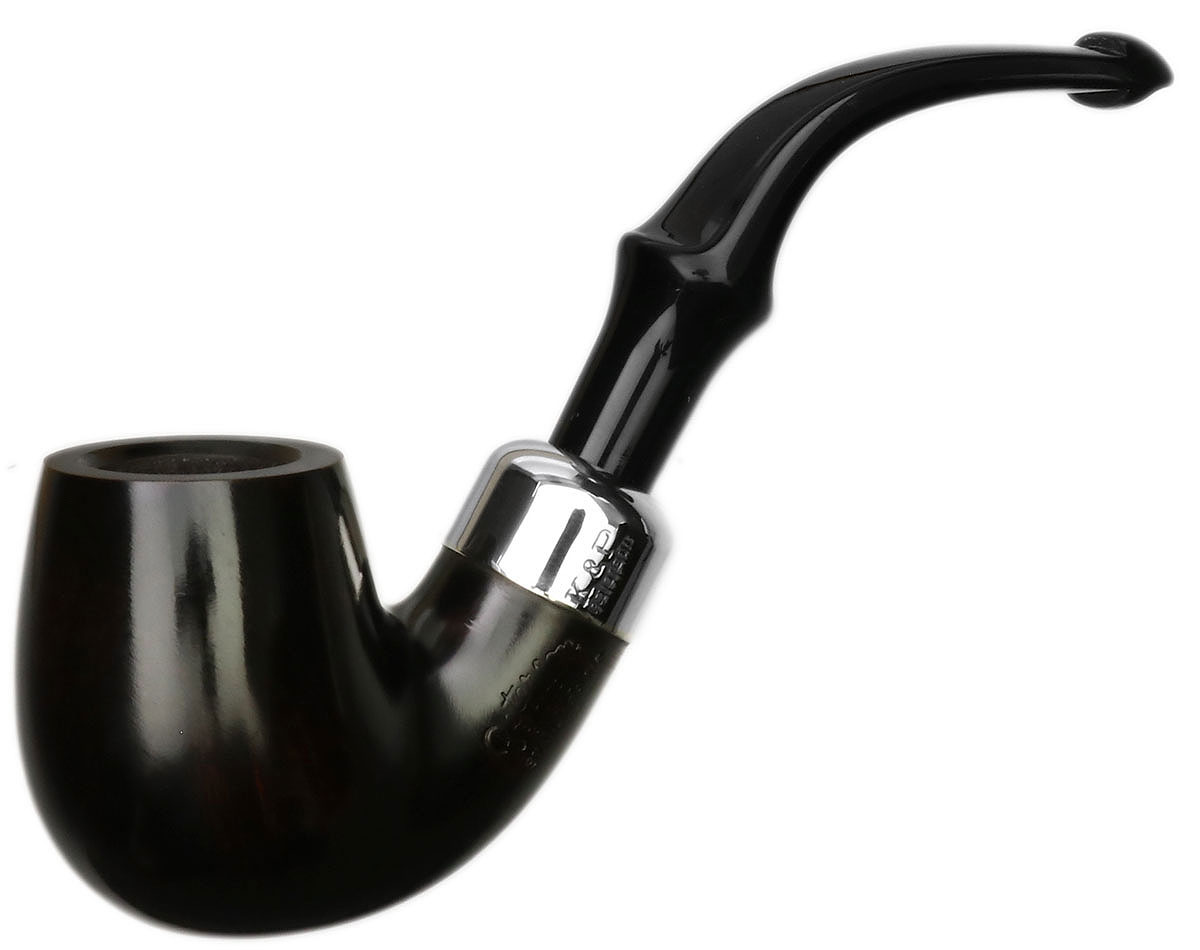
Peterson: System Standard (312) Bent Billiard
From corn cobs to meerschaums, Vaughan was something of a collector, smoking a variety of different pipes during performances. During a 1985 concert in Japan, he opened the set with his signature tune, "Scuttle Buttin'," clenching a rather sizable Bulldog. We're lucky enough to have video footage of that performance, which is impressive. Another photo shows the legend seemingly entranced by his music, smoking a classic dragon-claw meerschaum. The only pipe he owned that I was able to positively identify is a Peterson System Standard bent Billiard, the Irish marque's 312 shape. Not only was Vaughan a much better guitarist than me but he was better at smoking too. Having played my fair share of banjo, I always have a hard time keeping my smoking pace in check when I'm in the middle of a jam, nevermind the smoke in my eyes.
Another photo shows the legend smoking a classic dragon-claw meerschaum
As Stevie finally began to realize his dreams in the early '80s, the pressures of fame and success exacerbated his already formidable struggles with substance abuse. By 1986, Vaughan had become so dependent on whisky and cocaine that he famously began mixing the powder directly into a bottle of Jack Daniels to swig during his shows. At the height of his addiction, he was using up to seven grams a day, washed down with nearly a liter of whisky, quantities which would kill most people. His body finally rebelled while on tour and he was hospitalized for severe dehydration, entering two rehab facilities thereafter.
Recovery
It was in treatment that he was able to achieve lasting sobriety and entered the most vibrant creative phase of his career with his album In Step. The title is a reference to being "in step" with life, according to Vaughan, and the liner notes for the album include references to Alcoholics Anonymous, where the singer maintained his newfound sobriety, with quotes such as "thank God the elevator's broken." Fortunately, Vaughan indeed never went further down the rabbit hole, instead seeing his largest successes to date and finally finding a measure of peace.
... liner notes for the album include references to Alcoholics Anonymous
In 1990, Muddy Waters' prediction proved grimly accurate as a helicopter Vaughan had boarded after a show in Wisconsin crashed in flight, ending Vaughan's life at only 35 years old. Though the man is gone, his memory persists through his music and his inspiring story of recovery.
Numerous benefits and foundations to support musicians and people seeking sobriety have been named after Vaughan in the years since his passing. In 1994, the Stevie Ray Vaughan Run for Recovery was held to benefit the Ethel Daniels Foundation, which seeks to help addicts unable to afford treatment. Later, the MusiCares foundation created the Stevie Ray Vaughan award to recognize musicians for their contributions to the cause of recovery. Some of those who have received the award include Eric Clapton, Ozzy Osbourne, Steven Tyler, and David Crosby.
While many pipe smokers have been important figures in history, Stevie Ray Vaughan's impact on the world of music is truly immortal. From his incredible talent to his personal triumph over his demons, Vaughan's legacy will continue to impact new generations of musicians through his songs and the institutions that carry on the message of recovery in honor of his memory. Personally, I'll always imagine Stevie at his best, smoking his Peterson and playing guitar like no other.
You may also enjoy:



Comments
"It is cocaine," he said, "a seven-per-cent solution. Would youcare to try it?" -Sherlock Holmes. Maybe it seems like a bad idea mixing Jack Daniels and cocaine, but Hawaiian shirts are a terrible idea.
They still play Stevie on the Classic Rock radio station. Always loved his style. Glad to be sober almost 10 years myself! Drinking too much gets old. When you get old, it's rough on your system. The day he died was a vey sad day indeed. Heard the news on the radio in my car, and had to pull over to wipe my eyes.
We were fortunate to see SRV at the height of his sobriety, on the In Step tour. Whenever I listen to one of his albums, I wonder "what could have been". Knowing that he enjoyed smoking a pipe is a bonus to his fine catalog.
Thanks for the Stevie Ray Vaughan article. Didn't know he smoked a pipe. He was really One with his guitar as anyone who really listens to his music can tell. I always really liked his renditions of Hendrix songs and the song "Cold Shot" might be my favorite.
👏 Thank you SO MUCH for this article Gabriel! R.I.P. SRV. 🎸🙏💙
Wow, thanks for a great article. I was living in Lake Geneva WI when the helicopter crash at Alpine Valley in East Troy WI occurred. Several friends were 1st responders, and I had a few pictures of his crashed helicopter that they had taken on scene. It was a very sad and traumatic sight. I later disposed of those pictures because the memory left me so distraught. I have since visited his memorial statue in Austin, TX and will forever love his style and his music.
Great article. I did not know he was a regular pipe smoker. There is a good video of Stevie and Albert King on Youtube.
I always love any bit of info on srv. Best statement I ever heard about srv was he never played the same thing once! 😄
Stevie is in the pantheon of rock and blues. I've always been bummed that I missed a show of his in Denver because I had an air shift. Like others here, I was crushed when I heard he had been killed after working so hard to get clean. RIP Stevie.His album with Albert King is definitely worth having, and you might still be able to find a CD/DVD combo. When you see them play together you can see how much Stevie worshiped and respected Albert.
Love his style, he was a genius on the guitar. I go to U/Tube often to watch his concerts and listen to his fabulous music. I will always miss Stevie Ray Vaughn!
I consider stv one of the best blues guitar player ever. I listen to his music as often as I could,which is quite often.He is truly missed
I was lucky, saw Stevie three times. The first time in 1980 when he was just starting his touring. This was at Butte College (near Chico CA) in the gym! I said that guy is going somewhere.
I absolutely Love Love Love Stevie Ray Vaughan. It’s so sad he had so much talent and so much more to give to the music world. A BadAss guitar player of all time. There want ever be another SRV. I Love watching him play. I don’t want to just listen to him on the radio I want to see him. My man crush. I love you SRV💯❤️❤️❤️❤️