


 |
|
 |
|


Savinelli Production: Handcrafted with Dedication, From Briar to Pipe


Hey, everybody. I'm Shane Ireland. Welcome to another episode of "All Pipes Considered." I recently had the opportunity to chat with Edoardo and Paolo from Savinelli in Italy about the brand's production, from briar to finished pipe, every step of the way. With quality checks at every juncture resulting in exacting shapes, meticulous finishes, and pipes representing the top-tier of quality in briar, Savinelli pipes are no easy task to create. Join us as we get into the nitty-gritty details of Savinelli pipe production in our latest interview.
Note: The following transcription has been edited for clarity and brevity.
[Shane Ireland]: I have two very special guests here, our friends from Savinelli in Italy, Edoardo and Paolo. Ciao, Ragazzi.
[Edoardo Cassani]: Ciao, Shane.
[Paolo Tamborini]: Ciao, Shane.
[SI]: Welcome. Please introduce yourselves for our viewers.
[EC]: Hello, everyone. My name is Edoardo Cassani. I'm from Savinelli Company. And in the company, I'm the Head of Production of Savinelli.
[PT]: Hello, guys. My name is Paolo and I am the Export Manager at Savinelli.
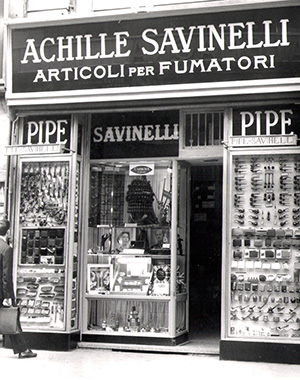
[SI]: Fantastic. I wanted to talk about production. This is my favorite topic, really. A company like yours has produced pipes for such a long time. And one thing that I wanted to start with is, I've been lucky enough to see the production many times. I think that one of the things that maybe not all of our viewers are aware of is that from the moment that production left the small workshop behind the shop in Milan with just a few people producing pipes into a real production in Barasso, which is still in the same facility that it was originally started, almost nothing has changed from the old days. You're still doing everything the hard and traditional way.
[EC]: Yeah, absolutely. The production is near Varese and we are maintaining the same quality as they did 150 years ago. Quality, for us, is the main driver of Savinelli.
[PT]: Yeah. I would say it's the same quality, the same methods, and sometimes even the same machinery.
[SI]: Yeah, well they made them good back then, built to last forever. So from the first moment that I visited you guys, which was nearly 10 years ago, and I've been coming once or twice a year since then, the thing that, I think, struck me as the most interesting is that 100% of the production is in-house. They're completely controlled from the briar blocks to the end of the production. And again, using traditional methods. So there's no computer-driven CNC machine type of stuff.
[EC]: No, nothing.
[SI]: Let's explain just a little bit from the beginning of production to our viewers. So I know that there's lovely storage full of very nice briar just outside of the factory. This is the first important part, right? Why don't you tell us when you guys receive a shipment of briar, what happens next?
[EC]: For us, it's very important to control the quality. And to do that, we need to control all the processes, as you said. From the briar to the final control, we do all of that in-house. The workers we have here are so important at Savinelli. We look like a factory, but we are not one. We are just a huge workshop.
[SI]: Exactly.
[EC]: We have a lot of artisans and a lot of people. Normally we have people that have worked for Savinelli maybe for 30 years, even more.
[PT]: Yes. 30-40 years easily.
[EC]: In the meantime, we have young people that are working for us, which is very important to keep the product ongoing.
[SI]: And it takes a long time, even for a younger worker to learn these processes. One of the most challenging parts would be sorting the briar before and after the shaping. But you also have every single process, and they all take a long time to get familiar with.
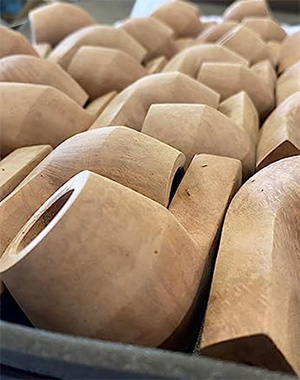
[EC]: Absolutely. Yes, it's very difficult and it's very tough. But everything starts with briar. So we buy briar in Italy since we are a hundred percent made in Italy. We are very proud of it. We buy the briar and we let it rest for years because the quality starts from the briar. We keep it dry in a very, as you saw in our factory, natural way.
[SI]: Oh, yes.
[EC]: That takes time. Time, work, and effort. And it took years to get it ready. And this is very important since we buy briar all around Italy, then we let it rest. And then after three, four, five years, even more, we will see if it's good briar or not.
[SI]: It's a big investment to make sort of blindly.
[EC]: Yes. It is. It is. But you have to, because if you want to have a very nice quality product which is not very soft, and let it dry in the right way, this is the nature, so you cannot force it.
[SI]: No, no, no. And this accounts for both the beauty and the smoking quality of the pipes. I will also say that anybody that's interested in pipes or pipe making in particular, when you go to the warehouse, just outside of the factory where the briar is stored, it may as well be a candy store, you know, or an incredible wine cellar, whatever is your choice. So, okay. Briar comes in, it immediately gets sorted, probably mostly by size, right?
[PT]: Yeah.
[SI]: And then put away to age very slowly and very properly. Once you're moving briar into production, let's talk a little bit about the next steps.
Moving Briar Into Production
[SI]: So out of the artisans that you have now, how many artisans are working in the factory currently?
[EC]: Approximately 50.
[SI]: So I would assume, and you can tell me if this is incorrect, that early on in their career, they're focused on maybe one task. And as their career advances, they learn more and more about the process, until you get to a point with somebody like Louisa, who is the old factory manager, where she did almost everything during her career.
[PT]: Exactly like that. Yeah. So, at first, they start working on a single process, and they get good at that. But then with time, they turn to different processes so that in a few years, they can do a bit of anything. But everybody has their own specialization.
[SI]: Are there some specializations in terms of process that are maybe harder to teach than others or harder to learn?
[PT]: Well, I would say something that is really hard to teach is the selection of quality of the briar for the grading. For example, Louisa was the only person actually grading the briar for a very long time.
[EC]: More than 50 years.
[SI]: And that's the thing. In theory, you can tell somebody the difference between these grades. But when you're looking at thousands of bowls, the only way to get good at it is to see that many pipes. Right? Experience and time is important.
[EC]: It's super time consuming. So you need to be very flexible and just listen to other people. That is very important.
[SI]: Are you comfortable sharing how many grades there are at that point in production? Because, of course, we know that the initial grading is based on the quality of the block and the individual bowl. And that can change again while the pipe is finished because you might end up with something nicer than you thought or even the grade can change as you sand it or whatever. So how many grades are there that somebody like that needs to know the difference between?
[EC]: We have almost 20. And it's very specific.
[SI]: Yes.
[EC]: But as you said, when we are working, something may change. So let's say at the beginning around 20.
[SI]: So you might find a pipe and cross your fingers that it remains the same grade.
[EC]: Especially for Punto Oro and Giubileo, it's very difficult. So we must be lucky.
[SI]: How much of the production makes the cut at the top grades?
[EC]: Just to give you an idea: to have one Giubileo, it's one out of 1000 pieces, if you're lucky. 1000 good, smooth pieces. That means a lot about more than 1000 blocks of briar that we receive. And we will see it in five, six years.
High-Quality Briar: Punto Oro and Giubileo Pipes
[SI]: Yeah. Oh my gosh, that's incredible. Let's talk a little bit about Giubileo and Punto. Because again, this is something that has been core to the brand's identity for many years. Can you tell us when these grades of the classical shapes began to be made?
[PT]: Yeah. So Punto Oro is one of the staples of Savinelli. And we started producing Punto Oro in the '50s. And it's still probably the most known pipe from the Savinelli collection among knowledgeable smokers. And, well, the formula to put the Punto Oro, the golden dot inside the stem, is still kind of secret.
[EC]: It's very difficult actually. It needs to be perfectly even in the stem.
[SI]: And the wood has to match that.
[EC]: So the flame is always outstanding and we never compromise on Punto Oro, that's for sure.
[SI]: Otherwise there would be more of them available. But that's what makes them so special, and I think that's why you have had so many customers for so many decades. My favorite thing about it, too, is that you can have a preferred shape or a preferred model or a couple of them, but you will not see, maybe, your preferred shape or model in Punto even every year.
[PT]: Yeah. It's not even up to us. It's actually up to nature.
[EC]: You cannot control it.
[PT]: Truly beautiful wood on those. And if you look at our sandblasting, I must say it's really amazing. Of course, all of our sandblasted pipes are sandblasted one by one, one at a time. So the quality is always amazing. And in our sandblasting, you always see the flame of the pipe.
[SI]: In this way, the artisan responsible for sandblasting has a lot more control.
[EC]: Exactly.
[SI]: When you have bigger productions of pipes that are sandblasted, a lot of times what they do is they take multiple pipes at once and sandblast them in an environment where all of the wood is getting hit basically at the same time. So it's very difficult and time consuming, so you must have a lot of experience with that.
[PT]: Yeah, exactly. So that the best quality and characteristics of the single bowl are highlighted.
[SI]: Exactly. And it's also easy when you're doing them one at a time, it's challenging to preserve the lines of the shape also. So that's another factor that you can see even when somebody sandblasts really deep or strongly, maintaining the lines of the shape is also quite difficult.
[EC]: And there is no margin of error because you cannot make any mistakes.
[SI]: Yeah. You can't put the wood back on.
[EC]: No. Especially for Punto Oro, it's going to be a pity because it's a rare piece. So if you make a mistake, it's done. So you must be very careful.
Modern Designs with Traditional Methods
[SI]: I've mentioned it before, and I think this is true for most of the consumers and fans of the brand for many years, there's been a period, let's say, in the last two decades or so, where in addition to continuing to produce the very classic, very traditional, and famous Savinelli models, we've seen a lot more of a modern approach to the designs overall. And I think a lot of us out there could pick a handful of favorites.
So you mentioned being completely 100% handmade in Italy. We'll come back to the production a little bit here because I want to talk about what that looks like. When it comes to sourcing the materials for the pipes, it's not just the Italian briar, in this case, it's also the Italian acrylic. You have a partner that is producing, in a lot of cases, proprietary-designed acrylic for your models. So going back a little bit farther, I think, we have the Miele, which is still one of the most popular series, for sure, introduced 12 years ago. I remember when this was introduced to the market with beautiful stains that pair very well with the rings and the stems, the very unique stem material, and also the lovely honey tampers. To develop something like this, what are the first steps? I mean, you have to have the idea, you have to ask them if it's possible to make it, and also go through samples. How does that work?
[PT]: Well, first of all, it takes a lot of time. And I would say, what is most needed is good taste.
The idea starts maybe from a single person, but then it is discussed thoroughly. It is discussed many times. We make many samples. We try, for example, this pattern and this color with different rings. One ring, two rings, no rings. And we see what looks better. But then, before a new pipe is approved, it is discussed by the whole team. And everybody needs to like it.
[SI]: Everybody needs to like it. Well, it's not just the rings, you have to figure out also which stains for the bowls that look good with it.
[PT]: Absolutely. That's so important.
[EC]: The color, the quality of the briar, and Miele, it's a perfect match. Because the quality of a Miele pipe is very high. But on the other hand, the stem is very particular for the series.
[SI]: And I also assume that when you're talking about a crazy material like this, or the Oceano, which we'll come back to in a moment, it's not just how it looks in the raw form. Because when you're buying this, you're buying essentially a sheet of acrylic that has not been shaped yet or anything. At that point, when you have a complicated pattern, the difference between how it looks on a perfectly round portion of the stem versus the saddle stem or when you're cutting it down towards the bit, the pattern looks different. Right? So a lot of it also comes down to discovering if it will maintain the same effect in a variety of shapes and designs.
[PT]: Exactly. So, yes. It's actually also about matching the stems, the stem color with the different shapes that we have. As you may know, we have a lot of different shapes. So that's also a big part of the work. So you can imagine there is a lot of brainstorming in projecting all the new pipes.
Oceano and Miele Pipes
[SI]: Let's pivot to the two pipes we have here, Oceano and Miele. Here's the Oceano, which, if I recall correctly, debuted in 2019.
[EC]: Yeah, 2019.
[SI]: So it's been around for a few years now. But I would say that out of most of the new series we've seen in the last five years, it's one of the most popular.
[PT]: Yeah, it is.
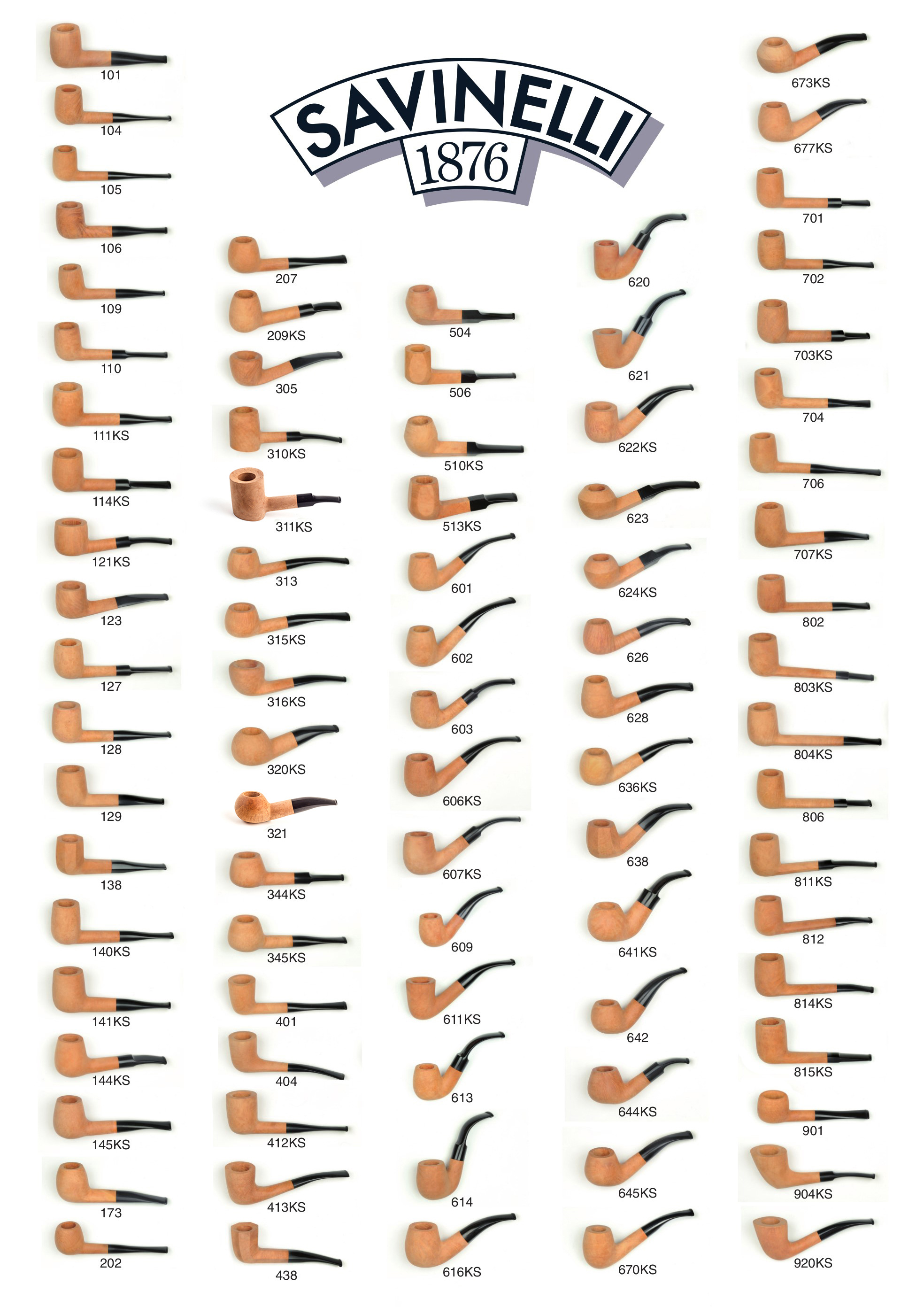
[SI]: I remember when we first saw the samples, it was striking. And we had never seen a swirl-pattern acrylic look quite like this before. But, for example, you see there's a huge difference between the diameter of a model like the 320 KS and the diameter of a 701 or even a 606 or whatever. And the pattern has to look good, in any case, which is not easy to achieve.
[EC]: And it's very difficult because also all the stems are different. The art of making this kind of acrylic is all artisan-made in Italy, poured and mixed by hand. When we have the samples and when we receive some stems, they look different, so we just have to start again. For instance, like the Miele, everything is custom for us because we decide to make the stem and then we will decide.
[SI]: I think most of us are probably familiar with the idea that in order to get a quality of pipe, say for example, even like a Punto or even like the Oceano smooth, there's a lot of briar you have to go through to get the quality that you're happy with. How much is that true for the stem material as well? There must be a certain percentage of waste.
[EC]: We do quality control of the stems before production to decide which will be good for the pipes.
[PT]: These kinds of stems are all different, but they all need to look uniform.
[SI]: I would imagine that toward the outside of the block of acrylic or something, you might have more of one color over the other.
[EC]: Exactly. Especially for that one, you may find two different stems from the same series, but they look different. It's a homemade product and everything is made by hand.
[PT]: But I also think this adds to the uniqueness of the pipes.
[SI]: Of course. It's not just the pattern of the grain, and none of the stems are identical either.
Pipe Production Continues: Sorting By Shape and Size and Turning Bowls
[SI]: So, back to production, we spoke a little bit about the briar and the early stages. But what I think is one of the most fascinating things, particularly because everything is done in your factory, is that once the briar is ready, the next stage in production is sorting by shape and size so you can decide which model to make from which block. Walk us through a little bit about how the turning process works in the factory. I've seen it, it's incredible. But tell us a little bit about how that works.
[EC]: Yeah. When we are ready, we have a huge digitalization of our process in order to control it, to control the quality, and to control the briar. So it's imperative that we maximize the stocks we have. So we start to turn the bowls, which is a huge and long process. And as you saw, it's a very old machine. It is a very old machine. And when there is something wrong, it's very difficult also to repair this machine.
[SI]: Yes. Basically what you have are standard models by, let's say, attachment for the machine. So the way that pipes have always been turned since the very beginning is that you basically design cutting tools that form the bowl part of the shape and the shank part of the shape in two different steps. And then there's still a lot of handwork after that. Right?
[EC]: Also, because it's made one by one. It's also very important that the artisan that works on it just makes the right regulation on the machine. And every 100 pieces they have to control, but everything is okay.
[PT]: Now we have counted the minimum of 80 hand passages after the bowls are turned.
[EC]: So even on the bowl-turning process, how many artisans are doing nothing but controlling the turning of the bowls?
[PT]: It's like four people turning bowls full time.
[SI]: That's a lot. And yes, it's like you said, there's no way to make that faster. When you do something like modernizing this process too much, in terms of robotics or CNC type of machinery, it doesn't work because you don't have as much control over the natural material. Like an artisan can say, "Okay, if we modify this block very slightly and turn it very slightly, we're going to end up with a much better result." Whereas if you're just loading that into a machine that does everything automatically, it won't be the same level of control.
[EC]: And sometimes you may find that the briar is a little bit more hard than soft, so you have to deal with that, and knowing what to do with the tools comes with experience to better understand which kind of briar you're working with and how to adapt. You can make it if you have people behind the machine that can work with it. This is why there's quality control step by step. So, as Paolo said, we have more than 80 steps, but every step has a small quality control on it.
[SI]: Of course. It saves you time down the road, I'm sure.
[PT]: Absolutely.
Pipe Production Continued After Turning The Pipe Bowls
[SI]: So after we're talking about turning the bowls, this would be the second time that the briar gets graded. There's a batch of bowls in one particular shape, and then what is the artisan doing after that?
[EC]: After the bowls are turned, we have to identify the quality in 20 grades. And then we start the production. Depending on the series, which kind of stem, which kind of rings, and which kind of characteristic the whole pipe must have, the production begins.
[SI]: So what would you say are some of the most challenging points of producing a product like this by hand from a natural material? What are some of the challenges that you're presented with on an average day in production?
[EC]: On an average day, you are dealing with natural briars, so when you color it, it may change depending on how much time it stayed in our warehouse, factors that can impact the quality. It may happen that you have a wonderful Giubileo, for example, but at the end you may see something that doesn't work. So there is potential to waste a lot of time, and it's a little bit frustrating.
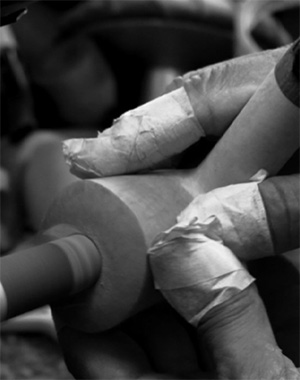
[SI]: Of course. So when you're talking about taking a bowl that was turned roughly on the old machinery, there are still hand finishing steps after that, such as papering. And other aspects can change. And even then, you're talking about very small adjustments in the actual material.
[EC]: It may change the quality of the pipe overall.
[SI]: You can have a sand pit come out or something like that, that you didn't see immediately, yeah. And just to touch on the other point that you made — talking about briar, especially briar that's old and the density of the wood, which, they can all come from the same exact region and you'll still have different densities — to get the color exactly the way you need it, the wood doesn't always cooperate.
[EC]: Yeah no, not at all.
Moving Through Production: Pipe Finishes
[SI]: Once the bowls are sorted a little bit, you can move on to finishing. Obviously you've decided which series they'll belong into and which stem they'll be paired with, but how do you go about deciding finishes? You have many different finishes and different styles of finishes. I personally have always thought, because I've had the benefit of seeing a lot of production in the world, I don't think people particularly understand or appreciate actually how difficult it is to produce a rusticated finish and how much work by hand that requires.
[PT]: Yeah. It's actually really hard work. And we have many different kinds of rustication and we have built throughout the years different tools to make each type of rustication possible.
[SI]: You can't go to a store and buy rusticating tools, you have to make them.
[PT]: Yeah, exactly. And again, as in all of our processes, it's always a matter of experience. So experience is always the main component with producing our pipes. So yes, we have used many different rustication drills throughout the years. Every single pipe is rusticated one by one. The skill of the person who is doing that is essential to the final product of the finish. It's actually quite an artistic work, I would say.
[SI]: I have to ask, have you tried to do it?
[PT]: Yeah.
[SI]: Me too. And I'm terrible at it.
[EC]: When you see an artisan who's trying to rusticate, it seems to be easy.
[SI]: Especially if they've done it for 20 years.
[EC]: And you say it's going to be easy. When you try, it's like a nightmare because it must be very soft, but in the meantime, you have to turn the pipes in the right way. It's very hard. But very fascinating.
[SI]: I remember the first time that I tried, I thought, okay, come on. I can do this. And then I did it and I remember I was doing it for a really long time and almost nothing was happening. You know what I mean? It requires a lot of strength.
[PT]: Yeah. Lots of strength.
[SI]: A lot of strength, really. Doing it by hand is not easy.
New Designs and Series
[SI]: I think that the other thing here that's interesting to me is the development and the design of these series. So we've all come, as fans of the brand, to expect the news every year of new designs and series. Can you tell us a little bit about how long it takes to bring one of these new designs or one of these new series to the market? Many times you're planning very far in advance.
[PT]: Yeah. I would say we start thinking about the new series two years before it goes on the market. So, yeah, it's a really long project. To give you an idea, we just finalized two weeks ago the new series for 2025.
[EC]: We are still in production for 2025. That means that we started to think about it at least one year ago.
[PT]: It's about two years for a new series to come into the market.
[SI]: Are there times when you're talking about developing a new series or a new design where not everything ends up being possible? So to come out with a few new ideas, how many things are you trying and troubleshooting before you get to that point where you know it's ready?
[PT]: Yeah, well, it's many times back and forth.
[EC]: Yeah. A lot. And sometimes when we speak about the design, Paolo might say, "Oh, I love this kind of stem. It is going to be perfect for the western market." But we say, "Okay, it's very nice, but we are not able to make it. Because it's very difficult. We cannot do it." So we are always speaking to the team and figuring out the design, the product, the packaging, and ensuring that we have everything. Everything is connected. And since we work a lot also on packaging and on accessories, that is another component to consider. We need to coordinate everything.
[PT]: And maybe even when a pipe is almost ready, somebody might have a great idea to do a different kind of ring, and then we start again.
[SI]: Then you get back to the drawing board. Coming back to the Miele, just so I understand, there's a three-layer ring here plus the stem, but the rings are produced in-house as well. So you have the ability to say how many millimeters and match the colors. Coming up with something fresh, in general, is a challenge. I mean, we're talking about an industry that is hundreds of years old and where for the longest period of time we had standard shapes and black stems. Keeping it fresh is not an easy task.
[EC]: Not at all. But we're working a lot to make some of them special edition and limited edition, or regarding our history or something special. For example, we made Venetian, we made Marco Polo, and other limited-edition pipes related to a particular event.
[PT]: Yeah. I think you always need to be very open-minded to look around a lot and read a lot so that you can get nice ideas.
[SI]: The amount of care that it goes into developing something new is another thing. I think that fans of the brand really need to understand that.
[EC]: It's very fun, actually, because we meet each other and we can discuss. Since we are very young in the office, a lot of us are in our thirties, so when we discuss, we have a different point of opinion. Then we have some more senior members of the team who appreciate and strive to maintain the more classical way.
[SI]: Of course. The balance between the traditional and something a little more modern or something a little more innovative is a hard line to walk. It's a hard balance.
[PT]: Yeah. And we really strive for that balance.
Ensuring the Briar is Ready
[SI]: So we talked a lot about the beginnings and the importance of controlling the quality of the briar. I think that it's not just about the final aesthetic quality of the pipe, which is important of course, but the briar needs to be ready in terms of the age, the curing, and how carefully it was taken care of in the waiting period. This has a big impact on the final experience of the smoker. Yes?
[EC]: Absolutely. A hundred percent.
[SI]: Let's talk about why people keep coming back to Savinelli pipes for the smoking quality and the smoking characteristics: It begins with the briar.
[EC]: The briar is the main aspect, of course. So it's very important to have very high-quality briar. And this is very hard work for us because we need to be careful and we need to select the right briar, let it rest in a natural way, let it dry, and take the time to do it manually. And that's a huge effort, but it's very important for the final result. Savinelli is very known worldwide because the quality for our product is very high. And we are working a lot. We are doing our best and we're trying to improve day by day to get the pipes technically perfect. A good pipe must be perfect in briar and technically work. And this is, I think, the main key for Savinelli.
[SI]: When we were speaking about this another time, you mentioned that one of the original reasons that the location of the factory was chosen was for the climate, and this is directly related to the storage of briar.
[EC]: Yeah. Everything is open. So we do not use anything for heating, we just let it dry naturally. So we move it, we receive the briar, and we let it rest in the shade, not in the sunlight for months, or years. And then we move to let it rest in a more comfortable way and then get it back. The climate is perfect near Barasso.
[SI]: So you're talking about resting it not only when it arrives in the sacks, but then once it's been rested for a period of time, you have to take it out to another drying process, which happens on the racks.
[EC]: There they have more air so they can breathe a little bit more, but not too fast, or else it's going to crack. So they need time. What we've understood in the history of Savinelli is that we need time and we cannot force it. We prefer to let it rest maybe one month more rather than one month less.
[SI]: Okay. Sure.
[EC]: We need to respect nature. It's the basis of everything. It's very important. And we love this concept.
[PT]: Yeah. And I think you can really see the end result on the pipe when you have it in your hand. Even in our larger shapes; for example, 320, or even on the huge Autograph pipes, they're always very light.
[SI]: Yes, that is another thing that you can't rush. Besides the quality of the briar, and the patience required to cure it properly and get it acclimated to your climate, I would say the next biggest technical decision or technical detail in the effect of the final smoke for the consumer would be the engineering, the drilling, and all of that stuff. I think that is one thing that ever since I started visiting the factory, about 10 years ago, I was always super impressed with the control of the actual internals of the pipes and the drilling. How much of a headache for production is it maintaining these standards?
[EC]: It's very demanding. Some shapes are easier to make, while others are quite impossible. We had a guy that worked for Savinelli for 40 years, and now we have a young guy and let's say two or three guys that are able to drill by hand. There is no machine. There is nothing. They look like a machine actually, but they're human.
[SI]: They work like a machine.
[PT]: It's just a very simple drill.
[EC]: But it must be in the right place. And again, you cannot make a mistake.
[SI]: So learning this part of the process, a 106, 207, something like that is relatively straightforward. And it's not easy. Trust me. I've tried that also. And I've ruined it. So, yeah, if you have a regular angle, it's maybe the easiest, but still very difficult. And then you talk about something like 614.
[PT]: Yes, exactly. It's a bit like magic, I would say. It's like the first question people ask: So how many drills, how many tools do you use to actually make this pipe? Do you use one drill, which is curved? No. It's just a very simple straight drill.
[EC]: Very simple machine. But the advantage that we have is the people who are working with it.
[PT]: Very skillful hands.
[EC]: Especially with Autographs. Because they need to rest.
[SI]: And you have to drill completely by hand. You can't take a freehand shape like that and fix it in a machine. I'm actually very surprised. You know what, I've seen the drilling before too. And you just reminded me about that because in some older factories that are still doing things the traditional way, in a lot of cases they build the drilling into the earlier stage of the process. And that way maybe you are finishing by hand, but it's not being completely drilled by hand. For you guys, it's the other way around.
[EC]: It's our technique. We used to do it like this in the beginning and still do because we think that it's better.
[SI]: Sometimes you can't improve what they figured out 200 years ago, you know what I mean?
[EC]: There is a reason why, because it's going to be better to drill the pipe after, before attaching it to the stem. So the stem is going to be perfect inside the pipe, even if the briar is still alive, because it moves, of course.
[SI]: That's a good point too. Yeah. Throughout production, you still have changes in the briar, with temperature and humidity.
[EC]: Yeah. If we're in the winter or the summer, everything changes. So we need to figure out how to deal with it.
[SI]: For the artisans in the factory, what part of the year is the most challenging to make pipes?
[PT]: I would say maybe autumn, when the weather is changing.
[EC]: I'd say spring and autumn because there's a huge increase or decrease of temperature and everything's changed.
[SI]: That has to be frustrating. Because on the tooling side, and even with the stems, okay, you know that 12 millimeters is 12 millimeters always or whatever, but no, on the bowls that must be a challenge.
[PT]: So yes, as Edoardo said, it's always about the artisans.
The Future of the Artisans Behind Savinelli
[SI]: What does it look like for Savinelli in the future? How often do you need to bring in a new apprentice? How often do you need to train a new person so that in the future you have somebody with the experience necessary to take over as people retire?
[PT]: Yeah. Well, I would say right now we are in the middle of it because many of the historic artisans are retiring. So we have, of course, started years before, but now we already have like a good portion of the artisans, who are young, but they've already been working at Savinelli for several years. And they're already quite good.
[EC]: Very good, actually.
[PT]: So really we needed to start thinking about that well in advance.
[EC]: It's a years-long process to keep the person and try, because a lot of people try and ultimately they are not good enough. We hire a lot of people, a lot of young people, and let them work and then we will see how they turn out. But it's like a continuous process to get people in.
[PT]: Yes. And yeah, we also try to make them passionate about pipes. That's super important.
[SI]: Of course. It's difficult work. It's hard to convince somebody that it's worth it without an appreciation of the product.
Also, I remember Sonia and I were talking, and she made a point that I've thought about. For many years in pipe production, historically a larger factory produced a high volume of pipes, such as Rossi or Chapuis-Comoy back in the day. And then you have smaller workshops and independent artisans producing a few number of pipes, but maybe they're doing every single step of the process from the beginning to the end. And of course you can find all sorts of quality, high levels of quality from one side of the spectrum to the other.
But she made the point that for a lot of what we saw in the Danish pipe-making community coming out of the '60s and '70s, shifting from a factory production to a little bit more of an artisan production, the Danish masters that are still around today, after 40-50 years, began making repairs or doing stem work in a factory setting or whatever.
And the comparison that she made that stuck with me was that when you start out learning one step of the process and doing one step of the process, thousands of times, you're going to master that part of the process a lot faster than somebody that's doing everything all at once. And I think that's something that we as consumers and as smokers might not understand properly, or might take for granted, but the difference, even from a very small volume to a medium volume or whatever, being responsible for rustication, for example, they have to get good at it quickly, and that can still take years.
And they have to do it many, many times. It's a muscle memory. That is something I always found interesting too, the guys that you have in the apprentice stage of their career, they're spending so much time on each individual process to master it. They need time. It's incredible dedication.
[EC]: They also need to listen to more experienced people. They must be very open-minded to listen to other guys and to learn. And since it's going to take a lot of time, they need to have passion. And that is not easy nowadays because they want to learn how to make an Autograph in one week. But it took years to be able to start to work on Autographs.
[PT]: And there's not much theory behind it. It's just about doing it, and then you'll get good at it, eventually.
[SI]: I've said for a long time, and this is true of any pipe craft, we can agree that a perfect pipe, 100% perfect, maybe doesn't exist. Especially because you have natural material to work with.
[PT]: There's no perfection in nature.
[SI]: My point is to get from knowing absolutely nothing as an artisan to getting to 75-80% of the way towards perfection. That can happen actually fairly quickly. But the difference between somebody that can make 80% perfect and somebody that can make 90% perfect is decades of work and experience.
[EC]: And just to make the stem, to be in that part is very difficult there. And as you perfectly said, there is no perfection. Even if we start with a material that is natural and then there is no machine, there is no CNC machine, there is nothing. It's just people, and people by definition make mistakes. So they're not perfect. That's the reason why when you buy a pipe that looks similar, it can be different. It's a little bit different, but this is not a defect. It's like a plus.
[SI]: Yes, absolutely.
[EC]: You have a unique piece. Even from Giubileo to Punto Oro, there are all different pipes because they are worked on by hand.
Savinelli Pipes: Handcrafted with Precision and Dedication
[SI]: Absolutely. And that's one thing that I think is just very important for all of us as smokers to understand. I think a lot of people sometimes assume that it's relatively easy to produce, let's say something rusticated or maybe a standard shape or whatever. Now, I have also made the argument for many years that classic shapes are actually the most difficult to produce because it's the easiest to see when something is wrong. It's the hardest to make perfect and it's the easiest to tell when there's a mistake.
I mean, essentially, the more wood that you have, the more possibility it is for the drill to move. And there's different densities of the wood the whole way through. You can hit a hard spot or a soft spot or whatever. But yeah, I do appreciate, particularly with a company like yours, and an operation like yours, what it takes to reach the final product. You said there's 80 plus steps, from beginning to end. And more or less you have to try your best, but you are getting lucky every one of those steps to get to a point where you have the final product.
[EC]: But just to let people know, this is the reason why around 10 years ago, we opened our factory to visit and let people come to our factory and see the production with their eyes so they could better understand. Meet with people, speak with the artisans, and better understand all the processes that are difficult to understand. When you think about 80 steps, that seems to be a lot. But at the end of the day, maybe it's going to be even more.
[SI]: Yeah, of course. If anybody out there is a collector, a customer, or a smoker, if you try even once in your life to get a pipe kit from online and finish it yourself, I think you'll have a different appreciation for what you're smoking. It is one of those things, especially when you go somewhere where there's a lot of people that have been doing it for their entire lives, watching them do it seems so straightforward. But trying to do it yourself, you'll have a different appreciation for how every step of the way it's possible to ruin it. And then that's it, and you have to start over. I've ruined a few pipes for sure. And then I stopped trying.
But yeah, I think that's fantastic. I would encourage everybody out there, if they have a chance, if they're ever in the area to visit the factory in Italy.
[EC]: Yeah, it's our pleasure. Always welcome to show you.
[PT]: Oh yeah. Always welcome, yes.
[SI]: Thank you guys so much.
[EC]: Thank you very much. It's a pleasure for your time.
[PT]: Thank you, Shane.
[SI]: And thanks everybody for watching.
You may also enjoy:


Comments
I bought my first Savi in 1976. I have a dozen of them now.. In recent years the quality has been most disappointing. The last pipes I have purchased online have been full of huge fills. Worse than I would expect from a Rossi. Hard to take this interview seriously.