


 |
|
 |
|


A Spotlight on the World's Top Cigar-Tobacco Producing Countries


Cigar production originated in the early 10th century with the ancient Mayans, and from then to now, cigars have continued to delight connoisseurs and casual users all around the world. A cigar, of course, begins with the growth of tobacco. We have previously talked about some of the locations for tobacco growth on our blog, such as Turkey, Macedonia, and plenty of other sources around the world. However, one topic that has recently piqued my interest is the areas where tobacco is produced with cigars in mind. Let's take a closer look at the world's top cigar-tobacco producing countries and what makes them distinct.
What The Top Producers Have In Common
Before we dive into the countries and regions within them, and what makes them particularly unique, the best locations aren't solely defined by their soil, which is rich, open-grained, deep, loamy, reddish-brown in color, and supplied with nutrients, nor their abundant humidity and tropical weather, though this certainly plays a role.
What also defines a prime region for cigar-tobacco production are the skills in that area for tobacco cultivation, particularly those of the bonceros and torcedors who bring the cigars to life. Bonceros, or bunchers, construct the bunch of the cigar, or the combination of the binder and fillers. The torcedor, or roller, twists the leaves into the final product masterfully.
Most cigar-tobacco growth occurs in relatively flat valley areas that are surrounded by mountains or hills, according to House of Horvath Canada. The four top regions are all situated within the Caribbean Basin and are all tropical places with distinct wet and dry seasons. All of these places are also fed with a steady stream of nutrients that are brought in from nearby rivers and lakes.
These countries are Cuba, the Dominican Republic, Nicaragua, and Honduras, all renowned for their high-quality tobacco that is used for both cigar and pipe tobacco, though today our focus is on the tobacco most commonly and notably used for cigars.
Cuba

Cuba is the most obvious and popular location when it comes to tobacco, given that it was the first observed place of the use of tobacco by the Europeans, and the same popularity can be noted in cigars. Often referred to as the "motherland of cigar production," many cigar companies strive to emulate the Cuban smokes of old, before the U.S. embargo changed the industry back in 1960. In fact, many of the tobacco growers for cigar leaf are the descendants of Cuban tobacco growers.
"Time-honored traditions exist that have been passed from generation to generation, with many of their growing and manufacturing techniques replicated by premium cigar manufacturers everywhere," according to Cigars.com.
The main types of cigar tobacco grown in Cuba are Vuelta Abajo, which is utilized for wrapper, binder, and filler tobacco; Partido, which is used for wrapper; Semi Vuelta; and Vuelta Arriba. Let's look a bit closer at Vuelta Abajo, which is famous for its rich soil and favorable climate in Pinar del Río in the westernmost province of Cuba.
"The region truly rose to prominence in the 19th century when it became a global hub for the production of premium, hand-made cigars. The term 'Vuelta Abajo', which refers to a specific zone of Pinar del Río, is considered by many aficionados to be the precise geographical spot that signifies the world's highest quality tobacco, bar none," according to House of Horvath Canada.
The tropical climate results in tobacco that is generally full-bodied and robust in flavor, with spicy and floral notes. This specific varietal is used in Habano cigars, affording plenty of complexity.
The Dominican Republic

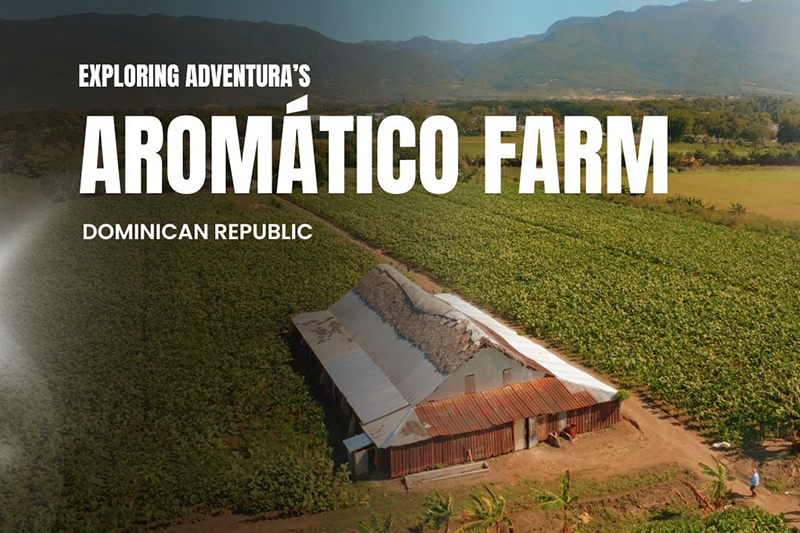
The Dominican Republic is another country that is well-known for its tobacco growth, particularly in the Cibaro Valley, which is a major center for cigar growth with many factories located in the northern part of the country.
"Recognized as one of the most fertile and productive agricultural regions across the Caribbean, tobacco cultivation in the Cibao Valley dates back to the early Spanish colonial period, when settlers first identified the region's potential for growing the valuable crop," according to House of Horvath Canada. "Over the centuries, the valley has evolved into a pivotal area for premium tobacco production, becoming a major force in the Dominican Republic's economy and cultural identity as a whole," they stated.
"A beneficiary of the U.S. embargo against Cuba, many great Cuban tobacco specialists migrated to the Dominican for the survival of their craft and access to the U.S. market," according to Cigars.com. "It is now the world's largest cigar producer and accounts for more than half of the cigars sold in the U.S."
The soil in the DR is rich in nutrients, thanks to the volcanic activity as well as deposits from rivers nearby, such as the Yaque de Norte and the Yuna. Dominican tobacco is known for its complex binders, fillers, and wrapper leaves, and prized for its smooth, mellow, yet rich flavor, leaning from mild-to-medium in profile. Some varietals grown in the Dominican Republic include Piloto Cubano, which is used as filler, Olor Dominicano, utilized as an aromatic filler, and Criollo and Corojo, used for both binders and wrappers.
Nicaragua

Our next country of focus is Nicaragua. Known as "The Land of Lakes and Volcanoes," Nicaragua is home to over 25 volcanoes, some of which are still active, such as the Telica Volcano. Volcanoes impact the soil, leaving the tobacco strong, sweet, and earthy in flavor to be utilized in full-bodied cigars. Nicaraguan tobacco retains its moisture, ensuring tobacco plants receive adequate hydration. The climate of Nicaragua is also tropical and savanna-like with a distinct dry season, aiding in the curing process to develop the flavor and aroma of the leaf, which is notably rich, spicy, and aromatic.
Estelí is the cigar capital of Nicaragua, located in the northwestern region. Its rich history stems from Cuban immigration in the 1950s, when they brought their knowledge and passion to emulate the "Cuban taste," according to House of Horvath Canada.
Estelí is situated at a very high elevation (around 800 meters above sea level), which contributes to its unique characteristics in cigars. This altitude results in cooler nights, which slows the maturation process, allowing tobacco leaves some additional time to develop a greater complexity of flavor with a peppery punch. Jalapa and Condega are also distinctive regions where tobacco leaf is grown. Jalapan-grown tobacco has more earthy notes in cigars.
Honduras

Honduras is also a top cigar-leaf growing region, particularly in the Jamastran Valley, which is located in southern Honduras, as well as Danlí. Both of these places are located near the municipality of El Paraiso ("The Paradise") and the Nicaraguan border, making it the epicenter of cigar production and growth in Honduras. Warm temperatures, moderate rainfall, and well-balanced moisture make the leaf robust and spicy, complex in its aroma, and excellent in burn quality. The Jamastran Valley is positioned at a relatively high altitude, so the tobacco benefits from a unique microclimate.
"Since the 1960s cigar makers have been likening the Jamastran Valley to Pinar Del Río, and judging from the full-bodied tobacco they grow, there are many similarities. Today, Connecticut shade-grown and Corojo shade-grown tobaccos are cultivated extensively throughout the region. In addition, Honduras also produces very large amounts of Cuban seed sun-grown filler tobaccos which are found in hundreds of brands today," according to TobacconistUniversity.org.
Most premium Honduran tobacco utilizes tobacco grown from Cuban seeds, dating back to the early 20th century, as well as Connecticut seeds. Some of the most common varietals from Honduras include Jamastran, Copaneco, and Talanga.
The flavor of Honduran tobacco is distinctly robust and spicy, with excellent burn quality and complex aroma. The warm temperatures and moderate rainfall result in well-balanced moisture in the leaf. The tobacco plants in Honduras are robust and healthy thanks to the tropical climate, fertile soil, and — you guessed it — nutrient-rich deposits from nearby rivers, such as the Hata River.
Similar to the other regions we have discussed, generations of expertise from Cuban immigrants who fled the Castro regime have made Honduran tobacco what it is today, backed by a commitment to retaining traditional methods while still embracing modern innovation.
Other Countries To Note
Aside from these four juggernauts in the world of cigars, some other countries are known for their tobacco growth intended for cigar use. The United States produces Connecticut Shade wrapper leaf that is light, creamy, and known for its mild flavor. This tobacco is commonly used for wrappers. Connecticut Broadleaf is darker and full-bodied, affording sweet and earthy flavors that are ideal as Maduro wrappers. The climate in Connecticut is temperate and its soil fertile, which is well-suited for growing mild, silky wrapper leaves.
Cameroonian tobacco is often used for wrappers as well. West African tobacco benefits from volcanic soil, affording distinct flavors that are neutral in character yet complements blends with sweet and earthy notes. Sumatran-seed wrapper is used in premium cigars that are grown in this region, according to ArcGIS StoryMaps.
Costa Rican tobacco has become a popular substitute for Brazilian, Mexican, and Broadleaf Maduro wrapper leaf. This tobacco is also used in boutique cigars as fillers and binders.
As for Mexican tobacco, the San Andrés Valley produces leaf for fillers and wrappers. Tobaccanist University describes this particular region for cigar tobacco on their website:
Until 1996, when tobacco import duties were dropped, Mexico produced primarily Puros, which consumers either loved or hated. Regardless of personal preference, Mexican tobaccos are distinctive and satisfy a special niche in the marketplace. The most famous of Mexican cigar tobaccos is San Andrés Negro. Like Connecticut Broadleaf, San Andrés Negro is stalk cut and lends itself to binder and maduro wrapper production. This varietal is a tough leaf that can withstand the extra fermentation required to produce a maduro. Other varietals such as Mexican-Sumatra are also successfully grown in the San Andrés Valley. (Tobacconist University)
Brazilian tobacco is used mainly for wrapper leaf. Mata Fina, which is known for its rich, sweet, and slightly spicy flavors, is utilized for wrappers, while Bahia, which is robust and flavorful, is used in fillers and binders. Overall, these varietals are sweet and aromatic, with a medium-to-full-bodied flavor profile, due to the soil and climate of Brazil.
Indonesian tobacco is the original home of Sumatran wrapper leaf, which is generally dark brown and quite neutral in flavor, making it a great choice for blending with stronger fillers and smaller vitolas that capture the punchier aspects of pepper and spice. Though this varietal has been used in the past, Indonesian Sumatra has largely been replaced with leaf grown in Ecuador and Honduras.In Ecuador, tobacco leaf used for cigar making emerged in the 1960s as an alternative to Cuban tobacco after the U.S. embargo. Much like other regions we have discussed, its volcanic ash is well mixed into its soil, impacting its flavor profile and smoking qualities.
Ecuador's proximity to the equator also means lots of sunshine, coupled with near-constant cloud coverage. Since it is grown without shade, it is less expensive for growing Connecticut and Sumatran tobacco. According to StogiesWorldClassCigars.com, Ecuador is known for producing silky wrappers, with Habano and Connecticut being the two most notable varietals grown here.
The locations where tobacco is grown dramatically impact the flavors, use, and smoking characteristics of each particular leaf, and the particular area also impacts the growth and cultivation of tobacco.
Bibliography
- Alexander, J. B. A. (2023, September 25). Cigar Tobacco Growing Countries & Regions. Holt's Clubhouse.
- Bradley, K. (2024, December 2). Why these 4 regions are world-renown for cigar tobacco cultivation - house of horvath. House of Horvath - Canada's Cigar Company.
- CigarInformer.com. (2024, June 18). Exploring the world's top cigar tobacco growing regions. Cigar Informer.
- Efinn. (2023, October 25). Tobacco growing regions explained. Stogies World Class Cigars.
- Prem.vijayakumar. (2024, October 17). A beginner's guide to cigar origins and regions. Embers & Insights Cigar Blog - Your Guide to Cigar Smoking.
- Tobacconist university: Tobacco college: Cigar regions. Tobacconist University | Tobacco College | Cigar Regions. (1996, November 24).
- Warthen, H. (2023, December 6). World within cigars ArcGIS StoryMaps.
You may also enjoy:


Comments
So - how would our favorite pipe tobaccos- the Virginias, the Burleys or the small leaf Macedonian-Turkish ones - turn out in those volcano strewn soils? Has no one at all tried this?