


 |
|
 |
|



The Flavor Wheel: The Perfect Tasting Notes Companion


Smoking, like so many of the finer things in life, carries a certain level of nuance. I've touched on this in the past with a blog post on how to help develop your palate as a smoker. Today, we're continuing that line of thought with one of the greatest tools in tasting: the flavor wheel.
Before we dive into the flavor wheel, here's a quick review of the difference between flavor and taste. We often use "taste" and "flavor" interchangeably but there is a key distinction. Taste occurs exclusively in the mouth; when something triggers our taste buds and that information shoots up to our brain, that's when we process what we call taste. Flavor is a combination of aroma and taste. Most scientists agree that aroma and taste make up our perception of flavor but there is also some consideration of mouthfeel and temperature.
Here's an example of the difference between the two: When eating a piece of dark chocolate, we'd say that overall the flavor is chocolate. But the taste would be the fine details used to describe something like dark chocolate having a soft bitterness with a mellow sweetness.
What is a flavor wheel?
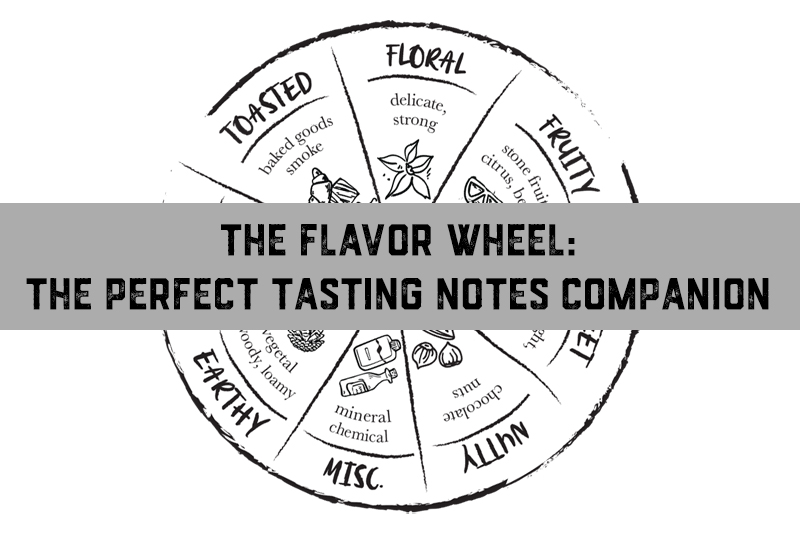
The concept is pretty simple: A flavor wheel is a visual representation of the tasting components found in food, beverages, and in our case, tobacco. It breaks down what one might experience in a tasting into individual elements, helping to find words to pinpoint and articulate nuances that may be difficult to discern without.
You may ask yourself if this is like using training wheels on a bike, or if this might hinder your palate's growth. The answer is simply no; even the top tasting experts of the world use flavor wheels to communicate what they're experiencing. It is simply a tool to help give you the ability to articulate your experience.
Why are there different flavor wheels?
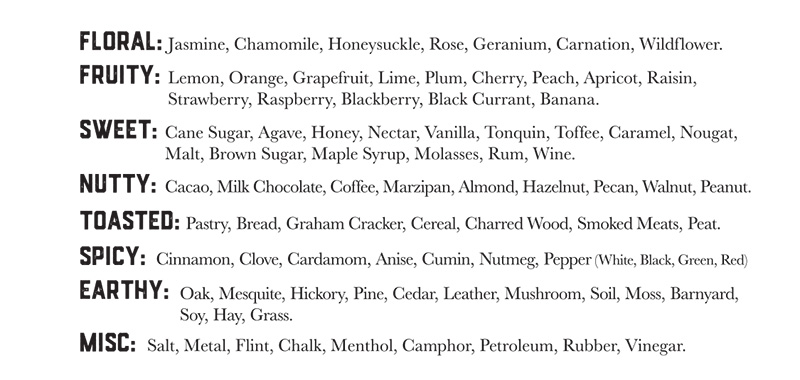
You may be tempted to look up one flavor wheel once and be done with it. How many flavor combinations can there really be? Well, different things have different pathways into flavor. Wine and tobacco are not made equally; certain things exist in each sphere that will never naturally occur in the other. Does this mean a wine flavor wheel is completely useless in the context of smoking? No, but it definitely means there are elements of it that you won't be using when you're trying to do notes on Engine #99, for example.
I think the best way to use a flavor wheel is to look at several through your tasting experience. You're going to see some overlap between the wheels but each will have its own distinctions.
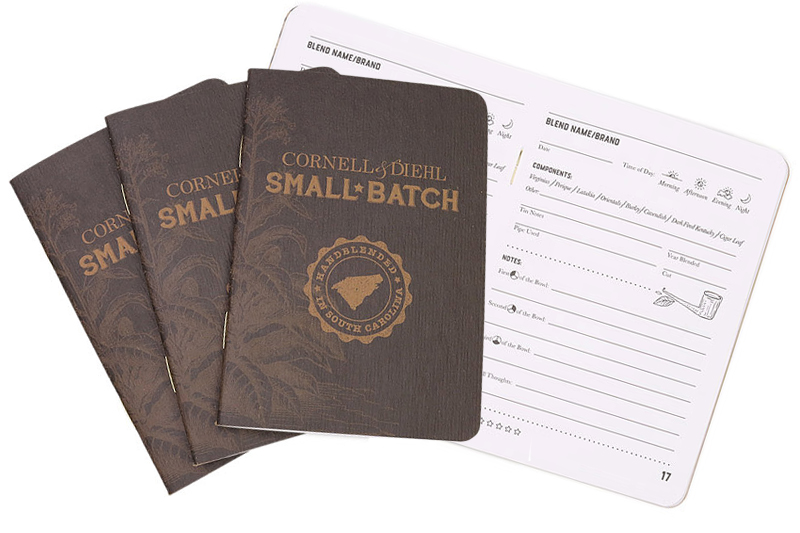
If you're feeling particularly lazy, I can attest to the tasting wheel and guide in the Cornell & Diehl Tasting Journal. Why? Because I helped design it, so while I'm biased, I'm pretty damn confident in it being able to help articulate an experience. My only lament is that because of the size, it had to be condensed to fit in such a pocket-sized package.
One thing of note about flavor wheels, in general, is that you might see what we would generally call "undesirable" elements. Why is medicinal or petroleum included on wheels so often? What some might consider rather unfortunate still pops up. When we sit down to experience something, and we're really looking for nuance, we might be so laser focused on having a positive experience that we may struggle to find the words for a bad one. I do not wish for anyone to wake up and smoke something that tastes like rubber, but the day will come when you have that experience, and having the flavor wheel ready might just help you find the words to say that.
The beautiful part about flavor wheels is that you don't need to buy anything to find one. There are a plethora of wheels out there on the internet for just about everything. You can find some for wine, chocolate, cheese, tobacco, or even more granular cigars or pipe tobacco specifically. The tools are out there; all you need to do is go out and seek them.
In my previous blog post, I shouted out The Art and Science of Foodpairing by Peter Coucquyt, Bernard Lahousse, and Johan Langenbick. It remains a great resource for food pairings that go beyond just a glass of wine or a cocktail and features a plethora of flavor wheels, and other great assets for figuring out how things play together. If you want some reading material on this subject, check it out.
I hope when you sit down next to enjoy your favorite smoke, you take the time to look at a wheel and maybe articulate what exactly you love so much about Star of the East or Crooner. Good luck out there, and happy smokes!
You may also enjoy:

.jpg )

Comments
The most interesting use of a taste vocabulary was R. Dahl's short story first published in the December 8 1951 edition of The New Yorker. I recommend it.
Interesting story, nice twist at the end.
I need to purchase the C&D's tasting journal. I'm a new pipe smoker and I think it can definitely elevate my pipe smoking experience. Great article!
Enjoyed it. Thanks