


 |
|
 |
|


A graduate of the U.S. Naval Academy in 1912, Richard Evelyn Byrd first experienced flying over glaciers and sea ice after his distinguished service in WWI. An aviator, he helped design navigational equipment for the NC-4, the first aircraft to fly over the Atlantic Ocean (1919). Commanding a naval aviation detachment for Commander D.B. MacMillan on his arctic expedition to western Greenland in 1924, Byrd found himself mesmerized by the landscape and pledged to be the first to fly over the North Pole. The Poles would become irresistible to him, both North and South, but Antarctica was where he placed most of his energy, engaging in five separate expeditions.
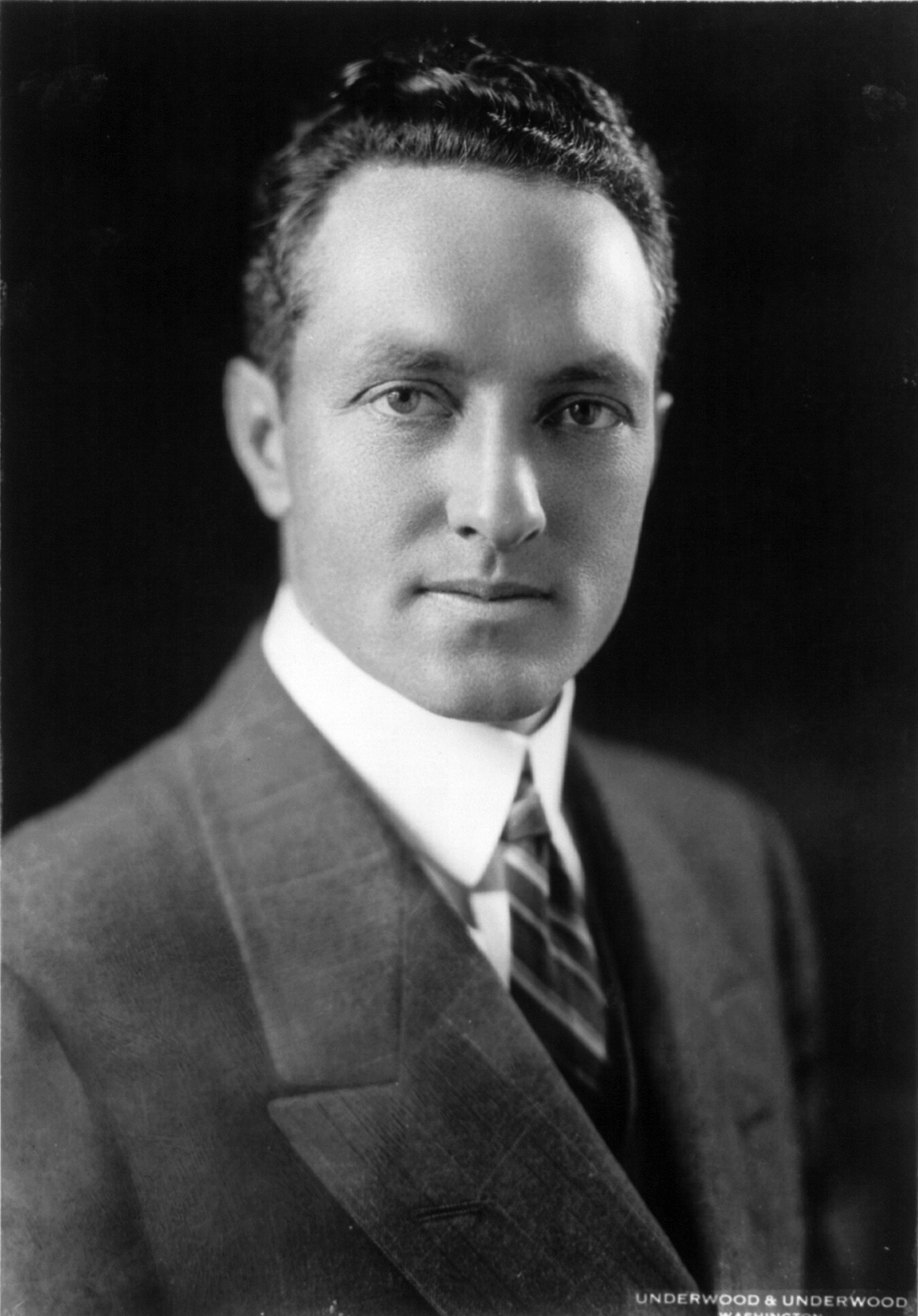
His bravery was well known. Early in his career, he twice saved companions from drowning, the second time diving into shark-infested waters to do so and earning a commendation from the Secretary of the Navy. It was the type of bold courage necessary to repeatedly traverse Antarctica, when such an adventure was deemed death-defying. It's still dangerous today, even with all of our modern conveniences, efficient equipment, accurate maps, and advanced navigation; imagine what it must have been like to be among the first polar explorers, before the advent of down sleeping bags, cold-weather insulated fabrics, efficient portable heating, and reliable foul-weather vehicles.
First Over the Poles
He was the first to fly over the North and South Poles, though history disputes whether or not he accurately traversed the North Pole because of potential discrepancies in recorded airspeed. The 15-hour, 57-minute achievement, which included 13 minutes flying around the Pole, was officially accepted, however, and afterward, Byrd was a national hero. Congress promoted him to commander by special act in December 1926, and he was also awarded the Medal of Honor, the U.S. armed forces' highest award for valor. Other awards would follow, including the Distinguished Flying Cross, the Navy Distinguished Service Medal, and the Navy Cross.
... such an adventure was deemed death-defying
Byrd is the only person in history to be honored with three ticker-tape parades in New York City, in 1926, 1927, and 1930. He earned many commendations, including the Smithsonian Institution's Langley Gold Medal and the National Geographic Society's Hubbard Medal, also awarded to explorers Charles Lindbergh, Robert Peary, and Roald Amundsen.
Interestingly, Byrd volunteered for a trans-Atlantic solo flight six years before Lindbergh, but the Secretary of the Navy scuttled the plan.
He earned many commendations, including the Smithsonian Institution's Langley Gold Medal and the National Geographic Society's Hubbard Medal
Byrd was one of only four American military officers in history entitled to wear a medal embossed with their own image, and he was the seventh recipient of the prestigious Hubbard Medal, awarded by the National Geographic Society for his flight to the North Pole.
Antarctic Expeditions
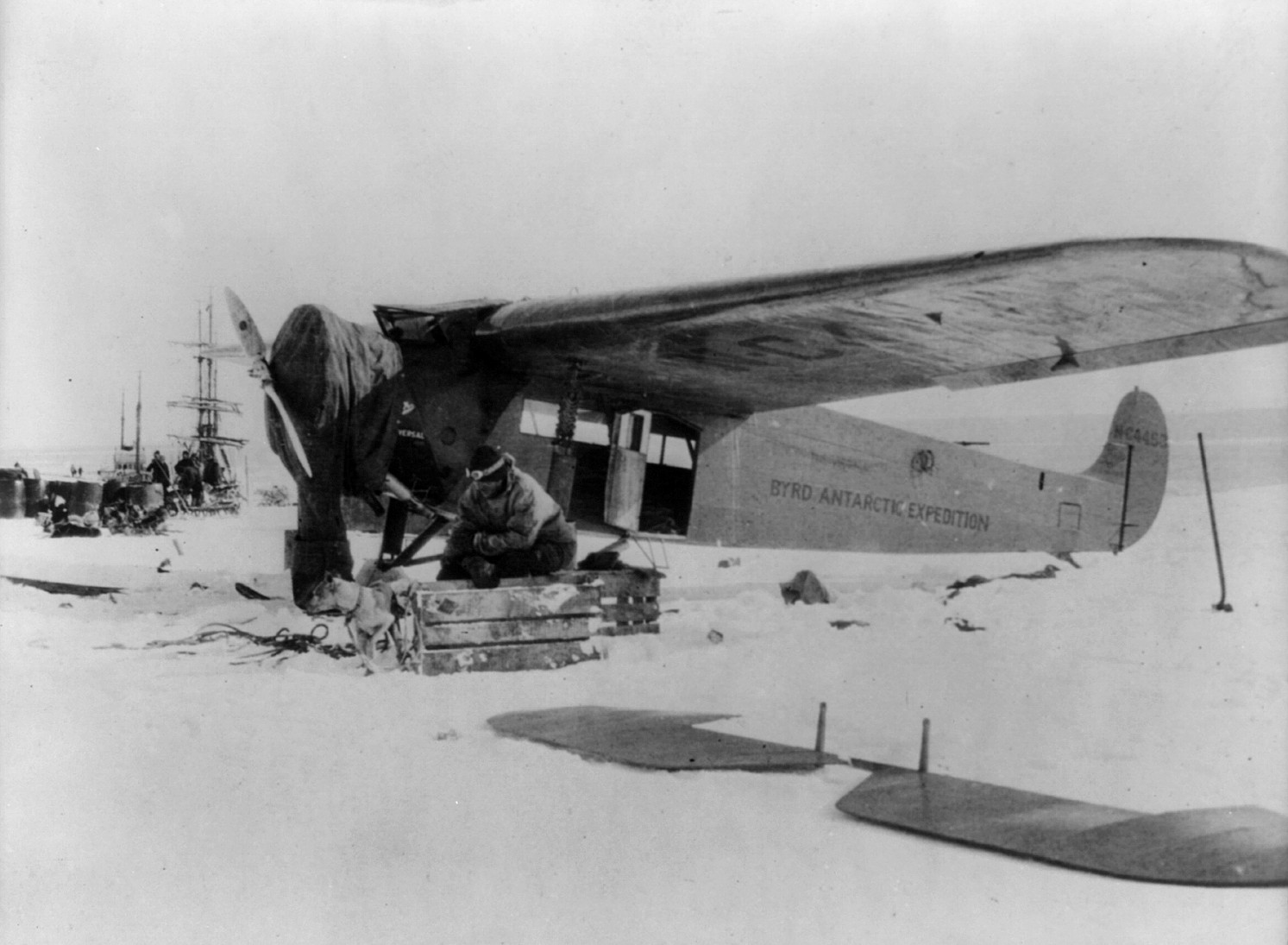
His first antarctic expedition was in 1928. Byrd included two ships and three aircraft in his transportation equipment and set up base camp on the Ross Ice Shelf. The party commenced exploration from camp, which they called Little America, via snowmobile, dogsled, and airplane. When winter struck, these small expeditions from camp were abandoned for the weather and the party hunkered down and awaited spring.
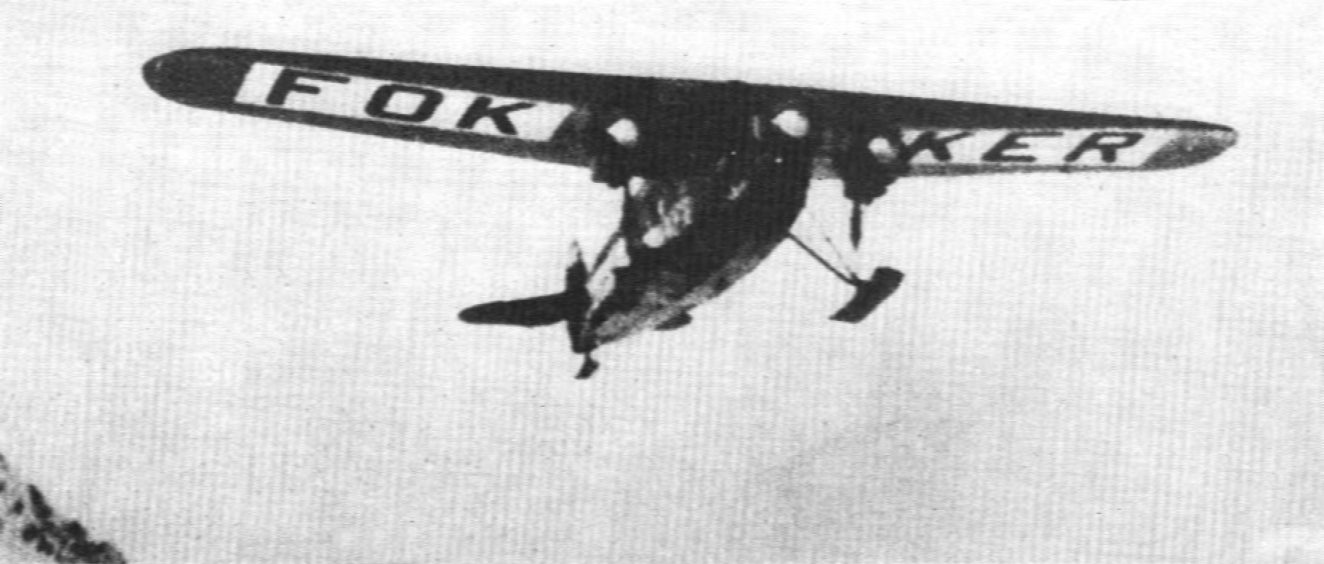
In 1929, Byrd flew the team's Ford Tri-motor airplane to the South Pole, making the round trip in under 19 hours. It wasn't a simple day trip. Byrd had to lighten the plane to achieve sufficient altitude to clear the Polar Plateau, and he dumped empty gas tanks and all non-essential supplies overboard. It was enough.
If Byrd wasn't already a globally recognized hero before his first antarctic expedition, he was afterward. He was promoted to rear admiral by a special act of Congress in December 1929, at age 41, the youngest admiral in Naval history.
Byrd had to lighten the plane to achieve sufficient altitude to clear the Polar Plateau, and he dumped empty gas tanks and all non-essential supplies overboard
For his second antarctic expedition, Byrd spent five months of winter operating a weather station by himself. The stove in his shack, it turned out, was emitting carbon monoxide and his health was severely affected, to the point where his radio transmissions alarmed his crew at base camp. They launched two rescue operations that both failed, but reached Byrd on the third attempt. His health was poor but he recovered over significant time.
Pipes and Pipe Tobacco on the Byrd Expeditions
As may be imagined, the supplies for an expedition to the South Pole were numerous, as Byrd explains in his book Discovery: The Story of the Second Byrd Antarctic Expedition (1935):
It's remarkable how many things you need. Apart from food (sugar — 15 tons, flour — 30 tons, dehydrated vegetables — 2,000 pounds, especially manufactured dog and man pemmican, etc., etc.) there are myriads of other things. 7,000 yards of windproof cloth for clothing, tents and flags; hickory for 50 sledges; 100,000 feet of piano wire for ocean soundings and samplings; 27,000 feet of rawhide for sledge lashings; 750 gross of screws; 2 outboard motors and 3 collapsible boats; 2 sinks and 6 stepladders; 15 stoves and 100 tons of coal; 20 gasoline and kerosene pressure lanterns and over a hundred mattresses; 15,000 yards of canvas and 1,500 pounds of pipe tobacco; chinaware and toilet paper; ski poles and a wind-driven generator; flashlights and batteries; blankets and shirts; 18 tons of rope for this and that, gang lines, sledge lashings, ships' tackle, etc.; 720 pairs of wool mittens and 300 pairs of overalls; 3,000 books and 6 cases of chewing gum; 5 typewriters and four phonographs; 12 telephone poles for radio antennae and a complete machine shop; 1100 pairs of wool socks; 12 brooms; 165 snow shovels (inglorious instrument!); hundreds of charts; 125 cases of soap; and some 60 cases of strong sauces to subdue, when the flesh is weak and the palate flagging, the taste of seal meat and the eternal salt horse. (page 12)
That's a lot of baggage, but the perceptive reader will immediately notice the 1,500 pounds of pipe tobacco. The Brown & Williamson tobacco company is credited with donating the tobacco, though the books and resources available do not reveal the name of the blend or blends. Pipe tobacco was essential for antarctic explorers of this era of exploration. On Ernest Shackleton's failed expedition, for example, when the crew abandoned their sinking ship as it was crushed in the ice and they could carry only the most important supplies, each crew member took one pound of tobacco, one-third of the weight each was permitted for personal items. Toward the end of the adventure, they were out of tobacco and complaining more about the lack of smoking than lack of food.
Another Byrd expedition was launched in 1939, lasting into 1940, and was particularly dedicated to scientific discovery. Byrd and his crew carried out extensive experiments and measurements regarding biology, meteorology, geology, and, of course, further exploration. Byrd had to leave his crew to finish the mission without him in 1940, when he was recalled to active duty.
"... 15 stoves and 100 tons of coal; 20 gasoline and kerosene pressure lanterns and over a hundred mattresses; 15,000 yards of canvas and 1,500 pounds of pipe tobacco ..."
Of course, Byrd made an impression with his WWII military career as well. He was an advisor to the chief of naval operations and led missions in the Pacific. He was in attendance at the Japanese surrender in 1945 after twice being awarded the Legion of Merit.
A Return to the Original Camp
Operation Highjump (1946-1947) was Byrd's fourth expedition to Antarctica, supported by 15 Navy ships, 6 helicopters, more than a dozen other aircraft, and 4,000 people. They explored and aerially mapped an enormous swath of the continent.
On this trip, Byrd could not resist visiting the original Little America base camp:
As soon as the blizzard lifted, Byrd was determined to revisit Little America I... Accompanied by a small party, including the ubiquitous navy cameramen ... Byrd set off on 3 February and soon saw the cage radio masts of his old base rising blackley, if barely, above the white desert of the vast Ross Ice Shelf. "Much digging" brought only part of the seventeen-year-old camp into sight, but Byrd was able to drop down into a portion of Little America I that had been built above the original site and had been used during the 1933-34 expedition. Several buildings were entered by Byrd, his son, Richard, Jr., and the others. The admiral discovered one of his old pipes and some tobacco and matches and was photographed smoking contentedly away in his old room. (Rose, 191)
Life magazine in 1947 published an advertisement for Edgeworth tobacco in the form of a letter from Bud Waite, who was on the expedition that rescued Byrd and also there when Little America I was visited. The title given to his letter was, "I was with Admiral Byrd When We Found That Tobacco":

We therefore know that Edgeworth was one if not the only tobacco in Antarctica for that initial expedition. As for pipes, we have little information, though one of the existing photos of Byrd reveals a straight Billiard that looks like a Kaywoodie. The Wm. Demuth company, however, sent some of the pipes, announcing in 1929 that the Byrd expedition had requested pipes in addition to those initially provided: "The New York office of the Byrd Antarctic Expedition has received a cabled request for an additional supply of Demuth Milano and Thorobred pipes, it was learned this week. Wm. Demuth & Co. immediately responded with a shipment which is already on its way to the Bay of Whales, Antarctica, where the expedition has its base."
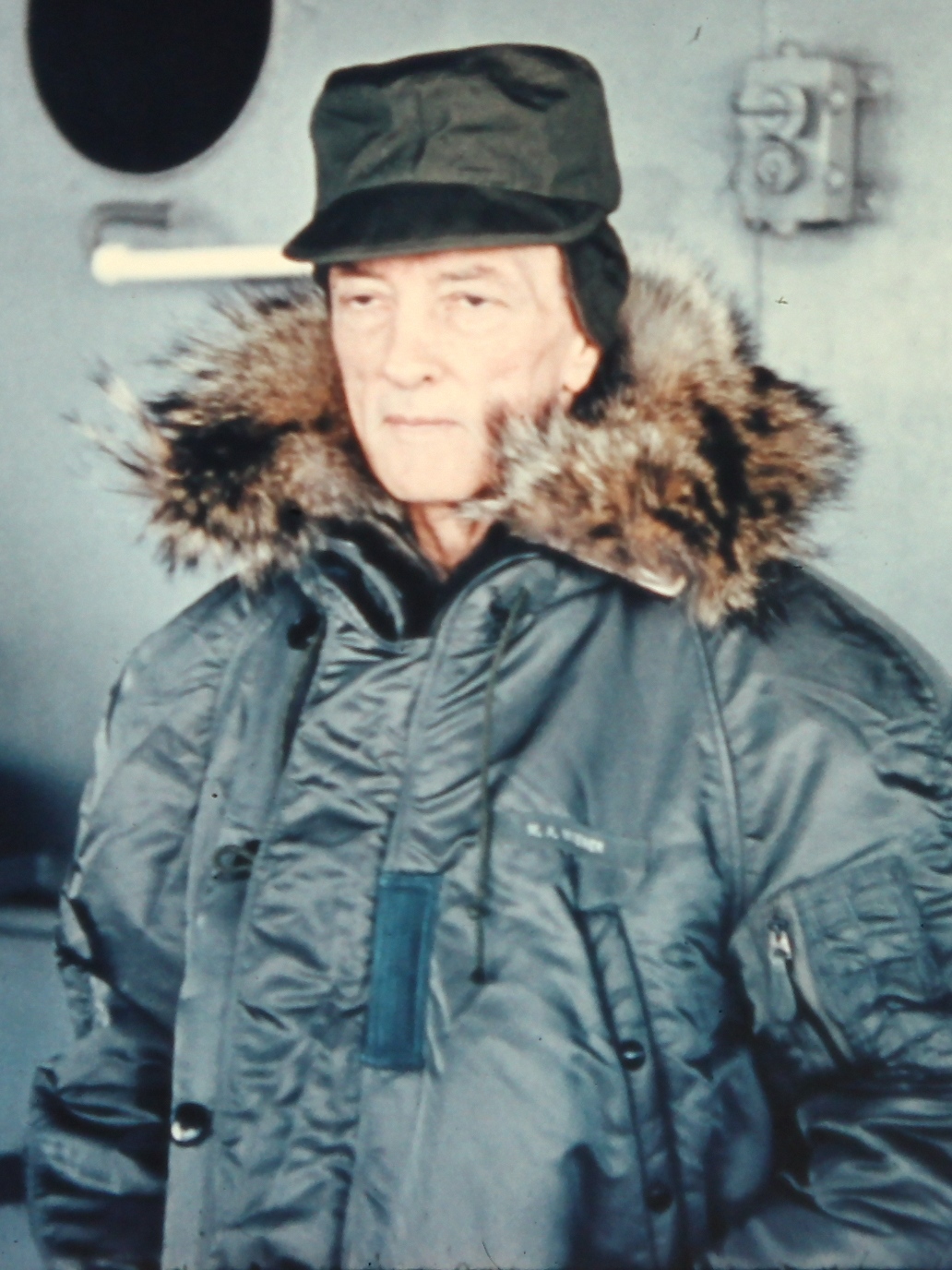
"The admiral discovered one of his old pipes and some tobacco and matches and was photographed smoking contentedly away in his old room"
For Byrd's fifth expedition, called Operation Deep Freeze I (1955-1956), permanent bases were established. It was Byrd's last visit to the continent he had challenged for so much of his life.
Byrd passed away in his sleep at age 68, among the most highly decorated officers in naval history. Like so many great explorers before and after, Byrd was focused, driven, courageous, and a pipe smoker. No doubt his pipe offered comfort and thoughts of home during the cold nights that he endured, and contributed to his well being and ability to endure the harshest of conditions.
Bibliography
- Warren R. Hofstra, "Richard E. Byrd and the Legacy of Polar Exploration," Virginia Magazine of History and Biography (Volume 110, Number 2, pp. 137-52)
- Discovery: the story of the second Byrd Antarctic expedition by Richard Evelyn Byrd First published in 1935
- Lisle A. Rose, Assault on Eternity: Richard E Byrd and the Exploration of Antarctica, 1946-47 (1980)
You may also enjoy:




Comments
An interesting read. Thanks
A most interesting and brave man. A true hero.
I would give my pipe and tobacco collection to know everything he discovered.
What I would give to smoke a bowl of Edgeworth with the Admiral. Great story.
Dear Chuck, as a history buff, just keep these articles coming.
Excellent article, I didn't know about the carbon monoxide poisoning he experienced, maybe that explains some of the crazier stories you hear about his expeditions!