


 |
|
 |
|


The intentionality behind the use of bamboo in pipe making extends beyond the material itself — creativity flourishes in the bamboo aesthetic even when other materials take its place. Many artisan pipe makers evoke the visual cues of bamboo through alternative mediums like briar, meerschaum, boxwood, silver, and more. This is the final installment of our deep dive into bamboo in pipe making — Part Three, the bamboo aesthetic in contemporary pipe making.
Part Three of a three-part series on bamboo in pipe making.
Before the final version of Part Two was published, Adam Davidson noted that the series was incomplete — a third part was necessary to finish telling the story of bamboo in pipe making. I love extending ideas here on the Daily Reader; often, a single post isn't enough to tell the full story on a given topic. Adam was right: I hadn't yet addressed how bamboo's aesthetic appears in modern artisan pipe making, with materials shaped and finished to evoke bamboo's distinctive nodes, coloration, and texture. The creative possibilities for pipe makers are seemingly limitless.
Bamboo as Aesthetic in Design
From the previous two parts to this series that explored the history of bamboo in pipe making and modern design, it is no secret that bamboo has captivated collectors' hearts for many years, and has intrigued pipe making legends like Sixten Ivarsson to Hiroyuki Tokutomi. The move from utilizing bamboo to evoking bamboo through the use of alternative materials stemmed from artisans' passion for using the organic material. "Some carvers love the beauty of bamboo so much," explains Adam, "they choose to essentially 'make it' out of other materials."
The natural aesthetic of bamboo is appealing not only to collectors but to the makers themselves. Pipe makers also love a challenge. Artisans like Adam are inspired by the possibilities in design, pushing the limits to create one-of-a-kind pipes that will be cherished as smokable artwork for years to come.
Among the most distinctive aspects makers emulate are the segmented nodes — the raised knuckles that visually define bamboo. Artisans recreate these nodes by shaping materials into raised segments, whether bulbous or more subtle in curvature. Stains are applied to mimic the yellow-to-brown coloration of dried bamboo, and varied polishing, wax treatments, and careful attention to light are used to give the material a natural, non-glossy finish. Quite a few carvers and factories have also designed pieces with shanks carved like bamboo.
There have also been examples of faux bamboo, pieces not designed to replicate natural bamboo exactly, but rather to stylize its appearance. Several makers, including Radice and Butz-Choquin, are noted on the PipeSmokersDens forum for their use of bamboo as a visual aesthetic rather than an actual material incorporated into their pipe designs. Let's take a look at a few examples that feature faux bamboo.
Examples of Faux Bamboo
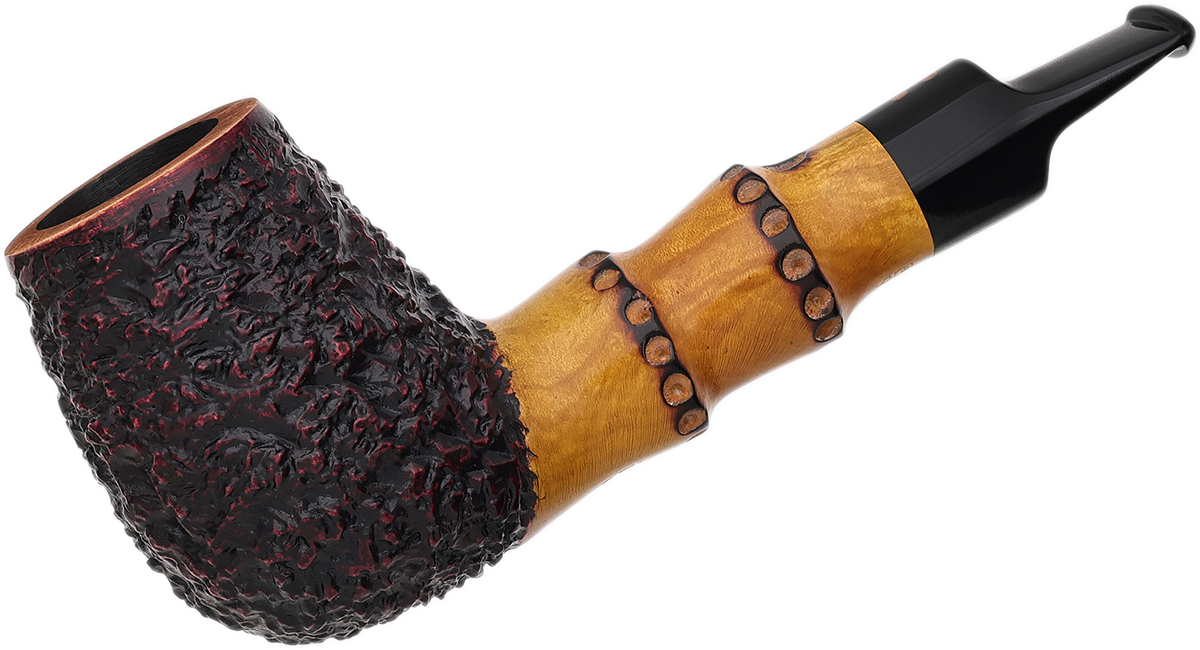
This example by Radice presents a Lovat with a tall, Brandy-like bowl and a wide transition behind it that features a thick faux bamboo shank. It's a very textured piece, with two prominent knuckles for the eyes and fingertips to admire.
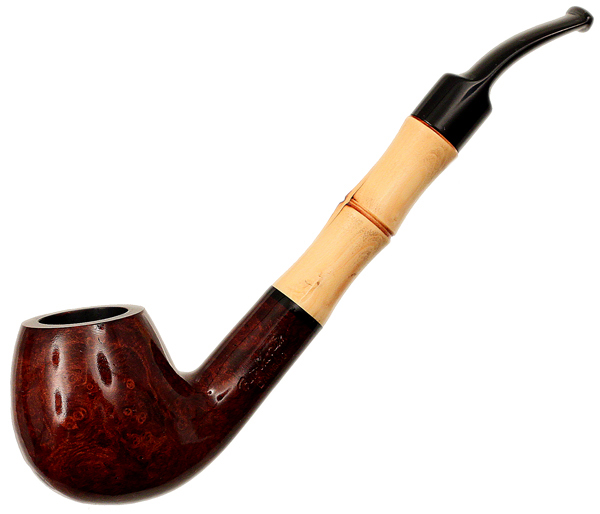
From our French estate archive, this bent Apple was stamped with "bamboo" and "faux" by Butz-Choquin.
Examples of the Bamboo Aesthetic Through Alternative Materials
Various other artisans, which we will see below, have gone beyond stylizing bamboo to recreate it through entirely different materials and processes.
As Adam has shared throughout this series, he genuinely enjoys working with bamboo, although it's become less common in his recent work. Even so, he has an archive of sold pieces that beautifully demonstrate what can be achieved within the bamboo aesthetic through means other than actual bamboo. The first Global Pipe-Making Exposition in 2024 was the third time we featured bamboo in an exposition, and his goal was to create three bamboo pipes that didn't have any bamboo at all.
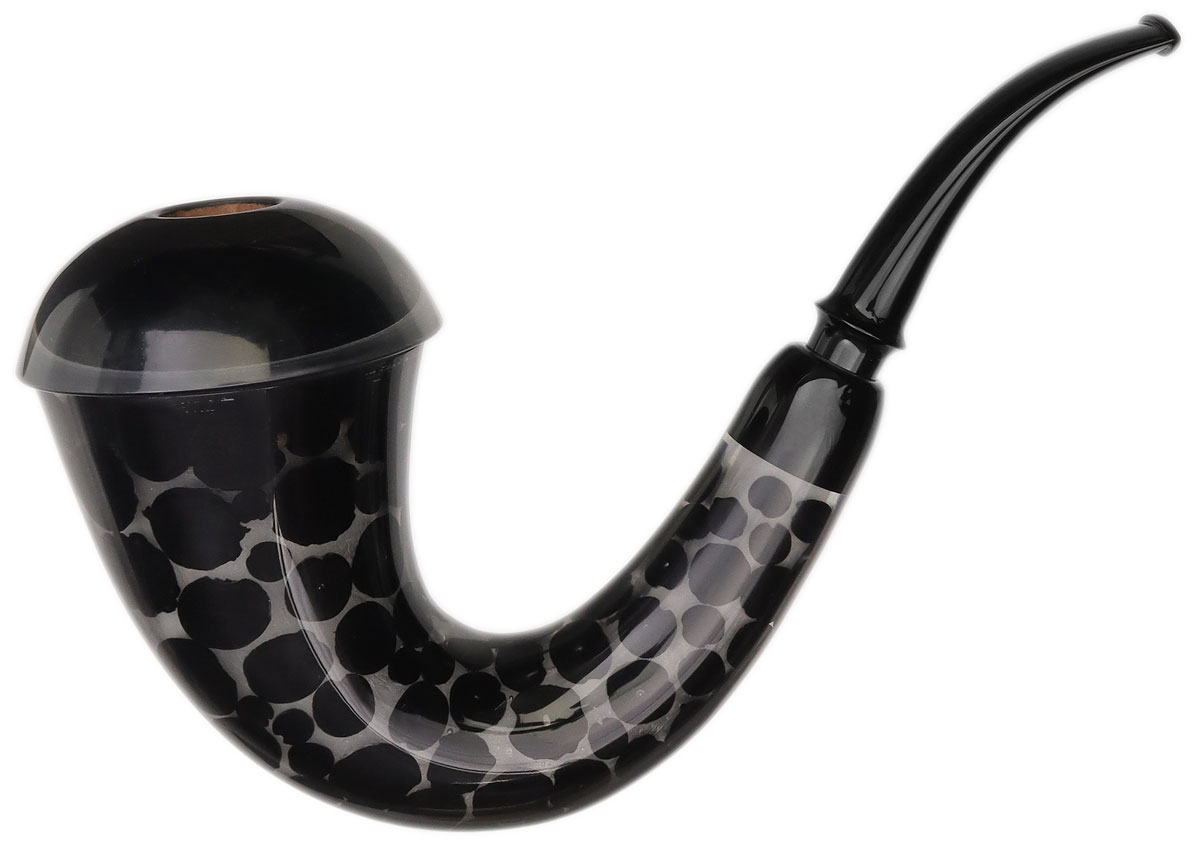
This example is singular in design, suspending dark pieces of bamboo charcoal within a cast resin body. A culmination of many hours of research, development, manufacturing, and craftsmanship, this Calabash incorporates charcoal made from bamboo as its central aesthetic motif. Adam stabilized the bamboo, then sanded and cut individual pieces to ⅛" before suspending them between two castings that form the inner and outer walls of the bowl. The resin is translucent, and the charcoal pieces appear to float within — suspended and nearly alive. Traditional and unprecedented, as the original listing described it, it is truly a piece unlike any other.
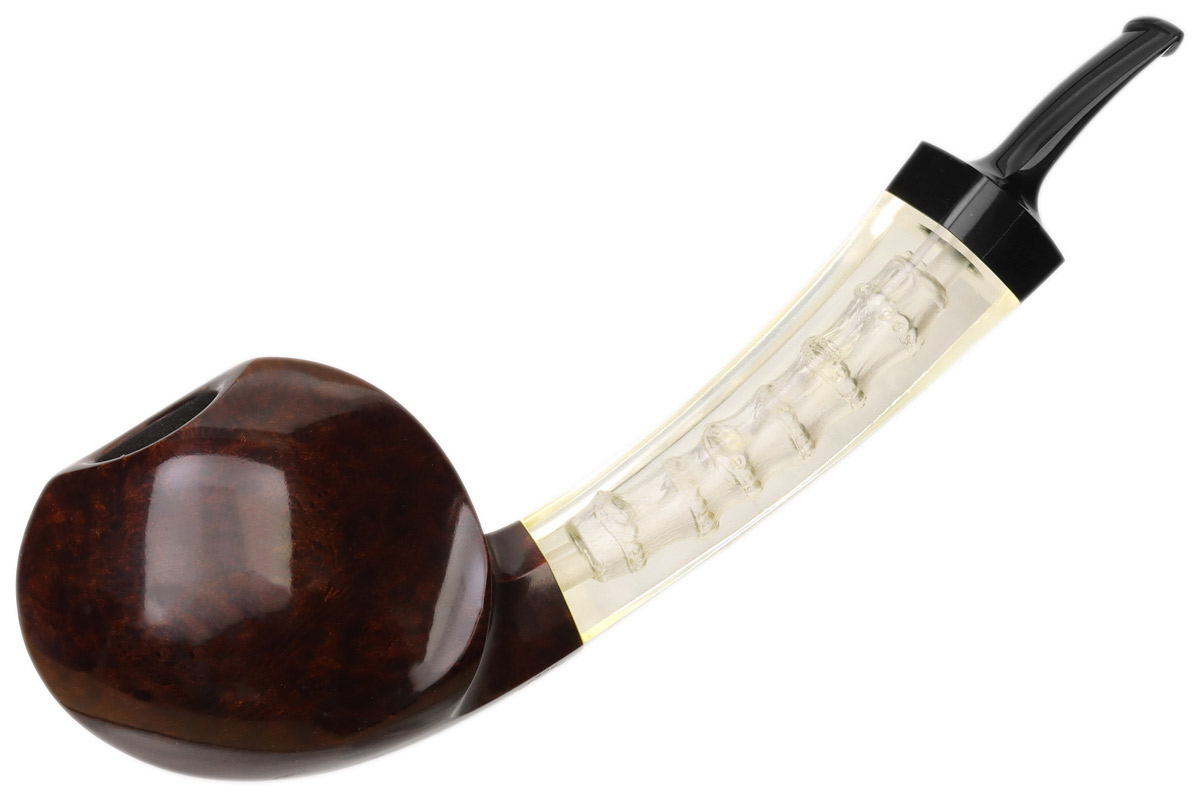
Also made for the Global Pipe-Making Exposition, this Blowfish without bamboo is defined by a resin-cast shank, revealing the shape of bamboo in negative space. Cast directly from real bamboo, the resin showcases every intricacy of the bamboo preserved in fossilized form. It also functions as the pipe's airway, where smoke can swirl and cloud through the visible channel. It's a remarkable feat of engineering, and the overall design is a masterpiece.
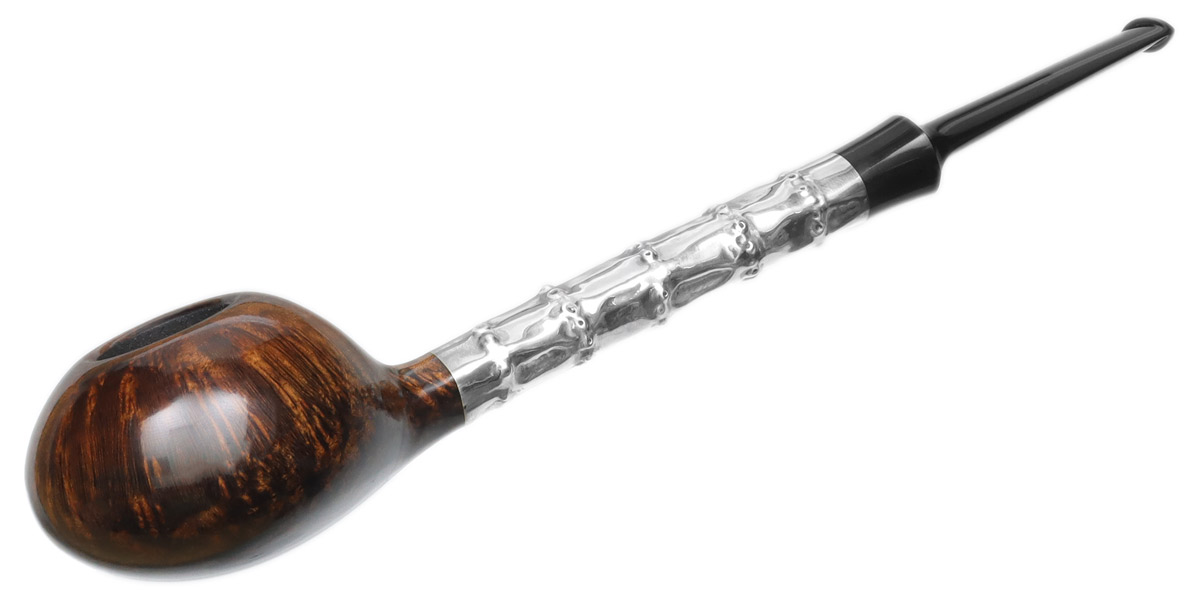
This smooth Tomato appears as a standard bamboo-accented pipe, but the bamboo is fashioned from a silver sheet that Davidson hammered, bent, and hand-shaped to mimic bamboo. The full composition highlights a beautiful interplay between natural and metallic materials.
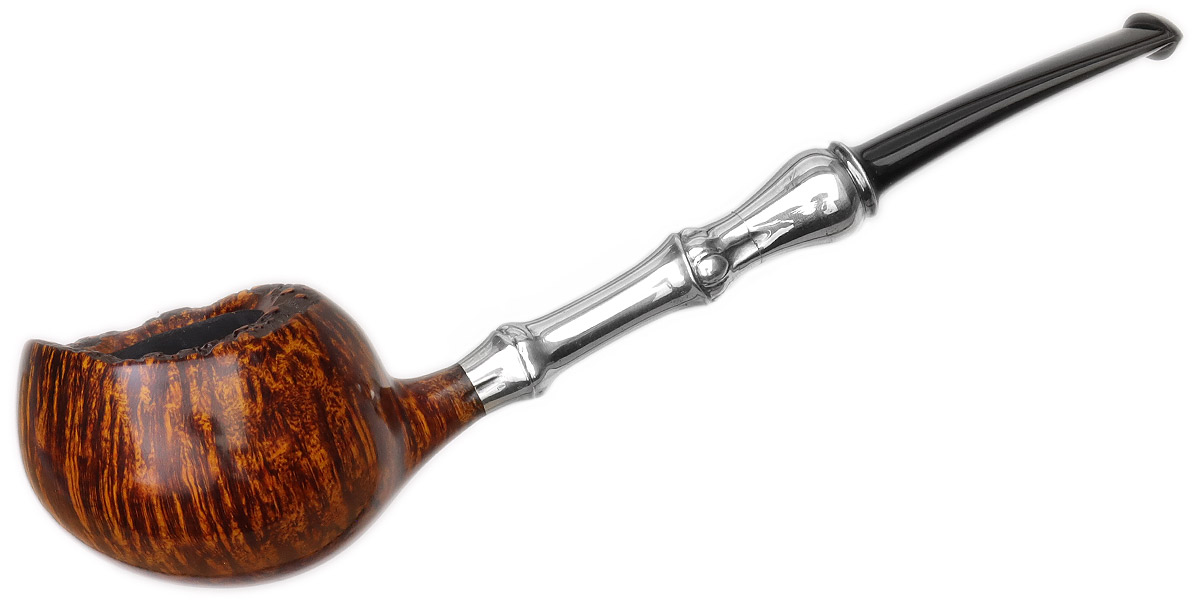
Another pipe from the 2024 Global Pipe-Making Exposition, Abe Herbaugh centered his pipe on silver as his medium for evoking bamboo. To create this accent, he made a mold from an actual section of bamboo, sand-cast silver from that mold, and then fine-detailed the silver to match the bamboo's surface details. It's a stunning interplay between organic and metallic aesthetics, and also a beautiful juxtaposition between living material and solid silver that feels both natural and otherworldly.
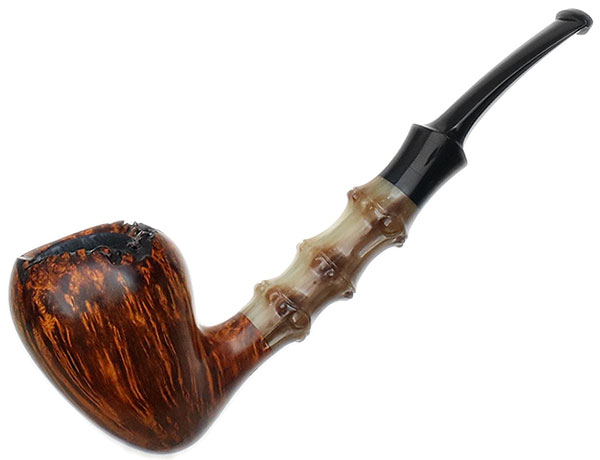
In this Sixteen-inspired Acorn, Ping Zhan replaces the traditional bamboo shank extension with one carved from horn to resemble a cleanly cut rhizome. The process required four different tooling set-ups and many hours of work, but also allowed him stylistic and practical advantages — in crafting the extension out of horn, Ping can show more variation in color and pattern than bamboo's natural length and knuckle rhythm would permit. The result is organic and innovative, emulating bamboo in a strikingly impressive and modern way.
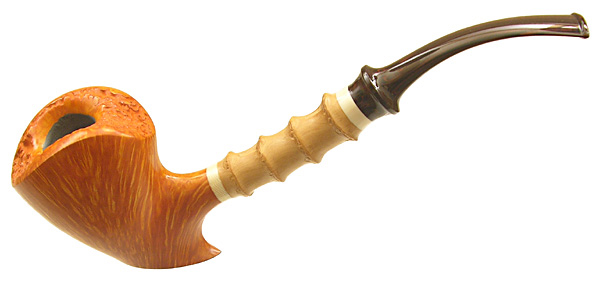
Tokutomi did fascinating work with boxwood, including this Sitter Dublin with a faux-bamboo shank.
In another piece pictured below and discussed in Chuck Stanion's piece on boxwood here on our blog, he similarly worked with boxwood to resemble bamboo, with three knuckles rendered in yellow-tan tones of the natural material. Both pieces are compelling examples of how far the bamboo aesthetic can travel from the source.
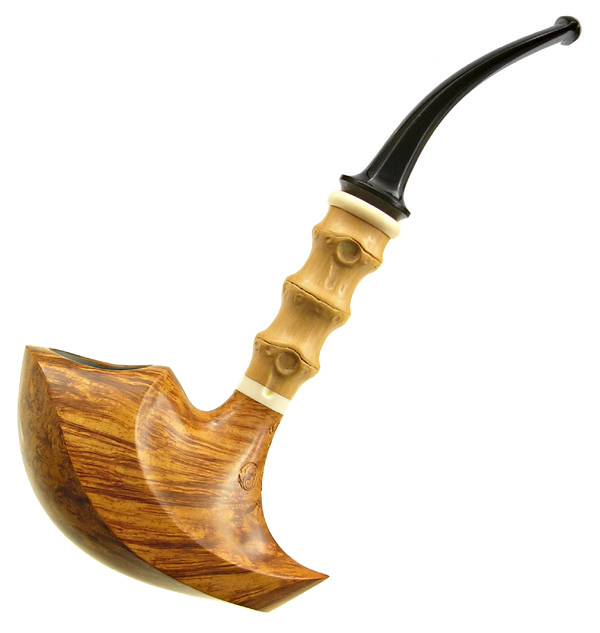
Hiroyuki Tokutomi
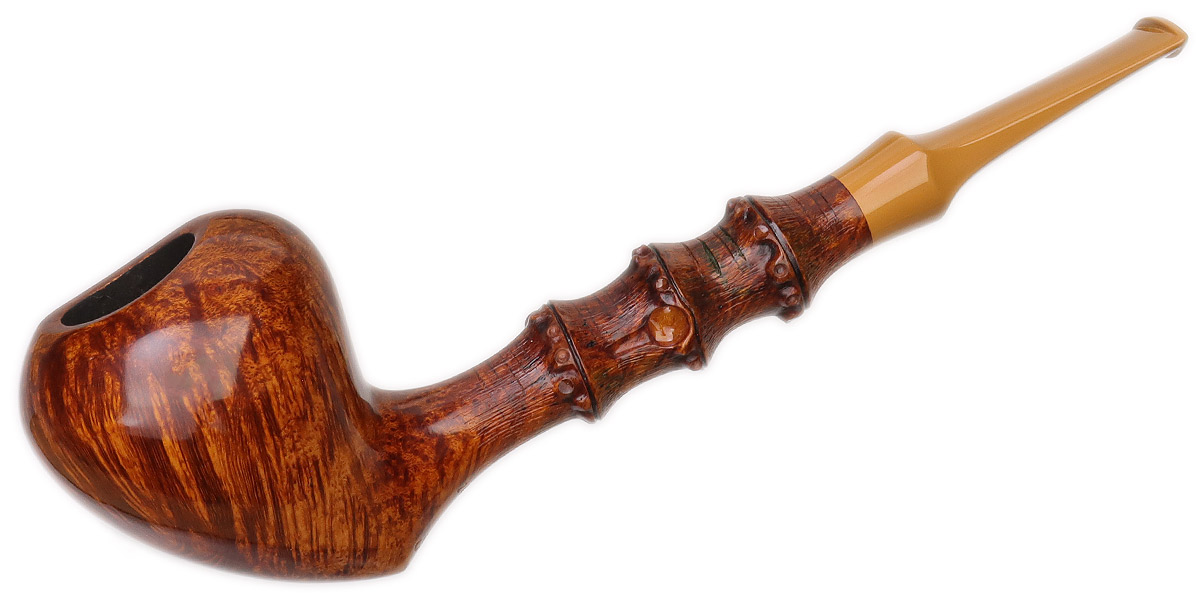
Going against the conventional use of bamboo itself, this Expo pipe features a hand-carved briar shank that Asteriou made to look like bamboo with three knuckles, blending seamlessly into the Acorn bowl.
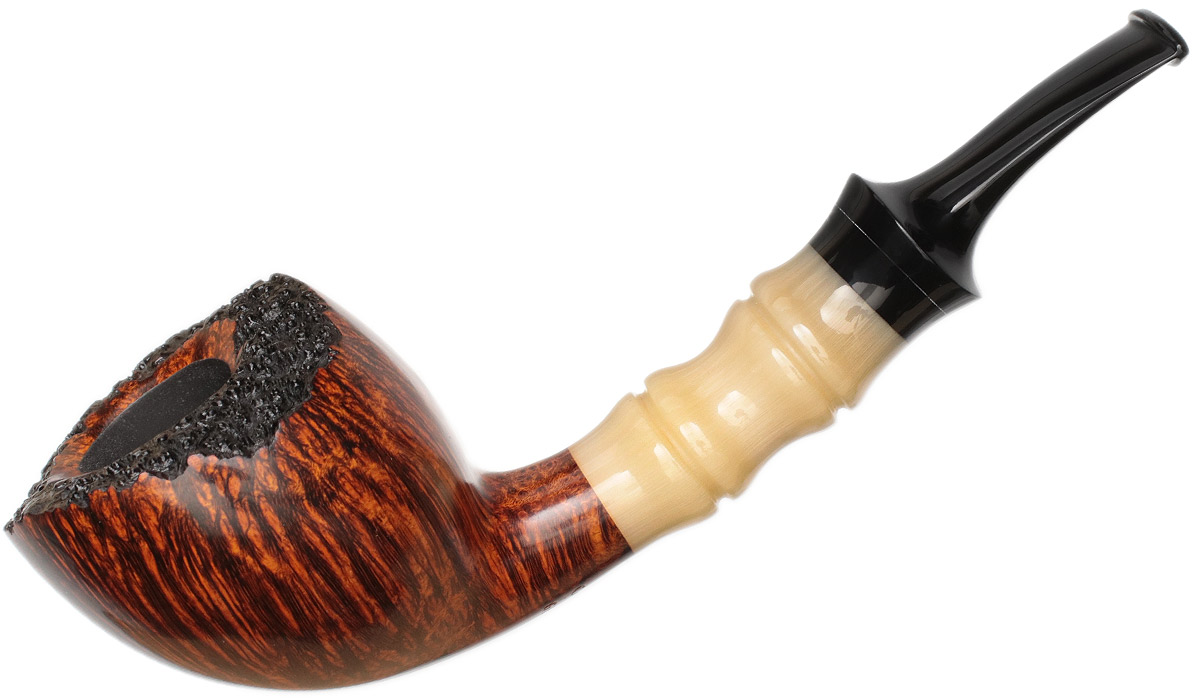
Featured in this bent Apple by Cornelius Manz is a horn shank extension, the first of its kind we've seen from the artisan, carved to emulate the appearance of bamboo.
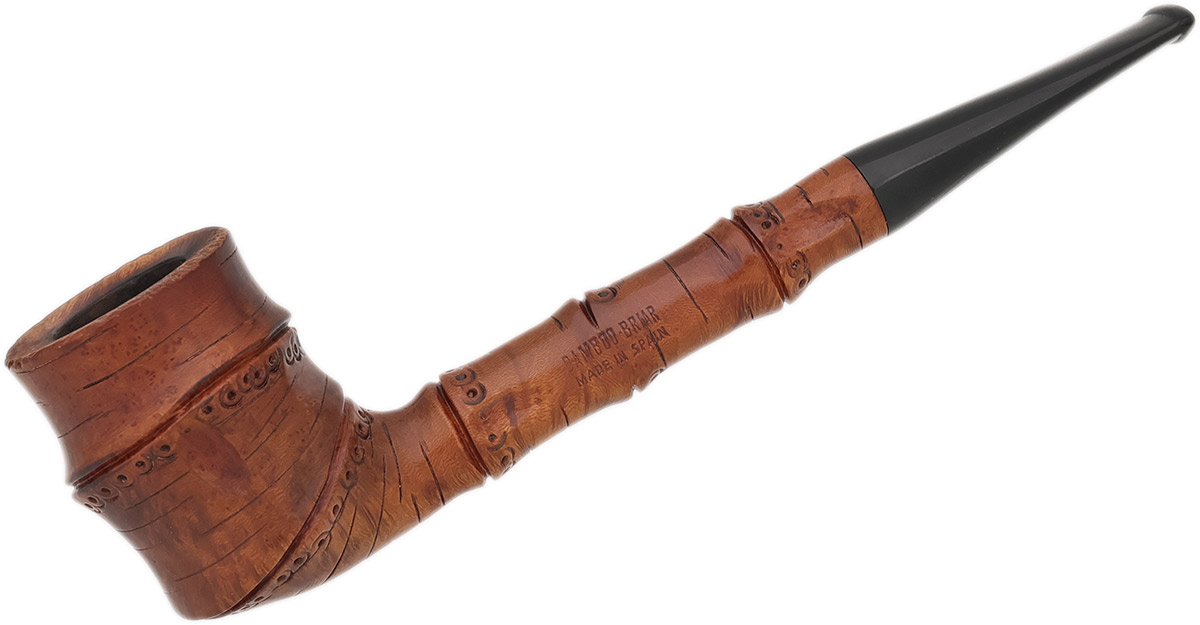
Bamboo Briar is based in Spain, carving briar pipes to look like they're made from bamboo. This Billiard is a great example of their work, featuring a faux bamboo knuckle and an earthy chestnut stain.
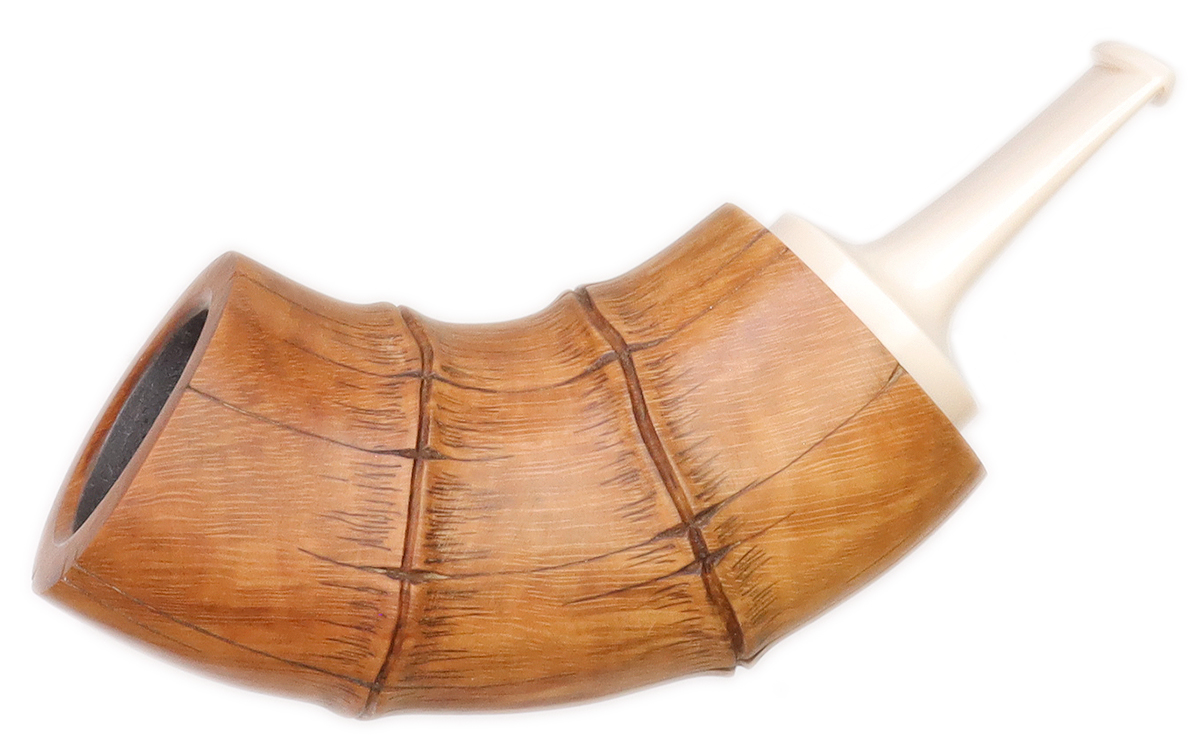
Carved to resemble a thick piece of bamboo, this Tuban showcases Heinemann's mastery of line and form, adding tactile detail to an already commanding form.
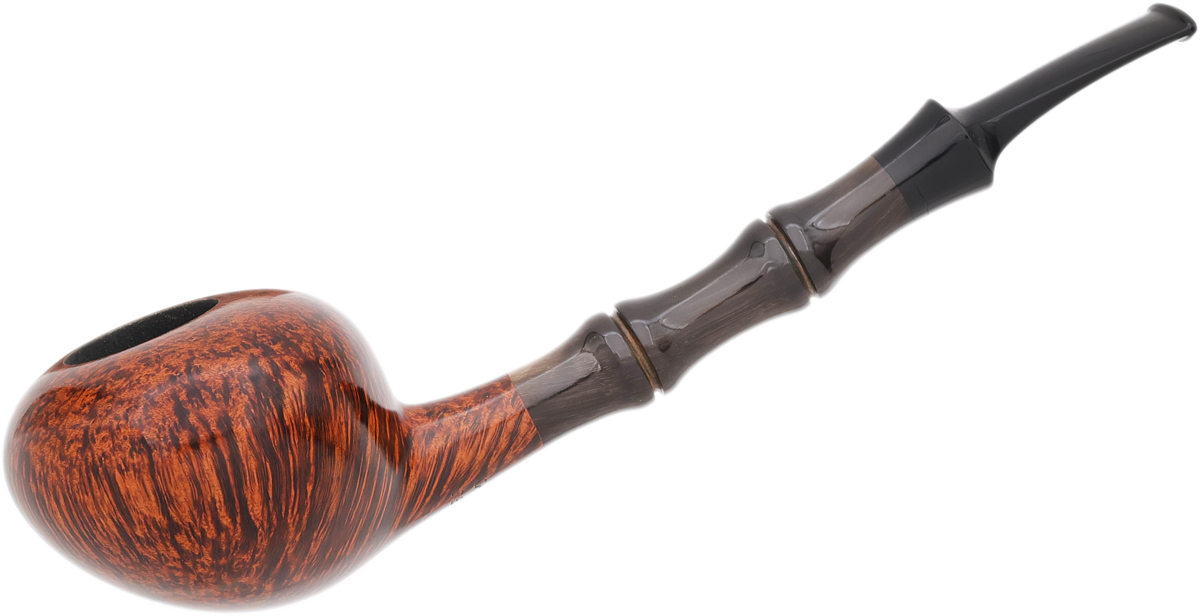
German Estates: Cornelius Manz Smooth Tomato with Horn Bamboo (Unsmoked)
Within our archives, this piece by Manz features a horn shank extension also made to look like bamboo.
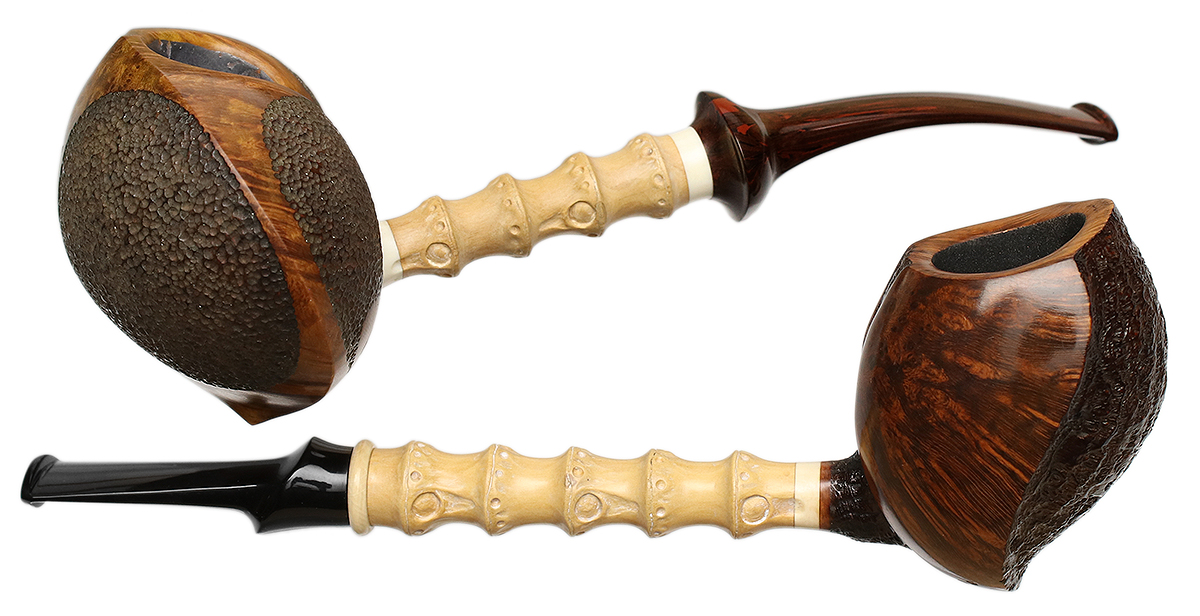
American Estates Hiroyuki Tokutomi and J. Alan Two Pipe Freehand Set with Bamboo Carved Boxwood (2010) (Unsmoked)
This set was created when Tokutomi and J. Alan visited Smokingpipes after the CORPS pipe show in 2009. Tokutomi brought the two shanks of carved Japanese boxwood and they each crafted a pipe.
A Living Aesthetic
Bamboo is a beautifully natural material utilized in pipe making, and has seen an interesting evolution over many years in this industry. From the origins of its use as a way to save a bowl or repair a stem to its influence in modern design for artisans like Adam, even inspiring the aesthetic of bamboo without the use of actual bamboo, it has certainly made its mark. Thank you once again to Adam Davidson for his expertise and interest in helping me put this series together. If you missed Parts 1 and 2, I encourage you to check them out! I enjoyed working on these pieces, and would love to hear your thoughts on this type of content in the comments.
Bibliography
- Stanion, C. (2024, May 31). Boxwood: The Ivory of Woods. Smokingpipes Daily Reader.
- Various Users. (2021, January 25). Faux Bamboo. Pipe Smokers Den.
You may also enjoy:



Comments
Best place to shop Smokingpipes.com.
100 % satisfaction at Smokingpipes.com.
Value, price and service Smokingpipes.com.