


 |
|
 |
|


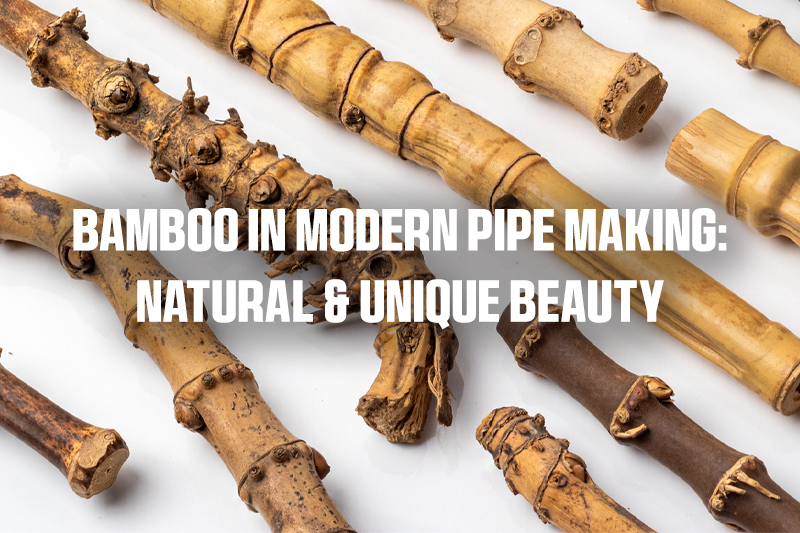
Bamboo from Adam Davidson's Collection
Pick up a piece of bamboo destined for a pipe and you're holding something a maker may have pulled from the ground themselves, hunted down on eBay, or selected from a pile of dozens for its particular curve, coloring, or the way its knuckles appear. That level of intention, and the craft required to honor it, is what defines bamboo's place in modern pipe making. A few weeks ago, we explored the history of bamboo and how it made its way into pipe making in Part One. In Part Two, we turn to the living side of that story: how aesthetics have evolved, how makers source and work with the material, and what the finest bamboo pipes reveal about the art of pipe making itself.
Part Two of a three-part series on bamboo in pipe making.
A special thank you to Shane Ireland and Adam Davidson for their expertise and enthusiasm to assist me in the research for this piece.
The Evolution of Bamboo Aesthetics
The deeper shift from functional use of bamboo in pipes to aesthetic was philosophical: artisans began creating pipes around the bamboo rather than fitting bamboo into an existing design. In an article on Smokingpipes published in 2015 called "The Art of Bamboo in American Pipe Making," this evolution was traced back to Sixten Ivarsson, as explored in Part One:
Bamboo was once something pipe makers stuck on pipes just so that they'd use up less briar. Things change; the place bamboo holds in the pipe world certainly did. That change started with Sixten, and has been carried on and refined since then. Today we find that in a high-end artisanal pipe, bamboo is, more often than not, not simply integrated into the design and aesthetics of a shape, but one of its central, principle themes. In other words, bamboo has become something the finest pipemakers often design pipes around. Just as they'll pick up a special block of plateau briar and visualize the shapes they could get out of it, they'll pick a particularly choice section of bamboo and imagine the shape they could pair with it.
Shane extended on this: "The philosophy of a stem being part of it all, not an afterthought in design, is also credited to Sixten. Taking that perspective and extending it to something like bamboo was definitely influenced by him and is carried forward by countless other artisans today." Adam echoed the point: "Picking up a really cool piece of bamboo and designing a pipe around it is a relatively modern practice."
The appeal of bamboo as a natural and organic material for use in pipe making has been present for years, though aesthetic priorities have shifted considerably over the last few decades. As Adam Davidson wrote in his 2012 article on Black Bamboo, pipes didn't begin featuring bamboo as a prominent accent material until the early 20th century — and even then, its role remained relatively modest for decades to come.
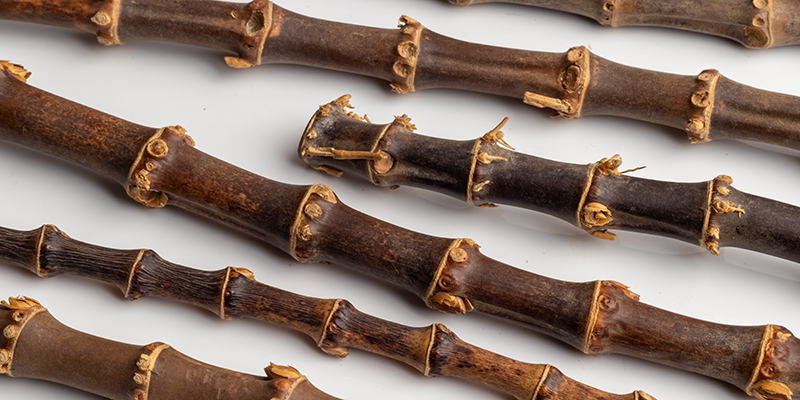
Black Bamboo from Adam Davidson's Collection
"For a long time," said Shane Ireland, "bamboo was most popular in pipes where it was uniformly colored and the knuckles — or rhizomes — were evenly spaced. In the late '80s, '90s, and early 2000s, artisans started looking for unique and crazy pieces of bamboo and how to incorporate it into their work." These pieces might be slightly bent, feature tightly compact knuckles, or be wavy, curly, irregular, or ovular in their cross section.
Around the 2000s, other types of bamboo came into favor, including Buddha belly bamboo. "Those are the pieces that grow flush to the ground, or just above it," said Shane. "They're not full stalks, but pieces that are thicker, with rings and knuckles that don't have those raised pimples since the rhizomes would've sprouted off actual roots in the ground. Above ground, there's no need for roots. So it's basically growth rings."
Buddha belly and other unconventional forms weren't used or popularized until the last 20 or so years, by makers like Cornelius Manz, Roman Kovalev, Jeff Gracik, Alex Florov, Todd Johnson, Tom Eltang, and our own Adam Davidson. These artisans pushed the envelope in design, and in doing so had to develop entirely new approaches to their pipe making.
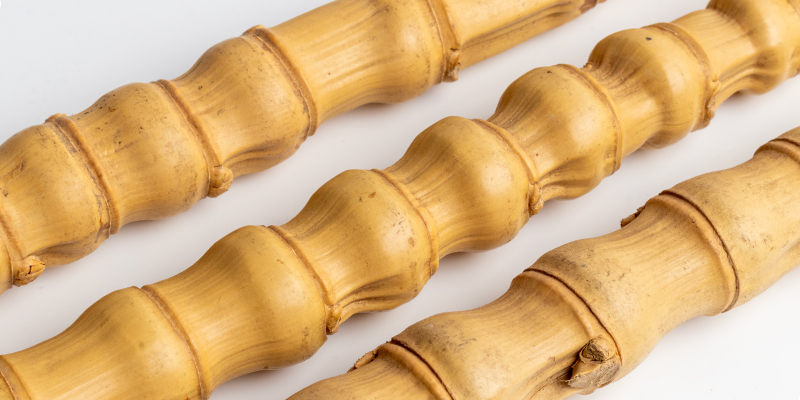
Buddha Belly Bamboo from Adam Davidson's Collection
"They had to develop new techniques to use it because you couldn't drill straight on a funky piece," said Shane. "People started incorporating accent materials into the bamboo itself. Florov and Kovalev would cut small pieces of boxwood, precious metals, or precious stone and affix those to the bamboo to accent the rhizomes and nodes." In their modern approach, artisans were also meticulously applying finishes as they would with briar, which was a relatively new concept.
Among the makers who shaped this era, Tom Eltang stands out for his signature Poker — utilitarian in form, paired and rusticated with bamboo in a way that became iconic. Japanese makers like Smio Satou and Hiroyuki Tokutomi also made meaningful contributions. "They're both from Japan where bamboo is appreciated and widespread," said Shane. "Wabi-sabi philosophy is a big influence on what artisans would do with 'crazy' bamboo." Wabi-sabi, the Japanese aesthetic of finding beauty in imperfection and impermanence, resonates naturally with bamboo's irregular, unrepeatable forms — no two pieces are alike, and that is precisely the point.
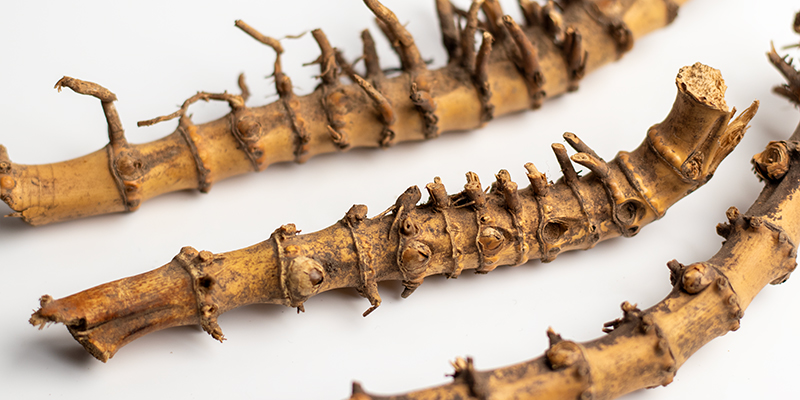
"Crazy" Bamboo from Adam Davidson's Collection
As for factories, some have moved away from the material entirely. "Stanwell no longer makes bamboo pipes, and Dunhills are rare," said Shane. "Tsuge is one of the few factories that still incorporates bamboo in their mass production. Bamboo is primarily an artisan material."
Shane's enthusiasm for bamboo in pipe making is genuine. "It's one of my favorite things. For real, I love bamboo so much. In general I gravitate toward natural accents more than precious metals because they have character. No two pieces of horn, for example, are the same, and the same goes for bamboo."
What draws him to bamboo most is the idea that working with the material means preserving something rather than transforming it. "Bamboo is actually preserving nature rather than augmenting it or replicating it. With briar, you're carving it into a shape that has pleasing grain, so you're removing some of its existing character and material. With bamboo, you're literally trying to take something and preserve it as best you can when you're applying it to a pipe." Adam put it simply: "The goal of bamboo in pipe making is to leave the bamboo untouched as much as possible."
When it comes to his own collecting, Shane's focus centers especially on the work of J. Alan. "I just find it to be the most interesting." Aside from his J. Alan collection, one fun fact shared was that the first pipe that Shane bought from Adam was actually a sandblasted Apple with asymmetrical bamboo.
If Shane is not smoking a classic Billiard or an Apple, he wants something with wild bamboo. "Some of my favorite pipes that I've even seen, much less owned, in the past 20 years or more have been pipes with bamboo on them. I think it's about as cool as it gets."
Sourcing Procurement Methods
The accessibility of bamboo today is something earlier generations of pipe makers couldn't have imagined. "Bamboo was really hard to get a long time ago, just like all pipe materials 20 years ago," said Adam. "Everybody had to buy rods from Germany in bulk." Beyond that, makers were largely on their own to secure materials. Adam sourced much of his early stock from the wild or through eBay searches, hunting for material that simply wasn't available through normal means.
"People in California started looking around because this stuff didn't exist," he said. "Unless you saw somebody at a pipe show that might have had a crazy piece of bamboo, most of the bamboo you could get was straight. You weren't getting curvy pieces at that point."
Some makers still approach sourcing the same way today. "If they see wild growth anywhere," said Shane, "they'll stop on the side of the road and dig up some roots. Harvesting and curing their own bamboo is common for those who appreciate the less uniform pieces." Shane also shared that Jess Chonowitsch once knew someone who worked at a factory that made ladies' handbags with bamboo handles. "At one point, they were getting rid of the irregular pieces. He took them and he has his bamboo supply from happening upon that opportunity."
The access to materials shifted significantly when Steve Norse of Vermont Freehand began supplying pipe makers with a consistent selection of bamboo and other materials in the 2000s. "20 years ago, we didn't have Vermont Freehand as a website where people could buy rods, blocks, and bamboo," said Adam. "It didn't exist back then. You might have been able to find some at pipe shows, but not very much and it was really expensive. Bamboo is easier to get now." With opportunities through the internet, eBay, and suppliers like Norse, real freedom for experimentation was opened up.
But accessibility had an unintended consequence. Prior to this era, tight knuckles were genuinely rare. "I remember back in 2004 or 2005," said Adam, "at the Chicago Pipe Show, which was humongous, a collector had a Tom Eltang with bamboo with knuckles spaced apart, maybe four or five knuckles. But it wasn't common. It was unusual to have a four-knuckle piece because those shipping the bamboo, or creating the pipe, were more prone to cutting it at two or three knuckles." Once these pieces became widely available, quality suffered as the market broadened. "A lot of makers took a pause because the market was flooded with less exciting stuff." The artisans who persisted and pushed further are the ones who defined what bamboo pipes could be.
Craft of Working with Bamboo
Better access to material raised the bar for what makers expected of themselves and their work. Working with bamboo is a complex process, and experienced makers are selective from the start. Adam favors thin pieces with close knuckles and a surface that is either chocolate brown or mottled, as he shared in his article on Black Bamboo.
Nearly all of the bamboo used in pipe making comes not from the stalk but from the root — and for a deeper look at how bamboo grows and why its roots are so suited to this purpose, Part One covers this in detail. Once a root has been harvested and thoroughly dried, the preparation is extensive. As Adam described: "It's cut, drilled to 3/16" on both sides for a double-mortise, and then drilled through the middle with a 5/32" drill bit. Further facing, capping, fitting a stem with 3/16" stainless steel tubing — as well as the bowl itself — can make for a rather time-consuming process."
The small bumps along a bamboo piece's knuckles, root sprouts that once absorbed water, are handled differently by various artisans. Some makers leave them sanded smooth; others drill them out and fill them with epoxy. Historically, either choice was partly dictated by regulations in China governing how bamboo could be exported; sanded and sealed was often the only option available. "The epoxy dots can look like beautiful little light-catching jewels," said Adam, "but they further serve a purpose to seal the bamboo so moisture will not leak out. I do it both ways, depending on the piece or the customer's desires." A clean piece of bamboo with no root sprouts breaking through the knuckles at all, he noted, is genuinely hard to find.
Among the varieties available to makers today — regular, black, Buddha belly, and the irregular "crazy" pieces prized by artisans — each has its own character. "The mottled pieces are especially beautiful, I think," said Adam. The mottled pieces get their distinctive patterning from the earth itself: leaves leaching tannic acids into the bamboo and minerals absorbing from the soil. Adam has also worked with bamboo by steaming and bending straight pieces to suit a particular design. He was also, to his knowledge, the first maker to sandblast bamboo in 2008, an approach that extended the material's expressive possibilities. "Some of my favorite bamboo is no larger in diameter than a pencil," he said, "but this isn't practical for most pipe shapes outside of Cuttys or other designs that have small bowls or shanks." For all the variety available, his preference runs toward the restrained and precise.
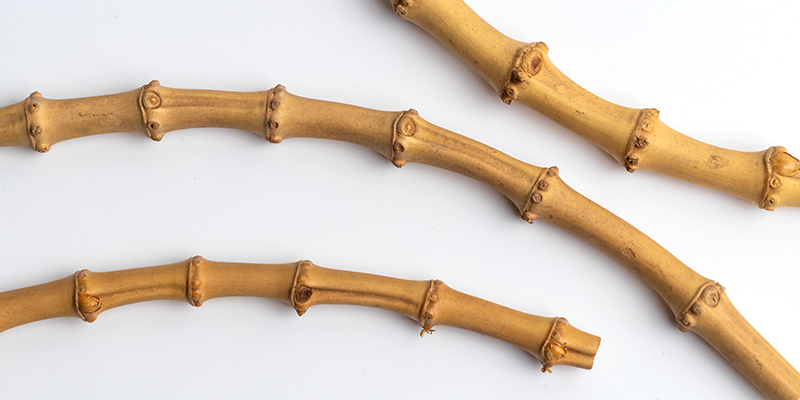
Curved Bamboo from Adam Davidson's Collection
An important aspect of bamboo that both Shane and Adam shared is that bamboo must not be compromised. "Really well-made bamboo pipes are flush and seamless," said Adam. The material should be used as close to its natural state as possible, polished and cleaned but otherwise left as found. Also, stain doesn't take to bamboo roots the way it does to briar.
What makes bamboo genuinely difficult, and ultimately rewarding, is getting the sizing right. "It's a proportionally challenging task matching the knuckles of bamboo with the rest of the pipe's design," said Adam. "There's a craftsmanship aspect of getting everything faced together, and then after that, you have to have enough skill to shape down the shank and stem to flow with the bamboo. It can't be too long or too short. It has to flow with the rhythm of the bamboo, all the while never sanding it."
Beyond the aesthetics, bamboo offers real functional advantages. "It is a durable and lightweight material," noted Shane. "A pipe with a bamboo shank is going to be less heavy than a pipe with a non-bamboo shank, which added to its rise in popularity." Its porousness also absorbs a degree of moisture, producing a cooler, drier smoke.
Adam used to make a lot of bamboo pipes, though still occasionally uses the material for special pieces. "In pipe making, creating a nice Billiard in any finish with nice proportions and lines can be challenging," he said. "But to make a nice Billiard with bamboo is possibly the pinnacle of pipe making and design, because in order to make one, you have to truly understand proportions and have excellent craftsmanship."
Meerschaum & Bamboo
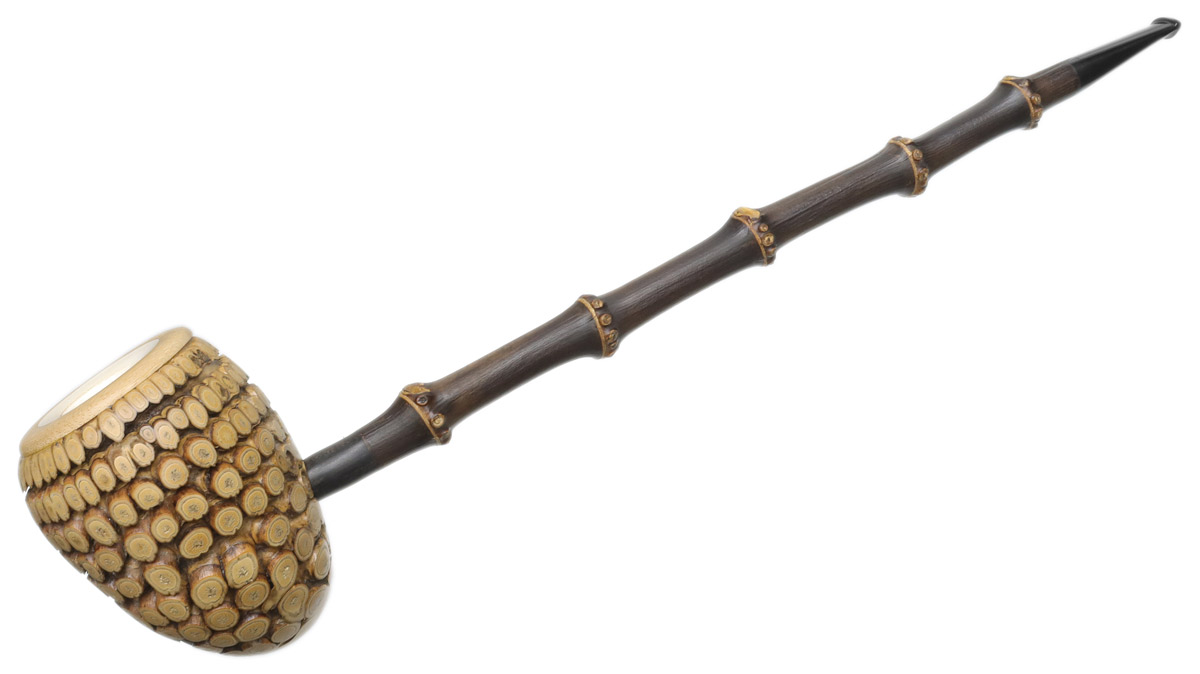
Manduela Bamboo Acorn with Bamboo and Meerschaum
Bamboo is not only limited to briar pipes; It eventually found new life in meerschaum craftsmanship, blending two naturally beautiful materials — the white softness of meerschaum and the golden-knotted grain of bamboo — into one composition, showcasing beauty and function in tandem.
Meerschaum pipes with bamboo are light, making it more comfortable for longer smokes in both the hand and the jaw. They also smoke cooler than other mediums; bamboo enhances this coolness with minimal heat conduction through the shank. Bamboo is also a flexible material that offers durability from its fibrous nature.
One commonality between bamboo and meerschaum is its ability to color, or patinate, over the years through use. Regular, or white bamboo, the most common type used in pipe making, absorbs moisture and colors over time, developing a warm yellow-orange with possible darker spots around its knuckles, according to Adam. Black bamboo, by contrast, won't color noticeably on the outside, though it still absorbs moisture internally, and its brown skin is thin enough that a file or coarse sandpaper will expose the cream-colored material beneath, so it demands careful handling.
Annual Pipe-Making Expositions
The craftsmanship and creativity surrounding bamboo in American pipe making was celebrated here at Smokingpipes during the very first annual pipe-making exposition in 2014. For the expo, we invited artisans from across the United States to create pipes incorporating bamboo — a recognition that the material had become central to the most exciting work being done. The theme was revived for the 10th exposition in 2024, this time opening the invitation to artisans worldwide, reflecting the rise in popularity bamboo had in the craft.
Examples Utilizing Bamboo
Having seen how bamboo is sourced, worked, and proportioned, the pipes below showcase the artistry behind utilizing the material. Each one represents a deliberate set of choices, from which piece of bamboo to use, how much to let it lead the design, and where to let it simply be itself.
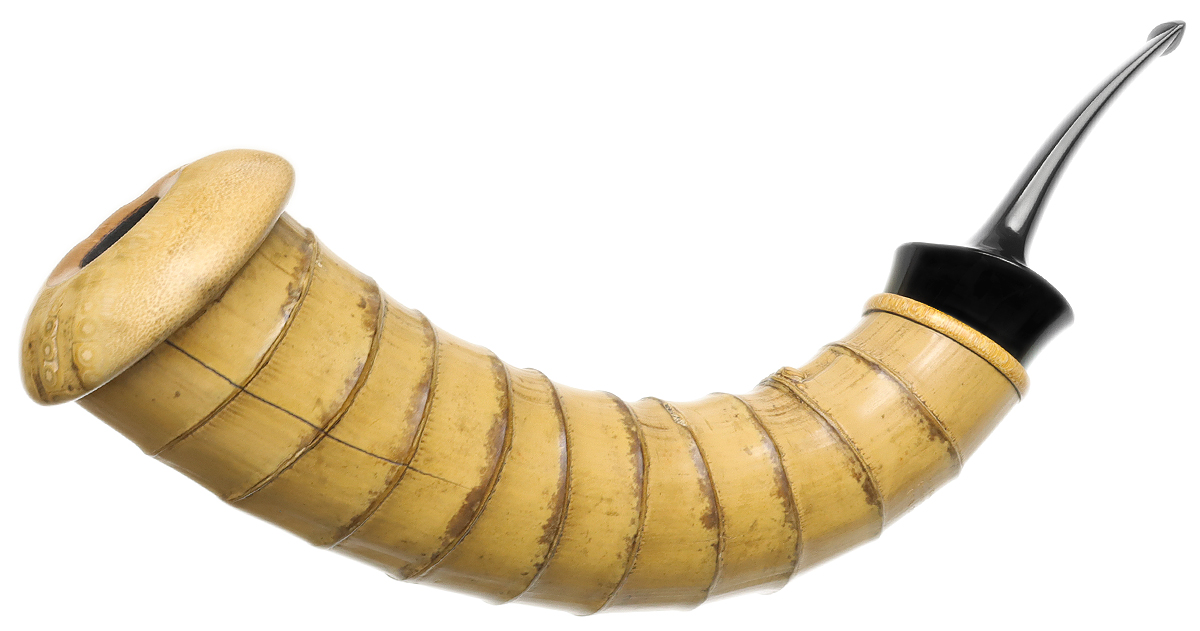
Bamboo Calabash (Signature) by Scott Klein
Scott Klein creates evocative designs that incorporate highly organic aesthetics. This pipe is made entirely of bamboo, except for the chamber and airway. It's a Horn-like Calabash, each knuckle serving as a visual focal point for the eye. It is finished with a bold saddle stem whose shoulders mimic a missing node of bamboo visually.
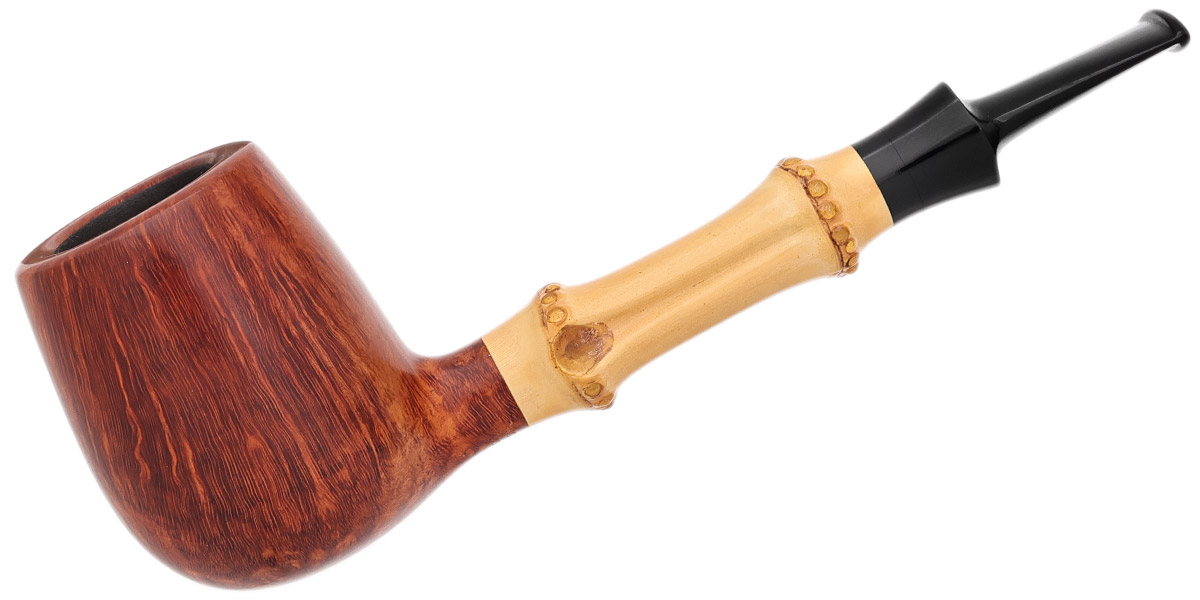
Smooth Billiard with Bamboo by Jess Chonowitsch
This balanced Billiard by Jess Chonowitsch features a bamboo shank that adds organic flourish, with two knuckles offering a stimulating texture. The whole piece blurs the lines between man-made and naturally beautiful; a stunning example for any fan of both Danish-style pipes and bamboo.
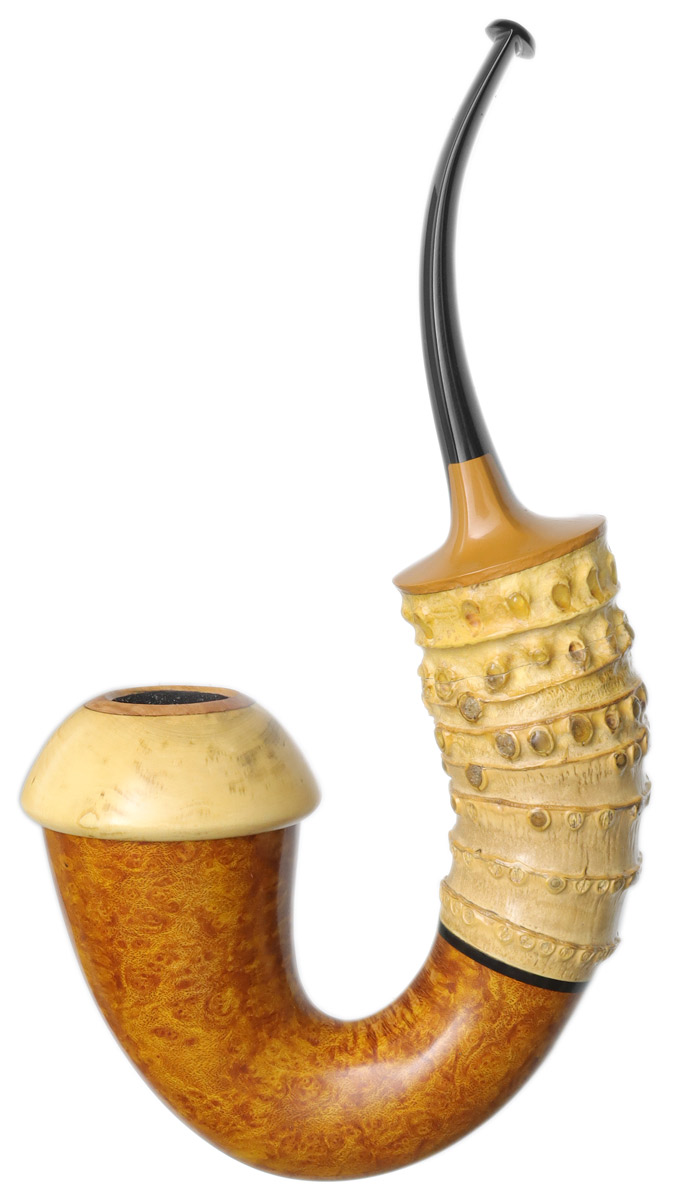
Smooth Calabash with Bamboo and Boxwood and Deng Feng Ceramic (with extra Boxwood Bowl) by Todd Johnson
This impressive pipe by Todd Johnson features a stem curve that matches the bamboo on the opposite side before sweeping into a curling briar stummel, almost like it's growing from a tree itself. The bamboo provides visual intrigue and eccentricity. This piece also has two caps, one made of briar and one handcrafted out of ceramic by premier potter Qiu Deng Feng, specializing in artisan teaware. This special pipe received Johnson's highest grade: Phalanx Q.
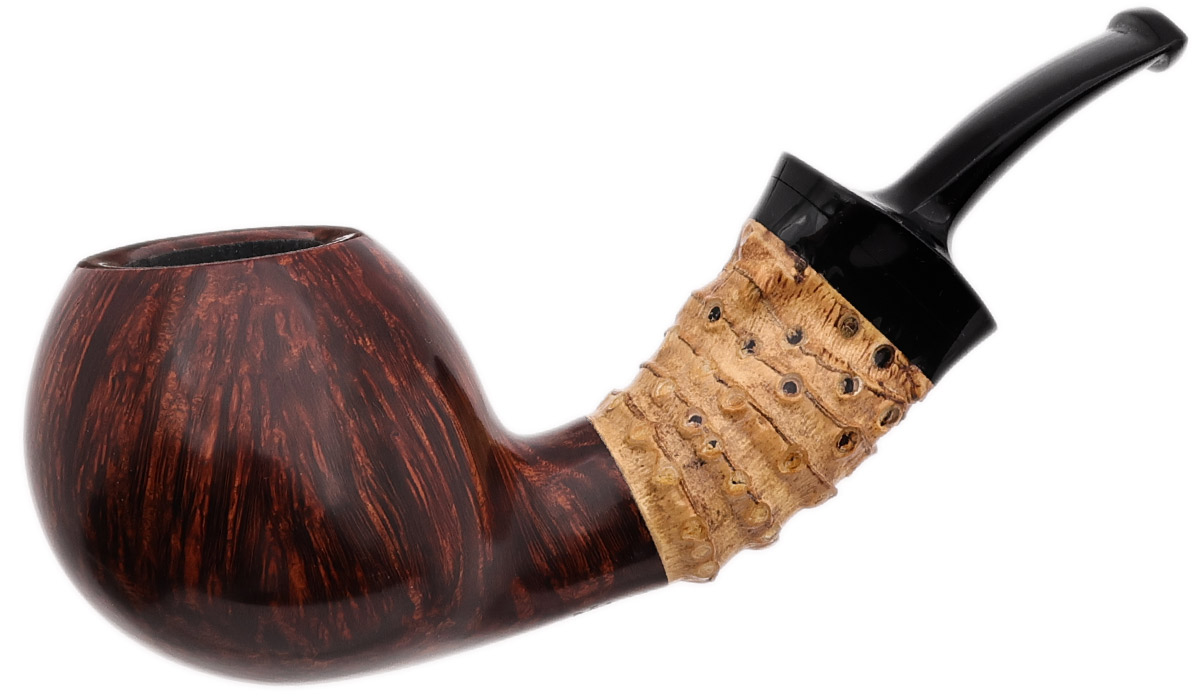
Smooth Bent Apple with Bamboo (1956) (2022) (Unsmoked) by J. Alan
Jeff Gracik showcases his skill for implementing organicism in his work through this bent Apple, featuring a bamboo extension boasting six knuckles. This piece bridges the gap between man-made and natural.
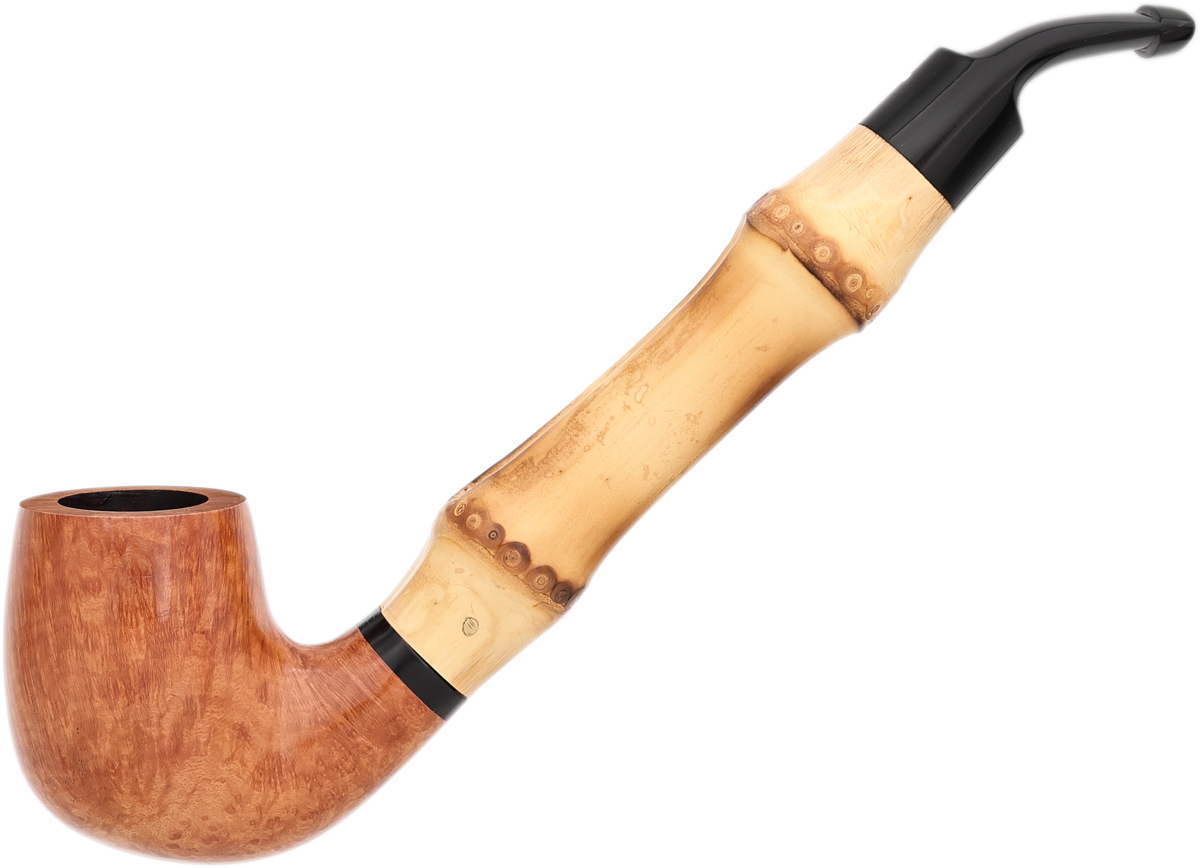
Root Briar with Bamboo (DR***) (2022) by Dunhill
Dunhill Whangee pipes feature bamboo, such as in this piece with the "DR" designation, signifying a special class of Root Briar pipes: Dead Root, which maintain flawless briar with choice grain. This example received three stars and is quite rare in the English marque's portfolio.
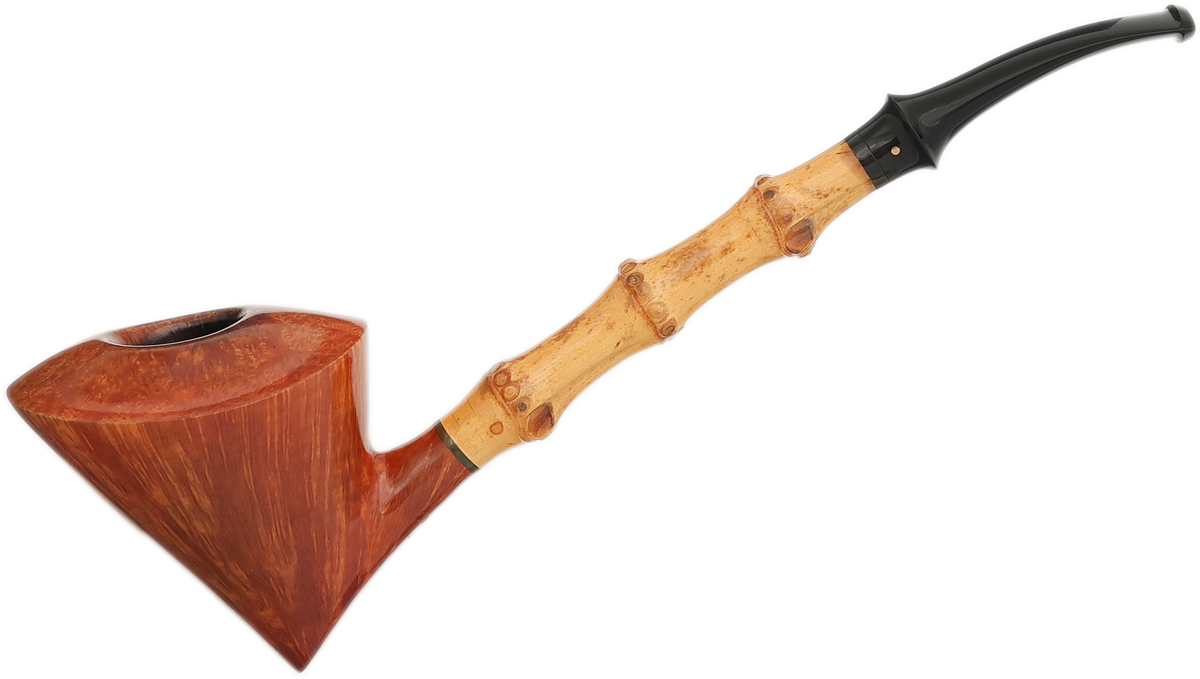
Smooth Bent Dublin with Bamboo by Smio Satou
This angular bent Dublin by Smio Satou features bamboo with a trio of knuckles, extending the shank's length.
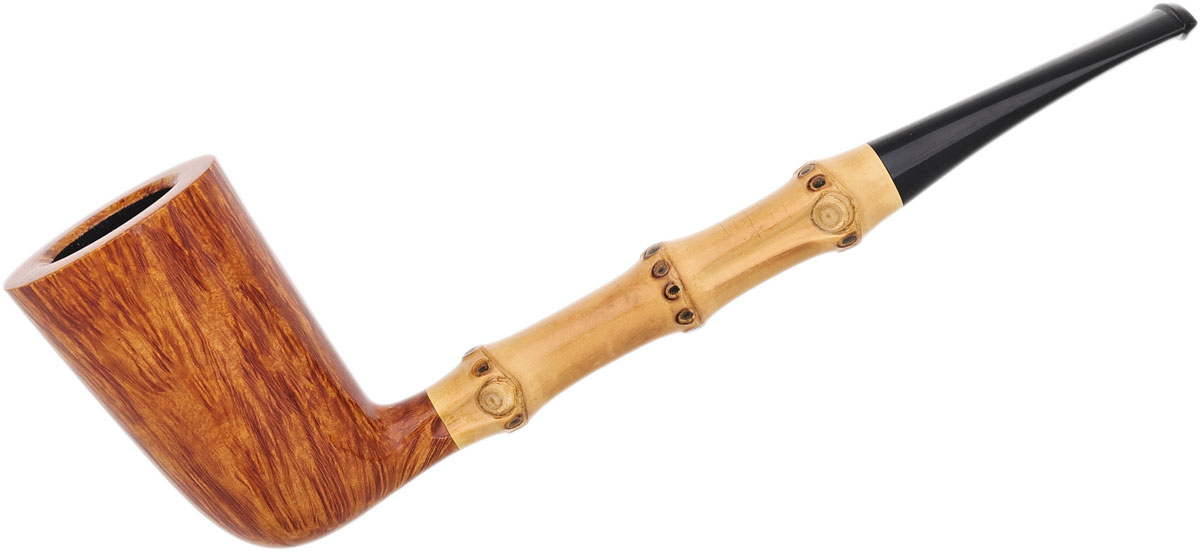
Smooth Dublin with Bamboo (Kikuchi) (J) (087) (2025) by Tsuge Ikebana
Featuring organic elements and timeless shape-chart standards, this Kikuchi smooth Dublin is a lovely representation of Japanese design. Its slender shank is extended by three evenly spaced knuckles of bamboo, introducing visual rhythm to the aft.
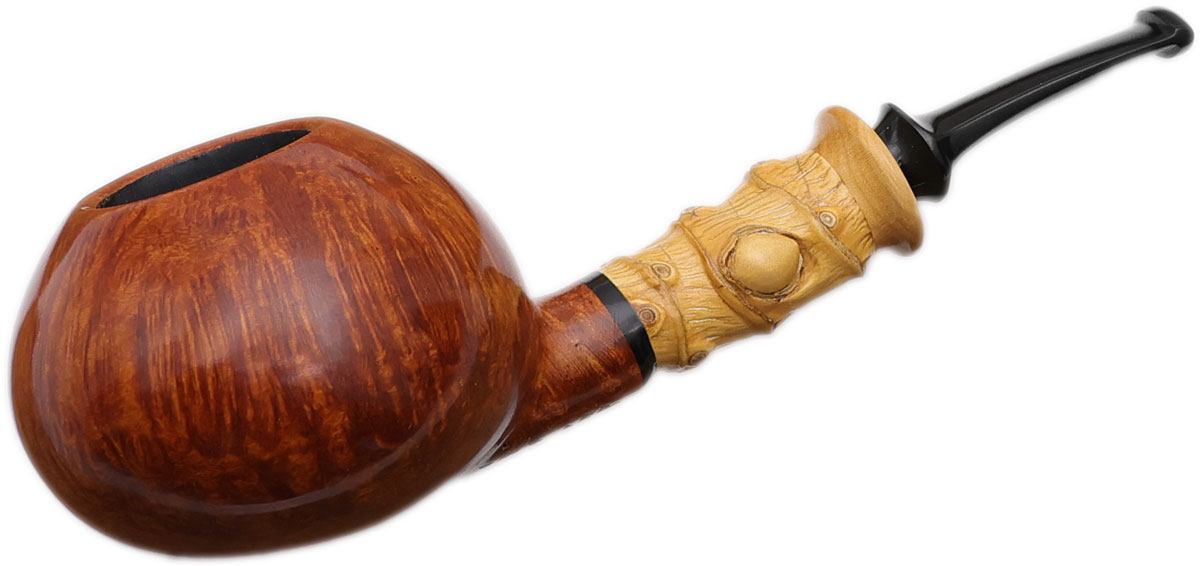
Smooth Tomato with Bamboo and Boxwood (1417) (Extra Grand Flash) (with Tamper) by Doctor's
Roman Kovalev has an eye for the aesthetic of bamboo, preferring craggy, nonuniform pieces in his creations, as seen in this pipe with asymmetrical, gnarly nodes. Stamped "Extra Grand Flash," one of Kovalev's highest grades, this smooth Tomato is in the upper echelons of his portfolio. An included tamper is made of gnarled bamboo.
For a sense of the wider range of what's been done with bamboo, here are a few archived pipes that have already been sold but are worth seeing:
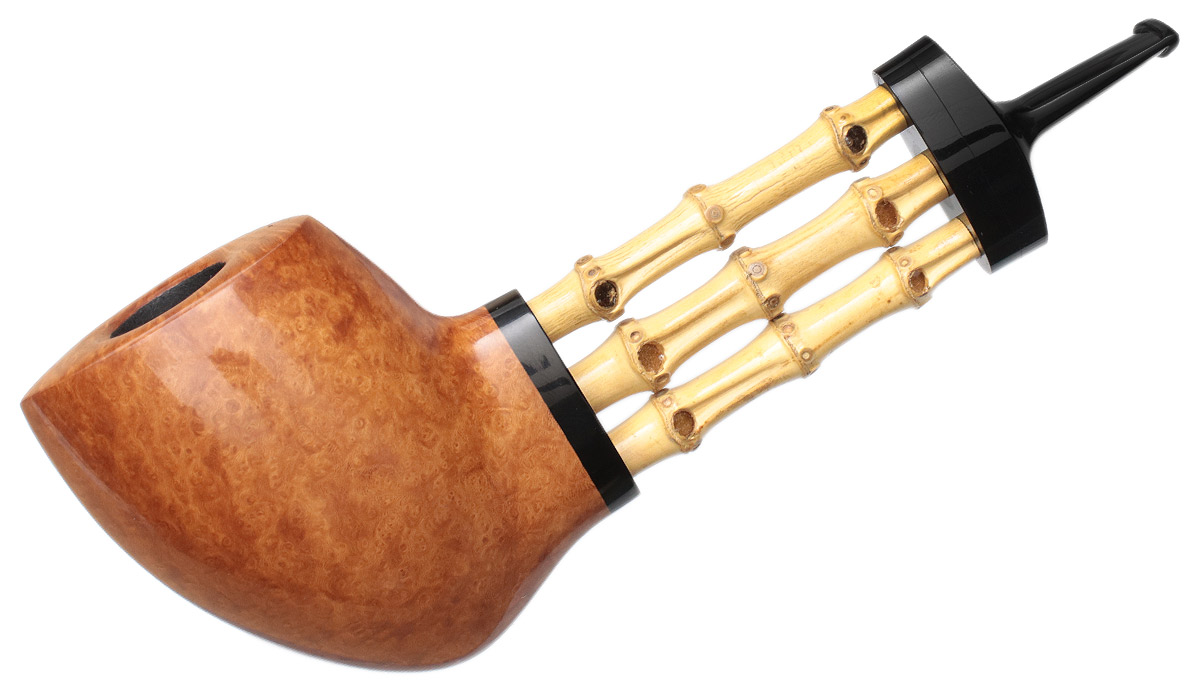
Smooth Triple Bamboo Almond by Adam Davidson
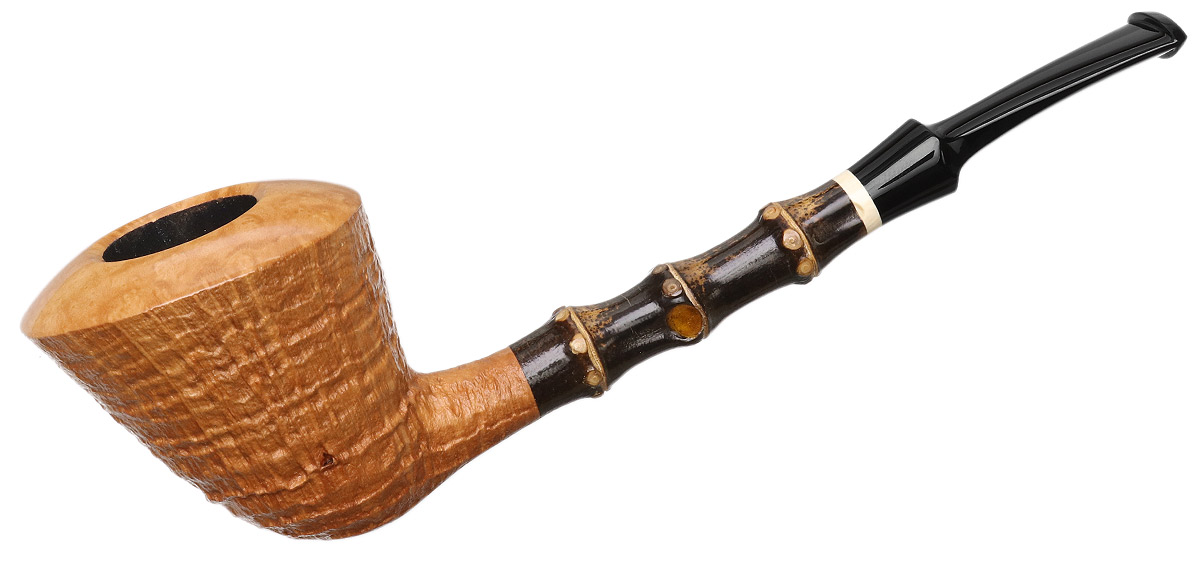
Partially Sandblasted Dublin with Bamboo and Mammoth by Chris Asteriou
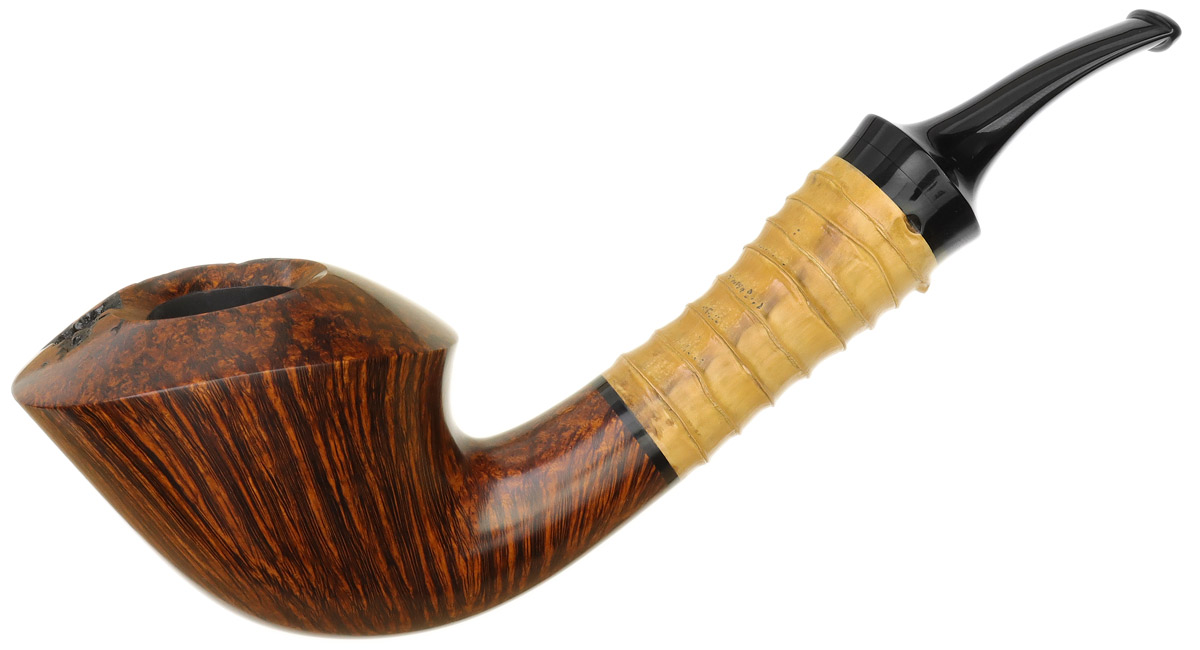
Smooth Bent Dublin with Buddha Belly Bamboo (AA) by Cornelius Manz
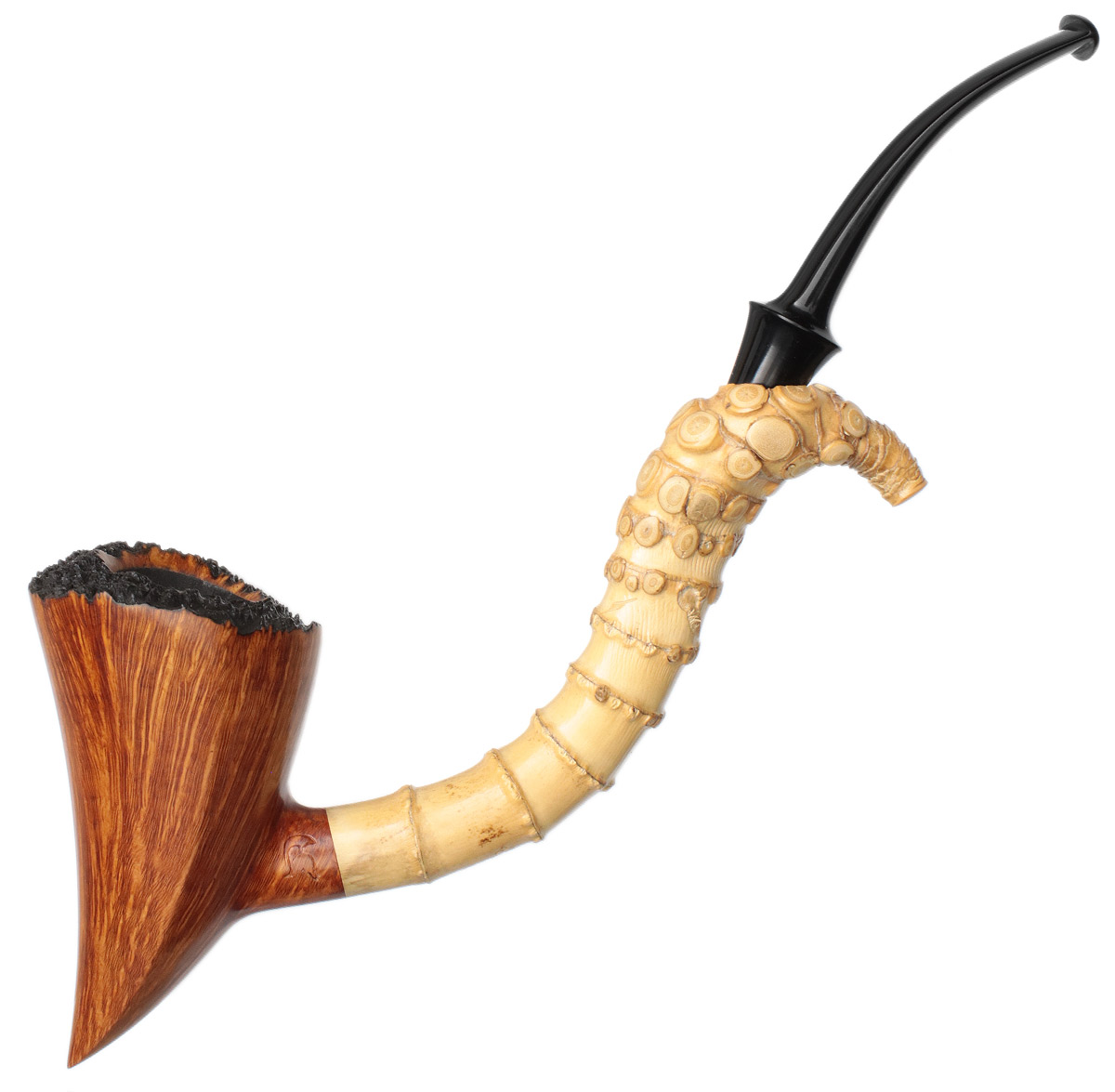
Smooth Origami with Bamboo (Phalanx) (Q) by Todd Johnson
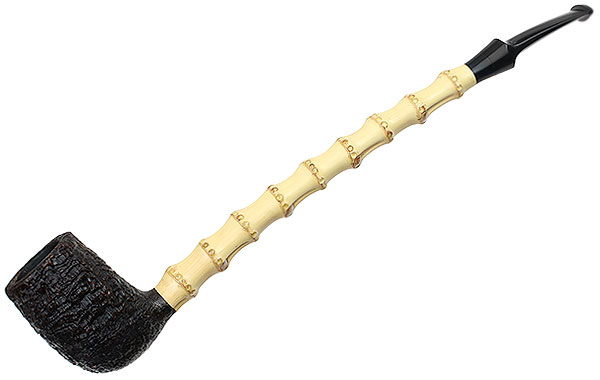
Sandblasted Churchwarden Billiard with Bamboo (Friar) (FC16) (04) by Jody Davis
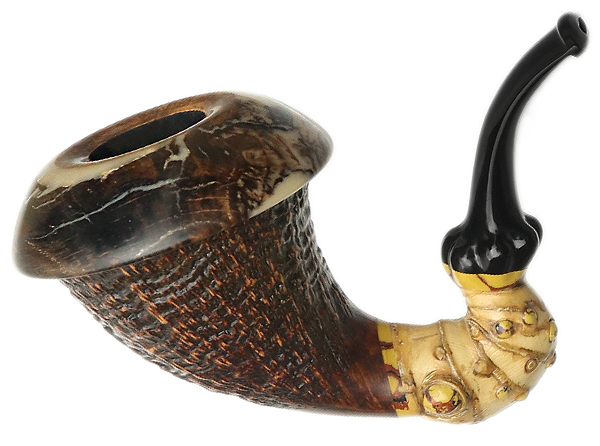
Sandblasted Calabash with Bamboo and Polymerized Oak (Double Flash) by Doctor's
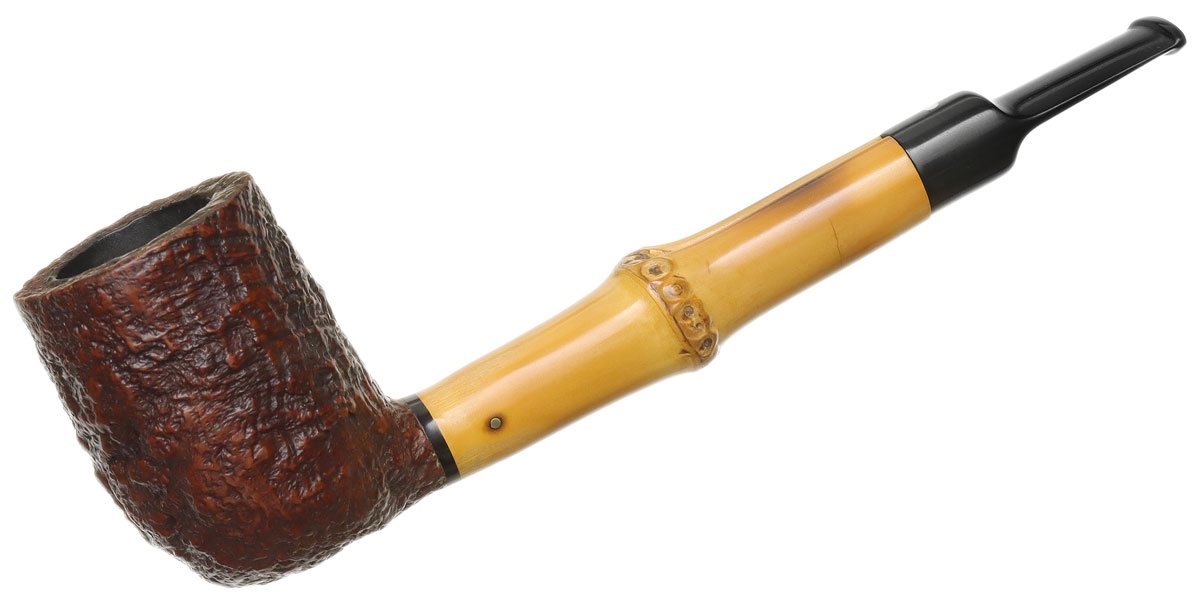
Whangee (W.60) (4) (T) (1962) by Dunhill
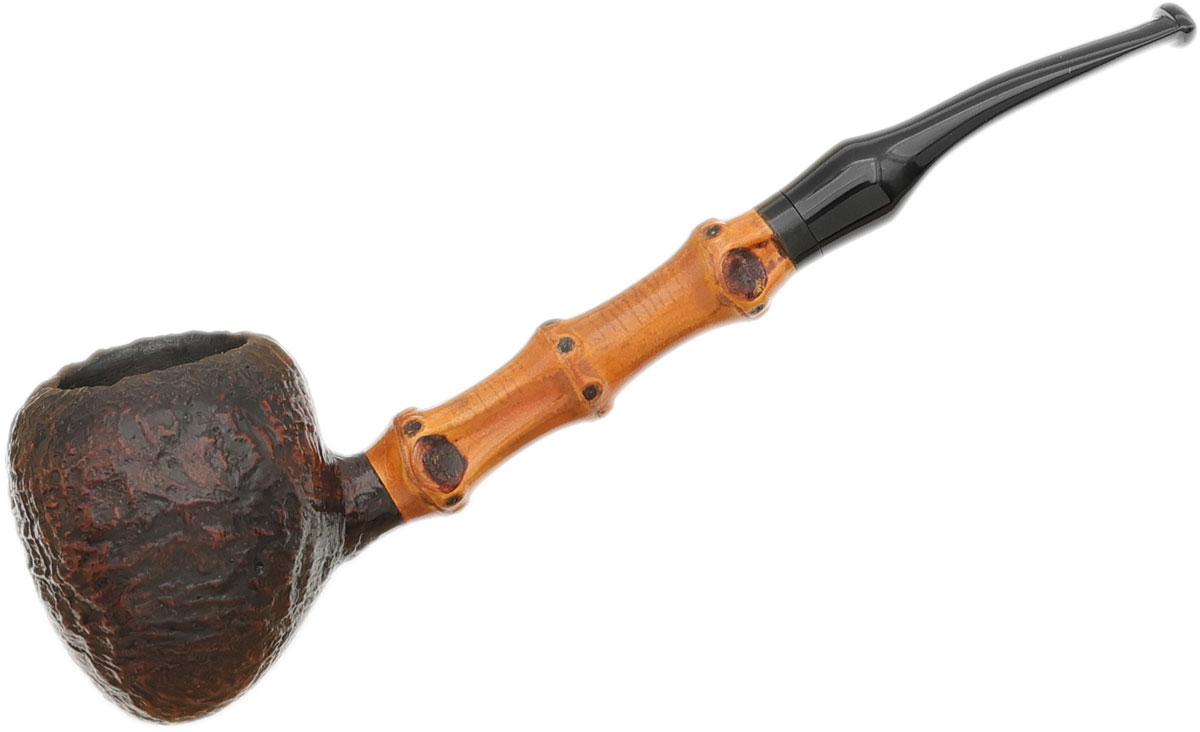
Sandblasted Potato Sack with Bamboo (18) (1964) by Sixten Ivarsson
Bamboo in Modern Pipe Making
Bamboo is a fascinating material that rewards close attention at every level, from the craft required to feature it in pipe designs to the philosophy of leaving something exactly as you found it. A very special thank you once again to Shane Ireland and Adam Davidson for their always-appreciated expertise. But the story doesn't end here — Stay tuned for Part 3 to this three-part series on bamboo, where we'll be exploring the aesthetic of bamboo and how else the visual language is presented using alternative materials by artisans today.
You may also enjoy:



Comments
Outstanding and very informative article. Thanks for sharing!
Before I gave up pipe making for other people and just reverted to doing it for my own collection, I made only 3 pipes using bamboo that I was happy with to the point of being willing to sell. Since then, I've worked on two more for myself. In that time span, there were at least 10 that went in the trash for various reasons of failure. It is hands down the toughest thing there is to work with in pipe making, in my opinion. Any higher pricing a consumer encounters in a pipe with bamboo must be considered within the much higher difficulty level it takes to pull off successfully. Hats off to these artists featured in the article, and others, who have made bamboo work in this beautiful art form.