


 |
|
 |
|



Castello pipes have represented innovation and quality since their inception by Carlo Scotti in 1947. Scotti's vision was to divert from the typical Italian pipe making of the time, which concentrated on inexpensive, high-volume factory pipes. Scotti transformed Italian pipe making and introduced high-quality, artisan carving and pipes that were more than disposable consumables. Castello pipes became objects to take enormous pride in.
In the early 1980s, Scotti passed management and eventually ownership of the company to his daughter, Savina, and son-in-law, Franco "Kino" Coppo. Franco became the face of Castello and steward of the Castello philosophy.
Franco passed away last week after a short illness. His death leaves an absence that the world of pipes will be coping with for some time.
"I first met him in 1997," says Marco Parascenzo, U.S. distributor of Castello pipes. Marco's father, Augusto, was previously the distributor, and Marco took over with his father's death in 2000. "Over the years, our relationship changed a lot as we grew to know each other better." Because of the timing of Augusto's death, Marco learned more about the business from Franco than from his father. "Kino was like a father to me, like a professional, work father, and more than that, a friend. He taught me a lot."
When Marco became the Castello distributor, he was aware of rumors about Franco. He had something of a reputation for being temperamental. "It was after a couple of years that I grew to understand the rumors were inaccurate. Kino's gruffness was a mask, just an appearance he chose to use. He was totally different in reality from how he appeared to some. He was taking on a role to better run the business and factory."
It took Marco several years to realize the depth of Franco's sense of humor. "At first, I was annoyed at his sarcasm, but I grew to understand how truly fun he was. He could be incredibly funny."
Castello's Unusual Sales Dynamic
An unusual aspect of dealing with Castello, for retailers, anyway, was that Franco wouldn't always sell the pipes they wanted to buy. A retailer might visit, for example, and look at all the pipes, choosing which ones were right for their particular shop. And Franco would say, "You can't have that one. Or this one. You can buy the others."
Kino's gruffness was a mask, just an appearance he chose to use
"That happened to me all the time," says Sykes Wilford, CEO of Laudisi Enterprises, including Smokingpipes. "He did that to me for years. I think that there was an attachment to his work and the work of the factory. For Kino, it transcended the normal manufacturing and distribution of pipes."
It was often the case that pipes Franco would not let go at first became available after a couple of years, as though he had learned what he wanted from them and was ready for them to go into the world.
Franco maintained a collection of Castello pipes at the workshop, in a room where the most interesting prototypes and especially fine examples would reside. He wasn't someone who wanted only to sell pipes; he maintained a reverence for them. He loved them, and Castello's reputation was paramount to him.
Shane Ireland, VP of Retail at Laudisi, worked for years as the primary pipe buyer for the company and visited Castello several times each year. He experienced the same dynamic, where he wanted to buy particular pipes, and Franco had trouble letting them go. "Some of it was that they had such a limited production, and he was trying his best to take care of all of his customers. And honestly, I think it was an attachment to some of these pipes. He loved them. He kept examples of the coolest stuff and everything that he refused to sell because he wanted to keep it. They were historically significant for the brand and used later as inspiration for other series and limited editions. There was always a bit of negotiation when picking pipes at the factory, and I think that was part of the fun of it."
Franco's Contributions
While Carlo Scotti was ingenious at positioning Castello as a premier workshop of artisan smoking instruments, Franco was more detail-driven, with a firm understanding of quality and consistency. "He was smart to understand that the production had to be classified much better, " says Marco. "At the beginning, Carlo Scotti was stamping his pipes without any consistent criteria. Kino introduced the grading system and the sub-grading system with the stamped letter 'K' from his nickname, to indicate quality and size. He always had a very strict and very clear grading criteria, which is one of the powers of this brand."
He wasn't someone who wanted only to sell pipes; he maintained a reverence for them
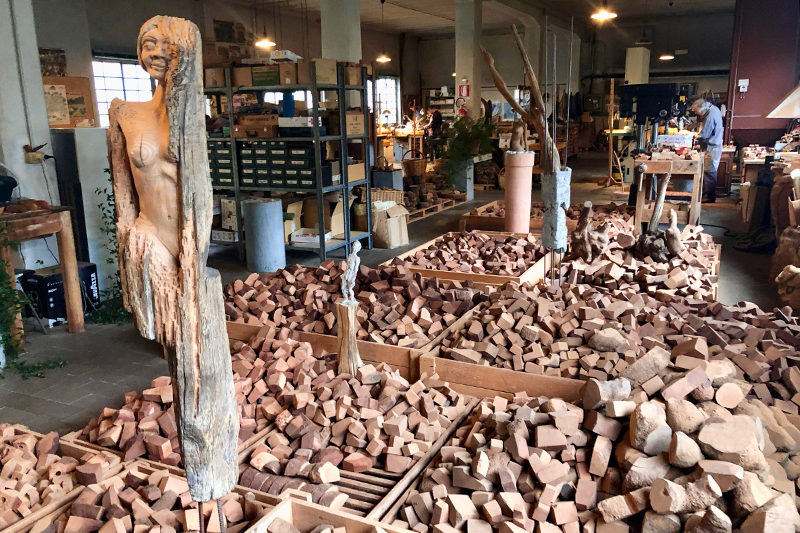
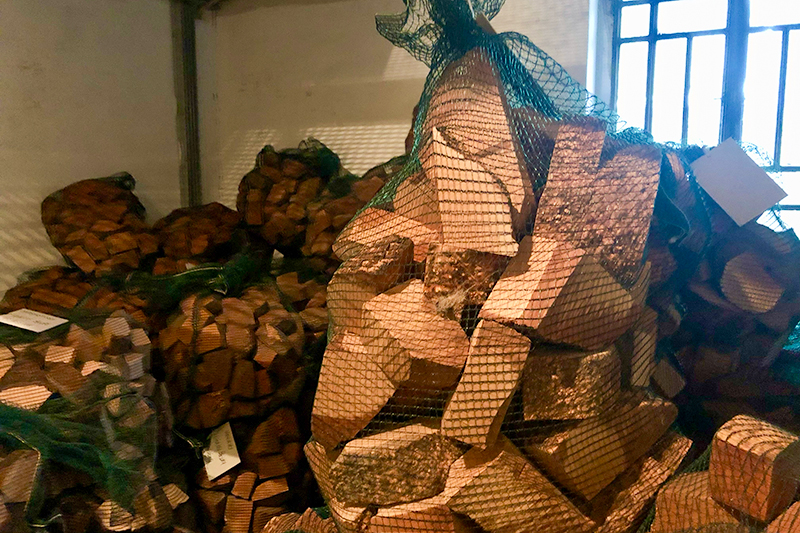
Franco went on to improve worldwide distribution, travelling around the globe, adding countries that carried the pipes, and building relationships. He also understood the rarity and value of briar. "He started to collect briar and store and age briar," says Marco. Castello is famous for its briar. Franco built an inventory that allowed Castello to use briar that had aged and cured for 10-15 years and longer. "That added to the quality of the pipes."
Quality control was another category that Franco concentrated on. "To be honest, Carlo Scotti would let defects get through, but Franco put a stop to that. Quality was always the most important factor for him."
So infatuated with pipes, Franco refused to expand beyond them. "He always refused the many offers he received for Castello cigars, cigar accessories, and cigarettes," says Marco. "He always said, 'I run a handmade pipe factory.'" His sentiments also precluded him from shortcuts in pipe production. "The manufacturing is very traditional. There are some steps in it, some processes, that could be done in a shorter way. Kino never took the shorter way, though."
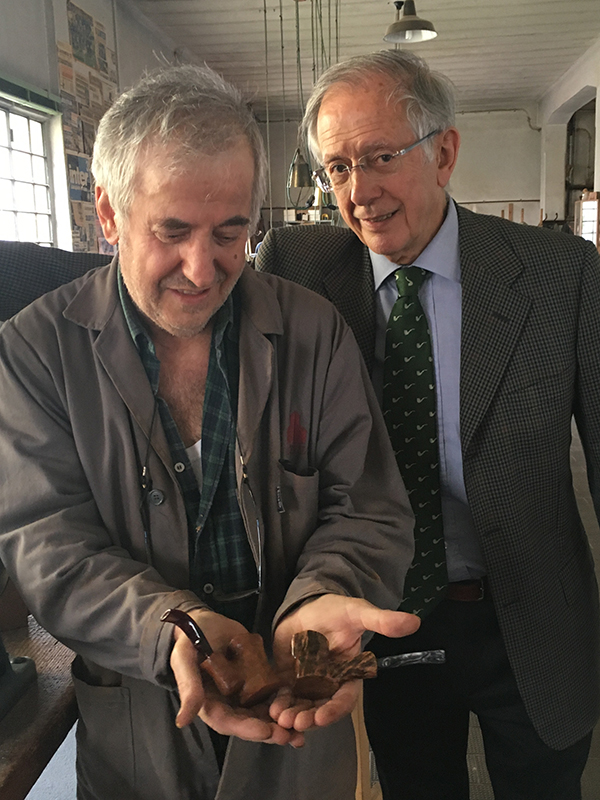
"Many manufacturers are always booking for more efficiency." says Shane, "but I have never — and I mean this as a compliment — I've never heard the word 'efficient' come out of that man's mouth. Efficiency didn't matter to Kino. What mattered was doing it correctly, to the highest level of quality, for the absolute best results that they could possibly produce."
Franco was always very involved in pipe design, starting from the shape chart developed by Carlo Scotti. Franco, of course, modified and improved them, leaving room for slight variations in concert with handmade pipe making. "There's always a little difference from pipe to pipe," says Marco. The shapes remain the same, but there is always a little variation in the ratio of stem to shank, for example, or bowl height and stem length. These differences highlight the artisanal nature of Castello pipes. "The carvers start from scratch with every pipe made, and every pipe is different. This is intentional."
Many pipe collectors over the years have concentrated on specific Castello shapes. Mike Davis and Mike McCain, for example, often displayed their collections of the Castello 84, or Hawkbill, and the most fascinating aspect of viewing their collections was to see the variations in the same shape.
His sentiments also precluded him from shortcuts in pipe production
Some impressive innovations occurred under Franco's stewardship. The Flame finish, for example, features carved licks of flame climbing the bowl, and the Le Dune finish, with a telescoping pattern resembling reptilian scales. Another favorite is the silver accent that folds out to keep the pipe stable instead of needing a pipe stand. Dozens of innovations define Franco's tenure at the helm of the company. "He was such a brilliant designer," says Shane, "and so well informed that he was able to push the brand forward in new directions that were simultaneously fresh and true to what Castello was."
Castello's Importance
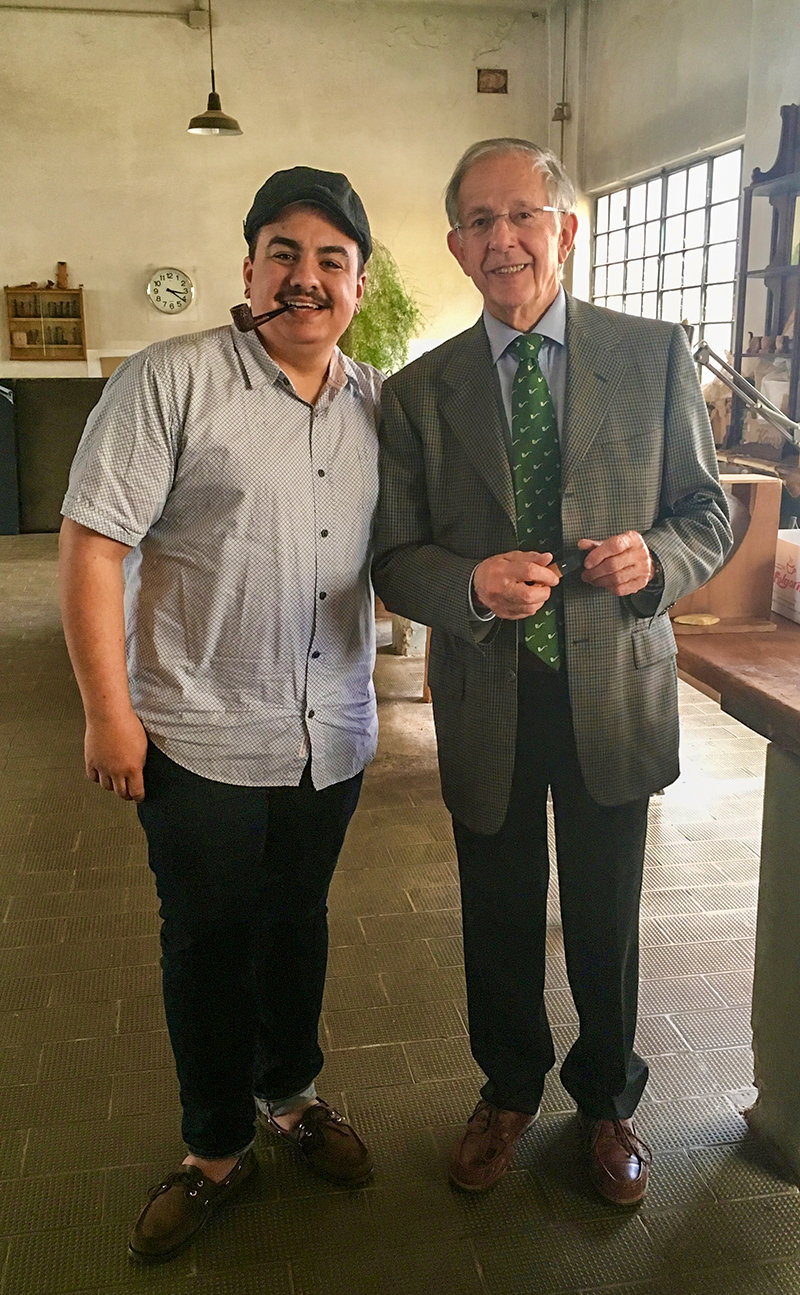
Shane Ireland & Franco Coppo
"I think the main takeaway for me," says Shane, "is that Castello is absolutely one of the most important pipe brands and one of the most innovative pipe brands of the last 100 years. And Kino has held an instrumental role in driving that. He was not only the steward of the brand after Carlo Scotti passed, but he continued to push the brand forward. He stayed true to what it was, he upheld what it was, from the, from the conception of the brand in the 1940s, and continued to drive them forward and innovate, creating things that the pipe world had never seen. Kino and Carlo Scotti are among the most influential figures in the world of pipe manufacturing. Kino was instrumental in bringing Castello into what I think of as this new renaissance of pipes and pipe interest that's occurred in the last 20 years. Many other brands either went away or lost sight of who they were and what their customers wanted."
A Terrific Loss
The entire world of pipes is now mourning Franco Coppo. His creative and meticulous approach to the craft has influenced pipe design around the world. "He did more for Castello as a brand," says Sykes, "and their design and status in this industry and in this hobby than I think anybody could have expected. He was a remarkable man, a good friend, and I'll miss him."
Shane likewise grieves this immense loss, having visited Castello dozens of times over the past 10 years and seeing Franco at events everywhere. "Everything that came out of that workshop was his life's work. His was a completely different approach to doing business. I think outside of our little world, that is so extremely rare these days in any sort of manufacturing."
Dozens of innovations define Franco's tenure at the helm of the company.
The future is vague, but there's little doubt that Castello will find a way forward, even without Franco. "There will be a solution," says Marco. "I doubt the factory will close because Kino told the employees to keep going. The carvers are ready to continue." Castello is more than one man, but the innovations and quality that Franco brought to the marque have positioned it to continue to thrive.
We have lost a great friend and a great contributor to our hobby. But we have not lost the art, creativity, or quality that he instituted. We can think about Franco Coppo with gratitude and affection as we smoke our Castellos and reap the rewards afforded us by a great man.
You may also enjoy:




Comments
A fitting tribute to a great man. I am a big Castello fan and hope that Kino's and Franco Coppo's legacies will continue.
A great loss. Castello is the standard against which other pipes and pipe makers—artisans or artists—are judged.
May Castello continue. That would be the best tribute!
I have 12 Castello pipes. They’re special in every way from the 10-plus years of briar aging to the quintessentially Italian take on classic shaping and design to the artisanal craftsmen who create them, and to the talent of Kino who managed it with stubborn firmness while maintaining the legacy of Mr. Scotti. Castello is not merely a factory pipe; it’s a collection of artisans producing classic pipes. Long may it live!
Since the mid-70s I have enjoyed collecting and smoking Castello's and now have 26 in my collection
that span from the '60s with the Carlo Scotti stamp through the 2010s with twhen beyond my means.) Oddly, in the mid-60s when I first saw Sea Rock Castello's, I passed on buying one because I couldn't see spending 40 dollars on a rusticated pipe when I could buy a smooth Charatan or even a sandblasted Dunhill in the same price range... (my how my tastes and prices have changed!) Sure enough, the first Castello pipe I bought in the '70s was a Sea Rock in the $70 price range and I was so thrilled that I returned to the dealer and bought the identical Sea Rock, which was the last Castello the dealer had.
Not unlike the price of Porsche's and houses, the cost has continued to climb over the decades, but I continue to enjoy the quality of the craftmanship and the smoking characteristics of Castello's