


 |
|
 |
|


Note: The following transcription has been edited for clarity and brevity.
H
i, everyone. Truett Smith here with Smokingpipes, and today we're going to be talking about plug pipe tobacco — specifically how to prepare it and how to pack it in your pipe.
Plug-Cut Tobacco Isn't Intimidating
For me, plug-cut pipe tobacco was one of the more daunting and intimidating cuts of tobacco when I first started smoking a pipe. Ribbon-cut is pretty straightforward; that's usually where most pipe smokers start. Flake is where I personally ventured into next, but plug was always a little bit more, "Ooh, not sure I really want to deal with that." But hopefully this video puts your mind at ease and shows you some quick and easy tips on how to smoke and prepare plug-cut pipe tobacco.
Benefits of Plug-Cut, Pressed Pipe Tobacco
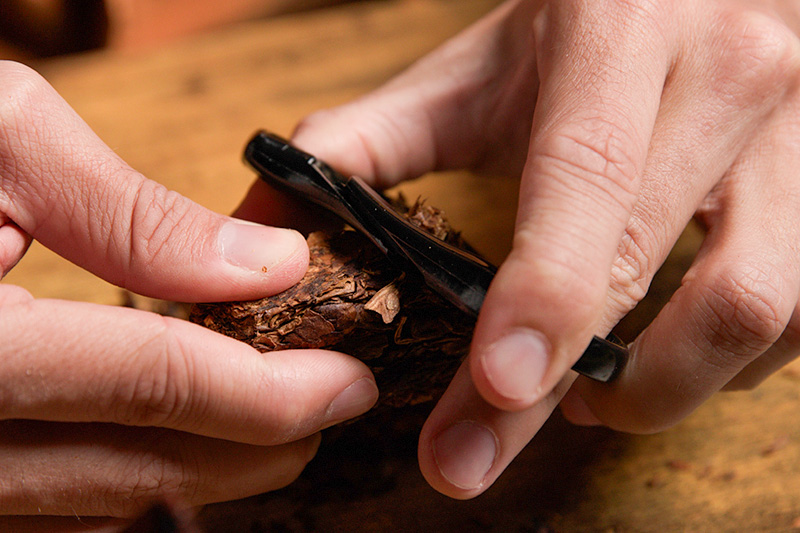
Plug-cut pipe tobacco is a type of pressed pipe tobacco, and it essentially is flake pipe tobacco before it's been cut into flakes. Whole leaf tobacco is pressed together and put under pressure for multiple days, sometimes multiple weeks, and that changes the flavor profile of a blend. It melds and changes the actual components themselves into something different than the sum of the individual parts, which would be a ribbon-cut pipe tobacco. So that's the benefit of pressed pipe tobacco; they have different flavor profiles than non-pressed pipe tobacco, even if the ratios and the components are the same. But it means they take a few extra steps when preparing to pack into your pipe.
Using Extra Accessories: Knife or a Cigar Cutter

So, for plug-cut pipe tobacco, you're going to need some extra accessories, and I'm going to show you two methods: One with a knife, and one with a cigar cutter. And basically what we're going to do is take these little plugs that have been pressed, they just haven't been sliced yet into cakes, and we, or me, as the pipe smoker, will do that rather than the manufacturer doing it and putting it in the tin like that.
So first, for the pocket knife, it's pretty straightforward. You're just going to slice it into a flake, and I probably don't need that much, but we're going to do one more. So we have our flakes right here, and we're now going to prepare it like we would any flake-cut pipe tobacco. If you want to fold and stuff, that's your preference. Personally, I like to rub them out. So I'm going to show that here. I'm smoking it in a little bit smaller of a pipe today, so I want to make sure this is really nice and rubbed out.
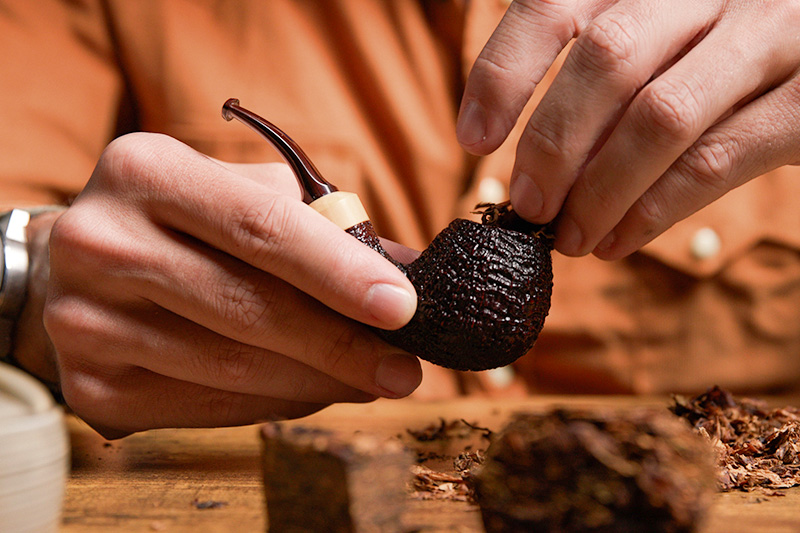
There we go. Before I pack it, I'm going to show you how to use it with the cigar cutter. Instead of using the knife and slicing down the edge, typically what I and others like to do is just take a corner and chop away at it until you get your desired quantity. So you're not going to be left with flakes, but instead you're going to be left with little chunks to rub out. Since I already have those rubbed out, I'm just going to throw these in with that. Now we're left with more or less ribbons of pipe tobacco. We've just made the ribbons ourselves and that's essentially the premise of preparing non-ribbon pipe tobacco; you're taking it from its original form and basically turning it into ribbon-cut to then pack it in the pipe.
Pack Your Pipe and Prepare To Enjoy Your Smoke

I'm going to use the gravity method, but feel free to use whatever method you prefer. And if you're unfamiliar with the gravity method, go ahead and check that other video out on our Daily Reader as well. So I've got it packed. Always be sure to test the draw. If it's too tight, you're going to want to dump it out and start all over. It's not worth the hassle to try to make it work. You're always better off just starting anew. So, I'm good to go. Time for the charring light. And you're ready to enjoy it. Thanks for tuning in and we'll see you next time.
You may also enjoy:




Comments
Short but good article. I hadn't thought of the chipping-away style with a cigar cutter, but I'll try it. About the "testing the draw." If I load a pipe in 3 or 4 pinches, I always test the draw after the first - if it's ok, the rest most always results in a good pack. If not, it's an easy re-do; maybe just poking around with a tamp will suffice and on to the rest for a good smoke.
Worth a quick read.I am a fold and stuffer, believing that the blend benefits from close association as it is smoked.I do object to the term “pack”, although I know that I am swimming against the tide here. “To pack” carries the association of jamming stuff into a space- like into a suitcase or back pack. I think that association carries over into the actual process especially when approached by a new piper- jam that tobacco into the chamber until it won’t hold any more.I think the term “load” would be better. “To load” carries the association of putting the right amount of material into an available or designated space- as one would do when loading a muzzle loading firearm.That said, I applaud the advice to test the draw, and then to unload and reload if that draw is too restricted.
This might be a stupid question, but what’s the difference between a plug and a cake? I really enjoy C&D Pirate Kake. Is that a plug-style tobacco? Btw, thanks for the cigar cutter tip — can’t wait to try that!
Never use isopropyl alcohol in your pipe! Use a strong liquor preferably 80 proof at least. Iso alcohol is toxic.