


 |
|
 |
|


How the Cuban Revolution Led to the Rise of the Central American Cigar Industry


Cuban cigars are among the most coveted cigars in America despite technically being illegal. There is a way to experience Cuban cigar quality, however, and that answer hails from Central America. The soil is similar to Cuba, and many original Cuban cigar manufacturers found new beginnings there. Central America has become a staple in the cigar industry during the past few decades, but how the market shifted toward it is a curious story involving revolution, embargos, government expropriation, and unrelenting passion for the cigar industry.
Pre-revolution Cuba
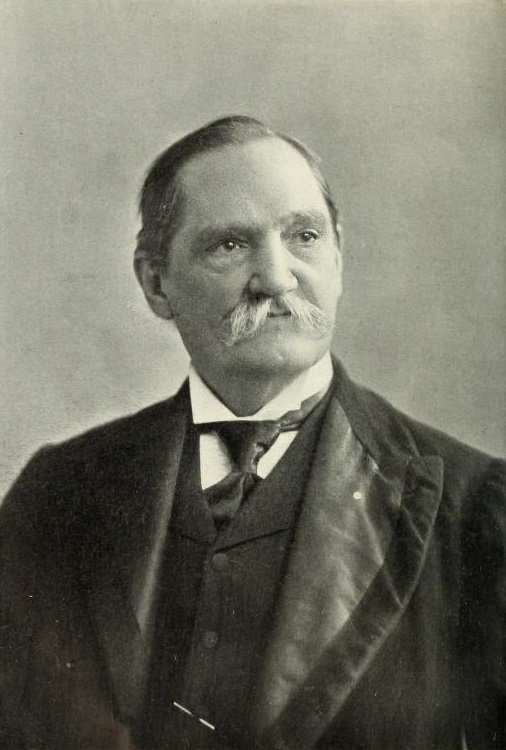
Estrada Palma, 1899
In the aftermath of the Spanish-American War, in 1898, Spain and the United States signed the Treaty of Paris. Spain agreed to give up Puerto Rico, the Philippines, and Guam to the United States for about $20 million, and more importantly, in our case, Cuba became a protectorate of the U.S. Years later on May 20, 1902, Cuba would gain independence and become the Republic of Cuba. However, under Cuba's constitution, the U.S. held the right to intervene in Cuban affairs to supervise their finances and foreign relations. Around this time, the U.S. leased the notorious Guantánamo Bay Naval Base. Four years later, in 1906, Cuba's first president Tomás Estrada Palma would face an armed revolt over disputed elections. With Cuba's army overpowered, the U.S. intervened by occupying Cuba and placing Charles Edward Magoon as acting Governor for the next three years. Cuban historians mark Magoon's time in power as the introductory period of government corruption in the fledgling nation. In 1908, Cuba would self-govern again when José Miguel Gómez was elected president but the U.S. would still heavily intercede in Cuban affairs.
Gerado Machado would serve as Gómez's replacement after the 1904 election. During Machado's leadership, Cuban tourism boomed and many American-owned hotels and restaurants popped up to accommodate this new market. When Wall Street Crashed in 1929, sugar prices plummeted and political unrest began. The Generation of 1930, a group of student protesters in Cuba, turned to violence to oppose Machado's government, and the unrest was further compounded when sugar workers began general strikes. Eventually, an army revolt would force Machado into exile in August 1933 and he would be replaced by one Carlos Manuel de Céspedes y Quesada.
... on May 20, 1902, Cuba would gain independence and become the Republic of Cuba
Céspedes wouldn't be around very long because by September that same year, the Sergeants' Revolt led by Sergeant Fulgencio Batista overthrew him and established a five-member executive committee known as the Executive Commission of the Provisional Government of Cuba, more commonly known as the Pentarchy of 1933. The Pentarchy had Ramón Grau San Martín as provisional President, but Grau would resign in 1934. This gave General Batista the ability to control Cuban politics for the next 25 years through puppet presidents. A new Cuban constitution would be adopted in 1940 and feature some radically progressive ideas like the right to labor and health care.
Batista held office till 1944. His government continued to roll out major social reforms and during this time, the Cuban Communist Party started to hold office under him. The 1940 constitution prevented Batista's re-election and saw Ramon Grau San Martin elected in 1944; during this time, Batista lived in Florida. Grau further damaged the Cuban political system by constantly undermining the Cuban national Congress and Supreme Court. In 1948, Grau's protégé Carlos Prío Socarrás came to power. Grau and Socarrás' terms brought an influx of investment into Cuba, fueled the economy, and helped raise the standard of living during their rules.
General Batista controlled Cuban politics for the next 25 years through puppet presidents
Batista returned to Cuba and ran for president in 1952. Upon losing, he led a military coup and returned to power with major backing from the U.S. government. His first order of business was to suspend the 1940 Constitution and revoke most liberties established during his "retirement." Batista would align himself with the one percent of Cuba and helped stagnate the economy further, banning the Cuban Communist party in 1952 as well. With a widening economic gap between workers and the rich, and dwindling support, revolution was on the way.
The Cuban revolution
The climate for Cuba was charged for an uprising, and the '50s would see various groups attempt to take control. It wouldn't be until 1956 that this cause saw any real traction, when Fidel Castro and 80 supporters landed in Cuba with the goal of sparking a revolution. By 1958, Castro's July 26th Movement was the leading revolutionary group and started to receive the U.S.'s support by imposing an armed embargo against Batista's Government. Batista would get around this by acquiring weapons from the Dominican Republic. Later in the year, Castro's rebels broke out of the Sierra Maestra and launched an insurrection against Batista's government. The rebels quickly captured Santa Clara, and Batista fled with his family to the Dominican Republic on January 1, 1959. He was exiled to the island of Madeira and finally to Estoril. On January 8th, Castro and his rebels entered the capital and Manuel Urrutia Lleó was put in power as the provisional President.
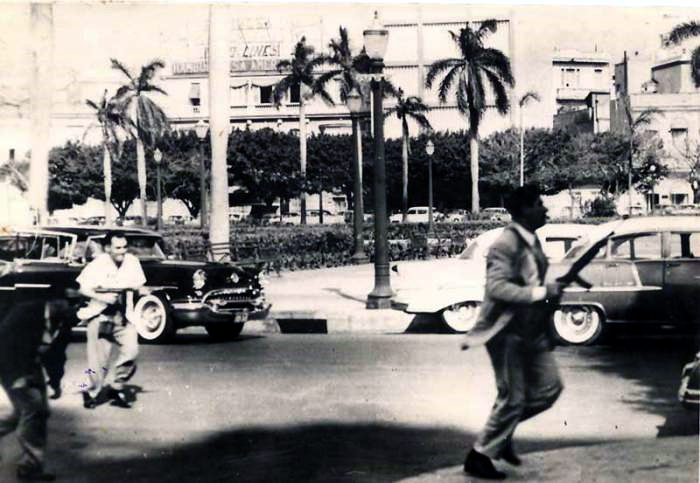
Between 1959 and 1987, 237 death sentences were handed out to various politicians, informers, and policemen of the Batista regime for their crimes against the revolution. Their trials and executions were widely popular among the general population. While the U.S. previously held Castro and his rebels in high regard with the hope that they'd spread democracy to Latin America, Castro's legalization of the Communist Party and his public executions led to an icy relationship between Cuba and the U.S. The first round of Agrarian Reform Law in May, 1959, took thousands of acres of farmland for the government, including many large American landholders, and this move further injured relationships. Thus began the first of many sanctions and trade bans between Cuba and the United States between 1960 and 1964.
Fidel Castro and 80 supporters landed in Cuba with the goal of sparking a revolution
This dynamic of course led to Eisenhower giving approval for the Bay of Pigs invasion, the failure of the Bay Of Pigs Invasion during Kennedy's administration, and the Cuban Missile Crisis. On February 8, 1962, Kennedy signed an executive order that largely widened the scope of Cuba's trade restrictions, including an embargo on all imports of Cuban goods, even if the final product had been made outside of Cuba. Later that same year, on August 3rd, we would see the Foreign Assistance Act amended to prohibit aid to any country that provided assistance to Cuba. A month later on September 7th, Kennedy once again expanded the Cuban embargo to include all Cuban trade except for non-subsidized food and medicines.
The Cuban exodus and the cigar industry
When the first round of Agrarian reform went into effect in Cuba, it was like the grim reaper knocking on the Cuban Cigar industry's door. Cuban armed forces led by Castro seized farmland, warehouses, and factories, stealing stock, assets, and bankrolls with nothing given to the employees or owners. It was a blow to everyone but the Cuban government.
In the first round, the Cuban government seized 16 cigar factories and 20 tobacco warehouses, not including cigarette plants. With very little hope, many cigar manufacturers fled Cuba, landing anywhere from Little Havana to Africa. Before we can explore how this industry could rebuild, however, we have to understand why Cuban cigars were so coveted. Part of what makes Cuban cigars so special is the terroir where the tobacco is grown. Terroir is a French word that means region, however agriculturally it refers to attributes of the soil, climate, and geology of farmland. It happens that Cuban soil, particularly in Vuelta Abajo on the westernmost part of the island, is full of nutrients like magnesium, iron, and calcium. The resulting tobacco from growing here creates a naturally sweet tobacco. In modern times, this soil has faced issues from overproduction and disease.
On February 8, 1962, Kennedy signed an executive order that largely widened the scope of Cuba's trade restrictions, including an embargo on all imports of Cuban goods
Another part of what makes Cuban cigars so special is the lifetimes of experience of the Cuban population. The first Cuban cigar factory was opened in 1542 and for about four centuries, Cuba was the only country makingPuro cigars, cigars made entirely from tobacco from just one country. The challenges that many displaced Cuban manufacturers faced was an issue of inadequate leaf and navigating a new place to call home. Cuban cigar makers tried everything from Colombian to American-grown tobaccos. Among one of the first popular alternatives to Cuban tobacco was Cameroon tobacco. Traditionally grown in West Africa in both Cameroon and the Central African Republic, this tobacco was grown by the tobacco monopoly SEITA and was sold at an annual auction in Paris, resulting in Cameroon leaf being highly sought after and hard to obtain for the new manufacturers.

Cuban Splits Cigar Ad, 1901
Another place many Cuban manufacturers called home was Jamaica, where a mixture of brands like Temple Hall and Palomino made blends of Cuban and Jamaican tobacco. But it would be Central America where many would find their place and would become the location that eventually dominated the industry. Daniel Rodriguez was among the pioneers who grew Cuban seed in Nicaragua after fleeing Cuba. But in the beginning, Nicaraguan tobacco didn't share the same success as Honduran tobacco. Honduran tobacco, while initially more popular, offered many restrictions due to the country's lack of development like safe drinking water or roadway infrastructure.
The first Cuban cigar factory was opened in 1542 and for about four centuries, Cuba was the only country making Puro cigars
Nicaragua would come out on top mostly due to its similarity to Cuban Soil but with deeper complexity due to the four regions available for tobacco farming. These four regions are Estelí, Condega, Jalapa, and Ometepe Island, with Ometepe being the least popular. An example of the regional offerings would be Condega, which is known for leaves that offer medium-strength sweetness, while Jalapa valley tobacco offers a great wrapper leaf with a zesty aroma.
While some would argue Nicaragua provided the closest offering to Cuban leaf, the new founding cigar manufacturers in the region once again faced problems with nationalism. Nicaragua in 1979 would see the Sandinistas take over the Nicaraguan government and history repeat itself with the government seizing the tobacco industry. Once again the U.S. struck with an embargo, leaving cigar makers in Nicaragua the choice to move elsewhere or give up. Some would hop back over to Honduras, and others would journey elsewhere. It would take a decade for things to settle in Nicaragua, and finally in March, 1990, the world would see George H.W. Bush lift the embargo entirely. This led many cigar makers to return to the region and rebuild what they had once again lost.
One such brand was Joya de Nicaragua, among the first to grow and manufacture in Nicaragua. They were founded on February 29, 1968, by J.F. Bermejo and Simón Camacho as the flagship brand of the Nicaragua Cigar Co. and became the first to be marketed worldwide. During the revolution and embargo, they were among the first forced to leave but were also leaders when it came to returning.
However, it would be the Dominican Republic that would become the capital of modern cigar manufacturing. The Dominican Republic is the world's largest producer of premium cigars in modern times, eclipsing Cuba in terms of production. The Dominican Republic had a unique advantage during the Cuban exodus with the La Aurora S.A., the nation's largest company that had been in operation since 1903. La Aurora had been doing business with the Quesada family, perhaps the most famous of Cuban tobacco brokers, since the 1930s. The Quesada family's buying and reselling in the Dominican Republic helped establish an early foothold in the country.
Once again the U.S. struck with an embargo, leaving cigar makers in Nicaragua the choice to move elsewhere or give up
After the Cuban cigar exodus in 1967, Carlos Toraño Senior traveled to the Dominican Republic with Cuban seeds and began working with the Dominican Institute of Tobacco to help develop more premium tobacco. At the same time, the country mostly produced cigarette tobacco. It wouldn't be until 1973 that the Dominican Republic would become a major cigar producer, when the government opened the Santiago free-trade zone. Santiago had ample tobacco in the heart of the Cibao valley in addition to a large workforce that was eager to work for minimal salaries. These factors helped bring manufacturers to the region.
Juan Sosa and Manuel Quesada joined forces in 1974 to create Manufactura de Tabacos S.A., the first cigar factory in the Santiago free-trade zone. They had enough tobacco and capital to create their first cigar: Sosa. Several companies would come to the region to start growing tobacco, like General Cigar in 1974, who worked with the government to grow green Candela leaves, but they wouldn't start rolling in the Dominican Republic until 1978.
It wouldn't be until 1973 that the Dominican Republic would become a major cigar producer
The cigar industry in the Dominican Republic would truly take off with the fall of the industry in the Canary Islands in the 1980s. The Canary Islands faced a slew of challenges with labor issues like increasing wages and strikes, economic issues, and a lack of mass market appeal. By the '90s, the Dominican Republic had become the leading producer of premium cigars for the United States, with exports growing from about six million cigars in 1977 to 34 million in 1981 and 129 million cigars in 2023.
While the Dominican Republic is at the top of the chain, Honduras and Nicaragua are still highly regarded and sought-after cigars. While Cuban cigars remain coveted, some argue that the golden age of Cuban cigars might be in the past. No matter one's preferences, no one can deny the quality and craftsmanship of Central American cigars.
Bibliography
- Embargo Politics. (1989). The Multinational Monitor, 10(12).
- Alexander, J. B. A. (2023, March 8). What makes Cuban cigars so special?. Holt's Clubhouse.
- Tunzelmann, V. A. (2012). Red heat: Conspiracy, murder, and the Cold War in the Caribbean. Picador.
- Alexander, J. B. A. (2022, November 22). A history of cigars in Nicaragua. Holt's Clubhouse.
- Francesca. (2023, May 15). Nicaragua's tobacco history: Nekupe. Nekupe Blog.
- Our history old. Joya de Nicaragua. (n.d.).
- Sweig, J. (2004). Inside the Cuban Revolution: Fidel Castro and the Urban Underground. Harvard University Press.
- Chaffee, W. A., & Prevost, G. (1992). Cuba: A different america. Rowman & Littlefield.
- Domínguez, J. I. (2018). Cuba: Order and revolution. Harvard Univ. Press.
- Savona, D. (2002, November). The exodus. Cigar Aficionado.
- Alexander, J. B. A. (2022, April 15). A history of cigars in the Dominican Republic. Holt's Clubhouse.
- Discover the artistry of Dominican Republic cigars. Pin and Travel. (n.d.).
- Savona, D. (2023c, April 20). Cigar imports for 2022 hit 464 million. Cigar Aficionado.
- Discover the artistry of Dominican Republic cigars. Pin and Travel. (n.d.-a).
You may also enjoy:



Comments
Great article. However, I have to point out that neither Nicaragua nor the Dominican Republic are in South America. There are several tobacco growers in South America (Ecuador, Brazil, etc.), but the industry you are talking about is localized in Central America (Nicaragua), the Caribbean (Dominican Republic), and even North America (Mexico).South America and Latin America are not synonyms.
Hey Cicero,You're correct, and I'm horribly sorry. My wires got crossed during the writing process, I've updated the article to try and remedy that mistake. I'll go in and clarify further on Monday. I'm sorry for letting this slip by.
Not a big deal, everybody makes mistakes. I am looking forward to a new article about the industry in South America! We do not know much about it, but it is also huge.A curiosity for all of you: The Spanish Crown did not allow Cuba to mass-produce cigars until the nineteenth century. The first cigar factories were actually in Spain, the most important one being the main building of the University of Seville today. The cigar that we enjoy today is the product of the Spanish interpretation of a native invention, then perfected by the Cubans during the nineteenth and twentieth centuries. So, for most of the colonial period, Spain seems to have been the main producer of Cuban cigars (meaning that they were rolled in Spain with Cuban tobacco)
Cuban cigars have been terrible for years. They are Communists without any brain power or other marketable skills or commodities, so their cigars get cranked out with little to no quality control. The last few Partagas Shorts boxes I bought were literally doornails, totally un-smokable. And there is nothing remarkable about the tobacco, either, no magic soil, nothing. It tastes like tobacco, and not the best I've ever smoked. I get a chuckle out of people fighting to buy the tiny, daily supply that Friends of Habanos strategically leaks out at ridiculous prices. Meanwhile, I can buy a pound of superb pipe tobacco for under $50. Cuban cigars are, at this point, a total gip.
Grat article , between other things , about USA imperialism. I just want to let you know that the term Puro is not exactly what you mean. It was in a cigar aficionado publicity , i think that from Te Amo cigars , that they began to claim Puro as a cigar completly made from the leaf of the same country. In Spain and other countries a puro is synonymous with a cigar with any old school cigar smoker. Puro undestanded as puro tabaco. Any cigar is a puro.