


 |
|
 |
|


Humidification, Humidors, and Cigars: An Introduction


One's first thought about cigars and their history is likely of a small island off of the south coast of Florida, though the use and enjoyment of bunched and rolled tobacco goes a good deal farther back in history. In fact, there's evidence that the Mayans were the first to have cultivated the plant and the first to have rolled it into a form that resembles cigars, utilizing plantain or palm leaves to bind bunches of leaves that were then smoked. It was only after tobacco was discovered by European colonists that we began to see cigars in a form similar to today's as the tobacco plant was spread to various countries around the world and methods were developed that refined its flavors and complexity. As the complexity of these blends was increased and the methods of their production refined, cigars became a commodity and, like any good commodity, they needed to be stored properly: Thus the humidor was born, an enclosed container designed specifically for keeping cigars at a proper temperature and humidity.
Why Keep Cigars Humidified?

When cigars leave the factory, they hold around 12-to-15 percent moisture content, much of which is owed to their curing process and the oils they contain, the latter of which is responsible for the cigar's flavors. Maintaining a cigar's moisture, then, is essential for experiencing the full array of its aromas, as dried out cigars taste and smoke worse than their more well-humidified counterparts.
Cigar tobacco generally undergoes an extensive process of aging, curing, and fermentation inside of barns within their country of origin, with these barns or curing houses keeping both at a relatively high heat and a high humidity that results in a fuller expression of flavors as the leaves age. The humidor's job is to replicate these conditions as well as possible and thereby keep your cigars fresh and smokable at any time, protecting them from getting too dry without making them too moist. Cigar humidification is a game of balance and drifting too far in either direction can be detrimental to the quality of our smokes.
Under-humidified cigars lose a good deal of their natural oils, not only reducing their flavor but resulting in a crisp, almost crunchy texture throughout that burns too quickly. In addition, this tobacco burns quite hot, and combined with loss of structural integrity due to degradation of the wrapper's vegetable glue, makes for a smoking experience rife with wrapper splitting, tunneling, canoeing, and any number of issues.
Likewise, an over-humidified cigar will have its flavors dulled as the excess moisture interferes with the burning of the tobacco and overwhelms the presence of its oils, its tobaccos becoming rather mushy and overly pliable. The resulting smoke would be fraught with relights, as the overabundance of moisture causes the cigar to constantly go out while also inducing an uneven burn, and can even cause plugged draws as the tobacco expands. All of that is aside from the fact that excess humidity promotes mold growth.
There's also the issue of the tobacco beetle, a prolific pest within the industry that feeds on tobacco leaves and lays its eggs inside of cigars, obviously to the detriment of one's smoking pleasure. The presence of their eggs within rolled cigars is widespread, and there's really no way to tell if yours has them, though your enjoyment won't be hindered if they're present but only if they hatch: another reason why proper heat and humidity is paramount. The eggs of tobacco beetles hatch only under particular conditions; namely, if the air exceeds 72% Relative Humidity (RH) or if the temperature exceeds 72°Fahrenheit.
An outbreak of beetles can be nothing short of devastating, as they burst from the tobacco as larvae and feed upon our precious cigars, leaving behind pinhole-sized exit wounds and posing an imminent threat to all other cigars as they feed and become adults. A collection in the early stages of invasion can be rescued by sealing the cigars in a freezer-safe container in the freezer for three to four days before moving them to the fridge for 24 hours so they can slowly rise in temperature, preventing stress cracks from a rapid increase in relative heat.
For cigars, the generally accepted standard of both temperature and humidity is 70°F and 70% RH, once more hearkening to the balancing act that is cigars and their keeping. There's a degree of personal preference involved here, with as little as 68° F/68% RH considered acceptable, though anything below this level risks damaging cigars if maintained for too long. This combination of temperature and humidity replicates that of aging barns, ensuring that the tobacco is perfectly acclimated to its environment for as long as it needs to be tucked away.
The Humidor

As previously stated, the humidor is a purpose-built or purpose-reconfigured container meant specifically for storing cigars and maintaining correct humidity. It's difficult to pinpoint exactly who created the first humidor, or where it was made, but we do know that the first cabinet-style humidors were made by a man named Terrence Manning, who imported exotic woods from South Africa to create beautiful furniture pieces that doubled as conditioned homes for smokes. As pieces of proper furniture, these cabinet humidors look and function much like a china cabinet, with swinging doors, sliding drawers, or panels of sliding glass.
It was Zino Davidoff, however, who is credited with making the first desktop humidors: smaller, more easily transported humidors that held fewer cigars than their predecessors, but revolutionized the industry with proper storage that's easily accessible to almost anyone, making them the most widespread variation of humidor. These certainly aren't full pieces of furniture, and their name is appropriate, as they're meant to fit on a desk. As such, they are usually outfitted with stylish exteriors of handsome woods and sometimes with printed veneers, sure to smarten any desk they grace.
A humidor maintains a cigar's proper humidity through a two-part system that pairs a tight seal with a porous lining, creating a self-contained ecosystem that both slowly exudes and preserves moisture. Most currently available humidors, excluding a few I'll cover later, choose Spanish cedar as their lining: a fantastic medium that is both very receptive to moisture and that releases it gradually enough to maintain a near constant humidity, all while suffusing our cigars with a delightful aroma and aging them in a way that enhances their character. The cedar additionally accounts for the humidor's seal, dovetailing on the doors or lids to prevent moisture from escaping.
Seasoning a Humidor
If a new humidor is to work properly, the process of seasoning it is vital. Seasoning a humidor can take from three to five days, or as long as two weeks depending on how gradually you wish to bring it to its cigar-ready state. Seasoning involves the gradual seeping of moisture into the cedar, or whichever medium your humidor utilizes, so that it can maintain its proper levels of humidity. To season your humidor, it's important to first understand Hygrometers.
Hygrometers
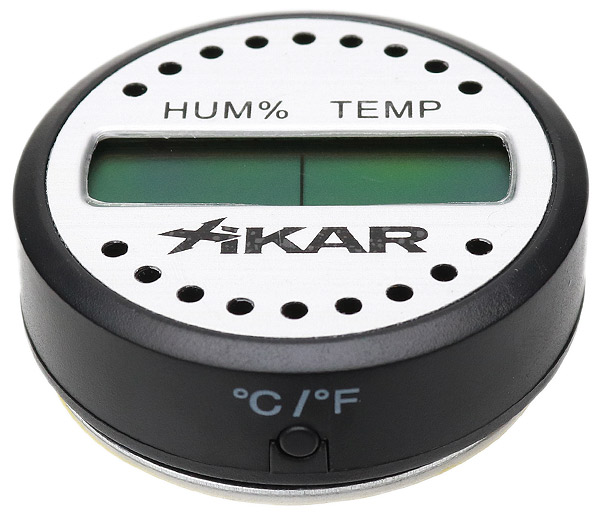
Hygrometers are essential tools for ensuring the continued and successful storage of cigars; they're essentially gauges of two distinct types that measure and display the humidity and often the temperature levels inside a humidor. The two varieties most often seen are digital and analog hygrometers, with digital variations often reading temperature as well, and analog generally reading only humidity, with a separate thermometer needed to read temperature. Of the two, analog hygrometers are generally considered to be inferior, often reading inaccurately, while digital is more precise. Knowing the temperature and humidity of your humidor is essential for keeping them ready to smoke, and smoke well, for as long as they're stored.
Hygrometers are usually not quite as accurate as they could be directly out of the box, so they need to be calibrated through a process known as the salt test. The salt test involves placing your hygrometer of choice in a plastic bag, with the bag additionally holding a small container, usually a soda bottle cap, that's been filled with a teaspoon of salt which has been made into a paste by the addition of a few drops of water at a time until it reaches this consistency. This combination should release moisture at exactly 75% RH, allowing you to calibrate the hygrometer after keeping it in the bag for six to eight hours. For digital instruments, the read humidity can usually be changed with a few button presses, but for the analog variety the needle pointing to the RH level requires physical adjustment.
The Seasoning Process
Seasoning, then, involves placing your newly calibrated hygrometer inside your humidor alongside a bowl of water containing a newly-bought sponge. This bowl should rest atop a plastic bag to avoid spillage that could potentially warp the inside of the humidor. From this point, it's essentially a waiting game, as you need to let three days pass before opening the humidor again and measuring the humidity. If it's not humid enough at first, close the lid and check it again the next day until the humidity hovers around 75% to 80% RH. While that seems like a fairly high humidity for cigars, this isn't meant to be the constant but to ensure that the wood has absorbed enough moisture to properly contain that level. In addition, any freshy interred cigars should absorb some of that moisture as they adjust to the levels of a more permanent humidification solution, resolving the issue rather quickly. This is not a step that can be skipped when setting up anew humidor; it is absolutely essential for the continued lifespan of your cigars. Ignoring, forgetting, or missing this step can and will lead to irreversible damage of your collection and even its full destruction if not immediately corrected.
Types of Humidors

There are a fair few different types of humidors available, including the cabinet and desktop versions already covered, and they come in a variety of sizes and shapes that make it nearly impossible not to find one that's right for you. For very large collections, there is an additional option, though not one that can really be purchased. Instead, it is built using a space in your house: the walk-in humidor.
Walk-in Humidors
These can be as large as entire rooms (or multiple rooms) or as small as a closet, requiring the full remodeling of whatever space it occupies, including making the area moisture-resistant, laying spanish cedar planks for flooring and walls, and furnishing the area with cedar shelves and racks to store cigars. Walk-in humidors hold the most cigars of any other method and require a constant supply of humidity at levels far exceeding others listed here, though they are infinitely modular and afford a true oasis of cigars accessible at any time.
Sliding-Drawer Humidors
These can take the form of desktop-size boxes or full cabinet-style furniture pieces, but are distinguished mainly by their drawers, holding even rows of cigars inside of drawers that slide in and out of the humidor itself. These rows make it extremely easy to choose individual cigars, assuming all of their bands are facing up, without too much loss of internal humidity. These will require more frequent rotation onto different drawers to prevent particular drawers' cigars from being over or under humidified, and their designated, limited drawer space results in less capacity than other types.
Hinge-top Humidors
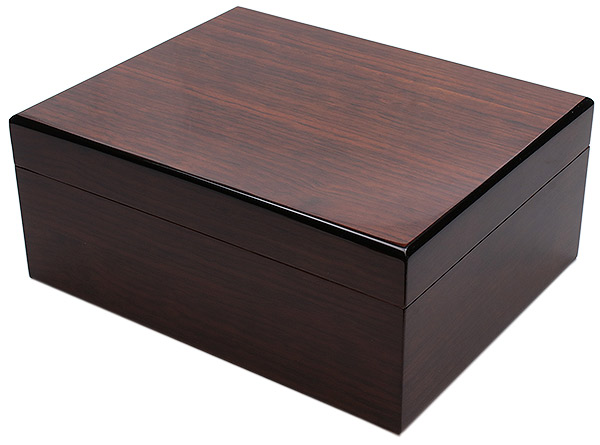
The most widespread variety of humidor, hinge-top examples run the gamut from small; 10-count, travel-friendly boxes, to large, chest or trunk-sized goliaths. These are the most common humidors to find either online or in-person, and the vast array of materials used in their construction and the quality of that construction can see prices vary wildly from brand to brand. The most common varieties hold around 75 to 100 cigars each and come in either wood-top or glass-top varieties. Glass-top humidors have one distinct advantage, but also several drawbacks to consider, as they allow immediate temperature and humidity readings, but they are vulnerable to absorbing too much sunlight and leaking moisture due to their clear, non-homogenous glass tops. These humidors will often contain additional dividers of Spanish cedar or sometimes multiple levels of the wood, each of which can hold its own selection of cigars.
Travel Humidors
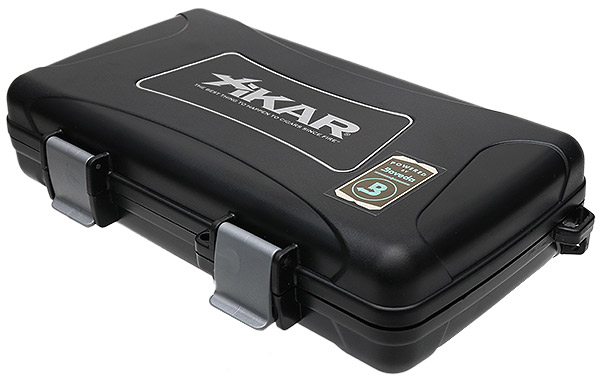
Travel Humidors are, above all else, portable, meaning that they oftentimes don't feature wood or cedar within them, but are constructed from a semi-airtight sealing plastic shell and lined with soft foam inserts that cradle each cigar individually. They can come in a variety of tiers, from single-cigar on up, and can be as large as rolling suitcases or small enough to slip into a backpack. Their construction is rugged and no-frills, lacking the qualities of Spanish cedar, but are more than up to being brought anywhere, safely holding your cigars while keeping moisture levels stable and contained.
Acrylic, Glass, or Ceramic Jars
A novel and effective method of storing cigars, acrylic jars contain a locking hinge top construction that is lined with a rubber or silicone seal which maintains interior humidity. The acrylic iterations are typically inexpensive but are limited in capacity and sometimes reveal sub-par construction. Glass jars are usually larger, but a touch more expensive, and Ceramic varieties can be extremely expensive and vary in size, though they can sometimes be functional works of art decorated or painted by skilled artisans, making them worthy of display.
Cooler-dors
The most unconventional cigar-keeping method that I know, cooler-dors are a relatively new development within the hobby that repurpose portable drink coolers as humidors. The seals on some of these coolers are actually quite good, but if you decide to make one it's recommended that you shore up this seal beforehand to prevent leaks and loss of moisture. Once completed, however, these are the largest humidors that you can acquire for the money, storing a veritable horde of cigars within their cavernous interiors. Cooler-dors are easy ways to store large collections and their easy portability and storage add to their convenience. They require robust humidifiers due to their size, however, but are a great way to start collecting on a budget.
Humidification Methods
There are many varieties of humidifiers ranging in size, function, quality, and ease of use. The most important job a humidifier fulfills is to keep its RH balanced, steady, and within an acceptable range, making it critical for the long-term success of your cigar smoking and storage. Without a humidifier, your beloved smokes would wither and dessicate, losing humidity until they become dry and crisp, bereft of their oils and withered to the point of unsmokability. The most basic and well-represented group of humidifiers are those that absorb water or propylene glycol, releasing continuous, balanced humidity over time.
Puck-style Humidifiers
These are most often packaged with starter-level humidors and can contain a number of mediums within them, all of which take in and release humidity. Generally speaking, these humidifiers are not preferred and some may even be made with plant foam, often seen at nurseries, though all of them lose their humidity extremely quickly. In the best cases, this means refilling them often, and at worst can mean a complete dry-out of your collection.
Gel-filled Humidifiers
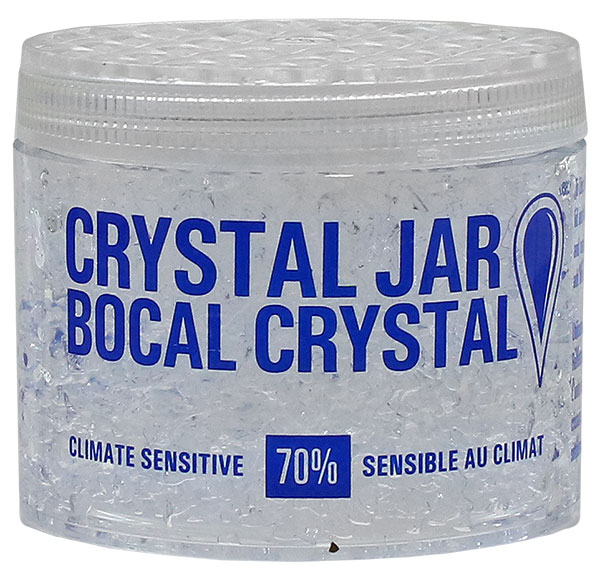
Gel humidifiers are generally filled with a sodium-based acrylic polymer that is highly water-absorbent and releases humidity at a slower pace than their puck-style brethren. These are great for keeping cigars humidified for longer periods of time before refilling, and they signal the need for a refill, shrinking from large, crystal-like globules to tiny, translucent beads. They can be used as many times as they still absorb moisture, meaning that they're a great solution for smaller humidors, as they generally come in containers too small to supply humidity to larger collections. There's still a possibility of these under-humidifying your cigars, so watch the hygrometer, adding more humidifiers if needed.
Humidipack-style Humidifiers
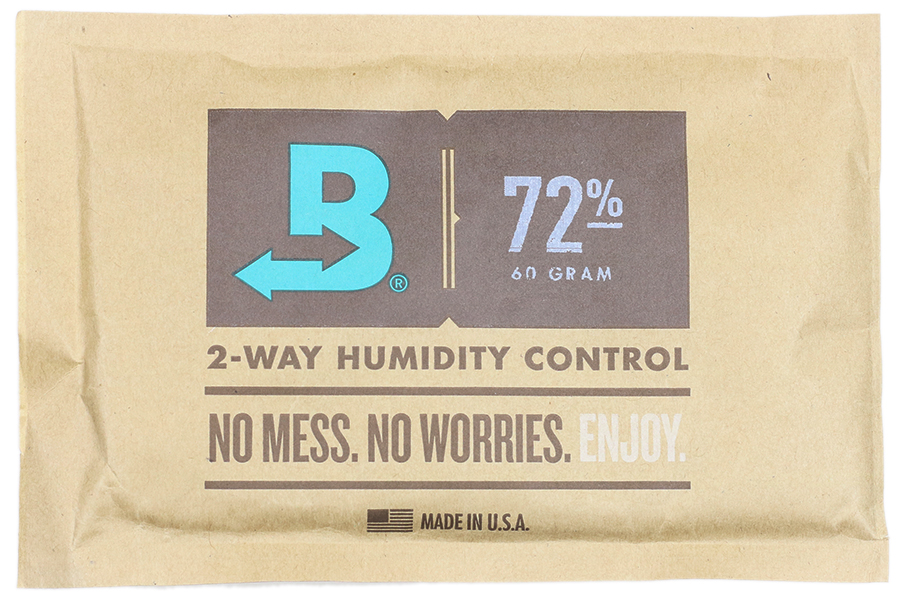
A fairly new introduction to the industry, humidipacks are a godsend for smokers who want a set-it and forget-it solution to keeping their smokes properly humidified. The most prevalent are Boveda's, the name becoming widespread and offering quality products in a variety of sizes, from small, 8 gram sachets appropriate for a few cigars, to large kits that can accommodate both the seasoning and maintenance of a 100-count humidor. They are disposable after use, meaning that there's a need to buy new ones after around 60 or so days (their claimed date of expiry when used properly). One of the slightly larger varieties of this style of humidifier can keep a fairly sizable travel humidor stable for months if properly cared for, though using them to maintain large collections can become expensive.
Electronic Humidifiers
The most expensive variety of humidifier, electronic models are also the most robust and apt for maintaining large collections, as they utilize an internal hygrometer to deliver measured wafts of water vapor into humidors of various sizes. Some are fed via an internal reservoir that needs refilling from time to time, while others are fed directly from an external water line, such as those that care for walk-in humidors. They are high-priced solutions and can become prone to over-humidifying if not placed carefully and looked after, making cigar rotations important, but their wealth of sizes and profiles means they're boundlessly versatile.
Humidor Maintenance and Choosing the Right Fit for You

Maintaining your humidor is an important part of maintaining your collection, and this extends to keeping it clean both inside and out to avoid any warping of the wood. If you're using a hinge-top humidor, it's important that the hinges are securely fastened and that the seal remains air-tight. The former can be achieved simply, with a screwdriver and a measured hand, though the latter is a result of both good construction and good seasoning. In general, a hinge-top should close itself with minimal noise, something you can check by raising the lid and letting it fall under its own weight onto the lip of the body. If there's a slight puff of air and a bit of a clack, then the seal is good, but if the result is a resounding slam, then you may need to shore up the seal or balance the humidifiers to compensate for the seal's shortcomings. Seasoning, however, is the most important part of maintenance, as a humidor's lining can lose its accumulated moisture over time, leading to a compromised seal. Therefore, if you ever notice your seal start to loosen, re-season the humidor.
Another aspect of maintenance that often goes overlooked is rotating your cigars, in both a literal and figurative sense: rotating by turning and rotating by changing the layout of the cigars. The actual rotation ensures that every bit of a cigar gets humidity, with the even suffusion of moisture making for a consistent smoke, while the change in physical layout limits the time any one cigar or group of cigars spends near the humidifier. Rotation removes the possibility of those cigars becoming over-humidified, while simultaneously avoiding under-humidification in those not as close.
Choosing the right Humidor depends on several factors: level of experience, budget, number of cigars to be stored, level of maintenance, and personal preference. If you're just starting in the hobby, I would strongly recommend against renovating your house or condo to include a walk-in humidor, as this may be price-prohibitive and full of necessary maintenance, not to mention a bit of overkill for a beginner. Likewise, if you plan to acquire a vast collection of cigars, a small desktop humidor would be inadequate.
It's also important to consider the method of humidification, with walk-in humidors necessitating large, pump-style electronic humidifiers, while smaller humidors are fine with more compact, gel-style, or humidipack-style solutions. Ultimately, the choice is yours when contemplating the next home of your favored smokes, and choosing the right setup can be daunting. Luckily, we at Smokingpipes have a curated selection of humidors and humidor accessories for you to choose from on-site, supplying you with both storage and cigars in one place.
You may also enjoy:




Comments
My first humidor was made by Decatur and the yearwas 1968. My wife bought me a Zino Humidor 1992.Zino was certainly not the first desk top Humidor .Daniel Marshall and not Dunhill makes the best desk top humidor, but Boveda has certainly changed the humidor industry . If you can purchase a Savoy Humidor with a Boveda packet holder, then that is a good buy.
I didn't know it took so much work to keep a cigar at the right humidity. The over/under humidification symptoms could explain some of the symptoms of an otherwise fine cigar smoking dissapointingly.
It's the most organized and informative article I've ever seen. It's the hardest to adjust the humidity.
How long can we store cigars in the humidified Smokingpipes zip-top bags that come with cigar orders? Do they have a specific relative humidity that they keep?
Is it ok to keep the cello wrapper on one's cigars while in a desktop humidor?