


 |
|
 |
|


Remastering Blends with Erik Stokkebye of 4th Generation


In this unique video, Erik Stokkebye and I had the opportunity to chat about 4th Generation blends and his methods for remastering them in the last year, in which he improved upon the mixtures we love to make them even better. The intricate and time-consuming methods of a master blender are fascinating, and the result is incredible tobacco blends that are blended as close to perfection as possible.
Note: The following transcription has been edited for clarity and brevity.
[Shane Ireland]: Hey everybody, I'm Shane Ireland. I'm here with a very special guest, although it's not his first time joining me at this little table here. Erik, welcome back.
[Erik Stokkebye]: Thank you.
[SI]: 4th Generation pipes, pipe tobaccos, and accessories. You and I had a chance early last year to touch on this idea of how a blender, specifically in the context of pipe tobacco, experiences constant evolution in their blends.
You're never done with your work as a blender, otherwise, you, Jeremy Reeves, and Per Jensen, all these guys would only work four days a year and then there would be no other work to do. That's not how it works. You have to constantly revisit acquiring the raw materials, the approach, the production, everything.
Your project for 2024 was to effectively remaster some of those plans and revisit all of the many variables we discussed. I was curious how that's going and what your experience was and if you could give us a little bit more context and shed more light on the process of undertaking something like this.
Revisiting 4th Generation Blends
[ES]: Sure. We are dealing with a farming product. Tobacco is a natural product and it changes all the time depending on soil, wind, and weather. I spent a fair amount of time this past year during the summer in Denmark with some of the blenders that I work with, and one of the things that I wanted to do was to make sure that we have the best quality in our tobaccos.
I spent quite a bit of time with the blenders looking at leaf tobaccos and seeing whether we could make some improvements in the blends to make them better. We touched on pretty much all their different leaf tobaccos and I think that we came up with, at the end of the run, some nice results. We were really considering how we could optimize our blends in the process of making good pipe tobacco. I hope that's what we achieved.
[SI]: I'm sure that's what you did.
There are constant variables and challenges to maintain consistency and to deal with the variables of a natural-grown product, and also the processes in production surrounding pipe tobacco and the many cuts, pressing or not pressing, steaming or not steaming, Oriental leaf versus Virginia, different levels of oils, all that stuff. Like the famous quote, even if you have done this for decades and you're a total master in every sense of the word of your medium, you never stop learning.
[ES]: You don't.
[SI]: I respect and appreciate that fact. It's like the analogy that I've used previously that a musical artist puts out an album and then that album gets remastered. It's not about rewriting anything or changing the lyrics. It's about taking what you have at your disposal today and making it better, or closer to the original vision.
[ES]: Exactly.
[SI]: In this context you are doing some reformulating and sourcing differently. How do you know that you've achieved the same experience? How much of it is intuition?
[ES]: Yeah, you really don't know until you get the results and you get the comments from your customers. It's a lot of testing and smoking the leaf tobaccos pure to make sure it's the right leaf that you want in your blend. It's a long process. Going into 2025, I feel really excited about what we came up with.
Erik's Blending Approach
[SI]: Absolutely. You mentioned that it's basically trial and error. You can look at the stats for a given tobacco on paper and that can inform the experience. I'm sure that you've done this long enough where if you're looking at a certain sugar content or a certain nicotine content, you have an idea of where it came from, but the variation from crop year to crop year, grade to grade, all that kind of stuff can change it.
[ES]: Exactly.
[SI]: Do you have one single approach when you're testing components, or does that approach vary depending on the type of components you're testing? To be a little more specific, are you smoking all your Virginias in a Clay, and then you're smoking your Orientals in a briar? How much of it is aroma? How much of it is visual? What's the process for you specifically?
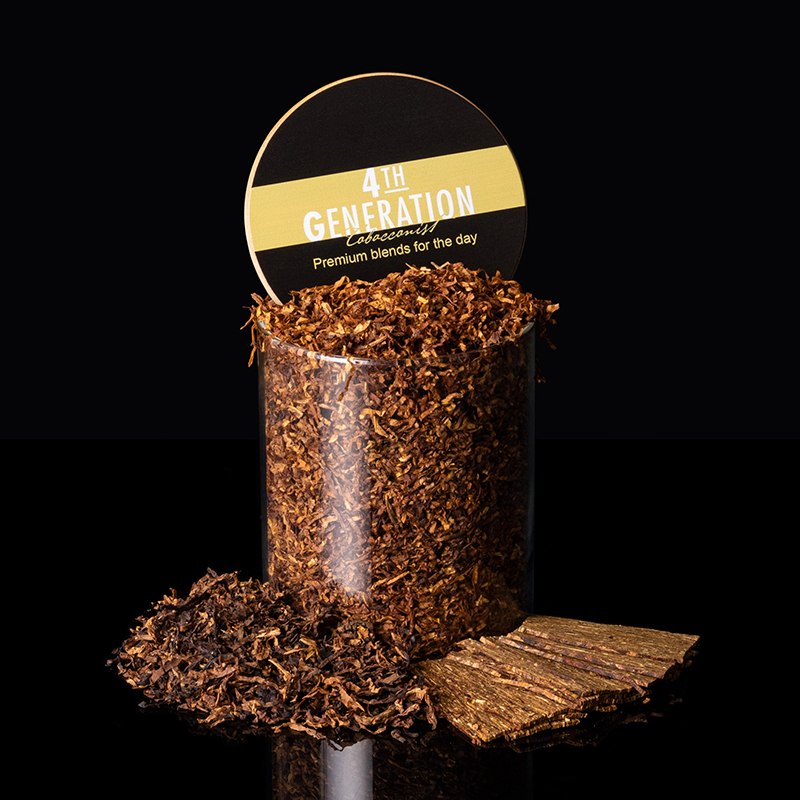
[ES]: For smoking leaf tobaccos, I like to use clay because I think that's the cleanest form of smoking leaf. For the end product, whether it's an Aromatic or an English blend or a flake, I like to smoke it in a briar pipe because that's how most consumers are going to experience it.
[SI]: Yeah, so you start with a Clay and then once you've actually gotten to a point where it's a fully formed blend, you might shift to briar and evaluate it in a more common setting.
[ES]: Yeah, exactly.
[SI]: For those of us who have only ever smoked final products and who have not had access to hundreds and hundreds of grades and qualities of tobacco, how possible is it that a small change affects the blend overall? How perceivable is that to the novice?
[ES]: A small change in the leaf blend is not gonna be a huge change. It's very minor, if any. I'm saying that because most blends, including the 4th Generation blends, usually consist of somewhere between 14 to 17 different leaf tobaccos. Even if it's a pure Virginia blend, for example, there could be 16 different grades of Virginia within that one Virginia blend.
[SI]: And multiple sources for those grades.
[ES]: Exactly, yeah.
[SI]: Sounds complicated.
[ES]: It is, actually. It's done that way because eventually, you do have to shift out one of the grades because you can't get it anymore. You can get something that's close and change it in a blend where there are 15 others, so the difference is going to be very minor.
[SI]: Basically it preserves consistency over many years of production.
[ES]: Exactly, and to me, consistency equals quality. I think that's very important. What I tried to achieve here is to make the blends that we have even better. I think we've come that far.
[SI]: Absolutely. A similar experience but informed by more experience of your own and all of that.
You're being really transparent about this whole process, which I find fascinating and I really appreciate that as a consumer. How common is it for blends to be changing all the time and we're just never informed? In terms of the grades being unavailable and all that sort of stuff.
[ES]: It's pretty common, actually. To name some examples, if one factory buys another factory, you're going to find the blend changed because one factory may have used different leaf than the other factory.
[SI]: Right, those are bigger, more obvious changes.
[ES]: Within a brand portfolio, it happens over time. Most factories usually have a leaf inventory up to two to three years, so it's a very slow, but gradual process.
Time-Consuming Process
[SI]: I think a lot of us think of blending tobacco as almost a creative process in the beginning, but that's actually a fraction of the responsibility. I think this applies to cigars and whiskey and all sorts of other stuff. Maintaining the blends into the future and letting them evolve and be remastered, if you will, is probably a lot more work than even the original formulation.
[ES]: It is. The original formulation is also time-consuming, but the remastering is too. I would say it's actually very similar, at the end of the day. It's the same process you go through if you have something new you come up with; it takes several trial and errors before you come up with something you feel is right. When you do the remastering, it's very similar; you try to make it perfect.
[SI]: Yeah, absolutely. How often can you envision yourself doing this deep dive in terms of the remastering and evolution of these lines?
[ES]: I have been through this twice now, specifically for this line. It doesn't have to happen every other year or every year but occasionally I think it happens.
[SI]: Yeah, especially if you're concerned with making sure that there's improvements in the quality and that the experience is similar and all that.
[ES]: Exactly.
[SI]: That's so fascinating. I think so many of us take that for granted. The work goes beyond just the blend and following a recipe. It's much more painstaking than that.
We've talked a lot about how you spent the time last year remastering these blends, which I do really like that term now. Is that the entire portfolio? What did you look at specifically that has been, tinkered with and improved upon?
[ES]: It's basically most of the tin line.
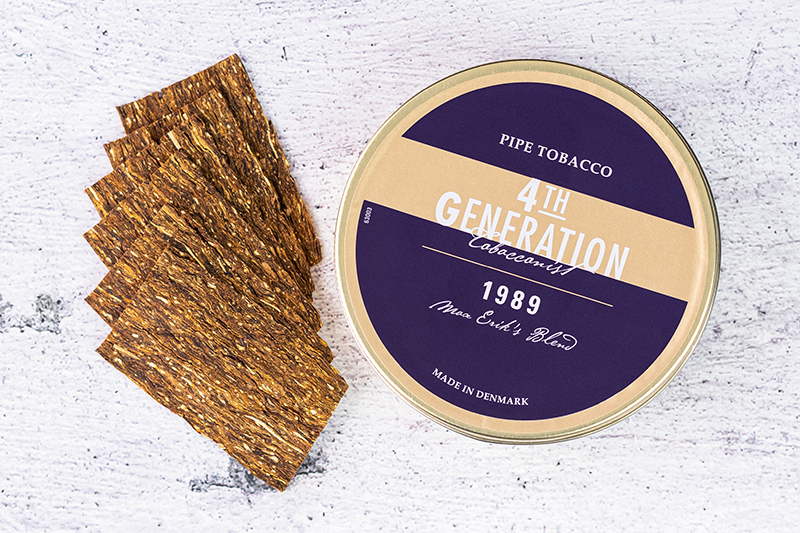
[SI]: I would imagine not Max Erik's blend, because this is the most recent release.
[ES]: Yeah, it's all the other ones starting with 1957, my blend, all the way down to 1882.
[SI]: And the bulk portfolio, similarly, is newer.
[ES]: Yeah. We decided that will stay as is. We aren't working on it yet, but you never know. Not yet. Yeah. You never know.
[SI]: I'm excited to get into smoking these blends again and revisiting some old friends. I encourage you guys to do the same.
1957 Blend
[SI]:For those of us who have not already been enjoying the 4th Generation blends, if you're new to the hobby or new to the brand, can you give us a recommendation for where they might start?
[ES]: Yes. Looking at my own blend, the 1957, I think that still is a relatively mild Virginia with a little bit of a topping to it. It's very approachable and has a very good aroma. It's something you can smoke all day, if you will. That's a good place to start.
[SI]: I feel like that one also really encompasses at least what I think of as the sort of quintessential Danish Virginia.
[ES]: Yes, exactly. It's a light Virginia, so it's a good start for a newcomer.
[SI]: Yeah, and worth revisiting also. Thank you so much, Erik, and we look forward to trying these remastered blends this year. Make sure to check out 4th Generation tobacco blends here at Smokingpipes to give them a try yourself.
[ES]: Thank you.
You may also enjoy:



Comments
I love watching and listening to Mr. Ireland's interviews with Erik Stokkebye here on smokingpipes.com because it takes me back about 10 years ago when I had the wonderful privilege to meet and converse with Mr. Stokkebye at Mission Pipe & Tobacco in San Jose, California. Erik took the time to talk to me about all his 4th Generation blends and pipes and he was gracious enough to sign the pipe pouch for the 4th Generation pipe that I purchased; I still have it along with the tin of his 1882 Blend. I truly love how much thought Erik puts into his product--naming his blends after each member of his family line. I own 5 of his pipes and believe they are exquisite in material and design. I hope to meet and chat with Erik again soon.