


 |
|
 |
|


While one may not immediately associate the name Stringbean with much beyond the green pods hanging in the garden, 50 years ago it called to mind banjo music, laughter, and grief. While people of a certain generation may remember the Stringbean from shows like Hee Haw and the Grand Ole Opry, he was also a pipe smoker, as well as a figure whose story would change Nashville.
Better known by his vegetal stage name, David Akeman was born on June 17th, 1915, in Annville, Kentucky to a musical family. His father, James, was a banjo player who played dances in the area. David learned how to play in the old way, by ear, at a young age, starting on a makeshift banjo constructed from an old shoebox and his mother's sewing thread. By age 12, the younger Akeman earned himself a proper instrument by trading a pair of chickens for it and began to play at dances with his father and other local musicians.
Then came the Great Depression, which hit Appalachia particularly hard, making it impossible for Akeman to earn a living from music alone. During those hard years, Akeman joined the Civilian Conservation Corps, participating in road building and tree planting projects. Later on, Akeman, who had continued to impress with the banjo, entered a talent contest held by guitarist and singer Asa Martin, a frequent collaborator with mountain music legends such as Fiddlin' Doc Roberts. Upon hearing Akeman play, Martin not only awarded him first place in the contest, but offered him a job. Soon after, as Martin was introducing his band, he forgot the new banjo picker's name, instead calling him "String Beans" on account of his tall and lanky stature. The moniker stuck, and was likely part of what gave Akeman such great success over the course of his career.
The Birth of Stringbean
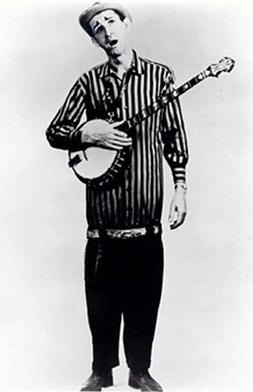
With the adopting of his distinctive stage name, Stringbean was well on his way to developing the act that would earn him the affection of thousands, and not a small amount of money. The final ingredient in Akeman's public persona appeared when, during a show in Lexington, Kentucky, a comic act failed to show. Akeman was almost literally thrust into the spotlight, taking the missing man's place as a comedic singer. Stringbean proved a roaring success, and continued to refine his routine throughout the 1930s.
In 1942, Akeman joined the often shuffling lineup of Bill Monroe's band, the Bluegrass Boys, from which the genre that Monroe pioneered derives its name. By the time Akeman left the Bluegrass Boys in 1945, he had become a regular guest on the fast-growing radio program, the Grand Ole Opry, where he formed lifelong friendships with fellow comedic banjoists Grandpa Jones (who had ironically gained the alias at age 22) and Uncle Dave Macon, who also famously enjoyed pipe smoking. It was also in 1945 that David married Estelle Stanfil, with whom he settled in a rustic cabin in Goodlettsville, just outside Nashville Tennessee.
Stringbean the Pipe Smoker
Like many high-profile smokers of the mid-20th century, there is little information available about Akeman's smoking habits beyond the many publicity photos the musician appeared in throughout his career. After all, most people were more interested in Stringbean for his music and humor. However, it is clear that he enjoyed puffing on a selection of large bent Billiards while he played the banjo. Many such images of him bear a striking resemblance to photos of his Nashville mentor Uncle Dave Macon, who also preferred bent Billiards. Akeman's first solo record was a tribute to the Dixie Dewdrop, portraying Stringbean playing what was very likely one of Macon's own banjos while smoking his pipe in a pose reminiscent of the elder Opry star. As for the tobacco Akeman smoked, that too is a mystery, though considering his background and mostly frugal lifestyle, he probably wouldn't have objected to such blends as the old Bull Durham, Five Brothers, or the like.
The Grand Ole Opry and Hee Haw
Already a successful and established musician on radio shows, Stringbean found even greater success when the Grand Ole Opry made its television debut in the 1950s. During one of its early broadcasts, Akeman designed the iconic stage outfit that created a lasting impression in the minds of Opry fans for generations. Before going on stage, Stringbean took a long nightshirt and a pair of shorts borrowed from fellow Opry star Little Jimmy Dickens, sewing them together with the shorts at around the height of his knees. Taking full advantage of his lanky build, the outfit accentuated his unique proportions to great and hilarious effect, making good on the Stringbean image.
He started on a makeshift banjo constructed from an old shoebox and his mother's sewing thread
Soon, he quite literally had more money than he knew what to do with. For a man of humble beginnings like Akeman, there was little use for cash, so he kept most of it in the cabin in Goodlettsville. His experience during the Depression eroded his confidence in banks, like many people of his generation, and he never opened an account, choosing to keep several thousand dollars in cash in a hidden pocket of his off-stage overalls, money that he enjoyed flashing around Nashville when he and Estelle went on out the town.
One of his few indulgences was an annual Cadillac, and he bought the latest model every year. Estelle would often drive Akeman to town — Stringbean never got behind the wheel himself — where he would trade squirrels for new clothes to wear on stage. When Hee Haw debuted in 1968, Stringbean reached even more fans and wider success, quickly becoming a household name for his old-fashioned banjo playing and lovably corny humor. With all of his fame and financial success, as well as his habit of letting people know about it, it wasn't long before rumors began to spread about a fortune hidden away in his small cabin, mixed with the kernel of truth that his door was never locked.
Stringbean's Last Day
November 10th, 1973, began as an ordinary day for the Akeman couple. Stringbean was due to make one of his regular appearances on the Grand Ole Opry and had made plans to go squirrel hunting with Grandpa Jones, who lived nearby, the next morning. Estelle drove the Akemans' brand new Cadillac to Ryman auditorium where the show, as usual, was a success.
The cousins John and Marvin Brown had heard the stories about Akeman's unguarded fortune and were determined to get a share. The pair knew that Akeman would be at the Opry that night and, after getting drunk, perhaps to settle their nerves, made their way to the Goodlettsville cabin. The door was unlocked, and they began ransacking the humble abode, making sure to turn on the couple's radio, listening to Stringbean play to know when he would return. Try as they might, the cousins could find no money in the cabin. Infuriated, they decided to wait for the Akemans to come home and force them to hand it over.
For a man of humble beginnings like Akeman, there was little use for cash
Eventually, Estelle steered the Cadillac into the driveway. David immediately suspected that something was wrong and directed Estelle to wait in the car while he retrieved a .22 pistol and approached the cabin. The radio was still playing when Akeman crossed the threshold of the darkened house. Hearing movement, he fired at the intruders, who fired back, killing Stringbean at his own front door. Estelle panicked and ran to David. When she understood what was happening, she turned and ran through the yard, pursued by John and Marvin Brown. They overtook Estelle, who begged for her life on her knees. She was shot in the back of the head. John and Douglas continued searching for money, rifling through Stringbean's pockets. Ultimately, the pair didn't get what they came for, leaving in the Akemans' Cadillac with nothing but a chainsaw and a couple of David's guns. They never discovered the bundle of cash in Stringbean's overalls.
The next morning, Grandpa Jones arrived at the Akemans' home for the planned squirrel hunt and knew something was amiss because there was no smoke rising from the cabin's chimney despite the November chill. He found Estelle first, and then David, noting how eerie it was that the radio was still playing inside. Jones called the police from the Akemans' telephone and returned to his own house to tell his wife, who was herself close with Estelle, what had happened. The couple came back to wait for the police.
Ramona Jones later said that what hurt her the most was seeing the morning frost that clung to Estelle's hair. It wasn't long before the Browns were apprehended and brought to trial. Both men claimed that the other had fired the fatal shots that night. The uncertainty ultimately meant little, as under Tennessee law, both men were guilty of the murders by default and were convicted. Grandpa Jones said that he pitied anyone who could do such a thing. Marvin Brown would die in prison in 2003, while John was granted parole after serving 41 years of a 198-year sentence.Hearing movement, he fired at the intruders, who fired back
A Shadow Cast on Nashville
The murder of David and Estelle Akeman sent shockwaves throughout the Nashville country music scene, marking the end of the days when Opry stars could be found among their fans in the streets and honky-tonks of Music Row. Musicians began to lock their doors and insulate themselves from the general public, learning to conceal the extent of their success and take security measures against the likes of the Brown cousins. While the world of country music has never been free from intrigue, the events of November 10th, 1973, left a dark mark on the industry that, while now 50 years past, still looms over Nashville.
Bibliography
- Alan Cackett.com
- The Murder That Changed Nashville Forever: Otis Gibbs
- Marc Hoover: The tragic death of David 'Stringbean' Akeman
- The Virgin Encyclopedia of Fifties Music (1998) by Colin Larkin
- "David Akeman, AKA StringBean," davidakeman.com
You may also enjoy:




Comments
What a tragic tale. If you are in the area, I highly recommend a visit to the Country Music Hall of Fame in Nashville. It is amazing (better than the R&R HOF) and Stringbeans music career is very well represented. His gag outfits made him appear to be a clown, but he was a well respected musician.
Very interesting read. Ultimate outcome notwithstanding, I enjoyed reading about someone in country music I had only briefly heard about before. I watched Ken Burns excellent country music documentary a few years ago and I don’t remember that he even mentioned this event. It seems like this had a tangible impact on fan relations as you wrote; I’m surprised this wasn’t in the documentary (as far as I remember anyway). Keep up the great writing.
Everything is correct except for the reason Grandpa Jones was meeting Stringbean the next morning. They were going on a fishing trip to Highland County, Virginia. I was there last weekend for their annual Maple Festival.
Thank you for the true Nashville Story about Stringbean.He was always one of the highlights of Hee Haw everyweek. I wasn't aware that he was in the pipe smokingcommunity. I will add him to the many folks that Irespect,admire and revere. Dave
Thank you for the true Nashville Story about Stringbean.He was always one of the highlights of Hee Haw everyweek. I wasn't aware that he was in the pipe smokingcommunity. I will add him to the many folks that Irespect,admire and revere. Dave
I wrote a record in salute to Stringbean. Check it out and feel free to share. https://youtu.be/YNLvmYekohg?si=t7Gf-AslIx-dcwX3