


 |
|
 |
|



The Origins of Tobacco As Told By The Prairie Band Potawatomi Nation


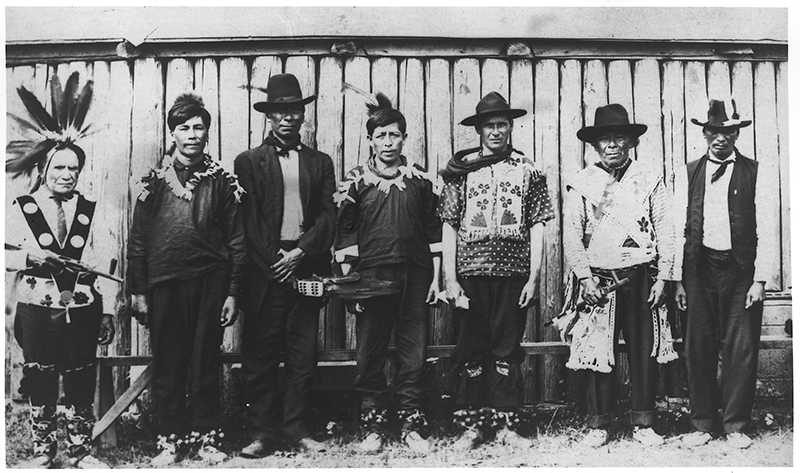
Potawatomi Prairie Band
The following is the tale of the Origins of Tobacco long passed down in the Prairie Band Potawatomi nation. This particular version has been adapted from Alanson Skinner's The Mascoutens or Prairie Potawatomi Indians, Part III, Mythology and Folklore.
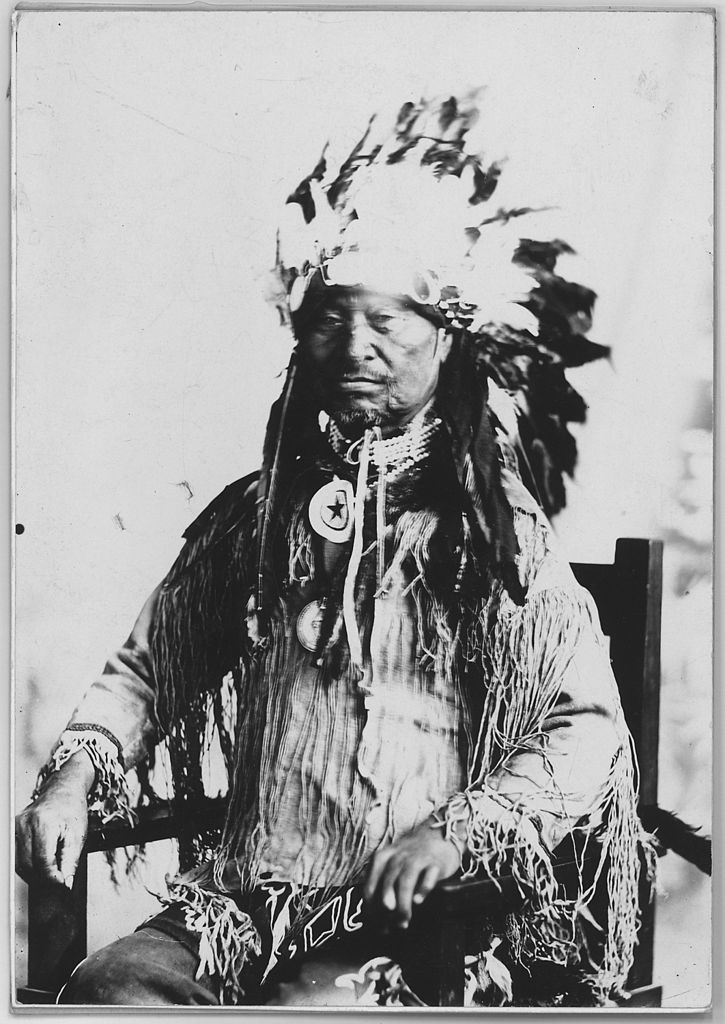
Chief Kack Kack of the Potawatomi Prairie Band
Legend says that when the Potawatomi still lived on the east shores of Lake Michigan and close to their grandfathers, an old man known as Wakusha the Fox had a dream, delivered by the Great Spirit, that something extraordinary would grow in his garden in a clearing that he made close to his home. The Great Spirit warned him to never let any women approach his farm, so Wakusha cut down trees that would fall over the stumps and form a natural fence. The people of his village grew suspicious but they could see nothing. His uncles and nephews teased him about his garden, jesting how he expected anything to grow when he had planted no seed.
They teased him so much that Wakusha became angry and when everyone else went on the Summer hunt, the old man stayed home to tend to his field. One day, plants sprang up in his garden even though he had not planted any seed. Wakusha did not know what to call the plant but regardless, he tended to it well and it grew up to be hearty stock. Eventually, a neighboring Delaware came to visit him, and Wakusha showed his friend what he had and explained that it had come from a vision sent by the Great Spirit.
"Why," said the Delaware, "my people have this sacred herb, also. One of ours also dreamed of it, the same as you."
"How do you use it?" asked Wakusha
The Delaware answered, "My grandson, if this was a gift to you from the Great Spirit, you should know. You should have been shown by the Great Spirit on how to use it. But if that doesn't come by fall, come to me and I will show you how we use ours."
One day, plants sprang up in his garden even though he had not planted any seed
Wakusha was more confused than ever but he decided to see if the Great Spirit would tell him what he longed to know, leading him to fast. He went without food for two days when the Great Spirit appeared to him and told him to gather up the leaves of the plant and dry them to pray with, to burn them in the fire like incense, and to smoke them in his pipe. The Great Spirit told him that this plant, this tobacco, should be the main offering at every feast and sacrifice.

Potawatomi rain dance, 1920
After this vision, Wakusha went to a place near the sea where a hill of soft black stone lay. He broke off a long rectangular piece, and began to make a pipe. The process was long and arduous, and he went to his neighboring Delaware for help. When the pipe was carved, they made a pipe stem of wood. During this process, the neighbor came to see that the Delaware had learned the use of tobacco, so he took out his own pipe, filled it with tobacco from his pouch, lit it, and passed it to Wakusha. Wakusha laughed, "I intend to smoke, but I certainly did not understand before." Wakusha had his wife sew a buckskin wrapper around the pipe's stem to make a tobacco pouch before he harvested and dried his tobacco.
When the hunters returned from the summer hunt, the people all went over to see what had grown in Wakusha's mysterious garden. They were shocked by the peculiar plant and strong taste of the plant's leaves and none knew what to call it. The old man soon saw people had been taking from his garden, and asked the chief to keep them away. The chief honored this request and walked around the village himself, announcing that the people must keep out of the garden and respect the owner on account of his age. "Wait until he is ready to share with us," the chief ordered.
... the Great Spirit appeared to him and told him to gather up the leaves of the plant and dry them to pray with, to burn them in the fire like incense, and to smoke them in his pipe
One day, Wakusha decided it was time and gave a feast to the tribe. With the chief seated to his left, Wakusha spoke: "I am glad that you all have been quiet about my garden, and honored my wishes. You all know that it was impossible for me to have grown this herb, and that it is a gift from the Great Spirit because I planted no seeds. We all believe what is given to us in our dreams, and this was given to me in mine. I dreamed that something would grow there where I had burned and cleared the earth for this garden, and I fenced it off as though something sacred was there. That was to keep the women away from it, because as we know, they typically tend the gardens. Once the plant had grown, I fasted for another vision to learn its uses. Once more, the Great Spirit appeared and told me how to use this herb in sacrifices and to place it in the fire and smoke it. I give this feast in honor of the new blessing that is to be with us now for all our lives."
Once the old man was finished, the chief now stood and thanked him for being so faithful to his dreams. "My people, always think of this man, Wakusha the Fox of the Fox clan, who got this for us. Now I will burn this tobacco, and we will all pray for him. He brought it here, and he will divide it among you all. I want you all to take it and use it when you are hunting. Put it in the fire and tell Our Grandfather the fire where you are going, and for how long. Never leave without telling Our Grandfather these things, and pray to the Great Spirit."
They were shocked by the peculiar plant and strong taste of the plant's leaves and none knew what to call it
The people rejoiced and thanked Wakshua for this gift. They had all heard that he had such a sacred herb, but none had known what it was until now. Wakshua rose once more and told them that he would distribute the seeds to all, that they were to plant far off where the women would not come. They were to set up poles with leaves left at the top in the middle of the tobacco patch as a sign and warning to the women to keep away from these gardens.
Cedar leaves were burned and food was blessed by the Chief, and they all ate. Thanking the Great Spirit that tobacco had come to them, when they had finished their feast, a man stood and said he thanked the Great Spirit. This led each member of the tribe to squat by the fire and burn tobacco while praying to the Great Spirit. When they had all prayed, Wakshua took his tobacco bag and filled his stone pipe, saying, "This stone pipe I copied from that used by our Grandfather, the Delaware. I have mixed the tobacco with dried sumac leaves, just as he does." He passed the pipe for all to see and smoke, and it was only a few days before everyone had made a similar one out of wood or stone.
From that time on, the Potawatomi smoked as part of their prayers. When the colonists came, they took up smoking tobacco, but never used it as part of their prayers, which is not what the Great Spirit intended when it was given to the native people.
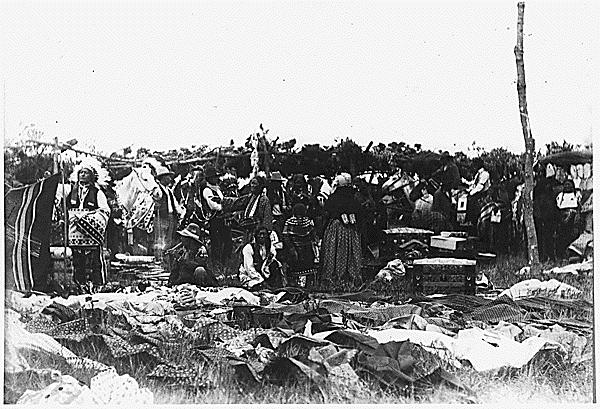
Potawatomi, 1920
Bibliography
- Skinner, A. (1927). The Mascoutens or Prairie Potawatomi Indians, Part III, Mythology and Folklore, (Vol. 3). Public Museum of the City of Milwaukee.
You may also enjoy:




Comments
Thank you for this article. I enjoy reading just about anything about the history of tobacco and smoking, especially regarding the Indians. The rest of us are forever in their debt.
“…and to this day, the women stay away.”Great article!
This article is of special interest to me since I live about 40 miles from the Reservation of the Citizen Potawatomi Nation of Oklahoma. The history of Indigenous Americans and tobacco is quite interesting, and anyone living in Oklahoma is going to know members of several Tribes. I live in the Reservation of the Muscogee (Creek) Nation. Ten miles south of here is the boundary of the Choctaw Nation in Oklahoma. Of course, all smokers of VaPers owes then a debt of gratitude. Just a few random thoughts