


 |
|
 |
|


Today we have an introductory video that I think will be helpful to newer pipe smokers, though I hope some veterans may glean some information from this as well. We're gonna be talking about different types of tobacco cuts.
Note: The following transcription has been edited for clarity and brevity.
Speaking from my personal experience, when I first started smoking a pipe back in high school, my understanding of pipe tobacco was that there was only one cut and you put it in your pipe, you lit it, and you smoked it. That was it. Obviously from this array you can tell that there are many different types of how tobacco can be cut and stored.
Ribbon Cut
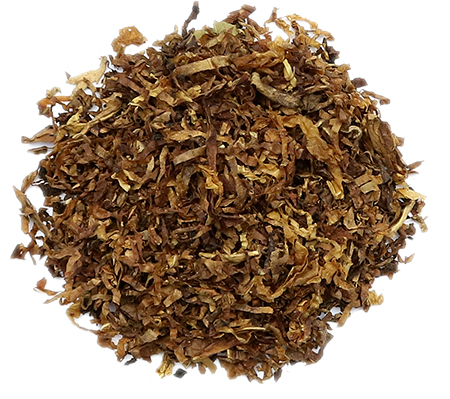
The most ubiquitous cut is the ribbon cut. It's definitely the cut you're gonna find the vast majority of pipe tobacco in. Essentially it's whole-leaf tobacco that could be multiple components or a single component sliced into fine, slender ribbons that make the tobacco easier to be lit and also promotes steady airflow within a packed bowl.
There is also a subtype of ribbon-cut tobacco called shag. Shag-cut tobacco is ribbon-cut tobacco, just in an even finer cut. That cut is going to burn faster and a little bit hotter. They're definitely preferred in smaller pipes, especially clay pipes where heat isn't as much of a factor.
Pressed Tobacco

Moving into other types of tobacco cuts, one of the other predominant types is pressed tobacco, and that's gonna be in several different varieties. Pressed tobacco originated centuries ago as a means of transporting tobacco across the Atlantic from the Americas to Europe, and the issues that they had back then revolved around humidification and the moisture content of tobacco. If you just transported ribbon-cut tobacco that would spend weeks on a ship, it would be bone dry by the time it gets to its destination and that's not good for the consumers, for the pipe smokers, or for pipe smoking in general. What they would do to combat this is they would press it into blocks or sometimes twist them into ropes and that would preserve the moisture content, enabling the tobacco to be transported over long periods of time.
Plug Cut
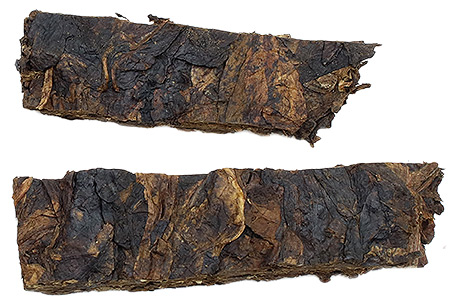
The first one we'll start with is plug-cut tobacco. This is pressed tobacco in its simplest, most primitive form. You're taking whole-leaf tobacco, blending it up into various components, and then putting it under very intense pressure for an extended amount of time, so much so that the tobacco will fuse together into an entire block.
Flake Cut
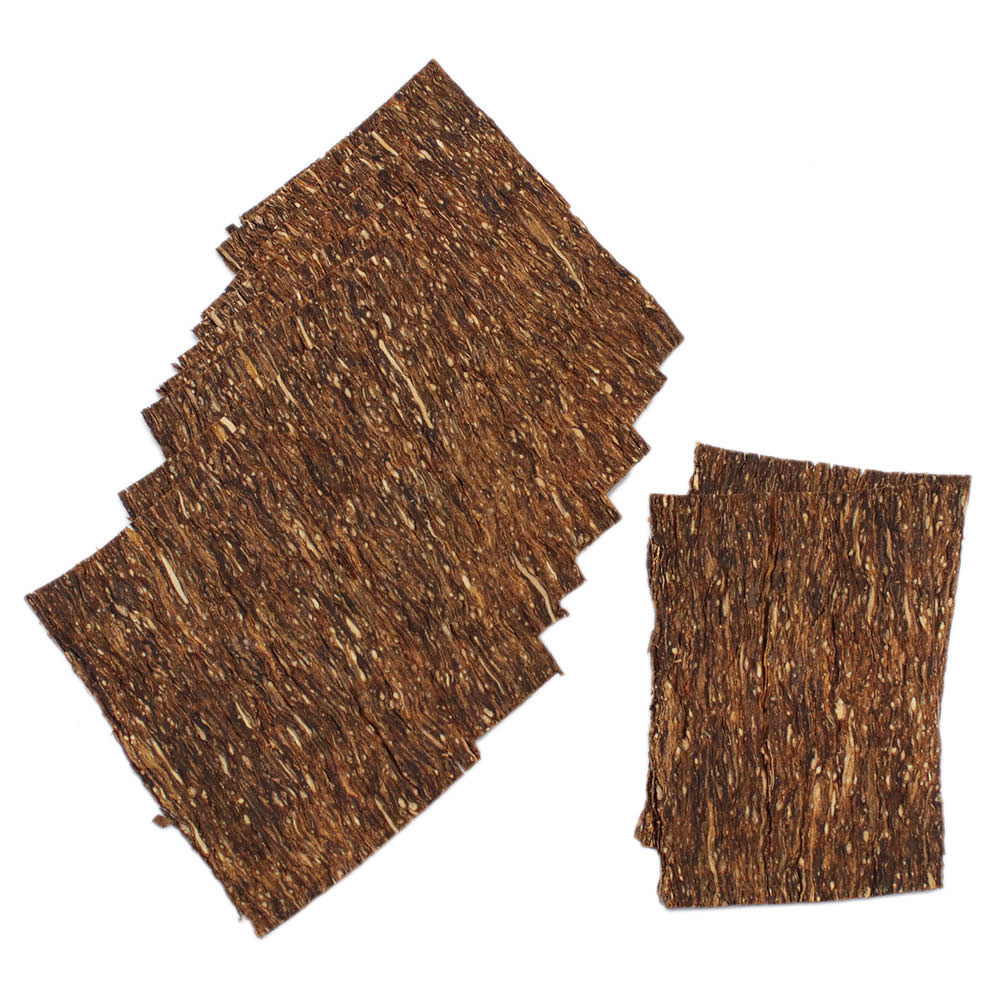
This then leads us to another type of cut, which is flake cut. This cut ties in directly to plug-cut tobacco because flakes are simply slender cuts of a plug-cut tobacco. The manufacturers cut the plug-cut into flakes, which takes some of the preparation off of the pipe smoker themselves when packing a bowl.
Broken Flake
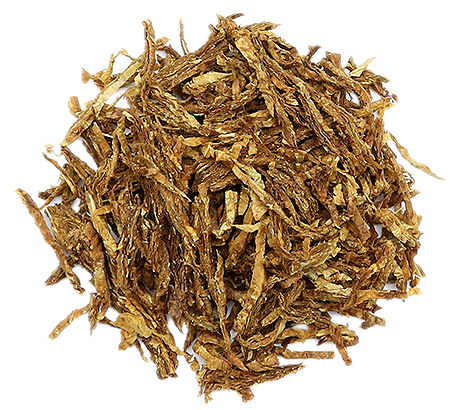
Moving on from flake tobacco, we also have the option of broken flake, and that is just like flake tobacco — it simplifies the preparation process for the smoker, adding efficiency and ease of packing your pipe. The manufacturer has taken flakes, which were taken from plugs, and they've rubbed them out to a more ribbon-like consistency to aid in packing and just making the process a little bit simpler and faster.
Aging Potential
As we're talking about these pressed pipe tobaccos, it's important to note the aging differences between these types of tobacco, and generally speaking, when a tobacco is pressed, the flavor profile changes slightly because of the intense pressure that the tobacco is undergoing. It actually changes the chemical composition of the tobacco itself, which results in a different flavor profile so you might have the exact same components, the exact same ratios between a ribbon-cut tobacco and a plug-cut tobacco, but they're gonna be slightly different in flavor profile, generally speaking.
Also, these pressed tobaccos are gonna have more aging potential. They're gonna offer more nuance, change, and a more dramatic difference between a fresh cut and one that's been aged 5, 10, 15 years down the road. Ribbon-cut tobacco will also age but you're not gonna notice as strong of a difference as you would with pressed tobacco. If you're interested in cellaring tobaccos, and you like seeing how blends change over time, pressed tobaccos are gonna give you the greatest difference between fresh and aged tobacco.
Cake Cut
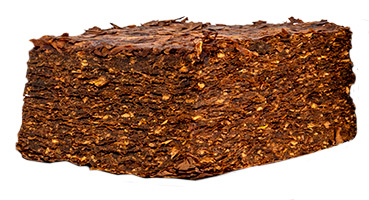
Moving on to cake-cut tobacco. It's similar to a plug in the sense that it's tobacco that's been pressed for an extended period of time. However, unlike a plug, which is whole-leaf tobacco, a cake is ribbon-cut tobacco that is put under pressure. The preparation's a little bit easier.
You can check out our videos on how to prepare different types of cut tobacco, but the biggest difference is that with a cake, you can typically break off pieces with your finger to put them in your pipe, whereas a plug is so dense, you're gonna need a knife or some cutter to take the pieces off.
Rope/Twist/Spun Cut
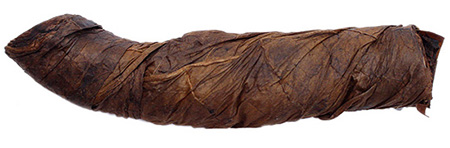
Next up is rope cut, also known as twist or spun tobacco. That's a pretty self-explanatory one as well. It's put under pressure, but instead of being pressed on either side, the tobacco is twisted. Very few factories in the world even have the capability to do that so rope is definitely one of the rarer types of tobacco cuts and it takes some very specialized machinery that you don't see much of today.
Coin Cut
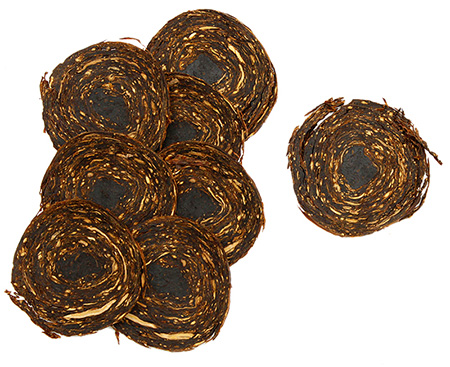
Similar to flake, which is a pre-sliced version of a plug, you have coin-cut tobacco, which is a pre-sliced version of a rope, and it's very similar to flakes. However, they're in circular form as opposed to rectangular form, simply because of the difference between rope and plug.
Cube Cut
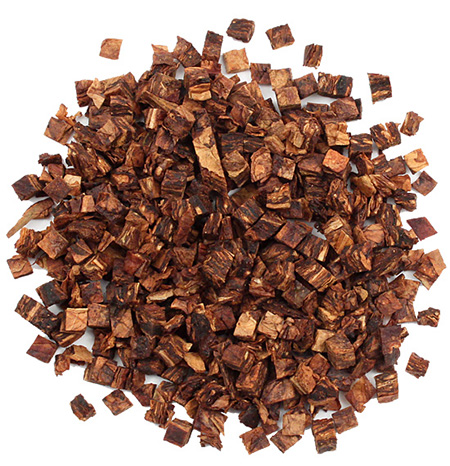
The last cut we're gonna be talking about today is cube cut, and out of this whole selection, you could argue that cube cuts may be your rarest. You don't see a ton of entirely cube-cut blends, although you will see a number of blends that incorporate cube-cut tobaccos into the overall mixture.
It's another offshoot of plug-cut tobacco except instead of being cut into flakes, there's an extra process where they're cutting it again, crosswise into cubes, and that promotes more airflow in the pipe, which can help in the burn rate. It also promotes the aging benefits of pressed tobacco so a lot of manufacturers will sprinkle in a certain ratio of cube-cut tobacco into a ribbon-cut mixture, for example, and it's gonna help the airflow a little bit and add varying flavor profiles.
You also have people who love smoking cube cut on its own. You can buy it in bulk as a single component and it's perfectly fine to smoke on its own, but most often you're gonna see it used as a component.
Thanks for reading this overview. Hopefully you newer pipe smokers out there now have a better idea of what the various tobacco cut options are and how they differ from one another, but also how they're very integrated and related to one another as well. Let us know in the comments if you prefer a certain type of cut to another, what your experiences have been with these different cuts, and what you notice in flavor profiles of different cuts.
You may also enjoy:



Comments
Nice to know especially the part with the aging potential.
Thank´s a lot for the INFO.
Greetings from Bavaria.
The thing I was waiting for, and really wanted to hear - and still do, is: what are the methods folks commonly use to pack their bowls with these various preparations? I've at one time or another enjoyed nearly all of these cuts, and am less apt to simply rub into ribbons for the sake of familiarity. A follow-up here would be welcome - unless of course, the consensus is "rub them into flakes or close to it, you philistine!" Thanks for the video, was a great primer for the uninitiated and a fun watch otherwise.
There are some videos in our Daily Reader and on our YouTube channel that overview how to pack these cuts! I can't promise that every cut is represented, but we've cover a decent amount :)
I was wondering this too and I have seen vintage tobacco shredders used to make ribbon cuts, similar to a coffee grinder, however I couldn’t afford it. I have some flake and plug and I personally don’t like have g to shred myself so wondering what to do lol
Excellent article and video. Thank you.
I still prefer ribbon cut, still Rattray’s Black Mallory and Red Rapparee; Balkan Sobranie and Saesini. C & D Strathspey and Palmetto Balkan; G L Pease Maltese Falcon and most other English. For a change, Steamworks and Atalaya.
Just started smoking pipes
And trying different tobaccos
And yous look good