


 |
|
 |
|


Filmed by Chris Herath and Nicole Weed | Edited by Nicole Weed
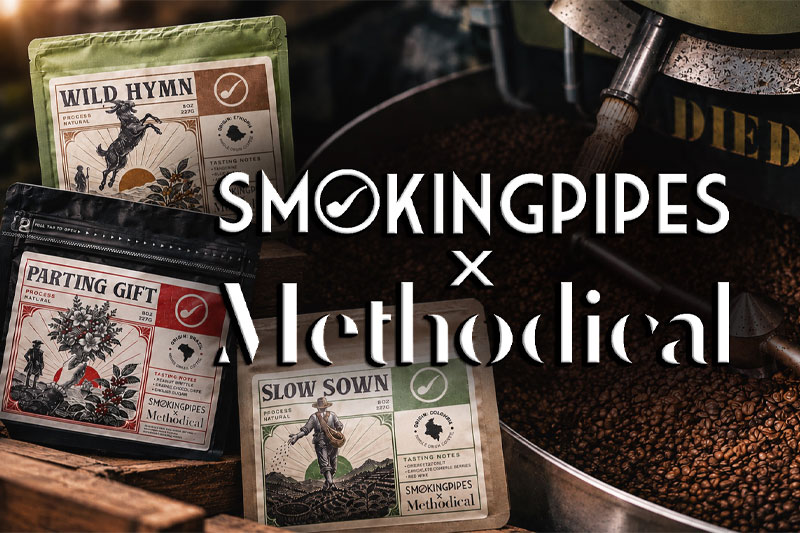
I recently visited Methodical Coffee Roasters in Greenville, South Carolina, to sit down with my good friend, Bo Parker, Director of Roastery Operations, to discuss various coffee varietals and taste a bunch of them with the goal of selecting a handful of coffees that will soon be available at Smokingpipes.
Note: The following transcription has been edited for clarity and brevity.
The Cupping Process
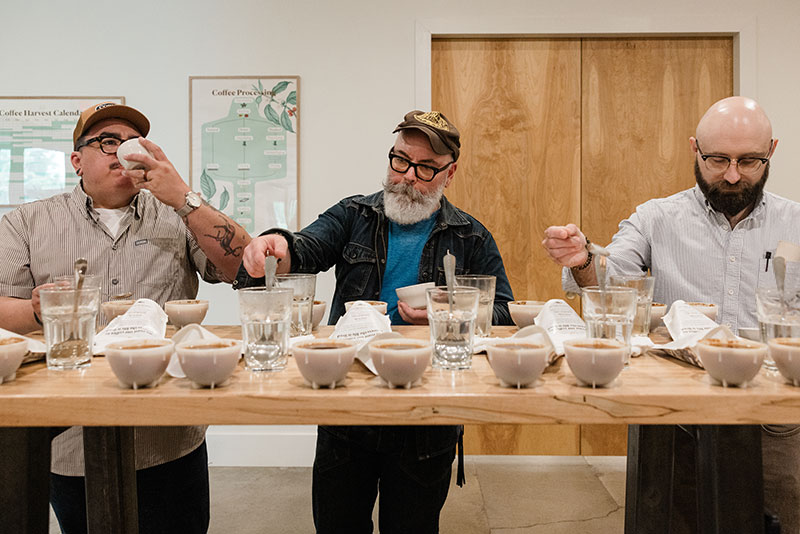
[Shane Ireland]: Tell us a little bit about the process of cupping, and then let's talk about which coffees we picked.
[Bo Parker]: Cupping is the best way to see what a coffee's going to taste like when it's brewed and get a sense of its characteristics. One of the big things you'll hear people talk about is the slurping sound — you want your whole tongue coated in the coffee.
[SI]: Essentially, it's aeration.
[BP]: Absolutely. Cupping is just a great way to say, "I do or don't like this coffee." It's the step where you really get into the nitty-gritty of mouthfeel, sweetness, and aroma. It's very akin to smoking or mixing blends of tobacco to nail down what you do and don't like.
[SI]: And then being able to identify and articulate what those things are that you enjoy or not. I really enjoyed the process — I love tasting things, I love coffee, and I've been a fan of your guys' work for years. It was a cool experience to come here, see the operation, and get our hands dirty picking these coffees. I'm excited to tell everybody what we landed on. Why don't we work bottom-up?
[BP]: It's crazy how this played out. We laid out a bunch of coffee for the whole team.
[SI]: I should mention, we did this blind — no labels, no names.
[BP]: We had everybody go through a couple of passes to see which would be the favorite, then pulled out a whiteboard and tallied up the results. We landed on two we all agreed on, and were on the fence about a third — which is usually how these things go.
Brazil: The Crowd Favorite
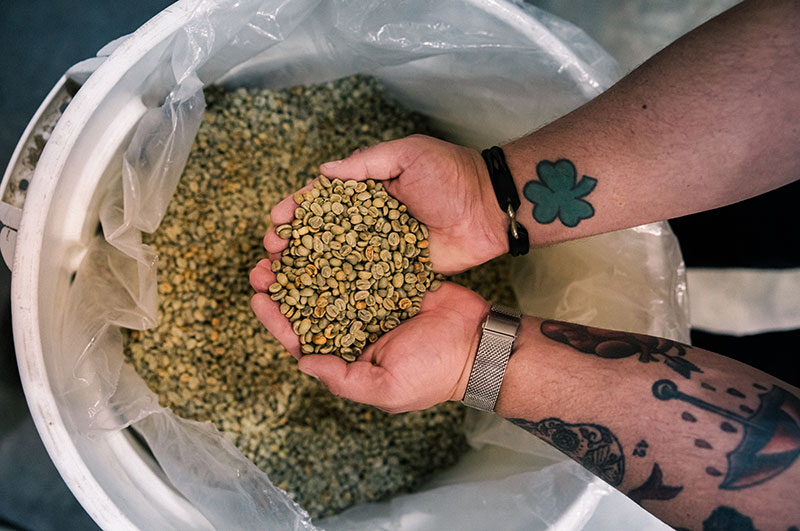
[BP]: The number-one crowd favorite is one of my favorite coffees we carry. It's from Brazil, the largest coffee-producing country in the world. This one's special because we work with our importer, Labiya, and the producer, Capricornio. They care a lot about doing it the right way — clean, efficient, earth-friendly.
[SI]: Sustainable.
[BP]: Exactly — making sure the coffee is harvested right and the farmers are paid fairly, so the region can keep growing as a good import and export for Brazil.
[SI]: What can you tell us about the processing and the cultivar?
[BP]: It's a naturally processed, sun-dried coffee. Instead of using heaters, they pick the cherries, pull out the seeds, and lay them on giant beds in the sun to dry naturally. All those natural juices and the mucilage between the cherry skin and the seed get baked into the bean, which is where a lot of that sweetness and brightness comes from.
Ethiopia: A Second-Wave Throwback
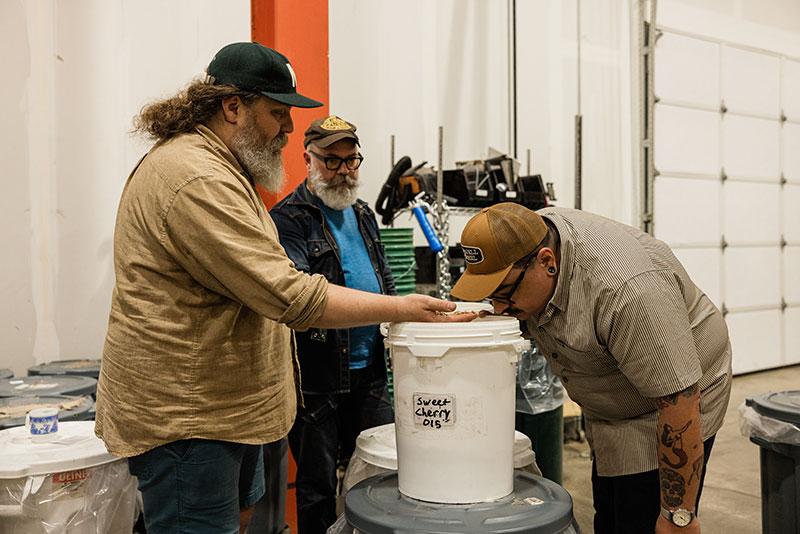
[SI]: The second coffee we landed on by an overwhelming majority takes us to Africa.
[BP]: That's right — Ethiopia, the birthplace of coffee. It's another naturally processed coffee, and one of my favorites I've had in probably the last year. Lots of berry-sweet notes, and robust without being too much.
[SI]: Still brightness, still some acidity. I'll be honest, that's not normally where my tastes lie, but tasting it blind with no preconceptions, I was really impressed. For me, that's an excellent daily driver — late afternoon, with still enough intrigue and complexity to keep me interested.
[BP]: It's a perfect in-between coffee — for the "I just want caffeine, I don't want to think about it" drinker, all the way to the person who loves getting into the science of it. This one fits right in the middle, so most coffee drinkers will love it.
[SI]: Is there anything about the cultivar or variety you can tell us?
[BP]: It's a hearty bean that grows well at the elevation Ethiopia is known for — an heirloom variety that's grown there for over a hundred years, so it has all those classic characteristics. About 10 or 15 years ago, we were all in love with Ethiopian naturals for their big, juicy berry notes, and then that kind of tailed off. It's been a while since we've had an Ethiopian natural that brings that berry note forward this well.
[SI]: It's really true to what defined that second wave of Ethiopian coffee.
[BP]: Absolutely — a really good homage to the Ethiopian coffees of yesteryear.
Colombia: Shane's Personal Favorite
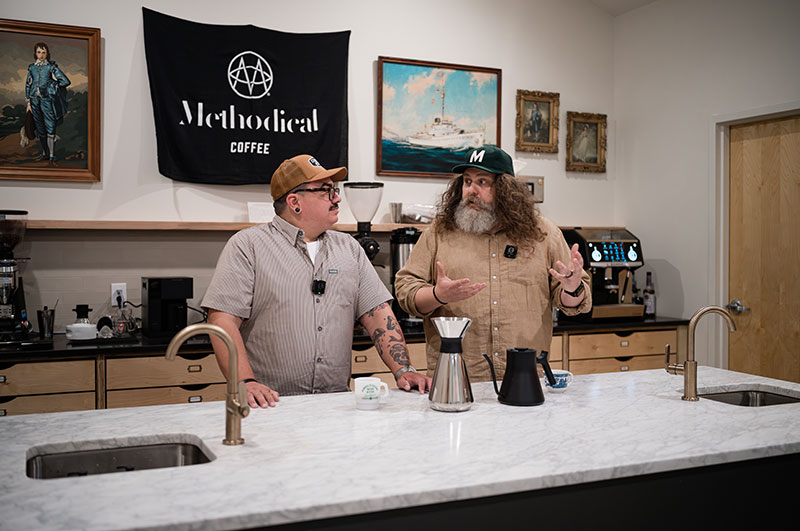
[SI]: Now, my personal favorite. Out of everything you all offer, I find myself, time and again, most in love with your various Colombian varietals. This one got a lot of nominations blind, but I may have given it that final push as my pick. Tell us about it.
[BP]: It's a super fun coffee. I won't give away who produced it, but the farmer is part of Unblended, one of our importers, which has made a big push to support young producers — guys pushing the envelope of what's possible.
A lot of these younger farmers are third-generation, grew up in coffee, but have also gone to university for degrees in bioengineering and bring that back into the family trade. There's some genuinely odd, scientific stuff happening with these coffees beyond my understanding.
Technically, this one is natural, and I love the co-ferments and experimental stuff out there — but this coffee is a great example of how a more traditional process can still get way more out of the cup. It's been through a different kind of natural process, likely pulled and dried at a specific time or in a controlled climate — some behind-the-scenes science is at play.
[SI]: But still very much rooted in heritage and tradition.
[BP]: Absolutely.
[SI]: That's what I love about it — there are still coffees out there that challenge our preconceived notions of what's possible. That's what I look for in cigars, pipe tobacco, whiskey, wine, everything. Finding that in a coffee from my favorite region, Colombia? I was in love almost immediately.
[BP]: When we laid everything out, I'd already earmarked this as the one you'd fall in love with. It's super boozy, but not in an artificial way — just a natural, fermented note. Tons of strawberry juice, a little jammy, dark chocolate, with a rich, viscous mouthfeel — and still a light roast.
[SI]: The body is so full, almost viscous, and juicy. It's so good.
[BP]: The only thing I can compare it to is a big barrel-aged imperial stout with some kind of fruit adjunct. It's a huge coffee, and yet it's still natural, still lightly roasted.
[SI]: Still approachable.
[BP]: And still a Colombian coffee at heart — not run through fifteen random experiments. It hearkens back to a really good heritage.
[SI]: It's pushing the envelope in a very elegant manner — which is nearly an oxymoron. That's almost impossible to pull off, and yet this producer managed it.
Thank you so much, man. This has been a pleasure and an adventure. We're so excited to offer these to our customers, and to have come out here and had a lot of good coffee.
You may also enjoy:



Comments