


 |
|
 |
|


Filmed by Nicole Weed and Chris Herath | Edited by Nicole
Welcome to another roundtable discussion. Today we are joined by our longtime friend, Bo Parker, Director of Roastery Operations at Methodical Coffee, to chat about coffee and tobacco pairings.
Note: The following transcription has been edited for clarity and brevity.
Meet Bo Parker
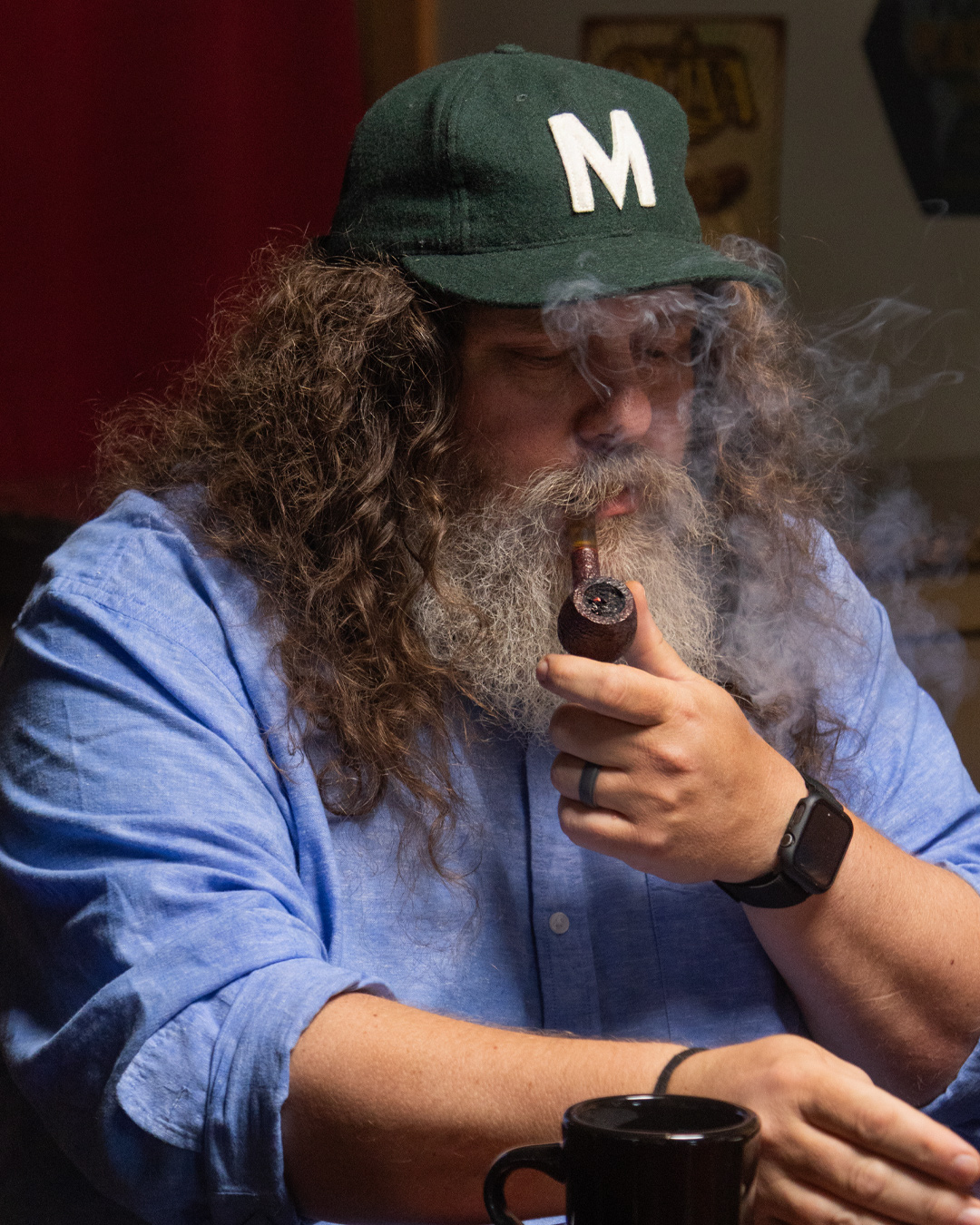
[Shane Ireland]: We are here with Bo Parker. The Bo Parker. Bo is a longtime friend of all of us here at Smokingpipes and a prominent member of the pipe community. You might know him from his Instagram handle, Heretics Pipe Club, or from the Pipe and Tamper Podcast. He is also the Director of Roastery Operations at Methodical Coffee in Travelers Rest, South Carolina.
We all love coffee, and Bo has been kind enough to join us and give us a little bit of a what-for on pairing coffee with pipe tobacco. He's also basically supplied and enabled all of our coffee habits for years now.
[Steve Mawby]: Greatly appreciated. My heart rate thanks you.
[Alan Britt]: One of my favorite moments yesterday was when the Methodical crew toured our facility, and one of our customer service reps Ashley poked her head out and asked, "Are those the coffee guys?"
[Bo Parker]: It's what we're known best for.
[SI]: Yeah, coming from the pipe guys, that's something we hear a lot. But you all make excellent stuff — we drink it in the office, we drink it at home, and we thought it would be fun to sit down with somebody who has real expertise in both pipes and coffee to talk through how people might approach pairing, and to put to rest the idea that there's a right or a wrong way to do it.
There's No Wrong Answer
Whether you're talking about alcohol, coffee, or any other beverage you enjoy with a pipe or cigar, it's a matter of personal taste. There's a reason a pipe and a cup of coffee, or a cigar and a cup of coffee, is such a ubiquitous pairing — you're probably not going to have a bad time no matter what you choose.
[BP]: I think that's totally fair. Good, bad, tasty, best experience — it's all experiential. What you ate that morning, which tobacco you're smoking, even your body's pH plays a role. There are a billion factors, but at the end of the day, if you like it and think it tastes good together, it's a good pairing. There's some science we can get into, some tips and tricks, but if it tastes good, it is good.
[SM]: And half the fun is the experience of experimenting, going outside the box and trying things that might not make sense on paper.
[AB]: Something fun we decided to do today was not focus on one pairing we all like, but each pick something we wanted to smoke and drink together. What'd you go for, Bo?
Bo's Pairing: Red Carpet & Bombe Abore
[BP]: I picked Red Carpet, a very classic, old Cornell & Diehl Va/Per blend — citrus notes and a nice plummy, stewed-fruit thing going on. I've loved this blend for years.
When I'm pairing, I go one of two routes: either look for matching notes between the tobacco and coffee, or go for a contrasting, seesaw effect. Here, the tobacco has a really good dark fruit, so I paired it with Bombe Abore, a natural Ethiopian with a bright, jammy blueberry-and-raspberry note. It's close to the old-school Ethiopians a lot of us coffee nerds fell in love with 25 years ago, when the third-wave movement was just getting started. With this tobacco's orange, hay, and darker fruit, having that brighter fruit alongside it makes for a nice little fruit salad.
Steve's Pairing: Steamworks & Bombe Abore
[SI]: What about you, Steve?
[SM]: I'm also drinking the Bombe Abore, and I'm smoking the 2026 Cornell & Diehl Steamworks. It's an interesting combination, because there's a natural sweetness to Steamworks that the citrusy, jammy coffee really brings out — and it brings out a bit more in the coffee than I'd normally taste, too. It's very complementary in kind of a contradictory way, and it highlights subtler notes on both sides.
[BP]: It's wild how tasting notes work. We're all in the business of helping people understand what they're tasting, not telling them what they should taste. That's why our bags say "we taste," not "you taste." But it is amazing when you read "jam" or "raspberry" on the tobacco and coffee notes separately, taste neither on their own, then put them together and go, "Oh, there it is."
[SM]: This is probably my favorite pipe-tobacco blend of all time, and pairing it with this coffee, I'm tasting things I've never experienced with it before. I've probably smoked as much Steamworks as anybody on the planet.
[AB]: Not to flex.
Alan's Pairing: Guendalose & Andrés Cardona
I went with a bit of a sleeper: Guendalose from the Low Country portfolio. I prefer stout blends with coffee, usually Virginia-based ones. Innsmouth from Cornell & Diehl might be my absolute favorite coffee pairing — Virginia blends with air-cured leaf add a lot of stoutness and richer notes you wouldn't get from a straight Virginia. Guendalose has Virginia, some Virginia Cavendish, Perique, and the addition of Katerini and Nicaraguan cigar leaf, which makes it pretty stout. I'm pairing it with Andrés Cardona, maybe my favorite Methodical coffee.
[SI]: It's unequivocally my favorite, too.
[AB]: Andrés Cardona has this super unique boozy quality. It's a natural-processed coffee, like Bombe Abore, but there's clearly some special process behind it.
[BP]: Andrés is one of the young producers we work with in Colombia through our importer, Unblended. They run a young-producers program that helps the next generation of growers. A lot of these guys go get degrees in biochemical engineering and then bring that back to their family farms. Andrés has some trade secrets none of us fully know. It's a natural process, possibly an anaerobic one, with variations in fermentation time and how oxygen and CO2 are managed.
In the broader coffee world right now, you've got co-ferments, thermal shocks, and triple anaerobic processes where the husk is fermented separately into a concentrate and poured back into the beans to ferment again. Andrés's coffee is wild — your first sip, you think, "That's weird." By the second sip, it's like a chocolate-covered strawberry imperial stout that's been barrel-aged.
[AB]: Like a barrel-aged barley wine, that boozy, super dark fruit character that's not just on the nose but on the palate, too. That pairs extremely well with a bold cigar leaf like Kasturi or Katerini.
Shane's Pairing: Aged Virginia & Andrés Cardona
[SI]: I'm also drinking the Andrés Cardona. No matter how I brew it — batch brew, pour-over, whatever — it always gives me the same emotional response, and I find that comforting. I lean toward fermented flavors: aged tea, cheese, wine, tobacco. I love the darker, muskier, heavier end of the spectrum, and as a fan of Perique, this coffee scratches that itch.
I went a little different from these guys on tobacco, because I wanted something typical for me on an average day: a 15-year-old straight dark Virginia, Astley's No. 44. Pairing it with this coffee almost turns it into a Virginia Perique. It gives me that extra bit of dark fruit and funk, and elevates the sweetness in a tobacco I wouldn't normally call sweet, even with all that age. There's more of a malty character and a tangy note on the finish that I also pick up in the coffee.
It's funny how much of this translates across coffee, wine, and tobacco — the parts of the flavor spectrum tied to barrel quality: vanilla, chocolate, woodiness, charred oak. The boozy quality inherent in the Andrés Cardona, paired with a Virginia that has age and fermentation of its own, amplifies similar characteristics in both. The coffee brings out an almost Perique-like note in a straight Virginia. These are complementary flavors, elevating the main characteristics of both.
I find it comforting, though some people might find it more on the complex or challenging side. If you like that fermented character, age some Virginias, be patient, and drink some well-processed natural Colombian coffee alongside it.
[SM]: Spend 15 years just drinking the coffee, and when the Virginia's ready, pair it and see how it changes.
[BP]: In 2041, give us a call.
From Third Wave to a New Fourth Wave
[SM]: Bo, you mentioned the third wave of coffee and alluded to an emerging fourth wave. For those of us who don't know, can you give a quick rundown, and maybe how Methodical fits into it?
[BP]: Coffee's popularity in America grew as people figured out what it was. Then, probably in the late '70s or early '80s, there was the second wave — people building brick-and-mortar shops for the purpose of coffee itself, not just to serve alongside a bagel. That's where Starbucks came from, and honestly, a lot of us in coffee today have jobs because of that mindset, not unlike making cigars a thing and opening a shop built around them. That was coffee for about 30 years: get beans, roast them dark and smoky, and make milk drinks and espresso out of them.
Then came a shift — roasting lighter, focusing on farms and sourcing, supporting farmers with living wages, and knowing that taking care of people across the supply chain yields a better product, even if smaller in scale. That's where the third wave came from: equal parts high-quality product and taking care of people across the whole chain.
Methodical is 11 years old now. Will, one of our three founders, was right there on that front line, and Mark and David came in alongside him. We're a specialty coffee roaster, meaning any beans we put out have to score 80 or higher on the standard 100-point coffee scale. Not everyone in the industry is doing it right among farmers, producers, and roasters, so we care a lot about working with the right people. We buy a couple of farmers' entire lots outright; our green coffee buyer, Austin, goes to Colombia once or twice a year to build those relationships directly.
When I say "fourth wave," I mean the explosion of experimentation and science happening in coffee right now. Not necessarily better or worse than specialty coffee, just different, with a lot more avenues. The co-ferment world is wild — throwing pounds of strawberries into the fermentation so the beans soak it up. It's this next phase of experimentation and growth, and it's being done well.
[SI]: There's clearly a market for it. People are interested in trying new things and having their expectations blown up by what's possible from a roasted coffee bean.
[BP]: Every year we do a summer blend, Feels Like Summer, and introduce a new co-ferment — coconut lemonade, watermelon, and this year, peach. If I have my way, it'll be peach forever. We grow peaches in South Carolina, so it makes sense.
[AB]: If you're the kind of pipe smoker who dives into blends and components and actually cares about what you're smoking, you're probably somebody who cares about what you're drinking, too, starting with that first cup in the morning.
Parallels Between Coffee and Tobacco Processing
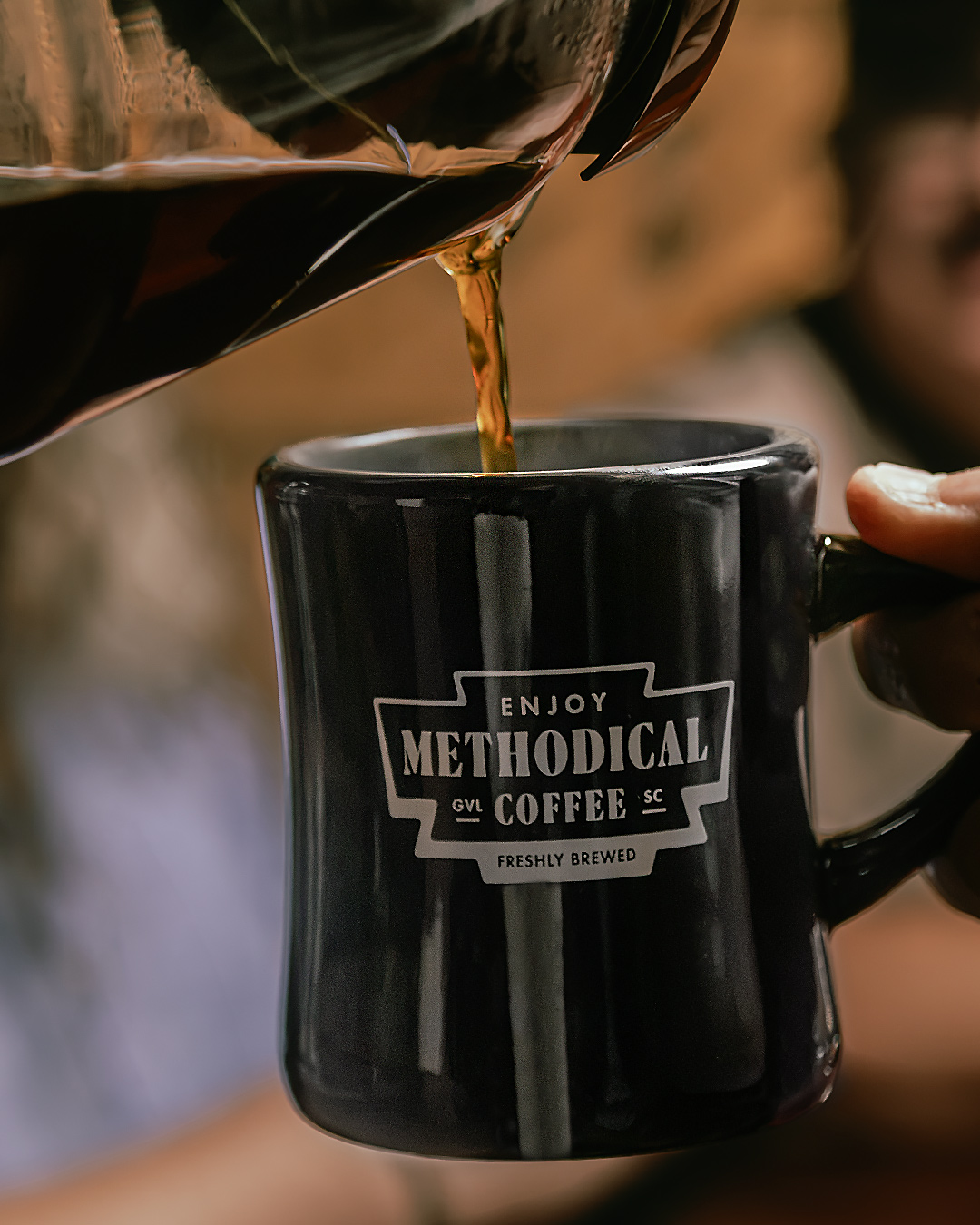
[SM]: We had the pleasure of touring your facility recently, and there's stuff where, when you tell us what it is, we think, "Why would you put that in coffee?" Then we smell it and go, "Oh, that's why."
[SI]: It's how analogous the processing is. Coffee and tobacco are both natural materials. You can cook them, apply heat and pressure, co-ferment, age them, and run anaerobic fermentation. There are so many parallels between what you all do and how, say, Jeremy processes his tobaccos. We're all tasting and enjoying these things with the same intentionality and curiosity, which is probably why they go so well together, from both an experience and a flavor standpoint.
[BP]: It's wild. When you all came to our warehouse and started digging into the green coffee beans, smelling and tasting everything, it was energizing for me, since I'm there every day and don't always notice it anymore. Then when we came to your place, the script flipped and we started nerding out over tobacco.
So many of the processes and pieces overlap that the products just work well together. Jeremy and his team's intentionality about getting the right materials from the right people, and celebrating the tobacco itself, is a big part of why I love those guys — and why I think our coffee pairs so well with it. We don't want to add anything that doesn't celebrate the coffee, or roast it in a way that doesn't celebrate the farm or the terroir it came from.
I think of coffee choices and tobacco choices similarly. If you are an Aromatic smoker, that is great. Go find a coffee that works well with that, or add milk and sugar. If you like dark, smoky flavors, you're probably going to like English blends, too. It's all valid, just personal preference.
I don't drink a lot of dark roast myself, but some of it works for me. If you are at a Waffle House with syrup-on-pancakes, sometimes you don't want a boozy, fruity, strawberry coffee. You want that classic dark roast that tastes like the bottom of the bowl.
[SM]: So much of it comes down to experience: what you ate that day, what mood you're in, and what you're craving.
The Science — and Magic — Behind a Good Pairing
[SI]: You mentioned there's some science behind pairing. Lay it on us.
[BP]: One of the biggest pieces is dirt, just like tobacco. Coffee only grows in certain conditions: the right elevation and the right rain shadow, similar to growing grapes for wine.
One of our farmers, Walter Bautista in Honduras, makes fantastic coffee with a really unique character. This past year, we asked him to try a natural process, but it rained every day in Honduras for something like 100 days, which makes sun-drying beans nearly impossible. That's the kind of factor, beyond dirt, elevation, and rainfall, that shapes what ends up in the cup.
On our end, we're way downstream from all of that, but we cup the coffee, tasting it in small amounts, similar to how a tobacco blender rolls up a single component into a quick cigarette to taste it on its own. Y'all got to do that when you visited. It involved a lot of slurping, which sounds disgusting at first, but that aeration really opens up the palate.
From there, we go through roast development, dialing in temperature, timing, and development percentage after first crack, the point where the bean audibly pops during roasting, to chase specific flavor notes. There is real science behind why pairings work, too. A Guatemalan coffee and a Guatemalan cigar leaf often go well together because they share a place of origin, similar to how a Philly cheesesteak just doesn't taste the same outside Philly.
When I say "science," I mean it is almost synonymous with magic or mystery to me. I don't know all of it, and honestly, I don't want to know all of it. I don't want to take Mickey Mouse's head off at Disney World and find out who is underneath. I'd rather suspend disbelief.
Advice for Pairing Coffee and Pipe Tobacco
[SI]: Before we sign off, any advice for someone approaching a coffee-and-pipe pairing for the first time? Is it as simple as lighting up and drinking?
[BP]: There are a couple of ways to approach the tasting side. You can go old-school: if a coffee's notes say blueberry, milk chocolate, and citrus, actually eat a few blueberries, then sip the coffee and see if that mutes or brings out the flavor. Or you can just smoke the pipe and drink the coffee separately, then bring them together — I don't think it matters which you do first; that's personal preference.
As for preparation, that's where it gets complicated. I'm a fold-and-stuff guy with flake tobacco; I'll relight it 500 times and love what I get. But I'll also rub the same flake out completely, or do something in between, just to compare. It's the same with coffee: grind size, water temperature, and brew time, all of it changes the result. First things first: there's no wrong way to make coffee. If you have a basic drip machine and pre-ground coffee and you enjoy it, that is beautiful.
You can also go all the way down the rabbit hole. I have eight different manual drippers on my home coffee bar, at this point. Water temperature matters a lot — I've been brewing at 188 degrees lately, which is quite low, and it yields light body and bright flavors. It depends entirely on what you're going for.
[AB]: I've recently gotten into water minerality, making my own water.
[BP]: There's no wrong answers, but there are more-right answers. Decaf is a good example of that shift. For years, the mindset was that decaf coffee was inherently lesser. We actually collaborated with James Hoffmann on his decaf project, searching for the best decaf on the planet. There are three different decaffeination processes, and to write off decaf entirely — similar to Latakia in tobacco, for that matter — is a pretty closed mindset.
You have to be open to failing. If you're going down the path of coffee or pipe tobacco, you need to be fine with eight bad bowls and six bad pots of coffee before the next one is right.
[SI]: That brings me to one last piece of advice, from my own experience: you never really know what you think of a tobacco after one bowl. Some blends are polarizing, sure, but with something like Red Carpet, you don't really know how you feel about it until you've smoked through half the tin, across different pipes and different days.
The same goes for pairings — if you are experimenting with one, try it a few days in a row with the same pipe, if you can. You will still have a different experience each time, but don't get discouraged and write something off too quickly without giving it a fair shake. Your mood, your day, and how you are packing the pipe or preparing the coffee, all of that changes the experience, even with the exact same tobacco and coffee. I think your initial impression can be misleading, in both directions, and the only real disservice is giving up on something too soon.
[BP]: You have to dial in whatever you are going to enjoy. You did not grill a perfect steak the first time you tried, either.
[AB]: And honestly, even a not-great cup of coffee is still pretty good. A decent cup is still better than no coffee at all — same as even bad pizza still being pretty good. At the end of the day, if you like what you're pairing, that's what matters.
[SI]: Absolutely. Bo, thank you so much for joining us.
[BP]: Of course. Thank y'all for having me.
[SI]: And thanks for the great coffee. This was a really enlightening conversation.
You may also enjoy:


Comments
Great discussion. I have been roasting coffee for 24 years at home and started drinking coffee with a good smoke. I am not familiar with the coffees mentioned in this discussion, however as far as coffee beans I have enjoyed Ecuador La Papaya Rum Barrel Natural, El Salvador Finca Kilimanjaro, various Geisha varieties and Yirgacheffe with my smokes.