EN
EN
 JA
JA ZH
ZH





 All New Pipes




















Ask a question about this product.
Measurements & Other Details
- Length: 5.83 in./148.08 mm.
- Weight: 1.30 oz./36.85 g.
- Bowl Height: 1.88 in./47.75 mm.
- Chamber Depth: 1.57 in./39.88 mm.
- Chamber Diameter: 0.74 in./18.80 mm.
- Outside Diameter: 1.54 in./39.12 mm.
- Stem Material: Vulcanite
- Filter: None
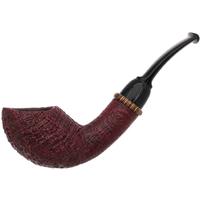
- Shape: Bent Egg
- Finish: Sandblast
- Material: Briar
- Country: Italy
About This Pipe
In 2014, Angelo Del Prete took over a tobacco shop. However, the shop was lacking in high-quality pipes, so Del Prete decided to fix that problem himself and began his career as a pipe maker. Looking to expand his skillset, Del Prete visited and learned from two of Italy's most talented pipe makers, Max Rimensi of Il Duca and Davide Iafisco. Today, Del Prete has cultivated his own style, one with Italian roots but also inspired by Danish aesthetics. Del Prete prioritizes compositional harmony and deft engineering, which are represented by the Il Cerchio name, which means "the circle" and represents balance — from traditional shapes to inventive Freehands, these aesthetic pillars define every Il Cerchio pipe.
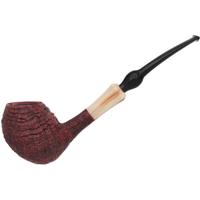
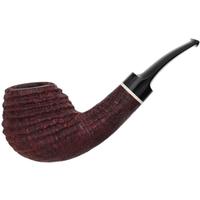
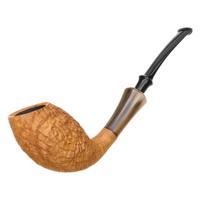
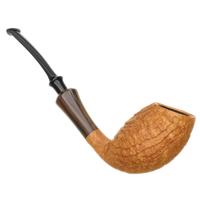
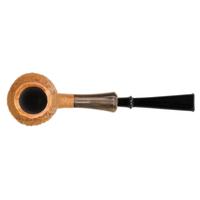
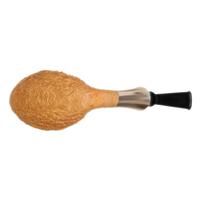
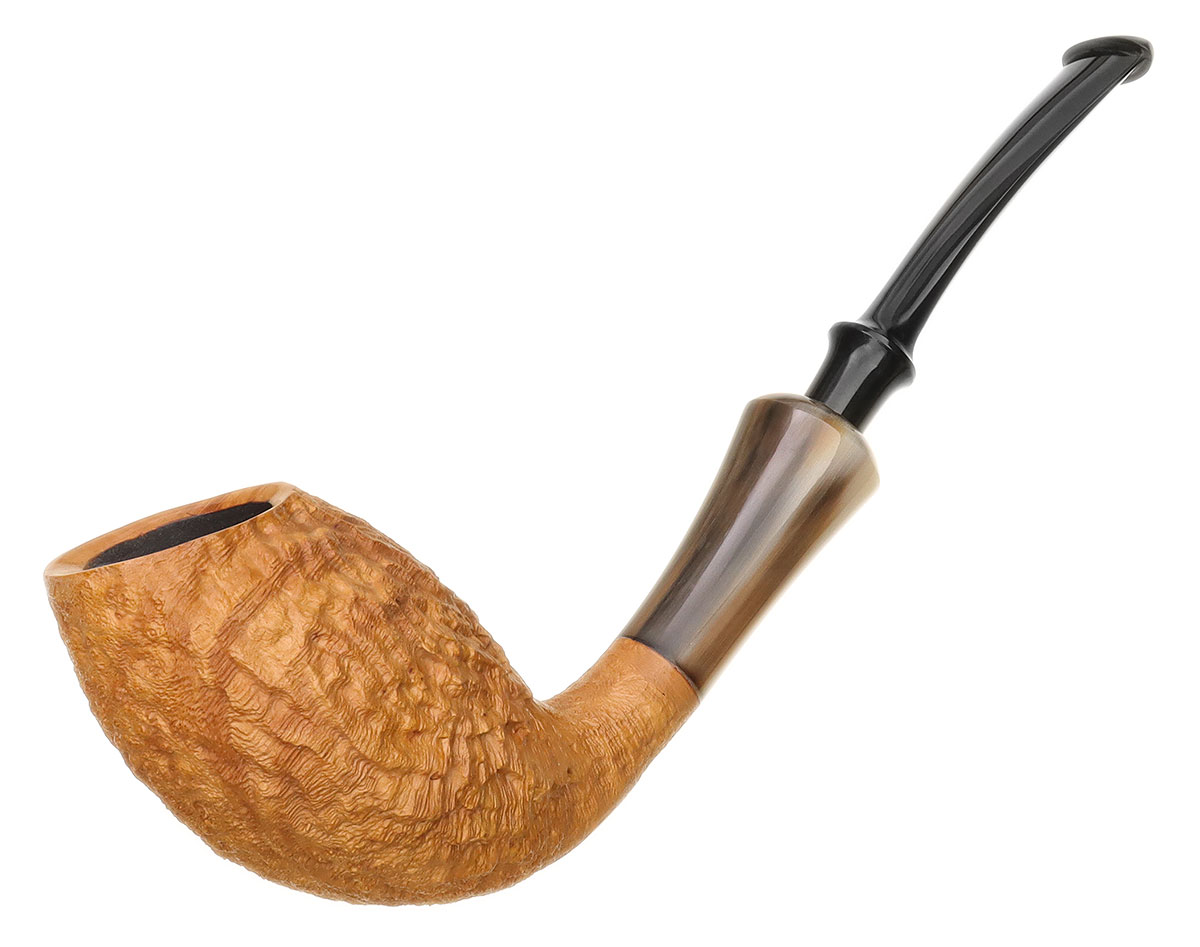
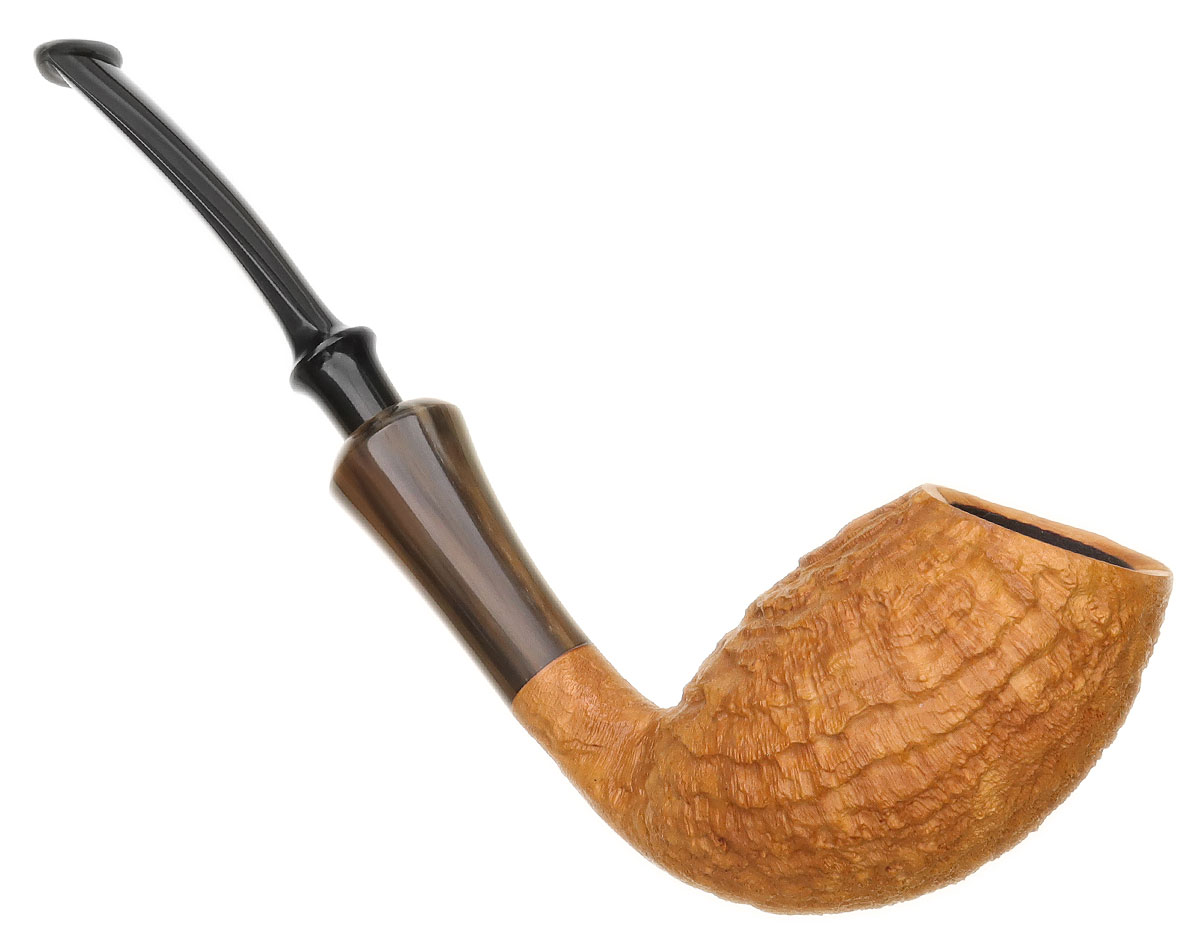
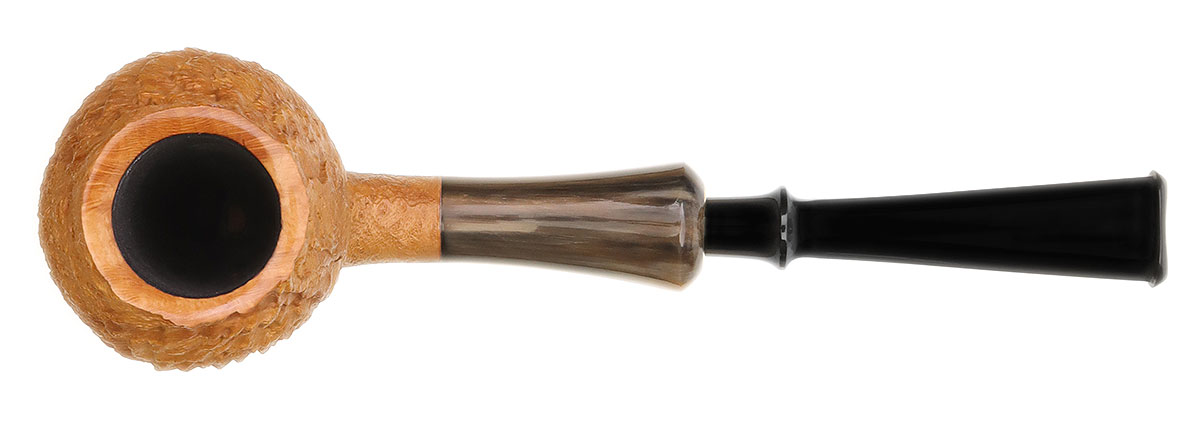
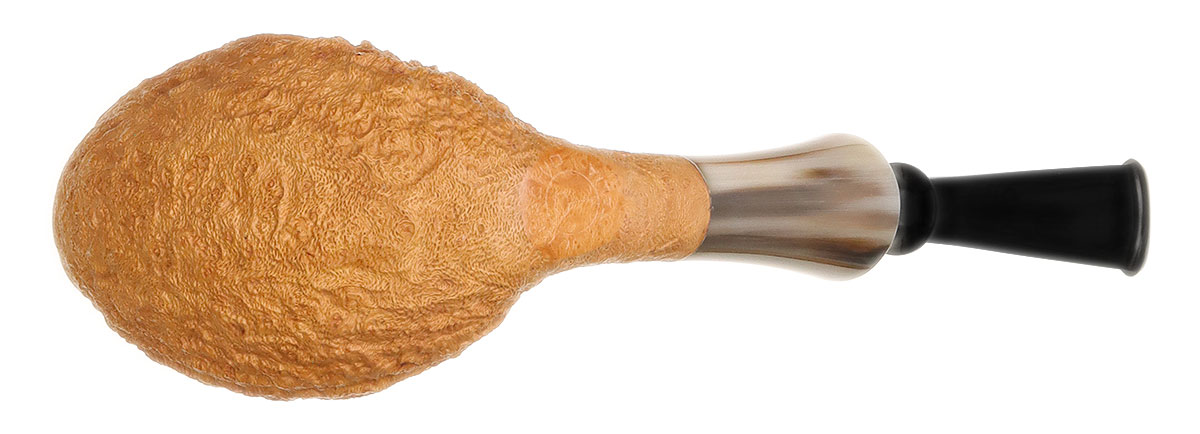
This bent Egg by Il Cerchio features a slender, forward-ebbing bowl, its walls bulging at its flanks before tapering to the crisp rim. Furthermore, the dynamic stance of the bowl superbly frames the exquisite grain pattern. Growth rings radiate from a core of birdseye positioned just below the rim on the bowl's aft, and they form an astonishingly craggy, organic texture as they expand to the flanks. In contrast, the fore of the bowl displays a rugged swath of birdseye pockmarks, which fosters tactile diversity. Out back, a lightweight shank-and-stem arrangement showcases some subtle sinuousness, which is accentuated by the flared contours of the horn ferrule. Additionally, the creamy striations of the horn complement the virgin stain that dresses the stummel, which ensures this piece will develop a fine patina after many bowls.
--Zach Podl