


 |
|
 |
|


Smoke Rings: An Interview with James Brown, Owner of Oveja Negra


Welcome back to another episode of Smoke Rings, everyone. Today, I'm joined by a very special guest: owner of Fábrica Oveja Negra and founder of Black Label Trading Company and BLK WKS Studio cigars, Mr. James Brown. Tune in as James and I discuss Black Label Trading Company's beginnings, dive deep into the creative process of cigar blending, and take a quick look at some exciting projects on the horizon.
Note: The following transcription has been edited for clarity and brevity.
[Shane Ireland]: James, welcome. Thank you for joining us. And tell us real quick which brands you manufacture, blend, envision and create.
[James Brown]: So I guess, first and foremost, I'm the owner of Fábrica Oveja Negra, which is our cigar factory in Nicaragua. In the factory we produce our two core brands — Black Label Trading Company and BLK WKS Studio — and we also manufacture Emilio cigars and Dissident cigars as well.
[SI]: Fantastic. So for those who may not be familiar, can you tell us a little bit about how you got started in this business? What was different about your journey compared to the white label cigar kind of market?
[JB]: Yeah, it definitely is a different story. So, you know, most people in cigars come from cigars in some way, but my wife and I actually were running a travel company in Central America at the time. We had lived out of the country for a long time, and I was spending a lot of time in Nicaragua. Of course, being a cigar smoker, I loved being there; I loved watching and observing the manufacturing.
[SI]: Cigars are such a big part of the culture. Absolutely.
[JB]: Yeah, absolutely. But I was very surprised when I was in Nicaragua. And what surprised me was the tobacco that I was smoking there and how different it was to the Nicaraguans cigars I was finding in the market. So I really fell in love with that intense, gritty, raw, strong Nicaraguan tobacco. And I felt like what I was seeing in the market at that time, when I would come to the States, was...
[SI]: More mild, a little more mass market?
[JB]: Right. You know, every time I picked up a new cigar to try, I felt like I had already smoked that cigar a couple of times before. So I spent years learning as much as I could about tobacco, about blending cigars, about manufacturing, and there came a point when my wife and I thought, you know what, let's give this a real try. So I spent a couple of years playing with blending, and I started making cigars for our travel company, because a lot of our customers were cigar smokers and were very into coming to Nicaragua and seeing the process. People fell in love with them; they wanted to know how they could buy them once their trip was over and they were back home. And so that kind of planted the seed, the idea of possibly starting a brand. And then 10 years ago, we decided to start with Black Label and everything kind of grew from there.
[SI]: Now, with Black Label, were you guys manufacturing the cigars yourself as well?
[JB]: At the time, no, we were not. Our cigars were being manufactured at another factory, very much like many people's businesses. But we learned early on that, if we wanted to do things exactly how we wanted them, if we wanted to experiment the way we wanted to, if we wanted to completely have our name on this product, then we needed to own every step of the process. So a couple of years in, we decided to go full on and open our own factory. So we opened Fábrica Oveja Negra.
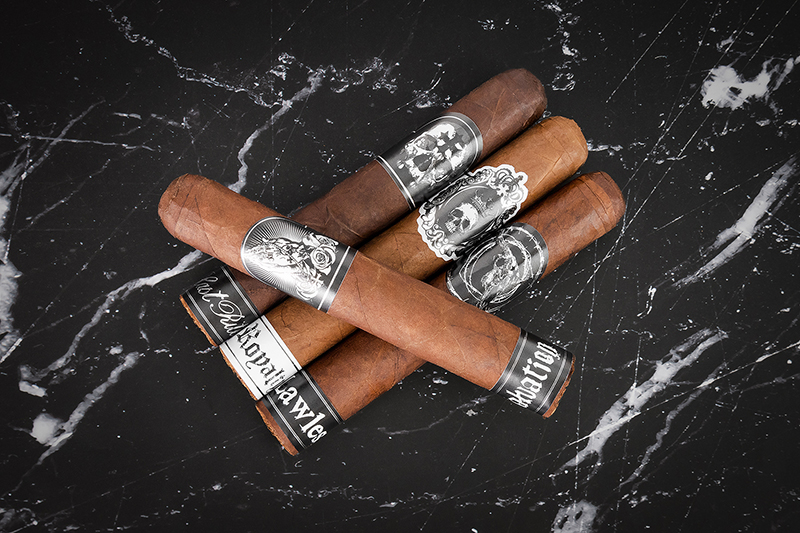
Last Rites, Lawless, Royalty, and Salvation Cigars by Black Label Trading Company
[SI]: Nice, nice. And the factory, is it still in the same location and everything?
[JB]: So it's at a different location. When we started with Black Label, we had no idea how big it could be, so we started extremely small. We had only two pairs in a very small location. We got very excited when our shipments were, you know, seven or eight thousand cigars. We wanted things to grow organically and really have it be about the cigars. And even though I didn't know anyone in the industry, I became like a vacuum cleaner salesman, man, just knocking on doors and trying to get them to try my cigar. Thankfully, people tried it and we developed this really cool cult following online through a lot of different social media outlets. And Black Label has just continued to grow from there.
[SI]: That's really cool. Yeah. So real quick, just for context, the pairs — a buncher and a roller — these are teams of people producing cigars completely. And in those days, how many cigars approximately were pairs producing per day?
[JB]: You know, it depends on the factory. For our teams, we keep them pretty limited. So on a standard Robusto, we like to keep our guys around 300-350 cigars a day. But at a big mass-production factory, you're probably looking at closer to 600-700 cigars per day, depending.
[SI]: And how many pairs are working at Oveja Negra now?
[JB]: Right now we're about 14-16 teams depending on the time of year. We're in the new facility that we've been in for almost six years now. And yeah, from where we started to now, we've probably quadrupled in size as far as the factory goes.
[SI]: That's awesome. So apart from just growth — apart from the new facility and more pairs of rollers or bunchers, what else has changed about production or about blending over the years? Maybe the materials you're sourcing or where you're getting them from. What else has grown or changed as the company has grown?
[JB]: You know, we built our brand on Black Label, right? That's what we started with. And in 2015 when we opened our factory, we developed a new brand, BLK WKS Studio, because I really wanted to do something that highlighted the artisanal qualities of cigar making. Within BLK WKS Studio, we have cigars like the Killer Bee, the Green Hornet, the Tiger Series, all of these cigars that have this kind of artistic twist to them, you know? And so I think the cool thing with the growth that we've had is that it's allowed us to really experiment and do the types of things that we want to do.
And for us, a cigar doesn't necessarily have to be something that checks several boxes for retail or mass production or any of those things. So we kind of have the freedom to put out what we want. Even if it's a cigar that we sell only in Nicaragua at the factory, if it's something we want to do, we do it. So I think the brand has developed in a lot of interesting ways in that regard. And then also, like I said, we started out with this idea of showcasing the bold, intense aspects of Nicaraguan tobacco. And now that we've kind of got people interested in what we're doing, we can step back and put out some unique medium-bodied stuff and really diversify the portfolio, and hopefully reach a lot more people.
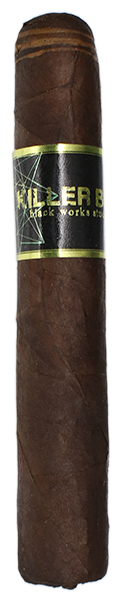
BLK WKS Studio Killer Bee Petite Corona
[SI]: Yeah, for sure. There are two things about what you guys have always done that I find really interesting as a consumer. One is the seasonal releases. I think that's just such a cool model in that it's not just like one limited-edition a year or whatever. Instead, you have these sorts of rolling seasonal releases. So how much of that going forward will be revisiting previous releases and how much of it will be brand new stuff that we've never seen before?
[JB]: You know, we always keep it as a mix, so every year it's a little bit different. Most of our limits are going to be annual, like you said. If we put out a cigar that everybody falls in love with, I don't want it to be something that doesn't come back. That just doesn't make any sense. But it is a tough balance, because the market does dictate that people want new products. And you have to keep it fresh and interesting. So every year is a tough balance of deciding what we're going to bring back and which new blends we're going to put out. Of course, certain things will occasionally have to take a break for a year or two, which actually works out well because then people are excited when they come back.
[SI]: Interesting. Alright, so this is maybe a little bit more of a business question, but I've always found it interesting as a consumer that, particularly for brands that have been around for quite some time, one blend will often have 10 different sizes, 10 different vitolas. But with Oveja Negra, it seems like you guys have always limited things to either one size or two, and the sizes vary quite a bit between all the blends. Is that intentional, you know, just to rationalize SKUs in your portfolio and keep it lean? When do you stop adding new sizes?
[JB]: So it's really just kind of a preference. When it comes to sizes, I always want to focus on what I feel like the cigar smokes best in. So for any blend that you come up with, adding a new vitola is almost like blending a new cigar, right? You try to keep it in the same wheelhouse, but it is going to be different. There's no changing that. But to me, it's just that I feel like particular blends smoke better in certain sizes, and so we just want to represent what we feel like is the best representation of that blend. We also want to put out some interesting sizes that maybe people haven't thought about before; I mean, for example, I love a Lonsdale. So I think it's cool to kind of show somebody something; maybe they don't know what a Corona Gorda is or a Corona Larga or something like that. So we also try to introduce people to really unique, good sizes that we feel represent the blends well. So it's kind of a mix of both.
[SI]: So what does that look like as a blender when creating a new size? Are you starting with the idea to make a Lancero? Do you just know that you want to use this specific material? Maybe there's a hole in the portfolio where there's a demand for a certain size or flavor profile? Where do you begin with something like that?
[JB]: So, for me, when it comes to developing a new cigar, the exact vitola is always the last thing. First I have to have an idea of exactly what I want that cigar to be. Typically, when I have an idea, I can visualize in my head the road I want to go down. At that point as well, I'll have a very good idea of which tobaccos are going to get me there. But when I start developing a blend, I like to do a 4.5" or 5" by 46 ring gauge, because I feel that's most likely to be the best representation of the filler-to-wrapper-to-binder ratio, and the truest representation of the blend.
From that point, once I get the blend exactly where I want it, then it's a question of where do we go from here? Would this be something killer in a Lancero or should we go Robusto with it, or whatever the case may be. So it just depends on the cigar, and the blend just lends itself to whatever size we ultimately decide on.
[SI]: That totally makes sense. So when it comes to the blend concept itself, what does that development process look like? Is it something where you're looking for something that has a Cameroon vibe to it? Or is there a specific material that you want to highlight, whether it's filler or wrapper? Where does that inspiration usually come from?
[JB]: Sometimes I'll have a very clear idea for a cigar, something where it's really clear exactly what we want to do. Other times, we'll get a particular tobacco — even a filler tobacco — where the crop is just exceptional. Then the idea comes from highlighting that specific tobacco and building a cigar around that. It could be access to a particular wrapper that is of exceptional quality this time around. It all just depends. But, usually, my thought process is to let the tobacco speak for itself: Every cigar we put out lends itself to and highlights the specific tobaccos used.
[SI]: So another thing that's given Black Label and BLK WKS Studio a lot of attention is the artwork — the packaging, the boxes, the banding, it's all super awesome. And you're handling all of that stuff yourself, right?
[JB]: Yes, I do all the artwork.
[SI]: So how does that process work? Do you develop the cigar first, then start on the artwork and naming? Or has it ever been in reverse order?
[JB]: It goes both ways. So, to me, artwork is one of the most important things on a cigar, you know? Good, bad or indifferent, it matters. We're in competition with a lot of people in a very small space in a humidor, and you really want people to be brought into the product — and a lot of times that happens visually. But I also think that every cigar kind of has its own story, and I want the artwork to kind of tell that story.
So sometimes that happens: The cigar comes first and I'll ask myself, what does this say to me? What's the attitude here? And the artwork comes from that. Sometimes I'll have an idea for the artwork and then I'll go build a cigar that showcases what the artwork represents so that it all is cohesive and makes sense. So it goes both ways.
[SI]: That's cool. I have two more questions. And if I were in your position, these are the kinds of questions I would hate to answer, but I'll ask them anyway. Is there a particular line or a particular piece of artwork, in either of the brands, that you're most proud of or you think turned out the best?
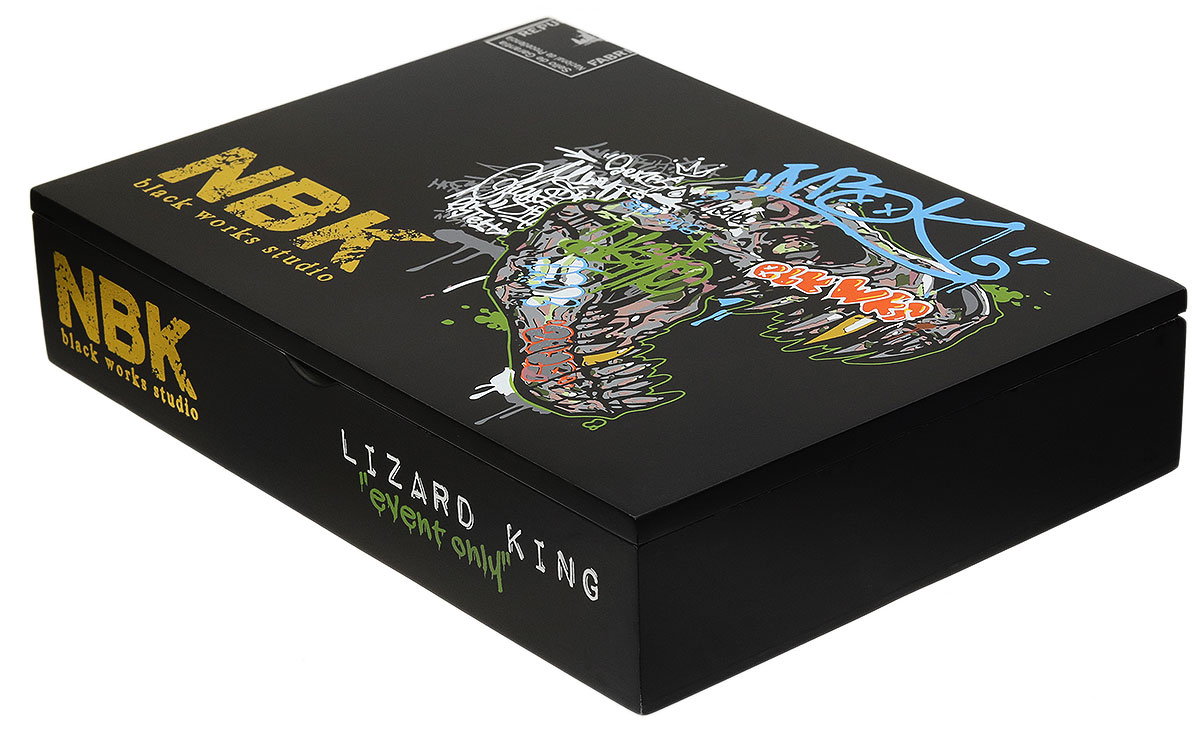
BLK WKS Studio NBK Lizard King
[JB]: There's definitely some that I like. I love the whole graffiti style we did with BLK WKS. Probably the Lizard King is my favorite. And that's just because it kind of takes me back to my youth. You know, I was actually a graffiti artist in my teenage years, and so bringing that feel to the cigar line is not only a snapshot of myself, but I think it's really unique.
And I want Black Label to be that: I want it to be something young and different and interesting. And so I'm definitely proud of how that artwork has turned out. And I think what I'm most proud of, across both Black Label and BLK WKS, is that we were very adamant when we developed them that they weren't just going to be cigar lines. We wanted to develop something that felt like a lifestyle brand. And I want people to look at the artwork, to smoke the cigars, and to just want to be a part of it.
And I think that we've accomplished that, and it's something that I'm really proud of: The art, the cigars, they evoke a feeling with people. They are drawn to it and they understand it. And, for me, doing both of those things is the coolest part of it.
[SI]: Very cool. So obviously everything in your portfolio is blended to your taste, but is there a single blend or a single vitola that would be your desert island smoke? Like what would you smoke more than anything else that you've created?
[JB]: Probably the original Killer Bee. I mean, I love the Petite Corona size, and it's a cigar that still to this day, I find myself smoking multiple times everyday. I smoke three to four Killer Bees a day.
[SI]: Really? Is it the flavor or maybe the length of it?
[JB]: It is. It is. A lot of times, I'm busy and I'm smoking a lot, so the size is perfect. But it's also exactly what I always wanted it to be. It's a cigar that I was so excited to come up with and put out there. And it's still a flagship product it's also it's always just it's exactly what I want it to be, you know? And so it's a cigar that I was just so excited to come up with and put out there. And while we're going on eight years of the Killer Bee, I'm still as excited to smoke it today as I was when it first came out. So that's probably the one that I'm drawn to the most.
[SI]: Interesting. Is there anything coming down the pipeline or anything interesting that you guys are working on at the moment that you'd like folks to know? Maybe not necessarily a blend, but a certain crop, a certain type of tobacco development at the factory, anything?
[JB]: Yeah, always. I mean, you know, 2023 marks the 10th anniversary for Black Label. So we've got a lot of cool stuff in the works for that. We'll have a 10-year Anniversary cigar that will come out later in the year. There will be some cool, new event-only stuff coming out and some cool new releases as well — all kind of tailored around Black Label's 10-year anniversary.
[SI]: That's fantastic. Can't wait. James, thank you so much for talking to us. And thank you, all, for watching. We'll see you next time.
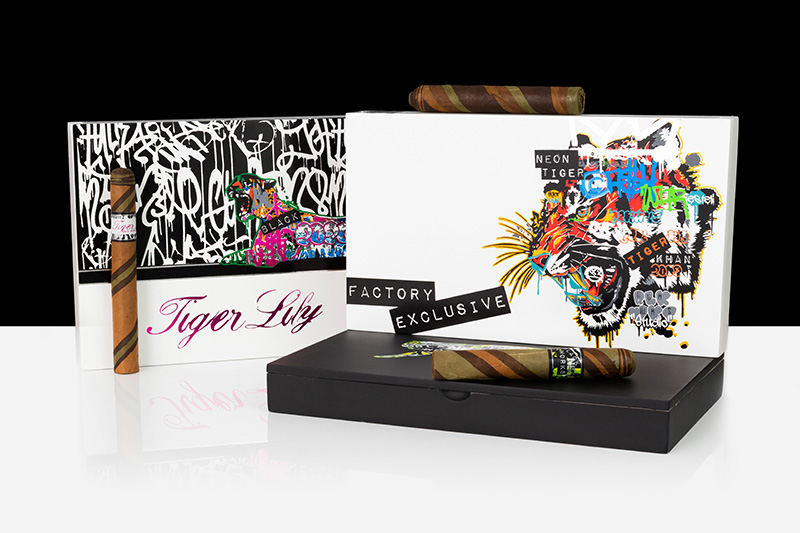
Special-Edition Cigars From Oveja Negra
You may also enjoy:



Comments
This interview might just start me smoking cigars again.
It was an amazing event at Low Country, Pipe & Cigar by Black Label Trading Company, Emilio Cigars & BLK WKS Studio! Beautiful art work on the cigar boxes created by owner James Brown! Happy 10th Anniversary and look forward to more delicious cigars!