


 |
|
 |
|


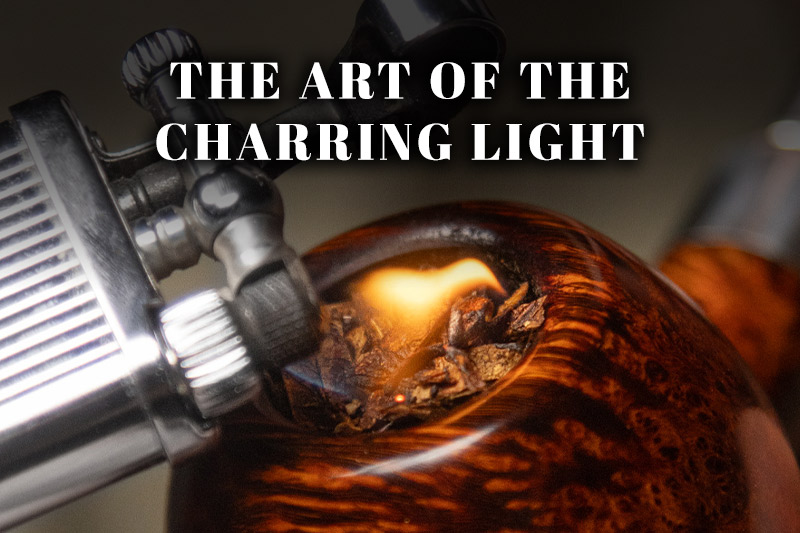
In many ways, I've become worse at smoking a pipe as I've become more experienced. When packing the chamber, tamping pressure, and smoking cadence weren't second nature, I paid more attention to those various techniques. Now, though, it's easy to take those processes for granted as I subconsciously go through the motions without much consideration or intentionality. Ironically, such an approach more often than not results in a less enjoyable, more ornery smoking experience with more relights, a less steady burn, and more fiddling overall.
The charring light is one of these often overlooked processes within the pipe-smoking ritual, even for veteran pipe smokers who could rub out a flake, pack a chamber, apply a light, and smoke the pipe completely blindfolded the entire time. It's easy to underappreciate the role a charring light plays in the rest of the smoking experience and to gloss over it without giving it the attention it deserves. Executing an effective charring light, though, provides a solid foundation for smoking a pipe.
What is the Charring Light?
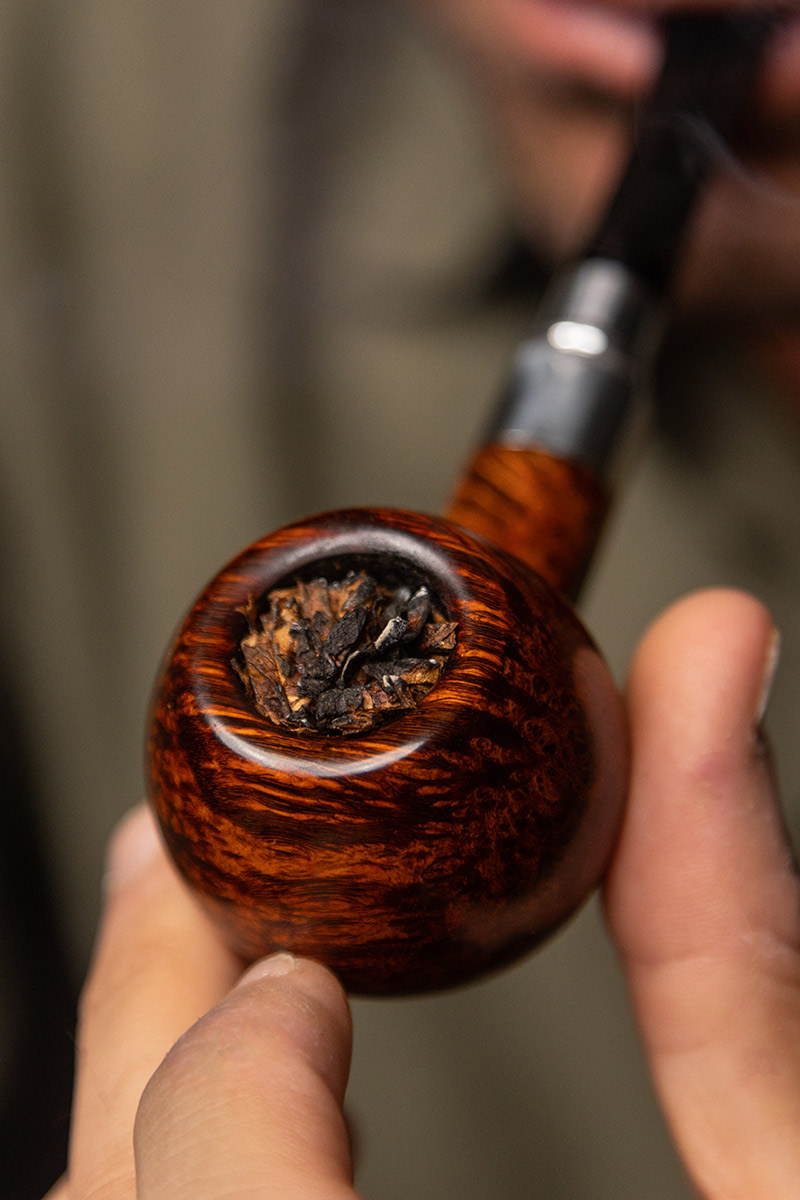
First, let's define terms for anyone new to the hobby or unfamiliar. The charring light is an intentionally temporary ignition of the tobacco that helps establish an even ember. In practice, a charring light involves lighting packed tobacco and drawing through the airway several times, causing the tobacco to sufficiently heat up and expand upward. Then, the tobacco is tamped back down, forming a slight layer of ash and partially burned tobacco atop the chamber, and a second light establishes the rest of the smoke from a more stable foundation.
While not required in the sense that it's literally impossible to smoke a pipe without tobacco and flame, a charring light is widely regarded by pipe smokers as a "best practice." By initially creating that top layer of burned tobacco, the charring light helps establish a more consistent ember, resulting in a more enjoyable smoking experience with fewer relights and generally less fuss.
However, understanding the benefit of the charring light doesn't mean I always succeed in following its principles. Recently, I was frustrated by my pipe underperforming — not staying lit mid-bowl, not smoking consistently, leaving more dottle than usual. I thought it was something wrong with that particular pipe; maybe I had smoked it too frequently and it needed rest. The next pipe underperformed similarly, and the next. I was the common denominator in the equation, so I reflected on my process. I realized that my charring light had become sloppy: I was technically administering one, but it was half-assed and didn't fully encompass the tobacco. I had become content with letting only a few strands of tobacco catch fire. I wasn't completely ignoring the charring light, but I was neglecting it enough that I wasn't reaping its benefits; ironically, I was rushing the part of the process that makes the rest easier and more enjoyable. My pipes weren't underperforming; I was.
The Benefits of Slowing Down
It can be easy to rush through the unglamorous, seemingly unrewarding parts of a process: measuring twice before cutting, preparing the mise en place before cooking, proofreading before publishing. But in reality, these elements directly influence the quality of the end product. If enjoying delicious tobacco is the reward of pipe smoking, then all of the preparatory steps leading up to it affect that reward. It's easy to think of the charring light as the first step in actually smoking the pipe since it involves lighting the tobacco, but it's actually more aligned with other preparations like ensuring the chamber isn't packed too tightly. Giving it proper attention dramatically eases and improves the rest of the experience moving forward. It might be annoying to spend time lighting the tobacco and to make sure it's consistently and thoroughly lit only to tamp it down and let it extinguish, but it's more than made up for by a pleasant and unperturbed smoking experience.
Plus, slowing down and relaxing is a feature of pipe smoking, not a bug. The realization was a helpful reminder not to try to make pipe smoking too efficient or expedient; it was never meant to be. Pipe smoking is a ritual — a process — not solely a means to the end of tobacco consumption. Instead of thinking of these preliminary steps — rubbing out tobacco or letting it dry, packing the chamber, administering the charring light, tamping — as preparations for the process of smoking a pipe, perhaps it's best to consider them as stages of the process and experience itself. That reframing helps me to avoid taking shortcuts or rushing through things and to more authentically enjoy the experience as a whole, not solely as a means of enjoying tobacco. That said, even if my only goal were to enjoy tobacco, paying attention to the charring light certainly supports that end.
The charring light may be among the least glamorous parts of smoking a pipe — and even the most counterintuitive: Why light the tobacco only to let it go out? — but it establishes the conditions for everything afterward. The charring light isn't something we do before smoking a pipe; it's the first step of the smoke itself.
You may also enjoy:


Comments
"The charring light isn't something we do before smoking a pipe; it's the first step of the smoke itself." Nicely put, and the piece is a good reminder to slow down. Which, frankly, is why many us of pick up the pipe to begin with.
Indeed. A good article that draws a much overlooked and under appreciated conclusion. Slowing down and relishing your smoke is something to be consumately desired. It's the reason that I so appreciate having a job that affords me the luxury of a three day weekend. It allows me to spend more time with some of my best friends: my wife, my beasts and my briars and meerschaums. Life is best sipped slowly!
Thanks for the article. I'm 78 years old and have been smoking a pipe since I was 18. We all need a reminder once in a while.
I’m about 7 years older and you are right on targetz
Thanks for posting this article. I have been doing this all along and didn't realize there was a name for it. I use the first match for the charring light and the second match for the light. I haven't used a lighter on a pipe in forty years.
Well, I certainly wouldn't use a 'Zippo,' unless you enjoy the flavor of fuel, that is....
Truett, an excellent article. I believe you have been looking over my shoulder lately. I have just gone through the process. Keep up the great work.
As a pipe smoker for over 50 years, I’ve grown accustomed to thinking that I knew it all, and just recently couldn’t understand why my pipes were smoking hot, and it’s because I’ve lost track of my cadence in smoking, smoking too quickly, so I have to keep an eye on that.