EN
EN
 JA
JA ZH
ZH





 All New Pipes




















Ask a question about this product.
Measurements & Other Details
- Length: 5.83 in./148.08 mm.
- Weight: 1.92 oz./54.43 g.
- Bowl Height: 1.72 in./43.69 mm.
- Chamber Depth: 1.20 in./30.48 mm.
- Chamber Diameter: 0.62 in./15.75 mm.
- Outside Diameter: 1.69 in./42.93 mm.
- Stem Material: Vulcanite
- Filter: None
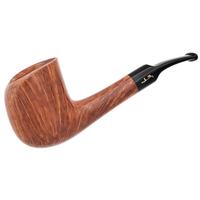
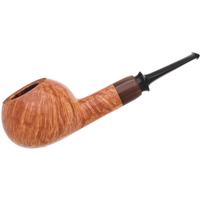
- Shape: Tomato
- Finish: Smooth
- Material: Briar
- Country: Italy
About This Pipe
Though he first began carving pipes in 2020 as a pastime during the COVID lockdown, artisan Antonio Lancellotti has long since acquainted himself with the world of pipes, having received his first pipe at the age of 18. While he enjoyed smoking it, he did set it aside for several years, and when the urge to pick it back up struck him several years later, he found it was in need of repair. In his search for a pipe repairman, Antonio took a deep interest in the pipe making craft, and decided to try his hand at it, eventually turning it into a full-blown career. Though he identifies as primarily self-taught, he supplemented his pipe-making education by joining the Accademia della Pipa, where he gained expert insight from fellow artisans Davide Iafisco and Angelo Del Prete, and he spent a particularly enlightening day in the workshop of Cornelius Mȁnz, who continues to be a sounding board for Antonio to this day. These influences helped shape Antonio's style, which he describes as "clean, balanced, and respectful of proportion and line, while still allowing room for inspiration in the moment." This Tomato certainly speaks to that approach, demonstrating a pleasing balance between robust curves and understated rigidity.
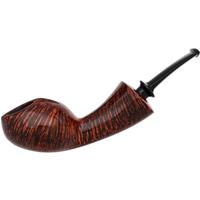
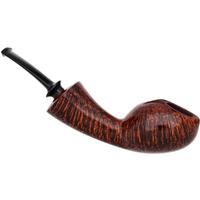
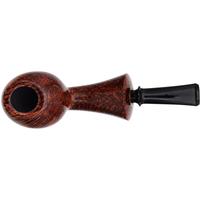
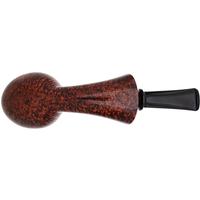
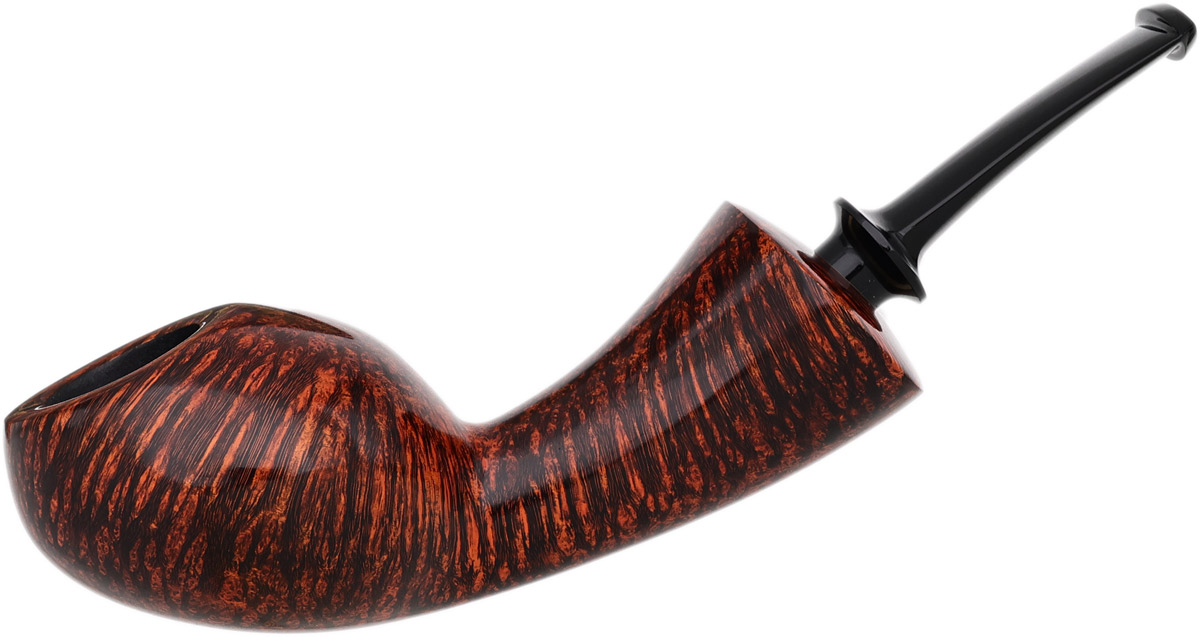
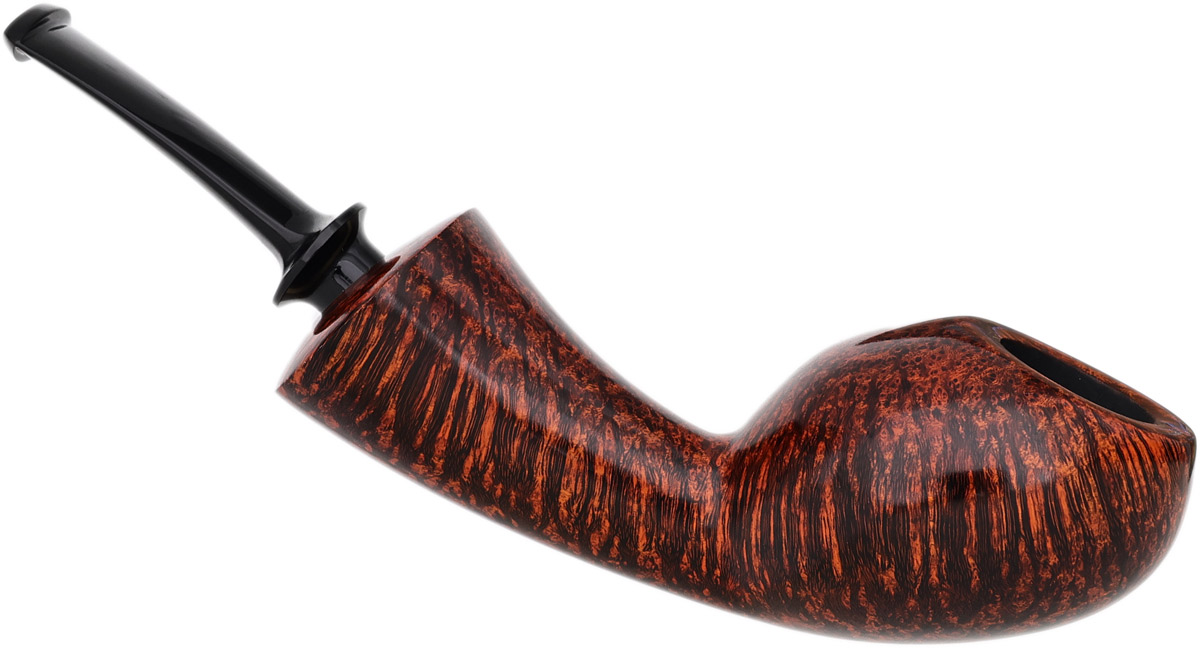
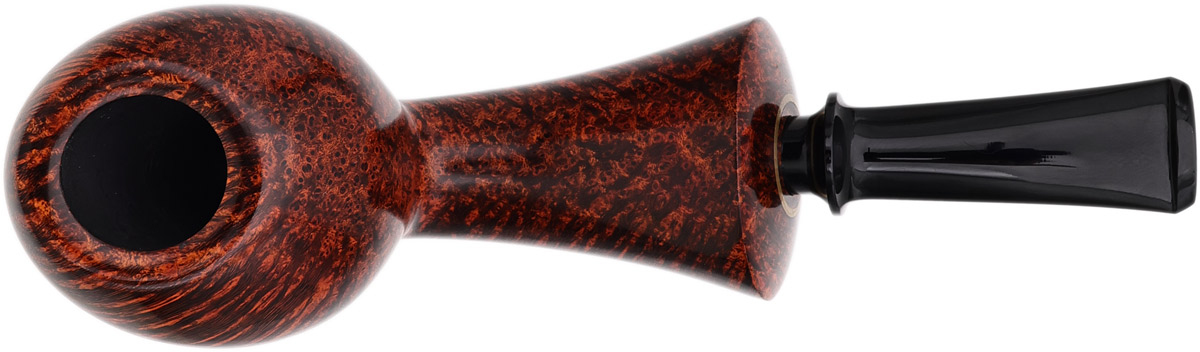
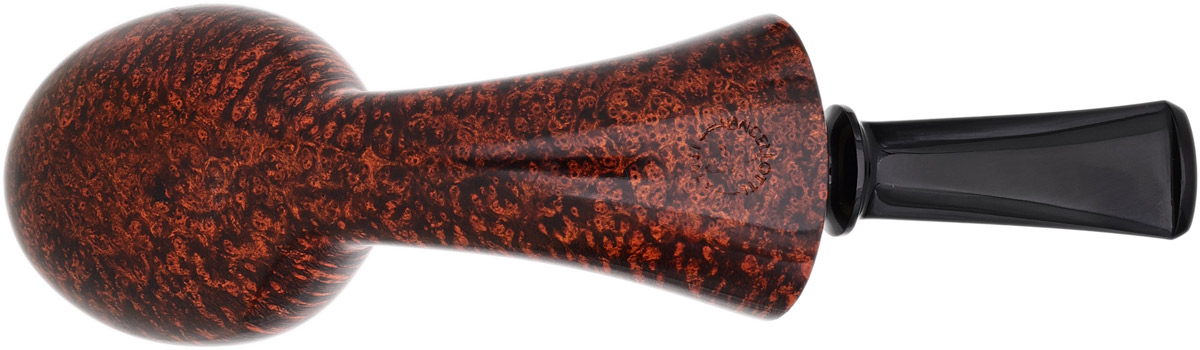
Replete with a swift sense of motion, this offering pairs a forward-surging bowl to a widely flaring, upturned shank. A push-style, vulcanite stem with a low-set expansion ring tops off the composition, its upward angling trajectory promoting a comfortable smoking posture. Though both the bowl and shank exhibit shapely curves overall, their softness is offset by subtle ridgelines that lend their forms a touch of rigidity. The bowl's lifted heel, for example, is established by an oblong ridgeline that swoops all the way through the fore before looping back into either side of the shank. This flattens the heel and adds a subtle angularity to it in profile. The same soft ridgeline continues all the way down the underside of the shank, adding a touch of crispness there as well. The entirety of the stummel wears a smooth, lustrous finish and a stunning, contrast-rich chestnut stain, both of which serve to accentuate the stummel's nuanced form and gorgeous grain with aplomb.
— Jenna Wasserman