EN
EN
 JA
JA ZH
ZH





 All New Pipes


















Ask a question about this product.
Measurements & Other Details
- Length: 4.91 in./124.71 mm.
- Weight: 1.36 oz./38.56 g.
- Bowl Height: 1.70 in./43.18 mm.
- Chamber Depth: 1.33 in./33.78 mm.
- Chamber Diameter: 0.67 in./17.02 mm.
- Outside Diameter: 1.39 in./35.31 mm.
- Stem Material: Vulcanite
- Filter: None
- Shape: Blowfish
- Finish: Smooth
- Material: Briar
- Country: China
About This Pipe
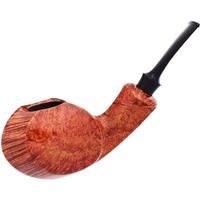
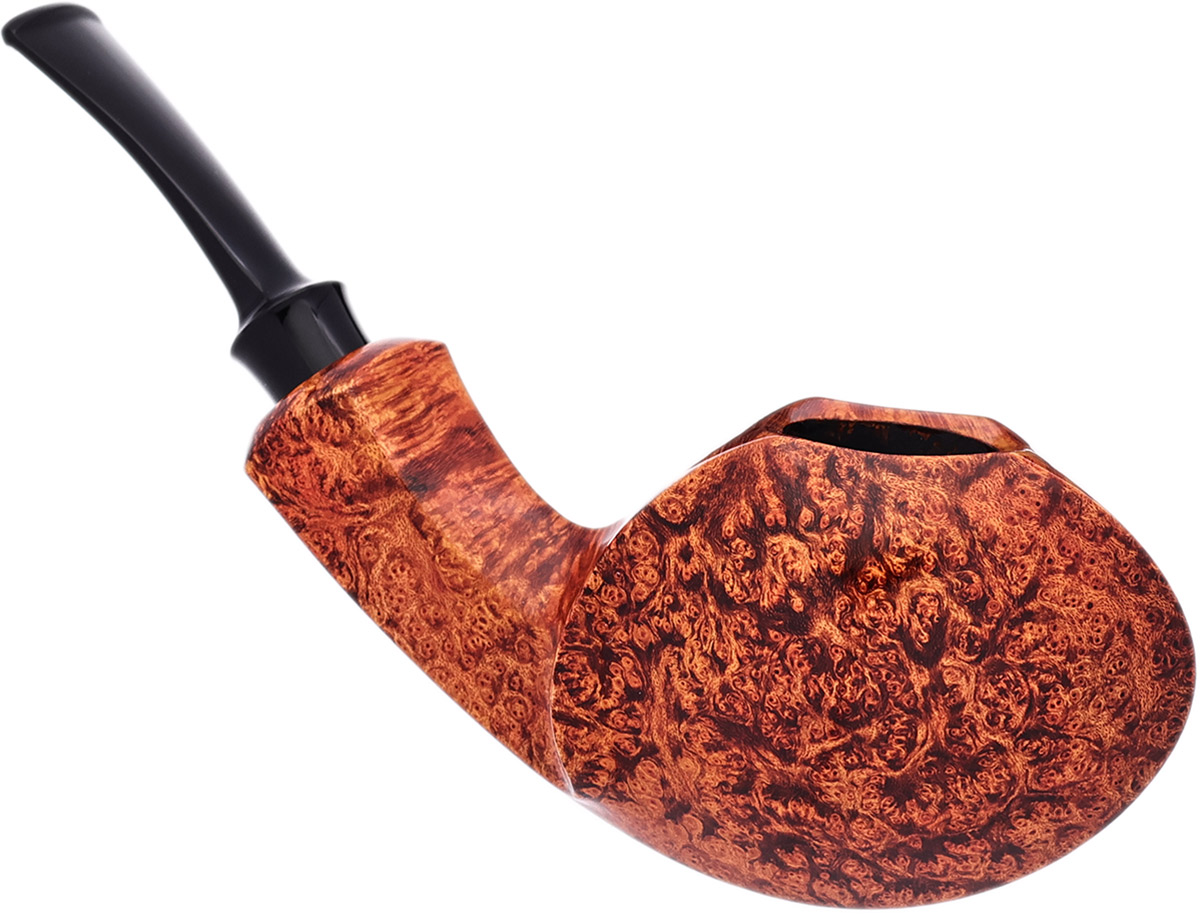
Wang Tieyuan, better known by his pseudonym Madao 3000, is a Chinese artisan with a penchant for subtly organic forms informed by his unique interpretations of the Danish and Japanese shaping schools. Inspired in equal measure by the works of master carvers that came before him and the natural world around him, Tieyuan's outlook on his craft is that of a persistent search for novel renditions of forms both familiar and fresh, telling us; "Nature is never repetitive, and I hope my pipes will never be either." Tieyuan cites Hiroyuki Tokutomi as a great source of both inspiration and admiration, and that inspiration is certainly visible in the build of this Blowfish, thanks to its myriad, complex ridges and the strikingly organic implied movement of the composition.
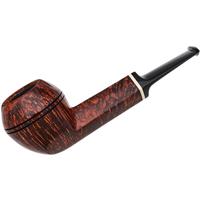
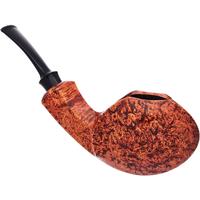
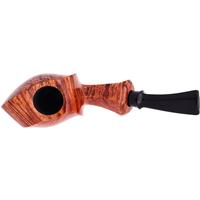
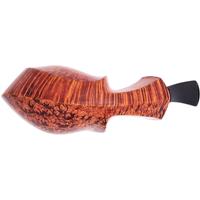
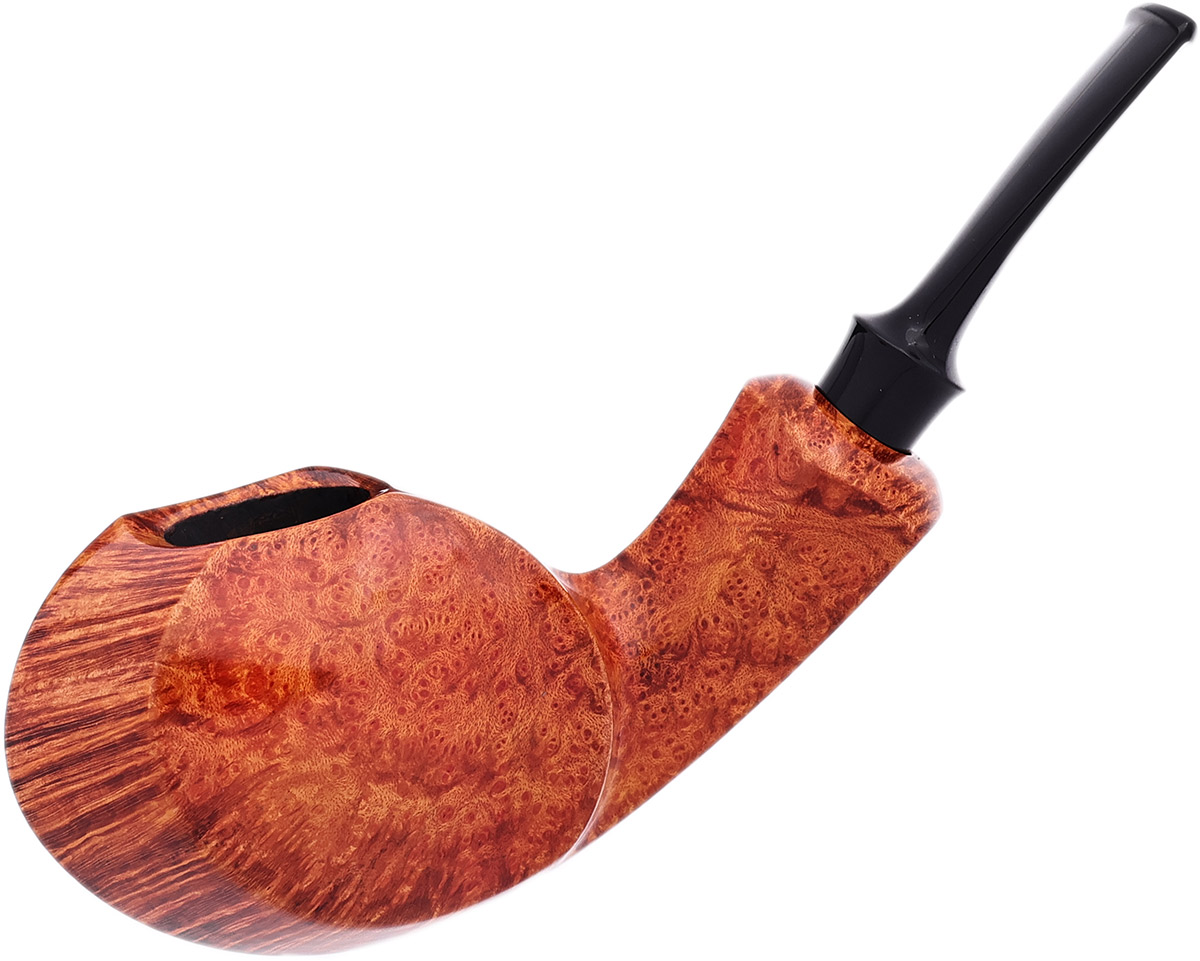
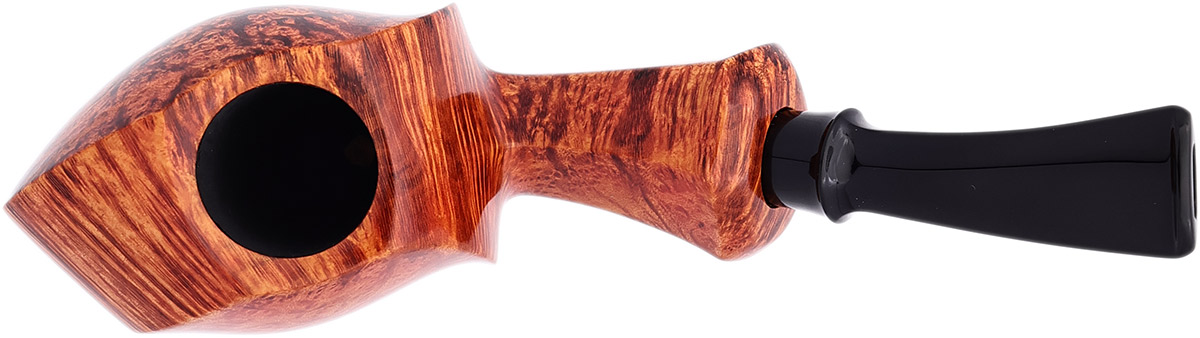
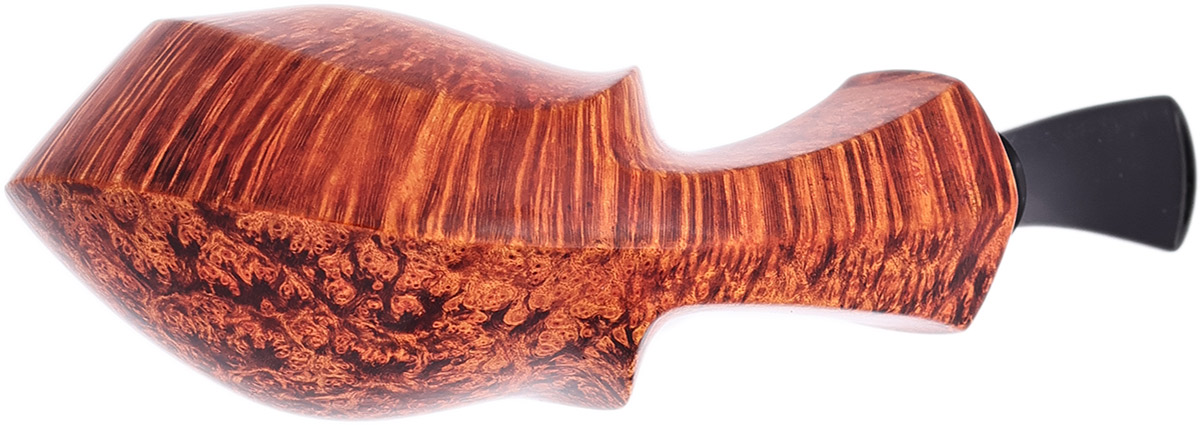
In silhouette, the shank and stem combination here display a rather sharp lift out of the wide transition, the lift possessed of the barest of curves across both components, with the shank's most present curvature appearing through the top line. A hexagonal pattern of panels surrounds the shank as it flows outward, balancing a gentle flare to the face, which, itself, features a nicely inflated dome that accepts a sleek saddle stem of black vulcanite. An understated expansion ring at the base of the stem adds further sharpness to the aft side of this pipe, and it seats the domed face between a pair of firm lines to provide additional structural contrast. The top three ridges of the shank reach forward to the bowl and dissipate as they arrive at the back wall, while the lower three go on to create the baroque arrangement of panels that define this shape's most iconic elements. On the right side, both the lowermost ridge and the lower right ridge work in tandem, the lower right's extending to a point quite low on the bowl and urging outward to form a stylistic "fin." This fin-like structure then curls around to outline the aft half of this side of the bowl, rising all the way to the rim and softening its outward urge a touch. The lowermost ridge then travels across the entire underside of the stummel, reaching forward and encircling the fore, meeting the other ridge at the rim and framing the right side of the bowl excellently. At the left side, a single ridge forms the bowl's panel, pushing through the shank and curving around near the transition, becoming softer and almost vanishing, before solidifying at the bowl proper with a similar fin-like outcropping near the aft side. Both flanks of the bowl showcase some deft hollow carving near the inner edges of these fins, which further demonstrates Tieyuan's facility with intricate shaping cues, while the lower ridge of the arrangement additionally serves as the starting point of a swift and striking taper from right to left, something best viewed aerially. From this perspective one may also witness the arresting curvature he's granted the briar, as the entirety of the stummel appears to curl to the left from the shank forward, with the stem countering this through its own subtle rightward curve. This arrangement of organically active lines keeps the smoker engaged and grants the entirety of this piece a remarkable liveliness while maintaining a comfortable fit in hand. Dressing this pipe is a lovely, contrast-rich stain that unveils dense fields of swirling birdseye across both of the bowl's panels, while the middle of the stummel is framed with a wrapping pattern of cross grain: complete with visible growth rings rippling through almost the entirety of its striations.
-John McElheny