EN
EN
 JA
JA ZH
ZH





 All New Pipes



















Ask a question about this product.
Measurements & Other Details
- Length: 5.59 in./141.99 mm.
- Weight: 1.74 oz./49.44 g.
- Bowl Height: 1.37 in./34.80 mm.
- Chamber Depth: 1.00 in./25.40 mm.
- Chamber Diameter: 0.74 in./18.80 mm.
- Outside Diameter: 1.95 in./49.53 mm.
- Stem Material: Vulcanite
- Filter: None
- Shape: Tomato
- Finish: Smooth
- Material: Briar
- Country: United States
About This Pipe
Louisianian artisan Jason Mouton first learned his way around a lathe by crafting duck calls under the instruction of his father, with whom he would fish and hunt in the bayous and marshes of their hometown, Gueydan. In 2016, Mouton purchased his first pipe, and was quickly compelled to try crafting one of his own. This curiosity snowballed into a passion for pipe making, and has since blossomed into a full-blown career. These days, Mouton is known for carving meticulously detailed takes on classic shapes, featuring full-bodied bowls and clean, sleek lines. This Tomato is one such example with its shapely bowl and a graceful, well-balanced silhouette.
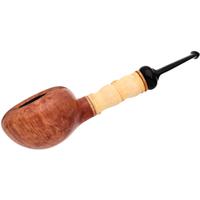
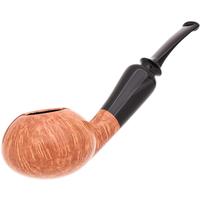
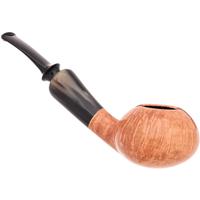
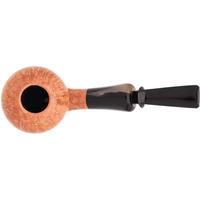
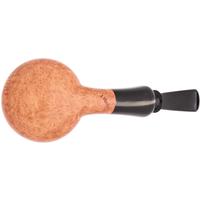
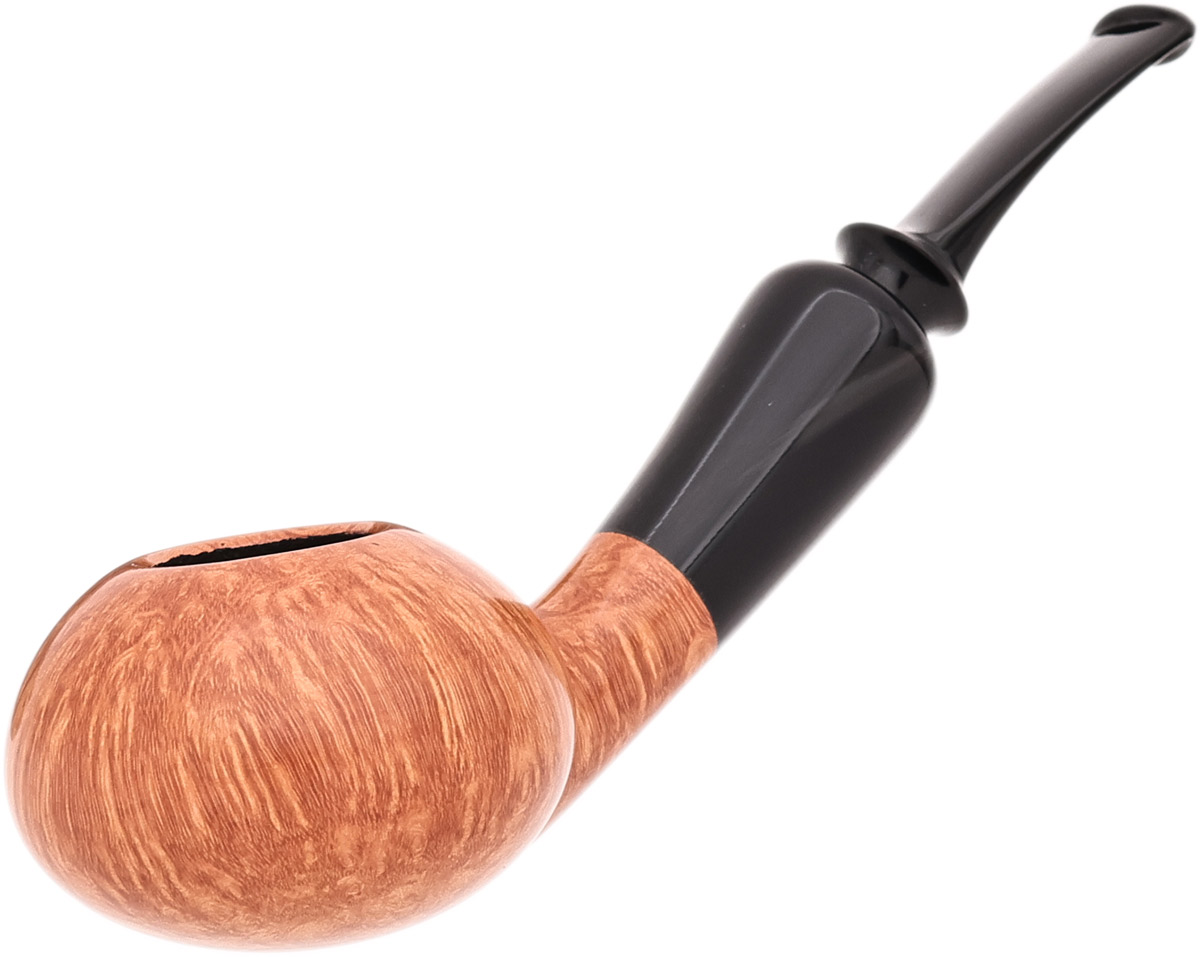
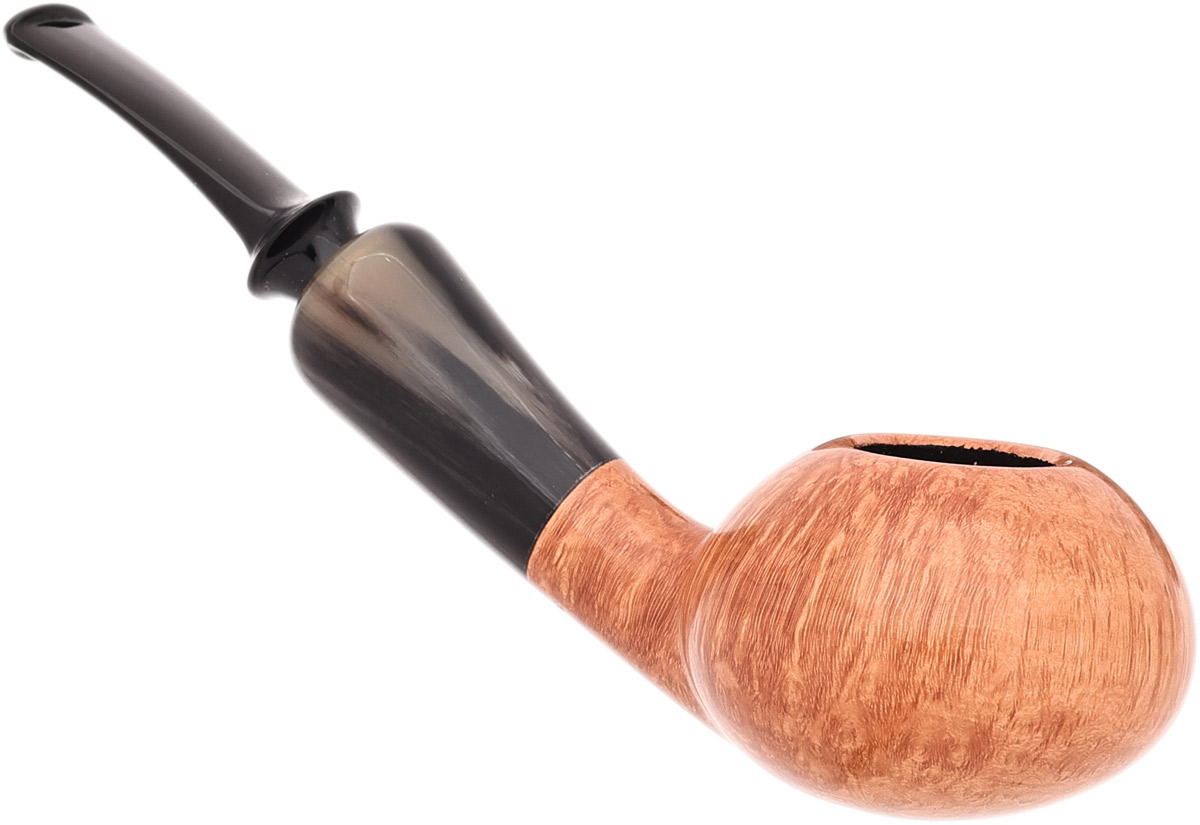
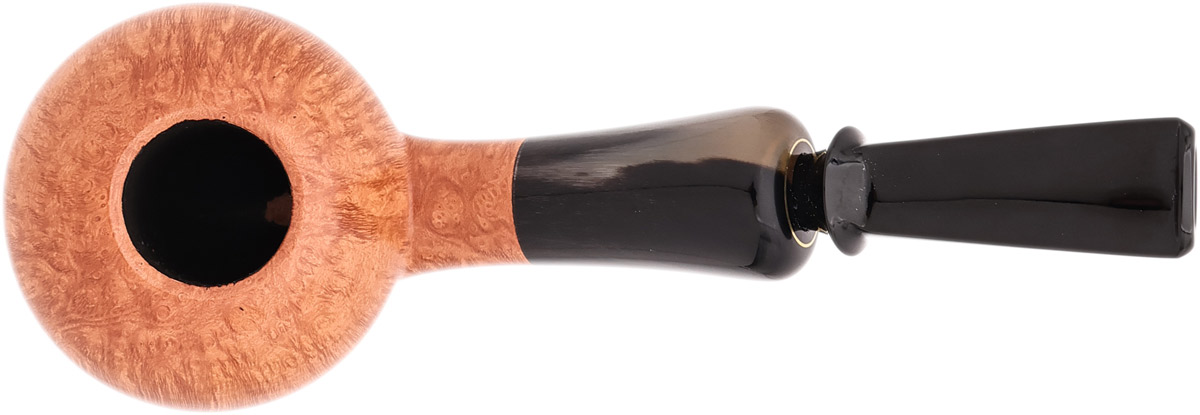
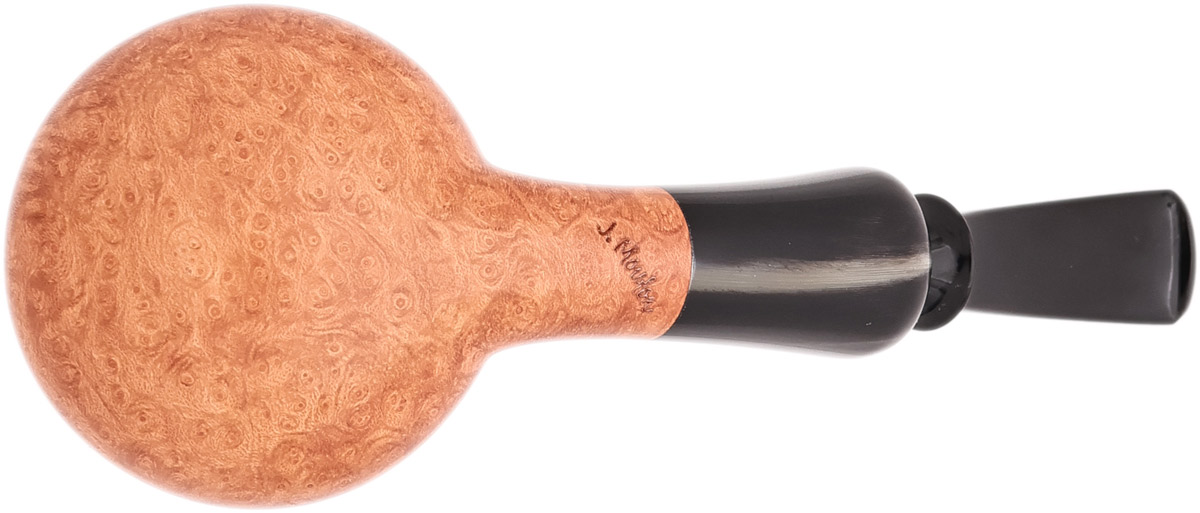
As to be expected of a Tomato, this offering features a broad bowl with a squat waist, though this particular iteration strikes the perfect balance of charmingly plump curves without looking bulbous or bulky. Emerging gracefully from the cheeked transition out back, the shank sweeps up and outward, embellished with a mount of genuine horn. The sizable mount flares out toward the stem, its edges gently curved to maintain the pipe's overall soft, supple appearance. A pressure-fit stem of hand-cut vulcanite completes the composition, its crisp expansion ring mirroring the flare of the horn for a pleasing sense of visual rhythm.
Mouton has done an excellent job at reading the briar of this Tomato, punctuating the bowl's plump waist with tight tendrils of flame grain, and showcasing impressive birdseye along the heel, rim, and top and underside of the shank. These lovely grain patterns are dressed in a smooth, warm finish that makes the perfect complement to the natural striations and dark-and-light color palette of the horn.
— Jenna Wasserman